How to make a Kinder goat?
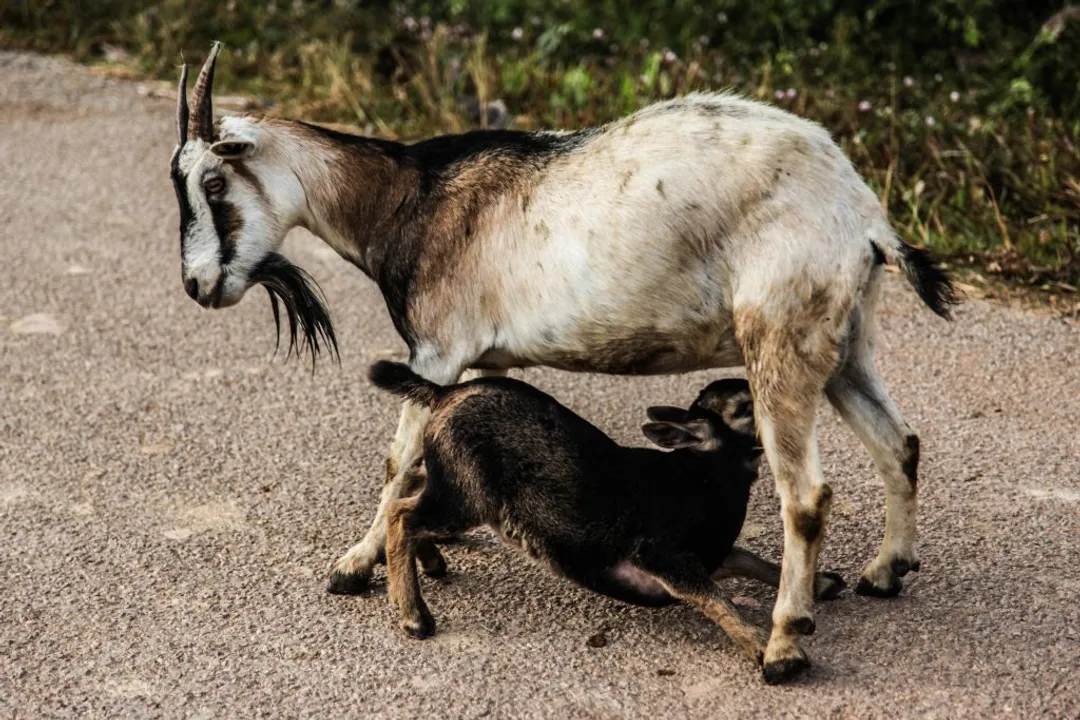
The genesis of the Kinder goat breed centers on a very specific, intentional crossbreeding effort designed to balance the best traits of its two parent lines. It is not a natural emergence but rather a careful, calculated creation that began in the mid-1980s in Washington state. To begin the process of "making" a Kinder goat, the foundational step requires two specific, registered purebred animals: a Pygmy buck and a Nubian doe.
This particular pairing is crucial. The goal was to blend the hardiness and smaller stature inherited from the Pygmy side with the superior dairy aptitude of the Nubian line. A critical note for anyone attempting this initial cross is the size differential: the Nubian doe is significantly larger than the Pygmy buck, and this asymmetry is necessary for a safe gestation. Attempting the reverse cross—a Nubian buck with a Pygmy doe—is explicitly discouraged because the smaller Pygmy doe would face extreme difficulty carrying the larger offspring.
# Initial Cross
When a registered Pygmy buck successfully breeds a registered purebred Nubian doe, the resulting offspring are recognized as first-generation (F1) Kinders. These F1 kids carry the foundational genetics that define the breed. Successfully registering these first-generation animals is the first milestone for establishing a new line.
The reason this specific mix was chosen is tied to performance. The resulting cross resulted in a goat that was notably well-muscled while still maintaining good milk production capabilities, setting the stage for the breed’s dual-purpose reputation. The desire for a manageable size, which reduces feed costs and makes handling easier, was central to the breed's development, positioning Kinders roughly in the middle size range between their two ancestral breeds.
# Generational Development
"Making" a Kinder goat is an ongoing commitment that extends well beyond that initial cross. The breed is developed through successive generations, where the F1 animals are bred to maintain the desired characteristics, often breeding F1 back to registered purebred Nubians or Pygmies in the early stages to stabilize traits, though this requires careful record-keeping.
The Kinder Goat Breeders Association (KGBA) has established a path for full registration, which is typically achieved when the goat reaches the fifth generation (F5). While generation count is a benchmark for registration paperwork, breeders stress that the improvement of desired characteristics is the true measure of success in breeding Kinders, regardless of the exact generation number. A breeder seeking to establish a stable line must prioritize traits like dairy capacity, meat quality, and size consistency over simply hitting an arbitrary generation mark.
For those who start with registered F1 stock, maintaining documentation on the lineage of those foundation animals is extremely important. If a breeder uses an F1 doe, the resulting offspring need to be bred to a registered Pygmy or Nubian to advance the generation correctly, or to another F1 animal to create more F2s. Since the Pygmy genetics can sometimes be less clear in subsequent generations when working with mixed-origin stock, keeping a meticulous log of which purebred line contributed to the F1 animal ensures you can track genetics as you progress toward the F5 registration benchmark. This diligence prevents a regression to less desirable traits from the founding breeds.
# Selecting Inputs
If one chooses not to purchase existing F1 Kinders but wishes to start their own line, sourcing the foundation stock requires diligence. You must secure a registered Pygmy buck and a registered purebred Nubian doe. While purchasing established Kinders from a breeder listed with the KGBA is often the simpler route, knowing the requirements for starting from scratch is key for expansion or diversification.
It is worth contrasting the goal with breeds like the Boer, which are large meat animals. In discussions about mixing Kinders with larger breeds, there is a consensus against putting a much larger buck (like a Boer) onto a smaller doe (like a Kinder) due to kidding risks, reinforcing the importance of the original, controlled size cross. The inherent issues with the Pygmy side, such as a higher rate of kidding complications or C-sections in purebred Pygmies due to short bodies, is precisely what the Kinder cross was intended to mitigate. Therefore, when seeking replacement or breeding stock, emphasizing lines known for good maternal health, which the Kinder generally exhibits, is prudent.
# Breeding Goals
The term dual-purpose is central to the Kinder identity. A successful Kinder herd should excel at providing both high-quality milk and efficient meat production.
# Milk Attributes
Kinder milk is highly prized for its quality over sheer volume. While standard dairy breeds like Alpines or Saanens can produce significantly more milk per day—sometimes over two gallons—Kinders offer richness in a more manageable package. Kinder milk typically boasts a high butterfat content, often at or above 6%, which is excellent for processing into items like cheese, butter, and yogurt. The higher solids mean that a gallon of Kinder milk can yield nearly double the amount of cheese compared to milk from larger breeds. Furthermore, the flavor is often sweeter and less "goaty" than commercial goat milk, similar to cow’s milk. A good producing Kinder doe can peak around two to three quarts daily, which is more than sufficient for most homestead needs without creating a massive surplus that requires complex management.
# Meat Efficiency
On the meat side, Kinders are efficient producers. They achieve market weight quickly, often comparing favorably to faster-growing meat breeds in terms of growth rate for their smaller size. Dress-out percentages—the weight of the carcass after processing compared to the live weight—are reported to be high, often 60% or more. This efficiency means that the space and feed required to raise a Kinder wether to market weight yields a substantial return in healthy, lower-cholesterol meat.
# Herd Management Nuances
Successfully "making" and maintaining a Kinder herd involves capitalizing on traits that make them easier for the small-acreage farmer or homesteader.
# Year-Round Production
A significant management advantage is their non-seasonal breeding cycle. Unlike many Northern European dairy breeds that are strictly seasonal breeders, Kinders, due to their Pygmy and Nubian heritage, can breed at any time of the year. This flexibility allows a careful breeder to stagger kidding to ensure a continuous milk supply throughout the year, a highly practical consideration for self-sufficiency. For instance, one doe can be bred to kid in the spring for summer milking, and another bred in the fall for winter milk production.
# Size and Handling Benefits
The medium size of the Kinder goat offers tangible daily benefits. A full-grown doe generally weighs up to about 125 pounds, and a buck around 150 pounds. To put this in perspective, a mature Boer buck can weigh over 300 pounds. This size difference translates directly into housing efficiency; for instance, where one full-sized doe might fit in a stall, two Kinder does can often be housed comfortably. They also require less feed overall compared to their larger ancestors, meaning the feed budget stretches further while maintaining milk production levels.
A key element of managing any goat, including Kinders, is recognizing their inherent herd nature. While a single, particularly affectionate wether might bond intensely with its human family, goats generally do not thrive when isolated. If you are breeding for utility (milk/meat) and have a friendly male that proves too attached to humans to sell or butcher, training him as a pack or cart goat is an option, provided you manage his weight to keep him lean and leggier rather than paunchy. If considering packing, be aware that while they are strong for their size, endurance for extremely long treks may be less than that of larger pack breeds.
# Improving Specific Traits
As you advance your herd beyond the F1 generation, selection becomes paramount. If your primary interest leans toward dairy, you must consistently select bucks from does that demonstrate excellent udder structure, large teats conducive to hand or machine milking (a common complaint with smaller breeds like Pygmies), and sustained high production across lactation. Conversely, if meat yield is the priority, select for growth rate and muscling that retains the necessary width for carcass quality. It is a management decision to lean into one characteristic while maintaining the other, as breeds that try to be perfectly exceptional at two distinct purposes often settle for being very good at both—which is exactly what the Kinder is, but careful selection refines how good they are at each.
For instance, one successful breeder noted that even a small herd of two or three does, along with some poultry, could meet the dairy and meat needs of a family, emphasizing the efficiency of the breed on a small plot of land. Furthermore, Kinders are often described as hardy, friendly, and good mothers, making the management of kidding events less stressful than with some other breeds.
# Maintaining Purity and Association
To truly "make" and maintain a recognized Kinder herd, connecting with the official registry is necessary. The Kinder Goat Breeders Association (KGBA) serves as the hub for breed standards and registration. Even though forums suggest that their website or technology presence might not be constantly updated, active communication channels, such as a dedicated Yahoo Group (though potentially dated), are historically how breeders communicate and share knowledge about current breeding stock.
A final consideration for anyone developing this breed line is temperament control, especially when introducing new breeding stock or managing wethers. Kinders are known to be playful and affectionate, but they are also excellent jumpers, necessitating secure fencing, often with smaller holes at the bottom to discourage escape attempts by young kids. Observing their behavior—whether they are extremely human-focused or prefer their goat companions—can inform decisions about whether a wether would make a suitable, solitary pack animal or if they require a goat herd-mate for psychological comfort. The commitment to quality documentation in the early generations directly supports the long-term integrity of the Kinder as a recognized, dual-purpose breed.
Related Questions
#Citations
Kinder goats — A small breed for milk and meat
Kinder Goat Breed Profile | MannaPro
A Great Dual-Purpose Breed: Kinder Goats! - Queen Bee Homestead
Boer and Kinder : r/goats - Reddit
Hello all! Kinder Breeder Here - Pack Goat Central
Kinder goats | Dairy Goat Info Forums