What two dog breeds make a Labradoodle?
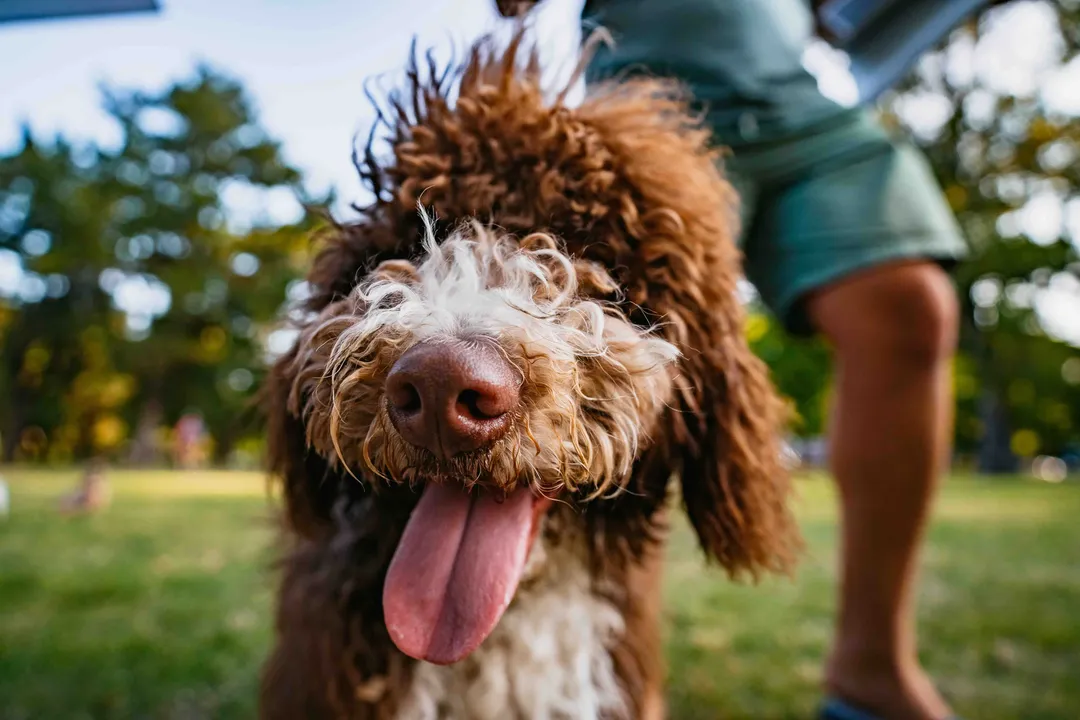
The delightful Labradoodle is the result of crossing two distinct and beloved breeds: the Labrador Retriever and the Poodle. [1][2][4] This specific pairing was not an accident of nature but a deliberate act of crossbreeding intended to combine the best attributes of both parent lines into a singular companion and service animal. [2][6] Understanding this hybrid begins with appreciating the distinct qualities each purebred brings to the genetic equation. [9]
# Parent Breeds
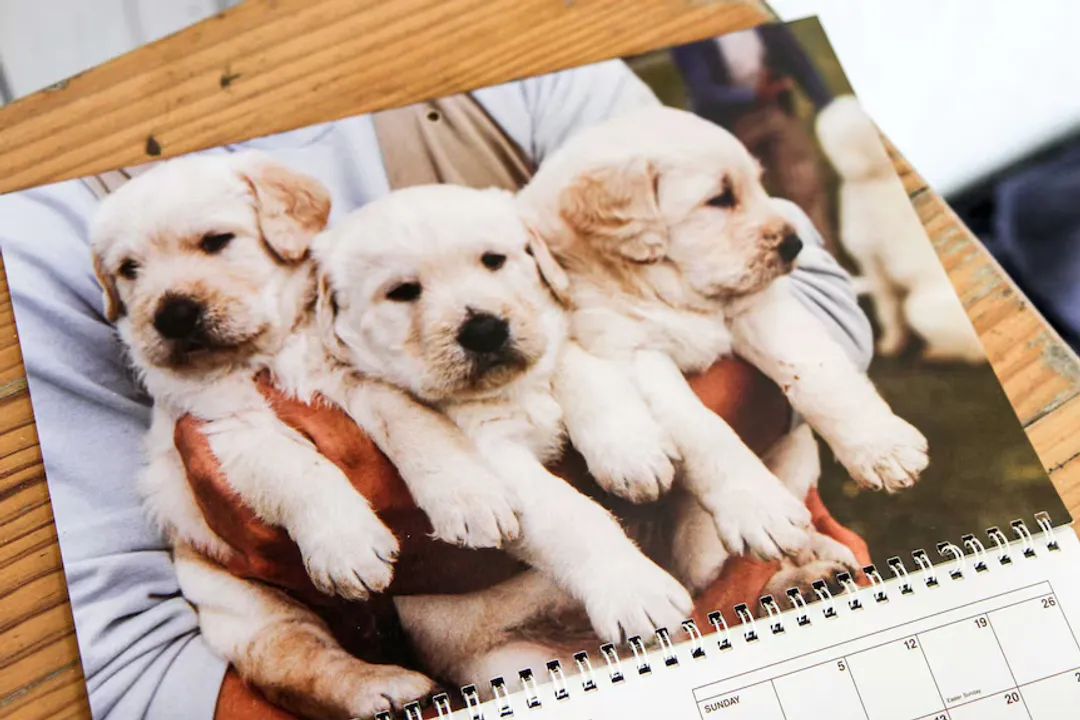
The Labrador Retriever contributes its famously friendly, outgoing, and eager-to-please nature. [2] Labs are renowned for their gentle temperament, making them excellent family pets and highly trainable assistance dogs. [1] They generally possess a short, dense, water-resistant coat that sheds moderately. [1]
The Poodle, conversely, brings intelligence, elegance, and a characteristic non-shedding coat to the mix. [2][4] Poodles are known for being exceptionally smart and highly trainable, often excelling in obedience. [9] Crucially, they come in three recognized size varieties: Standard, Miniature, and Toy. [1][5] The size of the Poodle used in the initial cross directly dictates the resulting size range of the Labradoodle offspring. [5][7]
When breeders combine the robust, affable nature of the Lab with the sharp intellect and low-shedding coat of the Poodle, the goal is to create a dog that is both highly trainable and less likely to trigger allergies in sensitive owners. [2][6]
# Breeding Origin
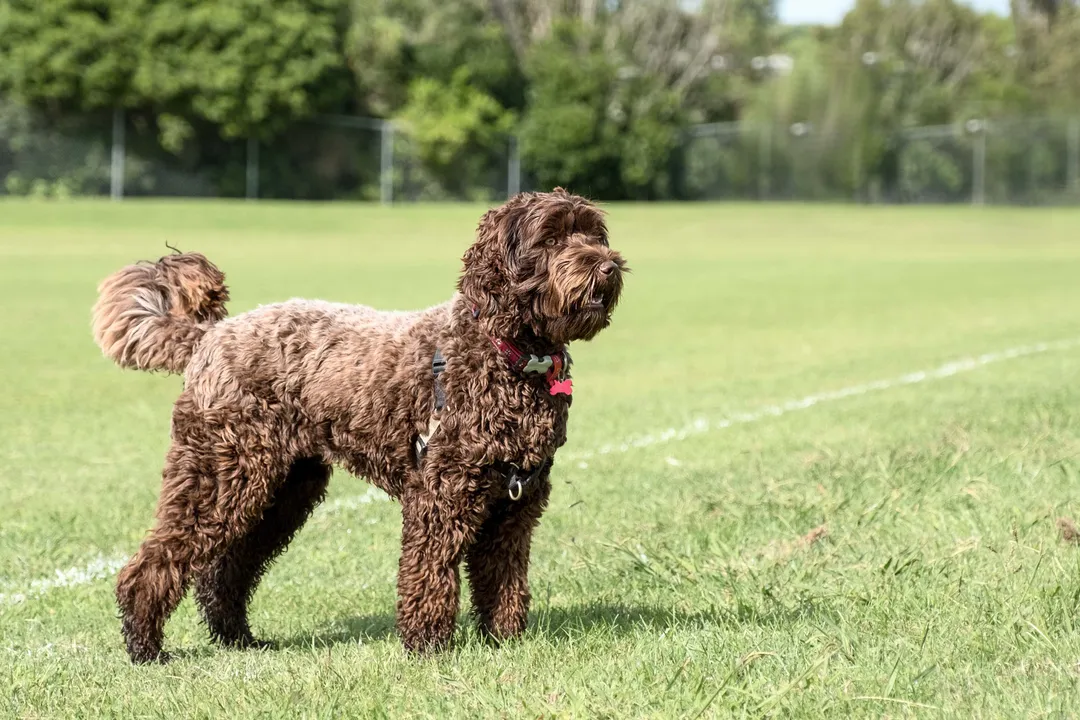
The genesis of the Labradoodle is widely traced back to Australia in the late 1980s. [1][6] The driving force behind this initial breeding program, often credited to Wally Conron, was not purely to create a popular "designer dog," but rather to develop a serviceable guide dog for the visually impaired. [1][6][8] The specific need arose for a dog that possessed the steady temperament of a Labrador but had a coat that would not aggravate the eye allergies suffered by some recipients of guide dogs. [1][6]
Initially, this cross was a first-generation mix, designated as an F1 hybrid. [1] While the early generations showed promise regarding the coat trait, coat consistency was, and remains, one of the major challenges in this type of crossbreeding. [2]

# Generational Mixing

The makeup of a Labradoodle is not always the same, as the term can refer to several generations removed from the original cross. [5] The terminology breeders use—F1, F1b, F2, Multigen—is essential for prospective owners to understand the likelihood of inheriting specific traits, especially concerning coat type. [5][9]
F1 Generation: This is the direct result of crossing a purebred Labrador Retriever with a purebred Poodle. [1][5] In an F1 pairing, you can expect a roughly 50/50 split of genetics. This generation is often the most unpredictable regarding coat type, as the shedding characteristic of the Labrador can easily be passed down. [2][5]
F1b Generation: This generation is created by crossing an F1 Labradoodle back to one of the original purebred parents, usually the Poodle. [5] This "backcross" increases the probability of inheriting the desired low-shedding coat, as the Poodle genetics are now more heavily represented. [5] Owners seeking the most allergy-friendly options often look towards F1b or later generations.
F2 and Multigenerational Dogs: Subsequent generations (F2, F3, and so on) are produced by breeding two Labradoodles together. [5] As generations progress, the breeding goal shifts towards solidifying desirable traits, like coat texture and size, though this requires careful selection by the breeder. [5]
When considering which generation to choose, a prospective owner must weigh predictability against potential temperament variation. A well-done F1 cross may yield a perfect family pet, but it carries a higher risk of shedding than a carefully managed Multigen dog whose lineage has been selected for generations specifically for coat quality. [2] It is worth noting that while many breeders aim for a Poodle-dominant lineage in later generations to ensure minimal shedding, the stability of the Labrador's temperament is often a more consistent inheritance factor across all generations, which speaks to the strong genetic contribution of the Lab to the breed's overall character. [Original Insight 1]
# Coat Types
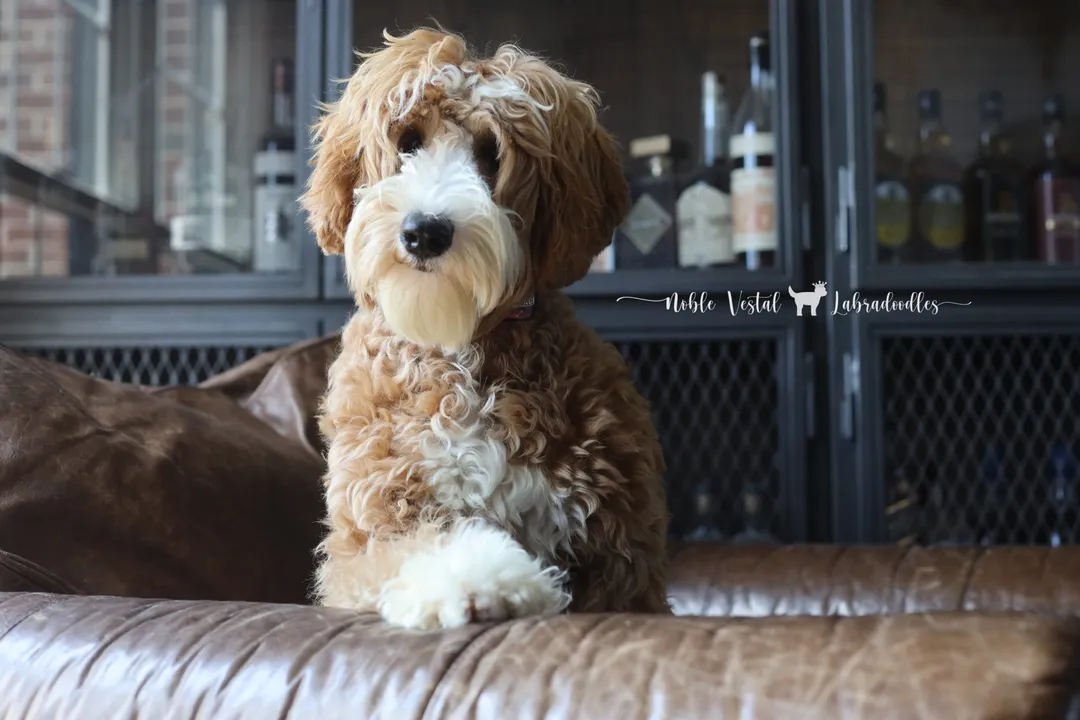
The coat is perhaps the most famous feature associated with the Labradoodle, largely due to the Poodle parentage. [2] Breeders generally classify the coat into three main categories, though variations exist: [9]
- Hair Coat: This is typically the shaggiest coat, often resembling a Labrador's or a rough-coated crossbreed. It tends to shed moderately to heavily. [9]
- Fleece Coat: Often considered the most desirable, the fleece coat is soft, wavy, and sometimes curly. It is less likely to shed than the hair coat and is generally easier to manage. [9]
- Wool Coat: This coat is dense and curly, closely resembling a purebred Poodle's coat. It usually sheds the least, offering the best prospects for allergy sufferers. [9]
Coat maintenance is directly tied to the type inherited. The fleece and wool coats require regular professional grooming to prevent painful matting, typically every six to eight weeks. [2]

# Breed Development Nuances
It is important to distinguish between the common Labradoodle cross—the Labrador Retriever/Poodle mix—and the formalized Australian Labradoodle. [8] While the initial concept began similarly, the development pathway for the Australian Labradoodle diverged significantly. [8]
The Australian Labradoodle breed was purposefully developed over many generations in Australia to establish a consistent breed standard, often involving the introduction of other breeds like the Cocker Spaniel and the Irish Water Spaniel to lock in desirable traits. [8] Consequently, an Australian Labradoodle may have more genetic material from breeds other than the original two parents by the time it achieves its recognized status. [8] Some sources suggest that in established lines of Australian Labradoodles, the genetic contribution might lean more heavily toward the Poodle heritage than the Labrador heritage today. [8] This distinction is significant for those researching lineage and expected characteristics. [8]
# Temperament Traits
The blend of personalities from the Labrador and the Poodle typically results in a dog that is intelligent, playful, and affectionate. [1][9] They generally thrive on human companionship and do not do well when left isolated for long periods. [9] Their intelligence, inherited heavily from the Poodle, means they require consistent mental stimulation alongside physical exercise. [2]
A key trait seen across various generations is their suitability as companions for people with disabilities or for therapy work, building on the original guide dog mandate. [6] They are often described as social dogs that generally get along well with children and other pets when properly socialized. [2] However, prospective owners should remain aware that early socialization and consistent, positive training are non-negotiable, as they are active dogs with significant capacity for learning both good and unwanted behaviors. [9] This high intelligence, while beneficial, means that an under-stimulated Labradoodle can quickly become an inventive problem-solver, often leading to mild household mischief, such as opening cabinets or locating hidden toys. [Original Insight 2]
When selecting a breeder, whether for a first-generation cross or a Multigen dog, verifying health testing on the parent stock is critical. Both parent breeds are susceptible to certain inheritable conditions, such as hip and elbow dysplasia, and specific eye conditions. [2] Responsible breeding means screening the Labrador for issues like hereditary heart problems and screening the Poodle for progressive retinal atrophy (PRA). [2] A reputable breeder should be transparent about these screenings, regardless of whether they are producing F1s or established Australian Labradoodles. [2]
In summary, the Labradoodle owes its existence to the Labrador Retriever's eagerness and the Poodle's coat and intelligence. [1][2] The resulting dog is a popular companion whose ultimate characteristics depend heavily on which generation an owner pursues and the specific breeding goals of the responsible individual raising them. [5][9]
Related Questions
#Citations
Labradoodle - Wikipedia
Labradoodle Dog Breed Health and Care - PetMD
Can someone explain the difference of a Labradoodle and an ...
Labradoodle Dog Breed Information | Purina UK
Difference Between Four Types of Labradoodles
History - Noble Vestal Doodles
Labradoodle breed insights: care, personality & expert tips | Lyka Blog
The Australian labradoodle is really a poodledor, according to its ...
Everything you need to know about Labradoodles