What breeds make a Fila Brasileiro?
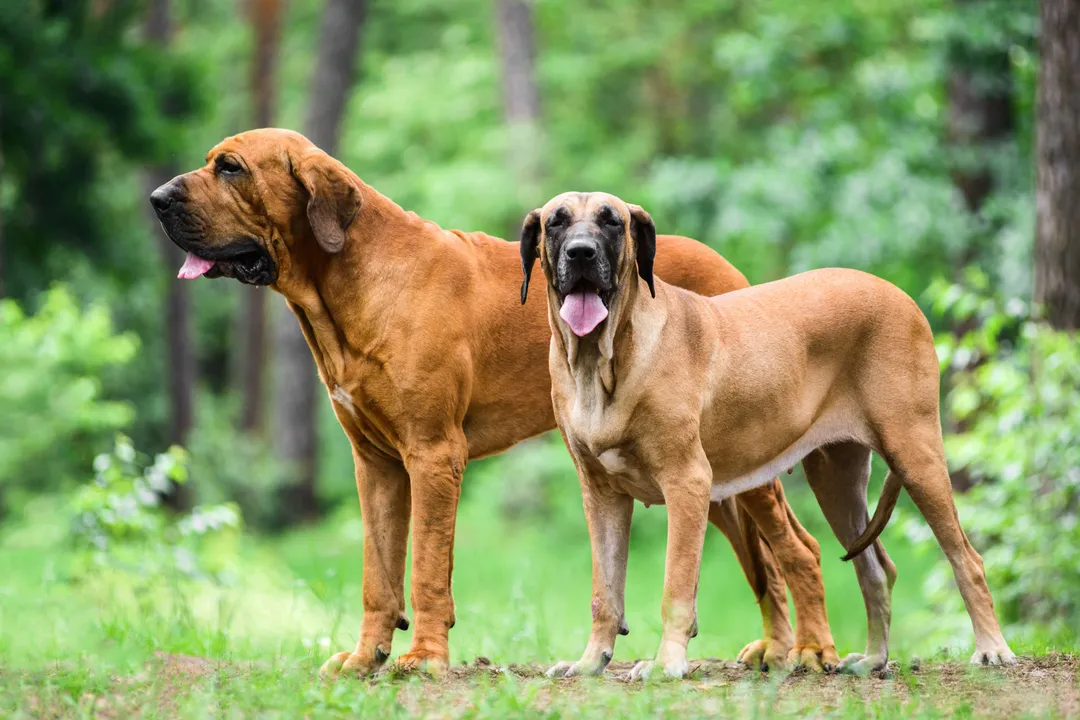
The formation of the Fila Brasileiro, often called the Brazilian Mastiff, is a subject wrapped in the mists of colonial history, making a definitive, single-source answer on its exact genetic recipe impossible. What we do know is that this formidable breed evolved over centuries in Brazil from the dogs brought by European explorers and settlers. The harsh, demanding environment of the New World—filled with jungles, wild animals, and the need for unparalleled guardianship—served as the primary, unforgiving crucible for the breed’s development.
# European Foundation
The consensus among historical accounts points toward a core trio of ancestral canines that laid the groundwork for the Fila Brasileiro we recognize today. These were not the specialized, often extreme versions of modern breeds, but working dogs capable of intense physical and protective tasks.
The primary components frequently cited are:
- Mastiff Types: Various mastiff influences are widely accepted as central to the Fila’s structure and power. Specifically, the English Mastiff is often named as a direct ancestor.
- Bulldogs: An older type of Bulldog, described as significantly larger and more aggressive than the modern counterpart, contributed to the breed’s tenacity.
- Bloodhounds: The scenting ability, tracking prowess, and holding instinct of the Bloodhound are thought to be key genetic contributions. One source suggests the Fila descended from English Mastiffs, Bloodhounds, and that older Bulldog type.
It is important to note that the historical record from that era was not focused on meticulous pedigree keeping; chroniclers often confused types, leading to the blending of labels like "Mastiff" and "Alaunt" (an extinct hunting mastiff possibly involved). The dogs interbred, sometimes intentionally, sometimes freely, forging a unique type perfectly suited to the vast Brazilian fazendas.
# Iberian Question
While the Mastiff/Bulldog/Bloodhound mix forms the most common narrative, other Iberian breeds are sometimes cited as important contributors to this working lineage. One respected account suggests the evolution involved the English Mastiff, the Bloodhound, the Bulldog, and the Rafeiro do Alentejo.
This focus on Iberian stock taps into a deeper historical context. The Fila’s ancestors were used by early settlers for protection against indigenous people, guarding property, and managing livestock, including holding off jaguars. The very name "Fila" comes from the Portuguese verb filar, meaning "to hold, arrest, or grab," perfectly describing the breed’s original function as a catch dog. This role required both strength and tracking capability.
However, one theory exists that champions a purer Iberian origin, suggesting the ancestors came only from the Iberian peninsula and that the Bloodhound influence is negligible or nonexistent. The ambiguity surrounding the exact Iberian imports—whether they were primarily Portuguese mastiffs or included breeds like the Cão de Fila de São Miguel or the extinct Fila da Terceira—contributes to the breed’s high phenotypic variability.
An interesting element arises when considering the environmental selection versus intentional breeding. In the early centuries of the breed’s existence, the sheer survival challenge—navigating jungles and protecting against massive predators—likely selected for the most capable dogs among the mixed population, irrespective of their formal lineage papers. This intense, natural selection honed the protective instinct and stamina needed for the bandeirante expeditions and cattle herding, effectively creating a new standard outside of formal registry control.
# Later Influences and Purity Debates
The effort to formalize the Fila Brasileiro into a recognized breed began in the mid-1940s, with Dr. Paulo Santos Cruz being instrumental in establishing the first standard based on the fazenda dogs. This attempt to create a standardized Brazilian breed led to historical friction that directly impacts how we view its makeup today.
In the 1970s and 1980s, a significant controversy arose concerning dogs registered under the Confederação Brasileira de Cinofilia (CBKC). Breeders allegedly introduced blood from foreign breeds into the registry, resulting in a sudden appearance of dogs with black coats, which were not typical of the older lines. These introduced breeds included the English Mastiff (again), the Neapolitan Mastiff, and the Great Dane.
This apparent dilution of the original type caused such concern that a faction of dedicated preservationists formed the Clube de Aprimoramento do Fila Brasileiro (CAFIB). Their goal was explicitly to return to and preserve the original phenotype and temperament found on the interior farms, rejecting dogs with characteristics seen as stemming from the "scandal of crossbreeding".
The persistent differences between the standards enforced by clubs like CAFIB and those recognized by the FCI (via CBKC) serve as a living documentation of the debate over the breed’s true makeup. For example, the CAFIB standard explicitly rejects the black coat color—a color appearing prominently after the infusion of Neapolitan Mastiff and Great Dane lines—as a sign of crossbreeding, while accepting larger white markings which might have been present in earlier stock. This divergence illustrates that the "Fila Brasileiro" today can represent slightly different genetic mixtures depending on which registry's ideal one is following.
For potential owners or enthusiasts trying to trace the ancestry, this divergence is a crucial point. If one seeks a dog emphasizing raw holding power and the Iberian working dog characteristics, the lines tracing back to CAFIB’s philosophy, which favor the older farm-type appearance, might be preferred. Conversely, the globally recognized FCI standard is influenced by the larger, often more docile, dogs resulting from the post-1970s breeding programs that included modern mastiff types.
The dog’s function also clues us into its necessary ingredients. The requirement to track, hold, and guard large threats like jaguars demands the scenting ability attributed to the Bloodhound and the mass and bone structure of the Mastiff. In contrast, a primary function as a static property guardian might favor the sheer intimidation factor derived from the heavy mastiff influence over the high endurance of the hound. A dog breed’s purpose is perhaps the best indicator of which ancestral traits were most heavily favored by its developers.
In summary, the Fila Brasileiro is not the product of a simple two-breed cross. It is a complex amalgamation of early European molossers and hounds, primarily the Mastiff, Bulldog, and Bloodhound types, likely mixed with specific Iberian working dogs like the Rafeiro do Alentejo. Its lineage story is unique because it is intertwined with historical events, political disputes within the Brazilian kennel clubs, and a continuous, passionate effort by dedicated breeders to define and preserve what it means to be authentically "Fila".



Related Questions
#Citations
Fila Brasileiro - Wikipedia
Fila Brasileiro (Brazilian Mastiff): Dog Breed Characteristics & Care
FILA : r/Mastiff - Reddit
Fila Brasileiro - Europetnet
Fila Brasileiro Braganza do Hungaro kennel
Fila Brasileiro Facts - Dog Breeds - Wisdom Panel