How many jungle fowl are there?
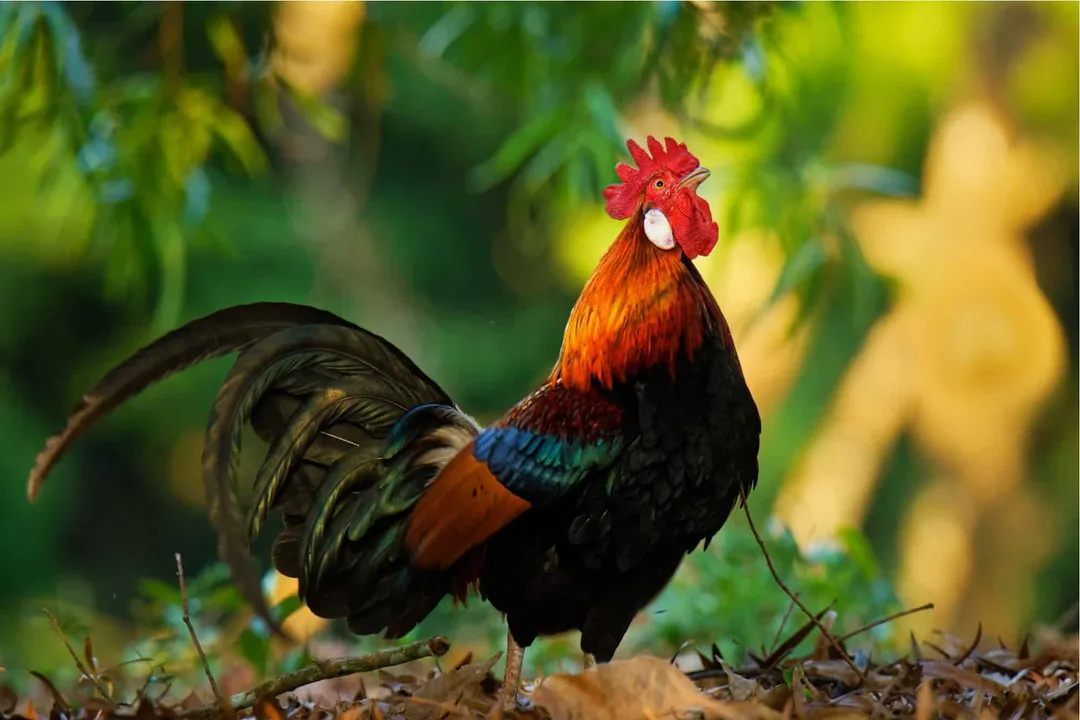
The count of recognized wild junglefowl species, the direct ancestors of the domestic chicken, comes down to a precise number: four. These four distinct species belong to the genus Gallus and represent the foundation upon which the vast array of domestic fowl across the globe has been built. [1] While many people picture a single "jungle fowl" when they think of the wild bird, ornithologists recognize this quartet, each possessing unique characteristics and geographical ranges. Understanding how many there are requires a closer look at each one, as they are not merely variations of the same bird.
# Four Species Found
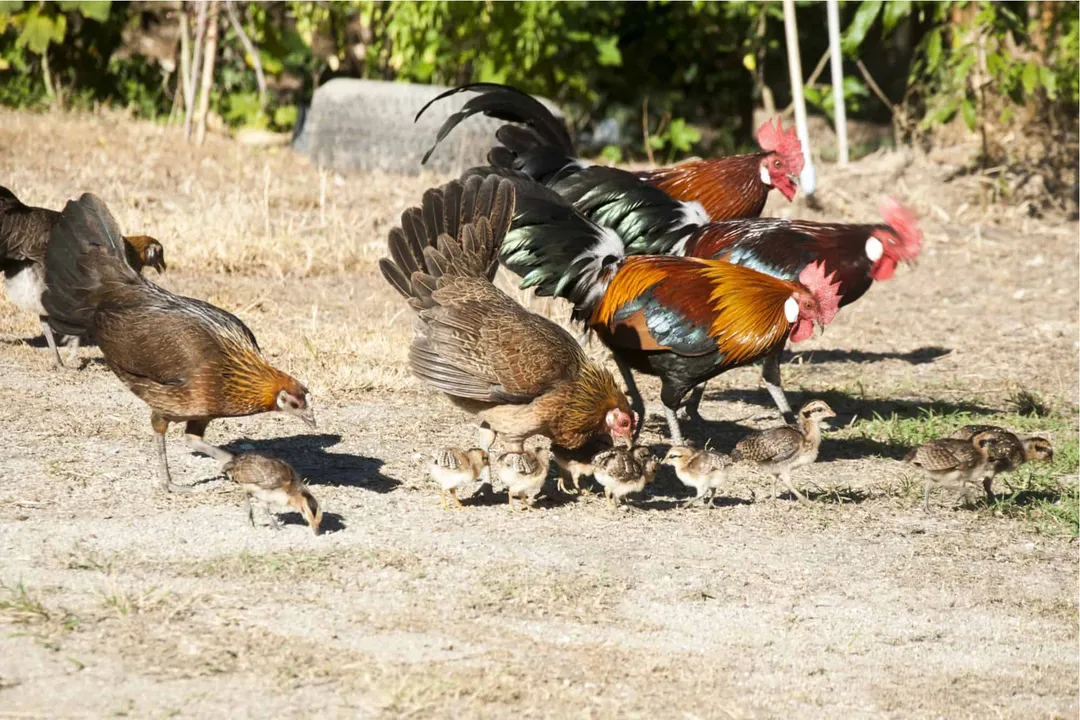
The four extant species of junglefowl are the Red Junglefowl (Gallus gallus), the Grey Junglefowl (Gallus sonneratii), the Green Junglefowl (Gallus varius), and the Ceylon Junglefowl (Gallus lafayettii). [1] Each species holds its own place in the avian classification and exhibits specific traits that differentiate it from the others, though they share a common heritage and evolutionary proximity to our common barnyard bird. The Red Junglefowl is arguably the most famous, given its direct role in poultry domestication, but the other three are equally fascinating subjects of study in evolutionary biology and field observation. [8]
# Red Ancestor
The Red Junglefowl (Gallus gallus) is widespread across South and Southeast Asia, making it the species whose range overlaps most significantly with human civilization and historical domestication events. [1] It is widely accepted that this species is the principal ancestor of nearly all domestic chickens worldwide, though evidence suggests some introgression from other junglefowl species may have occurred during the long process of domestication. [8] The male Red Junglefowl is instantly recognizable with its brilliant, flowing plumage, vibrant red or orange comb, and impressive tail feathers, mirroring the general archetype of a rooster.
When comparing the wild Red Junglefowl to its domestic descendants, the difference in behavioral specialization is striking. The wild bird must constantly navigate predator avoidance, foraging efficiency in dense undergrowth, and successful mating displays within a highly competitive environment, leading to peak physical condition and keen awareness. [8] In contrast, many modern domestic breeds have traded that intense, life-or-death fitness for traits like increased egg production or specific body sizes, a testament to the intense selective pressure applied by humans over millennia.
# Grey Junglefowl

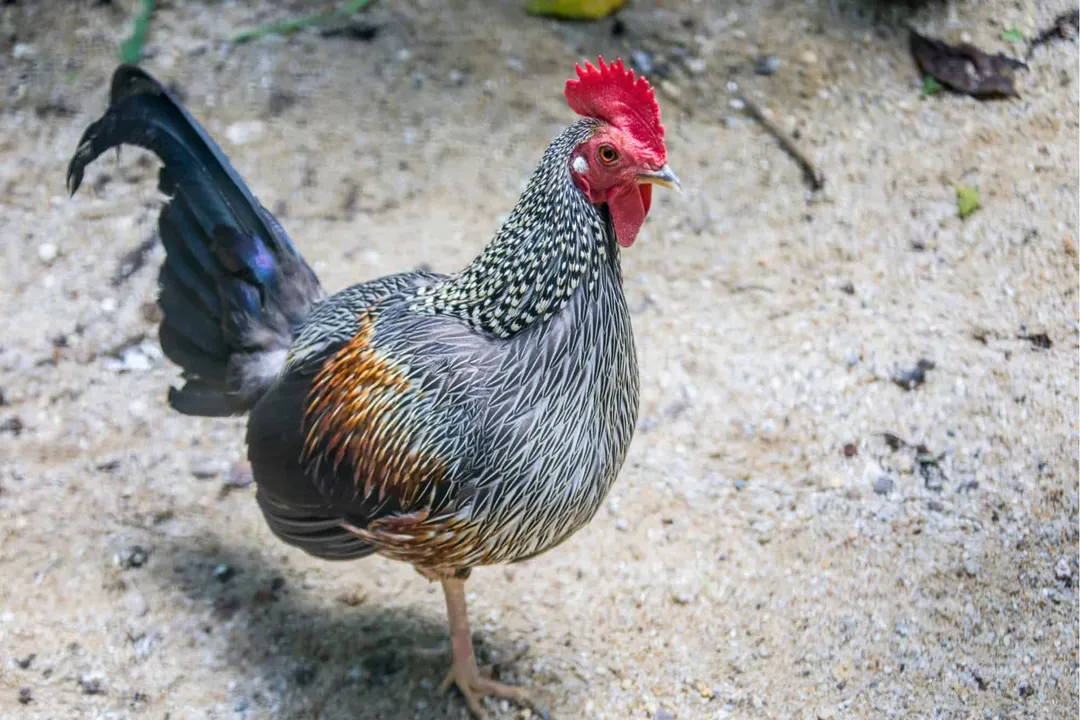
Moving west in terms of geographical recognition, the Grey Junglefowl (Gallus sonneratii) is native to India. [1] This species presents a somewhat more subdued, though still magnificent, appearance compared to its red cousin. The most distinctive feature of the male Grey Junglefowl is the hackle feathers around its neck. These feathers are black, tipped with a bright, waxy, yellow or golden spot, creating a dazzling, scaled look when the bird moves. [1] This unique genetic trait, the yellow shaft, is highly sought after in ornamental poultry breeding, demonstrating how features from wild species are selectively incorporated into domestic lines.
# Green Junglefowl Details
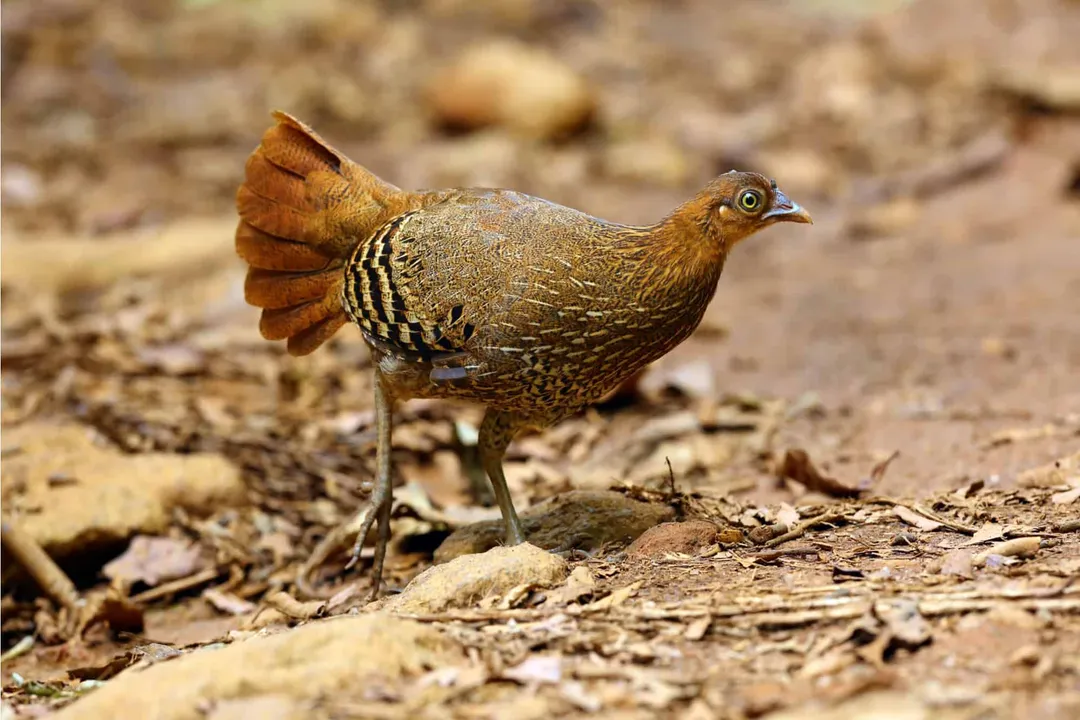
The Green Junglefowl (Gallus varius), sometimes referred to as the Spangled or Javan Junglefowl, is distinguished by its iridescent green and blue-black plumage, particularly noticeable in the male. [3][5] Unlike the other three species, G. varius is known to have a blue or purple comb and wattles, rather than the typical red associated with chickens and other junglefowl species. [1] This species is primarily found on the islands of Java, Lombok, and Sulawesi in Indonesia. [1] Its appearance is often considered one of the most visually stunning among the Gallus genus, easily captivating bird watchers and naturalists who spot its vibrant colors in the understory. [5]
# Island Bird
The final member of the quartet is the Ceylon Junglefowl (Gallus lafayettii), which has a very restricted range, being endemic solely to Sri Lanka (formerly Ceylon). [1] As an island species, its evolutionary trajectory has been isolated, which often leads to unique adaptations or a genetic bottleneck when compared to the more widespread mainland species like the Red Junglefowl. [1] The male possesses a distinctive yellow or orange wattle, setting it apart from the red or blue-tinged wattles seen in its relatives. [1] Protecting this species becomes particularly important because its entire global population is confined to a single island ecosystem, making it vulnerable to localized threats.
# Summary Comparison
To better illustrate the differences between these four distinct wild birds, it is helpful to summarize their identifying traits and locations. While all are ground-dwelling forest birds, their visual markers are clear differentiators for field identification. [1]
| Species Name | Scientific Name | Noteworthy Feature | Primary Range |
|---|---|---|---|
| Red Junglefowl | Gallus gallus | Classic "rooster" appearance; primary ancestor | South/Southeast Asia |
| Grey Junglefowl | Gallus sonneratii | Yellow/golden tips on neck hackle feathers | India |
| Green Junglefowl | Gallus varius | Iridescent green/blue-black plumage; blue comb | Java, Lombok, Sulawesi |
| Ceylon Junglefowl | Gallus lafayettii | Yellow/orange wattles; endemic confinement | Sri Lanka |
This table emphasizes that while the basic body plan remains constant—a medium-sized galliform bird—the evolutionary divergence has created clear, identifiable variations across Asia. [1]
# Evolutionary Context
The existence of these four species provides a fascinating case study in avian evolution and domestication history. While Gallus gallus provides the foundation for the modern chicken (Gallus gallus domesticus), genetic studies have indicated that there was likely hybridization with other species, possibly the Grey Junglefowl, during early domestication events in Southeast Asia. [8] This mixing of genes contributed to the diversity we see in domestic fowl today, suggesting that the "pure" wild lineage might be slightly more complex than a simple one-to-one transfer. [1]
Furthermore, the fact that the junglefowl remain wild today—retaining their wariness and natural behaviors—offers researchers an invaluable living model for studying the evolutionary divergence between wild ancestors and highly specialized domesticated descendants. Observing their social structures and territorial defenses in their native habitat, away from human interaction, gives us clues about the instincts that still exist, however buried, in our backyard flocks. [4] The continued presence of these four wild populations underscores the biodiversity of the Asian tropical forest ecosystem that fostered them.
#Videos
Jungle Fowl Facts: the WILD CHICKEN?! Animal Fact Files - YouTube
The Evolution and Biology of Junglefowl| The Origins of Domestic ...
Related Questions
#Citations
Junglefowl - Wikipedia
Jungle Fowl Facts: the WILD CHICKEN?! Animal Fact Files - YouTube
Wild green junglefowl, one of four species of wild jungle fowl, also ...
Don't Count Your Chickens... - Laura Erickson's For the Birds
The Origins of Chickens and their Junglefowl Ancestors - Facebook
Junglefowl Bird Facts - A-Z Animals
Red Junglefowl - WildArt.Works | Wildlife Photographer