How fast could terror birds run?
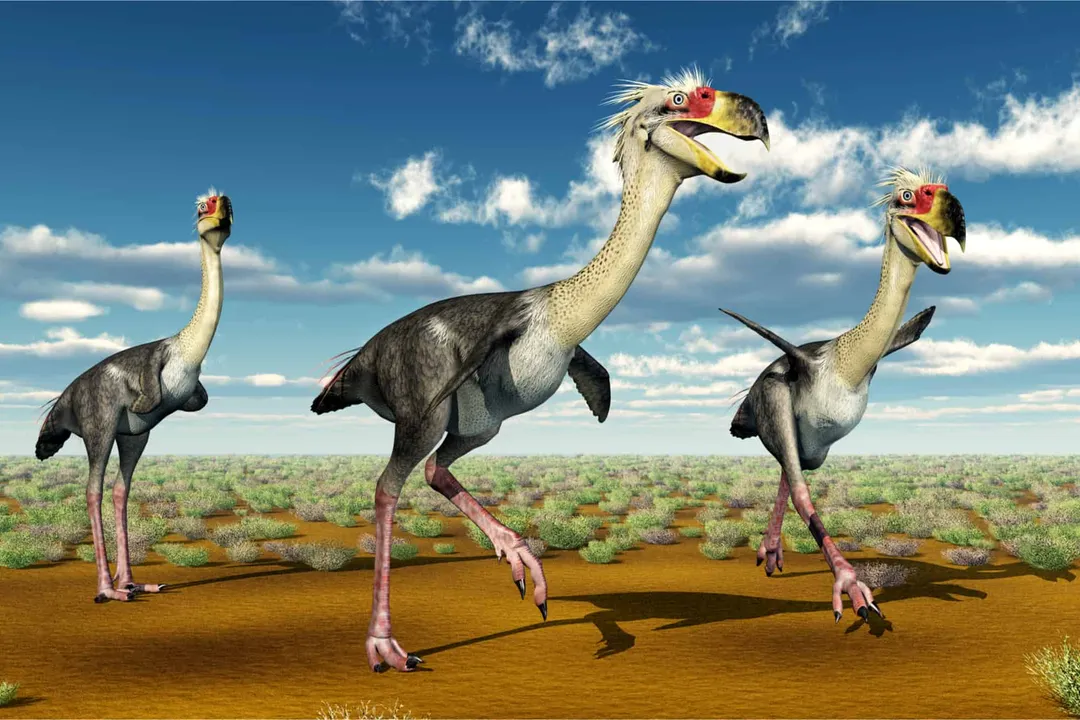
The terror birds, members of the extinct family Phorusrhacidae, were among the most formidable terrestrial predators to stalk the Cenozoic landscapes of South America for tens of millions of years. [1] These creatures, sometimes reaching heights near ten feet, possessed enormous, hooked beaks that were clearly adapted for dealing lethal, powerful blows to prey. [5][1] While their skull structure suggests a terrifying killing mechanism, the key question for understanding their predatory success—and what separated them from modern avian predators—centers on their locomotion: just how fast could these giants run?
# Anatomy Clues
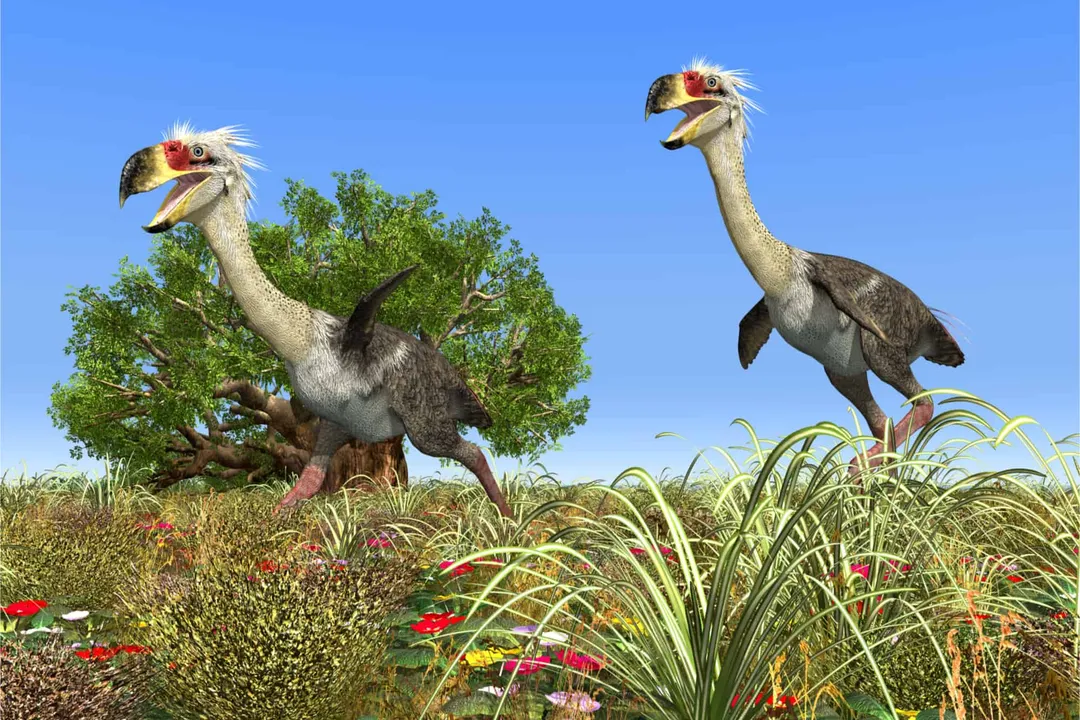
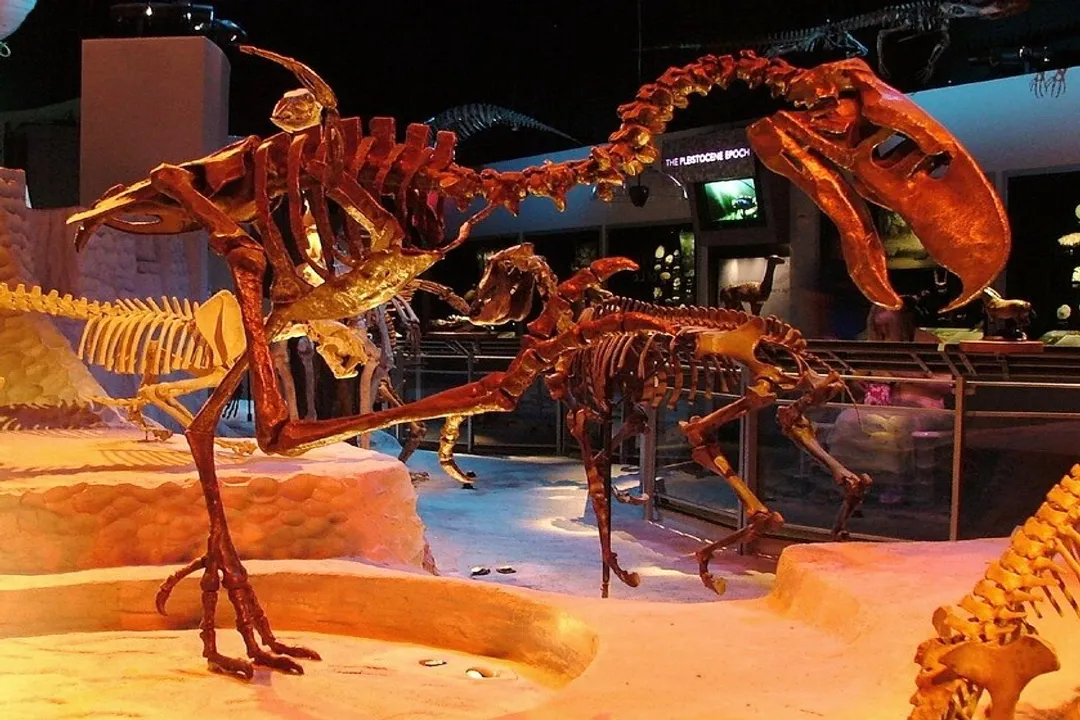
The skeletal structure of the terror birds provides the clearest indication of their speed potential. Paleontologists have long noted their adaptations for efficient forward movement. [1] Unlike modern flightless birds that might rely on a slightly more shuffling gait, Phorusrhacidae possessed extremely long legs relative to their body size. [1]
Their leg bones, particularly the tibiotarsus and tarsometatarsus, suggest a long stride length. [1] Furthermore, their feet were relatively narrow, lacking the broad, splayed base found in many slower, heavy-bodied animals. [1] This morphology strongly points toward a cursorial lifestyle, meaning they were built for running rather than walking or short bursts of speed followed by long rests. [1] This adaptation is similar to that seen in modern ratites like ostriches, which are known for their exceptional sustained running abilities. [3]
# Speed Estimates
Determining the exact top speed of an extinct animal based solely on fossilized bone structure is inherently challenging, leading to a range of estimates in scientific discussions. [2] Biomechanical modeling, which simulates how muscle and tendon attachments could function based on bone structure, provides the basis for these educated guesses. [2]
Some popular accounts suggest these birds could easily outpace any human runner. [9] When scientists model the potential speed based on the long leg structure, figures often fall into a range that would make them extremely formidable pursuit predators. [2][4] For comparison, a top human sprinter might briefly hit speeds nearing 28 mph (about 45 km/h), while the modern ostrich, the fastest bird on land, can sustain speeds closer to 43 mph (70 km/h). [9][3] The estimates for the larger terror birds often place them within this upper tier of terrestrial speed, suggesting they were built for covering ground quickly when necessary. [2]
However, not all research points exclusively toward them being pure pursuit hunters. Some analyses of their anatomy and environment suggest that while they were certainly capable runners, their primary hunting style might have been more complex than simply chasing prey over long distances. [4] The sheer bulk of some of the largest species would also impose physical limitations on how quickly they could accelerate or maintain their absolute top speed compared to lighter, more gracile birds. [2]
# Hunting Tactics
The debate over speed ties directly into their presumed hunting methods. If terror birds were capable of speeds rivaling large mammalian runners of the time, they likely engaged in pursuit predation, perhaps targeting slow-moving herbivores or young individuals. [4] The massive bill would then serve not just for striking, but for efficiently dispatching the prey once caught.
Yet, the bulk of a terror bird—some weighing hundreds of pounds—presents a biomechanical challenge for sustained high-speed chases typical of modern wolves or cheetahs. It is entirely possible that their running ability was optimized for acceleration and covering distances between ambush sites, rather than maintaining maximum velocity for miles. [4] They might have used cover or terrain features to close a gap quickly before using their enormous beaks to deliver a fatal strike, minimizing the need for an extended, energy-draining sprint. [1]
# Contextualizing Speed
To better appreciate the speed of a terror bird, it helps to compare it to other extinct and extant fauna. Modern large terrestrial birds like the emu or ostrich have specialized their entire physiology for speed and endurance on open plains. [3] The terror birds occupied a niche where they were the apex terrestrial predator in ecosystems that were perhaps less dominated by large, fast-running mammals than modern African savannas. [1]
Consider this: If a large terror bird could achieve 35 mph, it would have been significantly faster than most of the prehistoric South American mammals it shared the landscape with, which generally relied more on stealth or herd defense than sheer velocity. [4] This speed advantage would have granted them an unparalleled ability to select targets in mixed environments.
If we were to assign a specific biomechanical maximum based on the best-preserved limb structures, imagining a 6-foot-tall species like Mesembriornis running across open scrubland, its stride length, likely optimized for efficiency, suggests it could cover ground at a pace that would exhaust nearly any contemporaneous mammal in a short race. [2]
One interesting consideration when interpreting these skeletal estimates is the environmental context. If a terror bird evolved in a region characterized by rough, broken terrain or dense woodlands, its "top speed" would be the theoretical maximum achieved on a flat, ideal surface. In reality, its functional average speed during a hunt would be significantly lower, favoring stability and maneuverability over pure velocity, which is a trade-off modern flightless runners also face in varied environments. [3] The fossil record doesn't specify the exact geography for every species, meaning the true answer to "how fast" depends heavily on which terror bird and which ecosystem we are considering. [1]
Another analytical angle involves the energy cost. An animal as massive as the largest Phorusrhacidae species required an immense caloric intake to fuel its lifestyle. [5] Maintaining a high running speed is metabolically expensive. Therefore, evolutionary pressure likely favored a speed that was efficient for catching typical prey, rather than simply the highest speed mechanically possible. This suggests their preferred hunting pace might have been closer to that of a fast-moving human or a large dog—fast enough to surprise and overtake, but not so fast as to burn out before the kill was secured. [2] This points toward sustained moderate speed, punctuated by explosive acceleration, rather than the prolonged marathon running of an ostrich.

# Final Velocity
While a single, definitive number remains elusive and dependent on the specific species and the modeling technique used, [2] the evidence overwhelmingly paints a picture of a highly capable runner, not a lumbering giant. The terror birds were built for power and speed, tools necessary for an apex predator without the benefit of flight or opposable thumbs. [1] Their running prowess was certainly a defining feature that allowed them to dominate their ecological niche for an extensive period before they eventually vanished from the fossil record. [1][5]
Related Questions
#Citations
Phorusrhacidae - Wikipedia
Terror birds on the run: a mechanical model to estimate its maximum ...
Terror Bird Vs. Modern Bird - National Audubon Society
Were terror birds fast-running pursuit hunters or ambush hunters?
Fast and furious life of the terror bird | Science | The Guardian
These birds ruled over the Age of Terror, these are the Terror Birds ...
Terror Bird | Prehistoric Park Wiki - Fandom
This "Terror Bird" Dinosaur Ran Faster Than Any Human - A-Z Animals