How can you identify a khapra beetle?
The challenge of finding the Khapra beetle, Trogoderma granarium, lies in its unassuming size and the fact that many native insects share its general appearance, leading to costly misidentifications or missed outbreaks. This pest is one of the world’s most destructive stored product insects, capable of surviving in conditions where other pests might perish, making accurate identification an immediate priority for anyone handling bulk commodities or stored food items. Getting the identification right the first time can mean the difference between a minor containment effort and a major quarantine response.
# Adult Beetle Shape
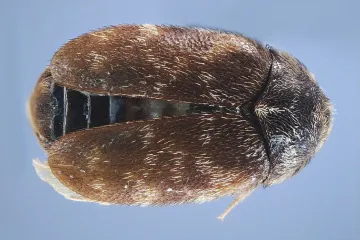
When you encounter a small, brownish beetle in stored grain or dried food products, the first thing to note is the overall shape and size. Adult Khapra beetles are quite small, typically measuring between 3 to 5 millimeters in length. Their body shape is generally described as oval or elongated oval. In terms of coloration, they present a somewhat drab palette, ranging from light to dark brown, and sometimes appearing almost black.
A key feature often mentioned, though sometimes subtle, is the presence of a fine, reddish-brown fuzz or dense, short hairs covering the body. This fuzz can make the beetle appear dull rather than shiny, which is a helpful differentiator against some other smooth-shelled pests. It is important to note that males and females look very similar, so sexing the specimen in the field is usually not practical or necessary for initial identification. The antennae, if visible, are short and terminate in a characteristic three-segmented club. Considering that an adult Khapra beetle is roughly the size of a large sesame seed, its physical characteristics must be scrutinized closely, especially if you find them in an area where they are not supposed to be.
# Larval Appearance
While the adult beetle is the stage that flies and spreads, the larva is the most damaging stage of the Khapra beetle life cycle. If you are inspecting materials like grain or packaged foods, you are often more likely to encounter these small, active crawlers than the adults. Like the adults, the larvae are hairy, but this feature is often more pronounced and easier to observe on the crawler stage.
The larvae are typically colored light brown, dark brown, or reddish-brown. The most distinctive feature of the larva, which an experienced entomologist looks for, is the arrangement of long, stiff hairs or bristles. These hairs are particularly noticeable toward the rear end of the body. Because they are active feeders and excellent hiders, finding these hairy larvae within the matrix of the stored product—perhaps deep in a pile of dried beans or inside a dusty crevice in packaging—is a strong warning sign.
# Microscopic Confirmation
The primary difficulty in identifying the Khapra beetle in North America stems from its close resemblance to several native Trogoderma species, such as Trogoderma ornatum or Trogoderma inclusum. Simply stating "it is small and brown and hairy" is insufficient for regulatory confirmation, as many non-invasive dermestid beetles fit that general description.
Distinguishing the Khapra beetle from its native cousins often requires examining specific microscopic features, which is why specimens suspected of being T. granarium must be routed to official diagnostic laboratories. For instance, while both native and invasive species possess body hairs, the setae structure and arrangement are definitive. Furthermore, native Trogoderma species often exhibit distinct patterns or lighter transverse bands across their wing covers (elytra), markings that are typically absent or much less defined on the invasive Khapra beetle. The structure of the head capsule and the mouthparts can also provide crucial clues that only high magnification can reveal.
One helpful, though not entirely conclusive, field check involves looking at the overall uniformity. If you find several specimens that are uniformly drab brown, lacking any obvious light or dark striping or speckling on the wing covers, you should treat the sample with suspicion, understanding that a conclusive ID requires expert analysis.
# Search Context
Where you find the suspect insect dramatically affects how seriously you should take the identification. The Khapra beetle is an external feeder that primarily targets dry plant products, especially cereals, dried beans, seeds, and processed food products. They are highly adapted to survive in low-moisture environments and can remain dormant for long periods if conditions are unfavorable.
When searching, focus your attention on areas where dust and debris accumulate, as larvae thrive in these protected zones. Look in the seams of burlap sacks, under labels on containers, along the edges of pallets, or in the gaps between stacked bags of commodities. Because the larvae hide so effectively, detecting them often means physically examining packaging and shipping containers, not just the commodity itself. In a storage facility, paying close attention to the first few feet adjacent to a known infested area is critical, as these beetles do not fly long distances but can easily hitch rides on objects being moved. If you find larvae or adults in an area where no dry goods are stored—say, in the crack of a concrete floor near a loading dock—it suggests they may have emerged from contaminated packaging or transport materials. This observation often points toward the entry pathway being external transport rather than internal production failure.
# Initial Screening Steps
For anyone dealing with large volumes of susceptible material, developing a standardized protocol for suspicious findings builds institutional knowledge and trust in the process. While waiting for official confirmation, the following checklist can serve as an immediate triage guide:
- Isolate and Protect: If you find suspect beetles, immediately isolate the affected product or area if possible. Do not attempt to clean up thoroughly yet, as this destroys critical evidence.
- Collect Multiple Life Stages: Aim to collect both adult beetles and any larvae or shed larval skins (exuviae) you can find. The cast skins are often more numerous than the living larvae and are excellent clues that a population has been developing in that spot. Finding a concentration of these dusty, hairy skins in a tight crevice is a more reliable indicator than finding one or two stray adults.
- Document Location and Context: Take clear photographs, noting the exact location (e.g., "Bottom layer of pallet 4, North wall of Warehouse B"). Record what the beetle was found in or near—was it spilled grain, discarded packing straw, or an empty container?. This contextual data is invaluable for surveyors trying to trace the source.
- Preservation: Place specimens in a secure container, preferably with a small amount of the infested material, or kill them using high heat or freezing, then place them in alcohol or a dry, sealed container. Do not use household pesticides, as residues can interfere with laboratory identification.
Remember that the Khapra beetle is a prohibited pest in many regions, meaning its confirmed presence triggers mandatory regulatory responses regarding quarantine, treatment, and destruction of contaminated material. This high regulatory consequence underscores why moving beyond simple observation to proper collection and submission, as detailed in official taxonomic guidance, is non-negotiable. If you find an insect matching the general description—small, dull brown, and hairy, especially among grain residues—assume the worst until proven otherwise by experts who can examine the defining microscopic structures.
Related Questions
#Citations
Khapra Beetle, Trogoderma granarium Everts (Insecta: Coleoptera
[PDF] Khapra Beetle Program Manual - usda aphis
Khapra beetle bulletin - DAFF
Khapra beetle : Trogoderma granarium - Dermestidae (Skin beetle)
[PDF] National Khapra Beetle Survey, Taxonomic, and Specimen Routing ...
Khapra Beetle - Texas Invasive Species Institute
Khapra Beetle - Veseris
Khapra beetle larva vs carpet beetle larva - Facebook
Khapra beetle - Wikipedia