What is unique about American kestrels?
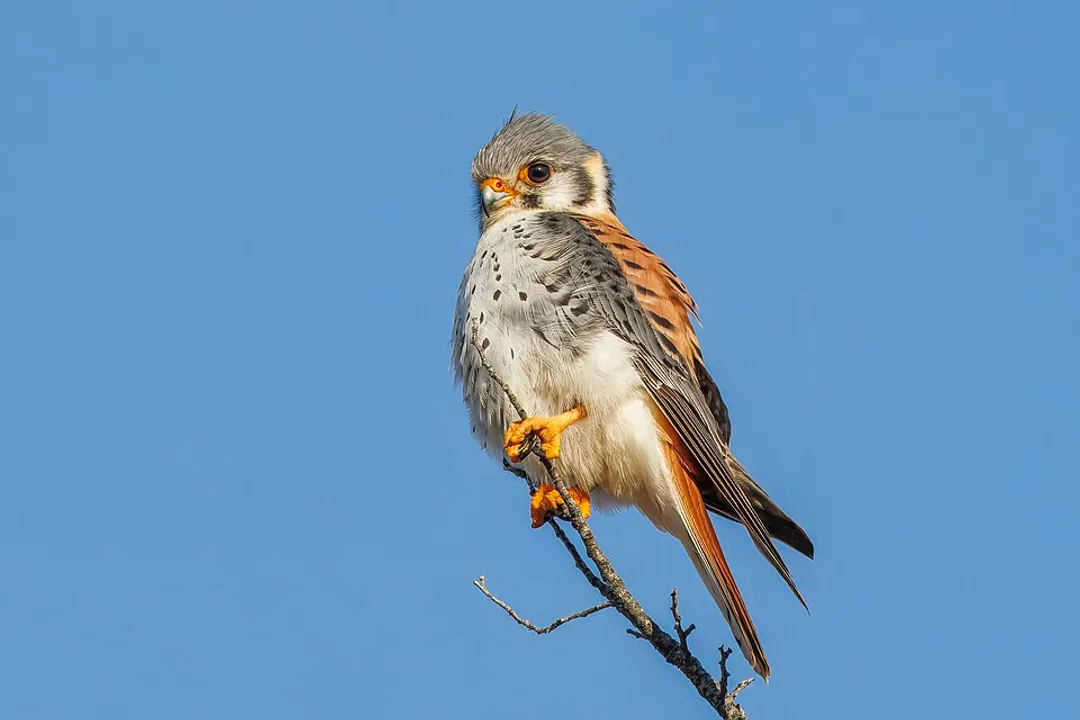
The American Kestrel stands out in the avian world, claiming the title of the smallest falcon found in North America. [2][7] This miniature raptor is widespread, ranging from Alaska down through South America, making it the most common and widely distributed falcon across the continent. [2][4][7] Despite its abundance, it possesses several striking characteristics that set it apart from its larger cousins, starting immediately with its visual presentation.
# Visual Marks

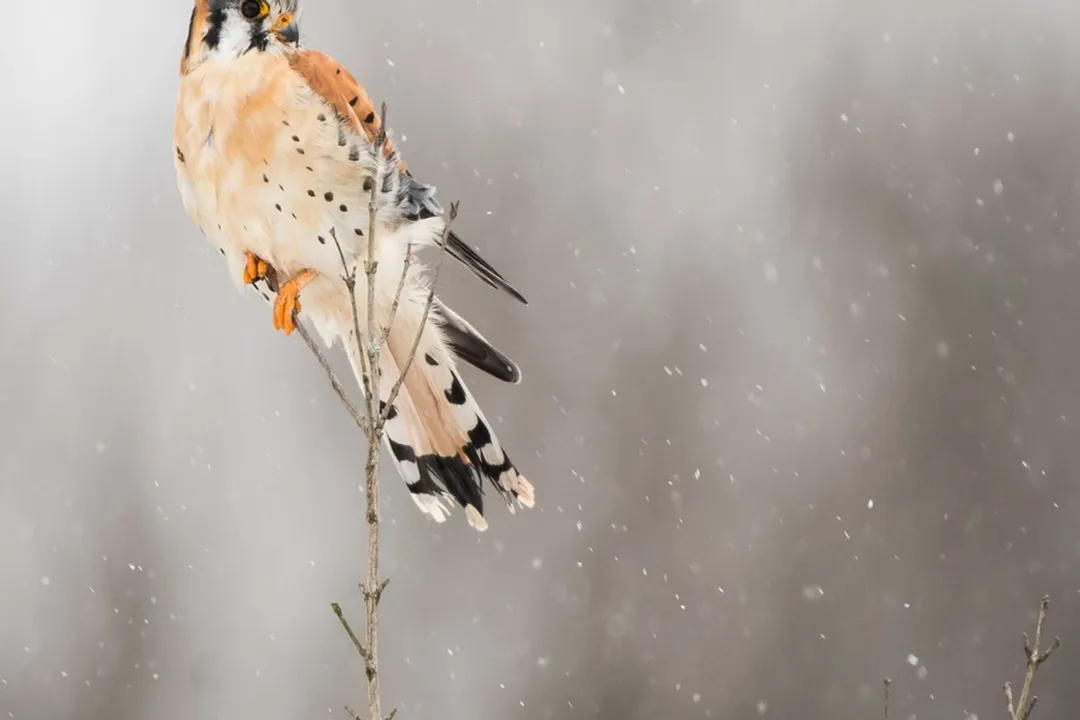
The kestrel’s plumage is remarkably vibrant, especially in the male, which showcases a beautiful contrast of slate blue-gray wings against a rusty back and tail. [2][4] The female presents a more muted, though still handsome, rusty coloration across her back and wings. [2][4] This difference between the sexes, known as sexual dimorphism, is a key identification feature. [2]
Beyond the body coloration, look closely at the face. American Kestrels feature a distinctive pattern of black markings around the eyes and cheeks that can resemble a pair of dark earrings—two bold black patches on each side of the face. [2][4] These markings are highly diagnostic for this species. Furthermore, they possess a dark streak below the eye and another vertical black mark beneath the cheek patch. [4] Their long, pointed wings and long tail are adaptations that facilitate their unique aerial behaviors, which often involve quick, darting movements through open country. [7]
# Aerial Display
Perhaps the most famous and unique behavior associated with the American Kestrel is its specialized hunting flight style. Unlike many raptors that soar or perch-hunt, the kestrel frequently exhibits a distinct hovering or "kiting" behavior. [2][4][7] While searching for prey, they hang suspended in the air over a promising patch of ground, beating their wings rapidly to maintain position against the wind. [2][7]
This aerial suspension allows them to scan the ground with extreme precision before dropping down swiftly onto their target. [7] When conditions are too windy for a true hover, they will still engage in rapid, shallow wing beats to make slow progress into the wind, often described as a stiff-winged flight. [4] Observing a kestrel hovering intently on a breezy day is an immediate giveaway to its identity, offering a visual clue about the availability of ground-dwelling prey in the immediate vicinity; if you see several kestrels displaying this behavior along a stretch of highway, it often indicates a healthy population of grasshoppers or voles in that particular field. [1][4]
# Specialized Kill

The kestrel’s diet is remarkably varied for a falcon, leaning heavily toward invertebrates, especially large insects, which can make up a large portion of their food intake. [2][8][9] They consume grasshoppers, beetles, and crickets, but they are opportunistic and will also target small rodents, lizards, snakes, and even small birds. [2][7][9]
This diverse diet requires a specialized tool for efficient dispatching of prey. Like other falcons, the American Kestrel is equipped with a sharp notch on the upper mandible of its beak, known as a tomial tooth. [1][7] This structure is not for tearing flesh broadly, as seen in hawks, but is used with incredible accuracy to sever the neck vertebrae of their prey, ensuring a quick kill. [1][7] This precise, sharp killing method is a hallmark of the falcon family, but it is particularly noticeable given how frequently kestrels consume large insects that require a swift, targeted strike rather than the tearing action used on larger mammals or birds by bigger raptors.
# Home Life
When it comes time to raise young, the American Kestrel displays a strong preference for pre-existing structures rather than creating its own home base. [2][7] They are cavity nesters, relying on natural holes in trees, old woodpecker excavations, or crevices in rocks or buildings. [2][4][7] Critically, they do not excavate the cavities themselves. [7]
This reliance on existing holes means that changes in mature woodland habitat or the removal of older trees that might host flicker or woodpecker nests can directly impact their reproductive success. [7] Their adaptability, however, allows them to thrive in human-modified landscapes, provided there are suitable openings. They are quite amenable to using man-made nest boxes, making them excellent subjects for backyard conservation efforts where natural nesting sites may be scarce. [7]
The male and female share incubation and chick-rearing duties, a characteristic common among many raptors, ensuring the best chance for the clutch to survive. [2] Their primary vocalization during these times, and for general communication, is a high-pitched, repeated killy-killy-killy call. [2][4]
# The Decline Mystery
Despite being the most widespread falcon across North America and often found in open fields, suburban parks, and farmland across the continent, [2][7] the American Kestrel is facing significant challenges. In many parts of its range, particularly in the East, population numbers have been declining sharply. [3][7]
This decline is concerning precisely because they are such a widespread and adaptable species, suggesting underlying issues affecting large swaths of habitat. [3] While researchers point to several potential factors, including habitat loss, changes in agricultural practices leading to fewer insects and rodents, and potentially the historical impacts of pesticides, a single definitive cause remains elusive. [3] The fact that populations in some western areas remain stable while eastern populations drop suggests a complex interaction between local land use and species survival that scientists are still working to untangle. [3]
If you are keen on helping monitor this species, a simple, high-value activity is participating in citizen science by noting the first and last date you observe a kestrel hovering in a familiar open area each season. Consistent, location-specific observation logs can provide invaluable long-term data points to track shifts in migration timing or local extirpation trends, contributing directly to the research efforts trying to understand these population dynamics. [3] This type of focused, repeatable backyard observation is often more useful to researchers than sporadic sightings far afield. [7]
# Adaptations for Survival
The kestrel's small size, while making it vulnerable to larger predators, is also part of its success, allowing it to hunt prey inaccessible to larger falcons, such as large beetles or dragonflies. [2] Their coloration also serves a purpose; while the male’s bright colors might seem like a liability, they are essential for attracting mates. [2]
Their generalist approach to habitat—using open spaces for hunting but requiring trees or structures for nesting—shows an evolutionary flexibility that has historically allowed them to thrive near human activity. [8] However, this flexibility appears to be strained by modern environmental pressures. Their ability to thrive on a diet heavily reliant on insects means that any broad-spectrum insecticide use across agricultural areas can cascade quickly up the food chain, potentially starving out the kestrels by removing their primary food source before they even switch to hunting more resilient prey like mice. [8]
The way they manage their nesting sites also speaks to their reliance on historical landscapes. A farmer who leaves a few tall, dead snags in a field edge, or who avoids clearing out old barns with suitable openings, is unknowingly providing essential infrastructure for the next generation of kestrels, even if the primary hunting ground is now a managed hayfield. [7] The difference between a kestrel pair successfully nesting and failing can often boil down to the availability of a suitably sized, abandoned woodpecker hole within a short flight of an abundant insect population. [7]
Related Questions
#Citations
Facts about American Kestrels-Buffalo Bill Center of the West
American Kestrel Overview, All About Birds, Cornell Lab of Ornithology
American Kestrel | The Peregrine Fund
American Kestrel | Audubon Field Guide
Amelia – American Kestrel | College of Veterinary Medicine
American Kestrel | Hawk Mountain Sanctuary: Learn Visit Join
American kestrel - Wikipedia
Species Spotlight - American Kestrel (U.S. National Park Service)
American Kestrel | San Diego Zoo Animals & Plants