Why do grebes generally exhibit a strong reluctance to fly when faced with a threat?
Answer
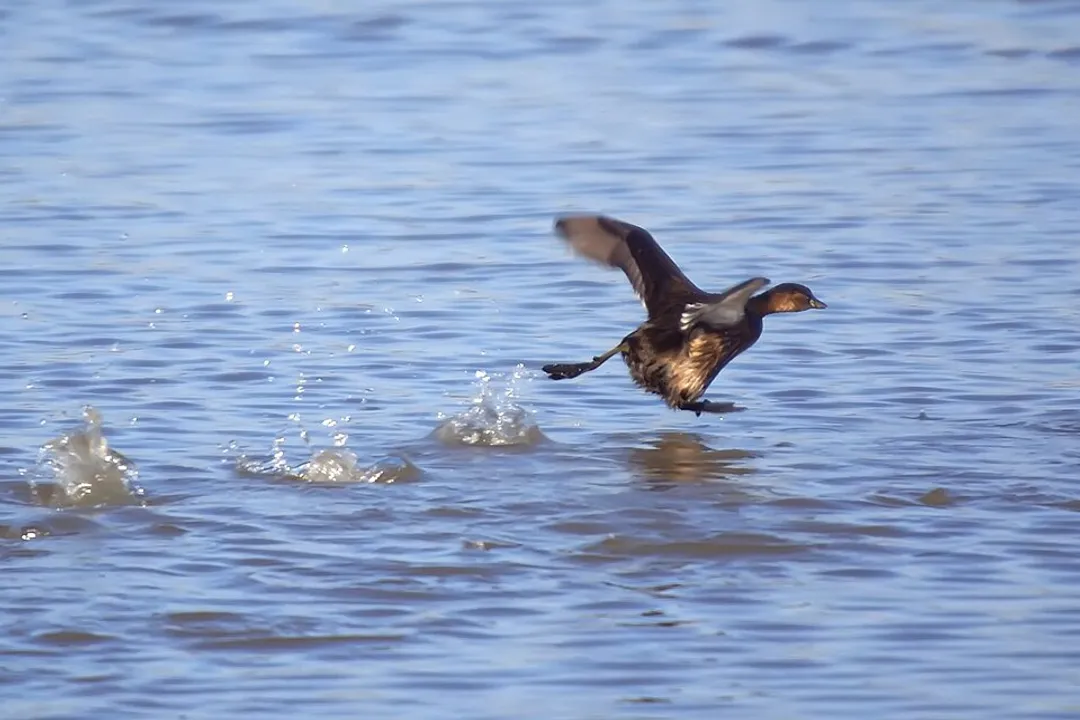
Flight is a high-energy maneuver usually reserved as a last resort.
For a bird that typically escapes danger by deep diving or camouflage, engaging in flight requires a relatively high energy expenditure, making it a secondary escape strategy.
Related Questions
What type of foot structure do grebes possess instead of fully webbed feet?Why is the extremely far back placement of grebe legs advantageous underwater?What is the core physical requirement for a grebe to successfully achieve airborne lift from a standstill?What surface must a grebe utilize to execute the running start needed for takeoff?What characteristic of grebes aids their superb diving ability by helping them submerge?Why do grebes generally exhibit a strong reluctance to fly when faced with a threat?What is the effect of the grebe's far-rearward leg positioning when it is on land?If a grebe is found grounded on land, what is often necessary before it can successfully fly again?How does the water launch mechanism allow the lobed feet to aid takeoff velocity?To which taxonomic order are grebes classified?