What unique feature defines the recovered teeth of Livyatan melvillei, excluding tusks?
Answer
They are the largest biting teeth of any known animal.
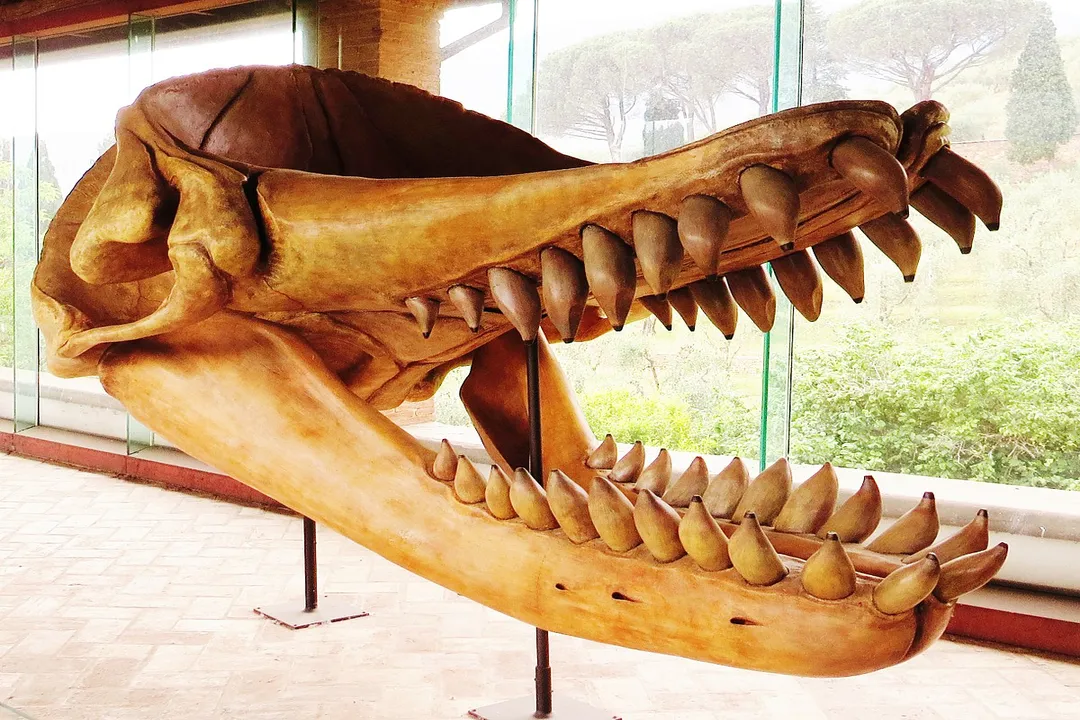
The teeth of Livyatan melvillei offer concrete, measurable evidence of its hypercarnivorous diet, contrasting with the inferred nature of its body size. These teeth are remarkable because, when tusks are excluded from the comparison set, they represent the largest biting teeth known in any animal species. This capability for tearing large flesh segments distinguishes Livyatan from its modern kin, which rely on suction feeding. The functional specialization suggests the animal used its massive jaws, capable of interlocking, to subdue and consume large prey items, such as medium-sized whales.
Related Questions
Where was the holotype fossil specimen of Livyatan melvillei discovered in 2008?What was the approximate measured length of the Livyatan melvillei holotype skull?Scaling against which extinct raptorial sperm whale yields the maximum estimated length for Livyatan?What is the approximate weight estimate corresponding to the upper-end 17.5-meter length for Livyatan?What unique feature defines the recovered teeth of Livyatan melvillei, excluding tusks?What was the calculated height of the largest Livyatan teeth recovered from the left lower jaw of the holotype specimen?How did the implied hunting strategy of Livyatan differ from its modern descendant, the sperm whale?What functional capability does the deep and wide supracranial basin of the Livyatan skull suggest?In size comparison with Otodus megalodon, how did Livyatan compare ecologically?Why is defining the absolute maximum size of Livyatan melvillei inherently statistical rather than definitive?What did the presence of a Livyatan tooth in California suggest about the genus's historical geographical range?