In size comparison with Otodus megalodon, how did Livyatan compare ecologically?
Answer
It occupied a similar ecological space, possibly leading to competition over medium-sized whales.
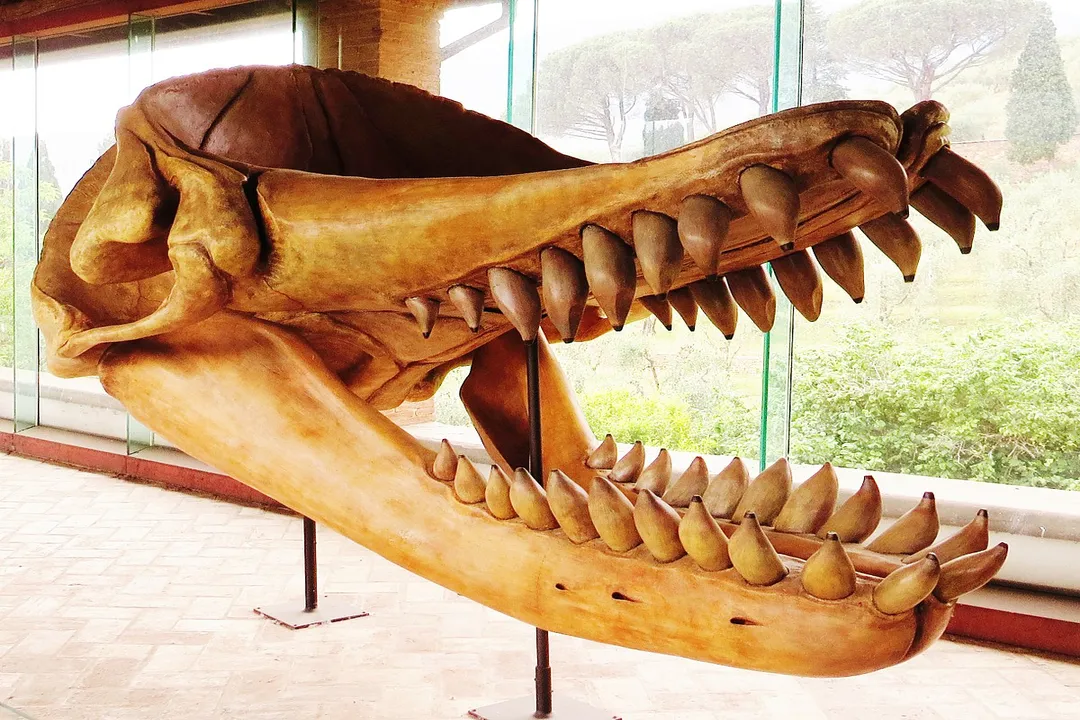
Livyatan melvillei coexisted with the contemporary apex predator, the Otodus megalodon shark, during the Miocene. In terms of sheer estimated size, Livyatan was a peer to the massive shark. Although the Megalodon likely possessed a more powerful bite force optimized for crushing bone, Livyatan’s weaponry—its massive, interlocking teeth capable of shearing—allowed it to engage in similar high-stakes predation. This overlap in size and capability strongly suggests that the two mega-predators occupied a similar ecological niche, which would have inevitably led to direct competition for shared food resources, such as medium-sized whales.
Related Questions
Where was the holotype fossil specimen of Livyatan melvillei discovered in 2008?What was the approximate measured length of the Livyatan melvillei holotype skull?Scaling against which extinct raptorial sperm whale yields the maximum estimated length for Livyatan?What is the approximate weight estimate corresponding to the upper-end 17.5-meter length for Livyatan?What unique feature defines the recovered teeth of Livyatan melvillei, excluding tusks?What was the calculated height of the largest Livyatan teeth recovered from the left lower jaw of the holotype specimen?How did the implied hunting strategy of Livyatan differ from its modern descendant, the sperm whale?What functional capability does the deep and wide supracranial basin of the Livyatan skull suggest?In size comparison with Otodus megalodon, how did Livyatan compare ecologically?Why is defining the absolute maximum size of Livyatan melvillei inherently statistical rather than definitive?What did the presence of a Livyatan tooth in California suggest about the genus's historical geographical range?