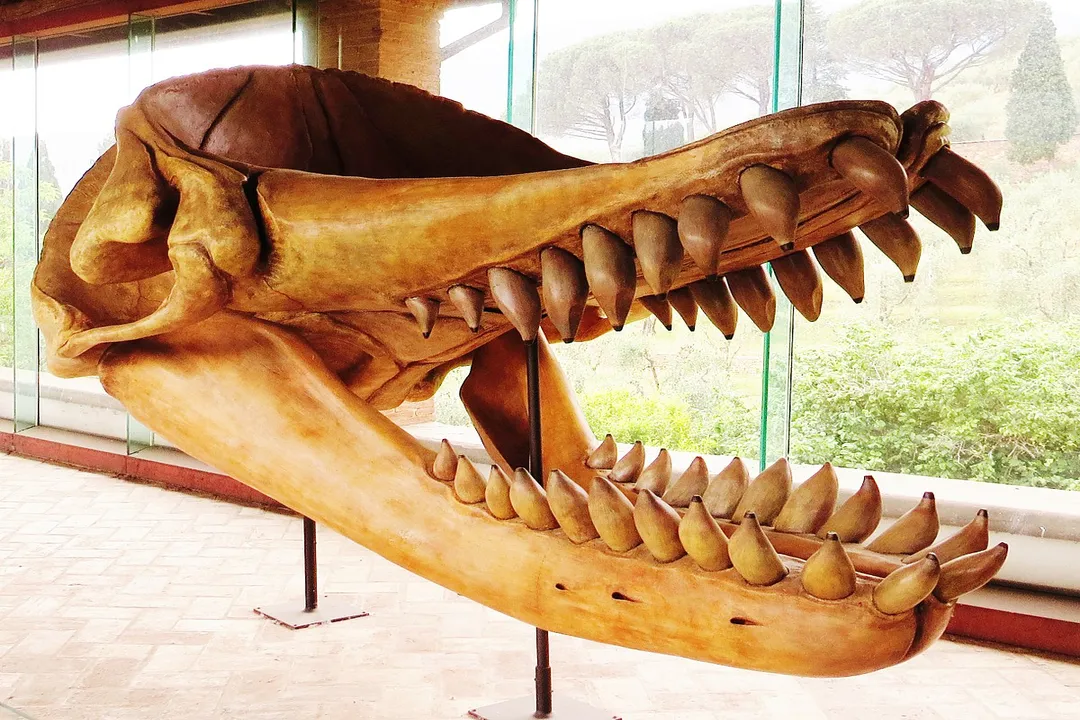
What did the presence of a Livyatan tooth in California suggest about the genus's historical geographical range?
That it may have had a global presence and was not strictly confined to the Southern Hemisphere.
Fossil evidence for Livyatan melvillei has historically pointed toward distribution across the Southern Hemisphere, with key fossils found in locations such as Chile, Argentina, South Africa, and Australia. The core species is associated with the time period around 9.9 to 8.9 million years ago in Peru. However, the discovery of a tooth in California provides critical information that extends this known range northward. The presence of the genus, or a very closely related species, in North America suggests that Livyatan's geographical distribution was likely much wider than previously hypothesized, indicating a potentially global presence rather than one strictly confined to the Southern Hemisphere.