How did the implied hunting strategy of Livyatan differ from its modern descendant, the sperm whale?
Answer
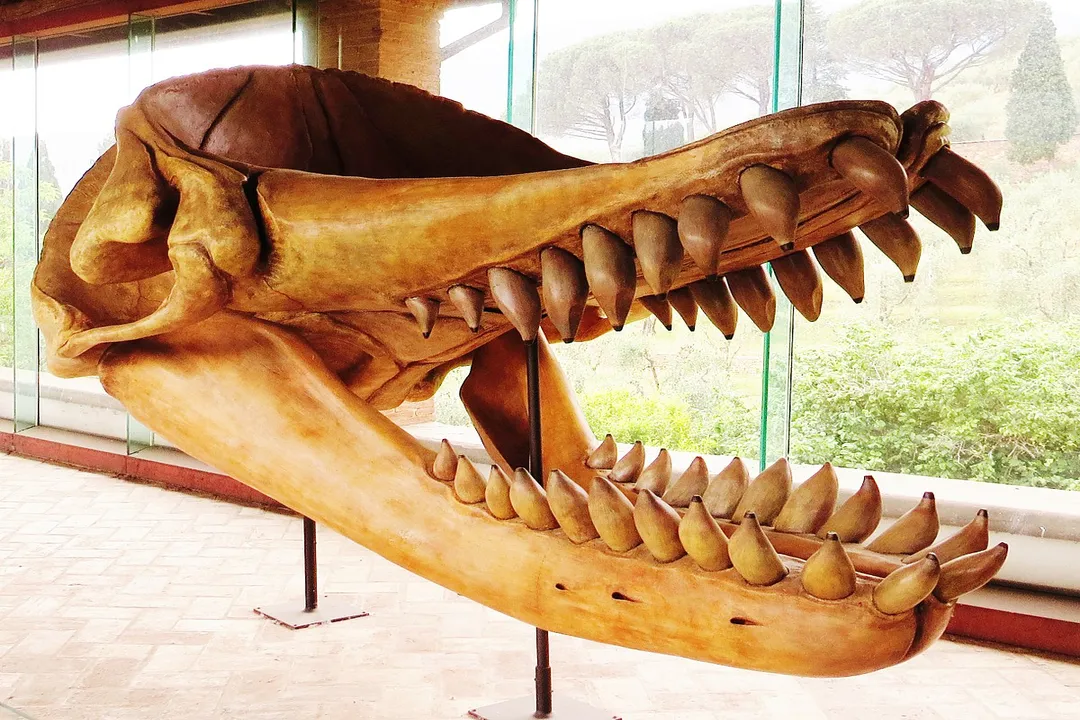
It was built as a robust, grappling predator to subdue marine megafauna like large baleen whales.
A key differentiator between Livyatan melvillei and the modern sperm whale lies in their hypothesized feeding ecology. While the modern sperm whale is recognized as a deep-diving specialist primarily focused on hunting squid, the structure of Livyatan suggests a different, more confrontational predatory lifestyle. The combination of massive, interlocking teeth designed for shearing flesh, alongside muscle attachment points implied by the skull structure, points toward an animal built to be a robust, dedicated grappling predator. This specialization indicates it likely targeted and consumed large marine megafauna, such as sizable baleen whales.
Related Questions
Where was the holotype fossil specimen of Livyatan melvillei discovered in 2008?What was the approximate measured length of the Livyatan melvillei holotype skull?Scaling against which extinct raptorial sperm whale yields the maximum estimated length for Livyatan?What is the approximate weight estimate corresponding to the upper-end 17.5-meter length for Livyatan?What unique feature defines the recovered teeth of Livyatan melvillei, excluding tusks?What was the calculated height of the largest Livyatan teeth recovered from the left lower jaw of the holotype specimen?How did the implied hunting strategy of Livyatan differ from its modern descendant, the sperm whale?What functional capability does the deep and wide supracranial basin of the Livyatan skull suggest?In size comparison with Otodus megalodon, how did Livyatan compare ecologically?Why is defining the absolute maximum size of Livyatan melvillei inherently statistical rather than definitive?What did the presence of a Livyatan tooth in California suggest about the genus's historical geographical range?