How big was the biggest Livyatan?
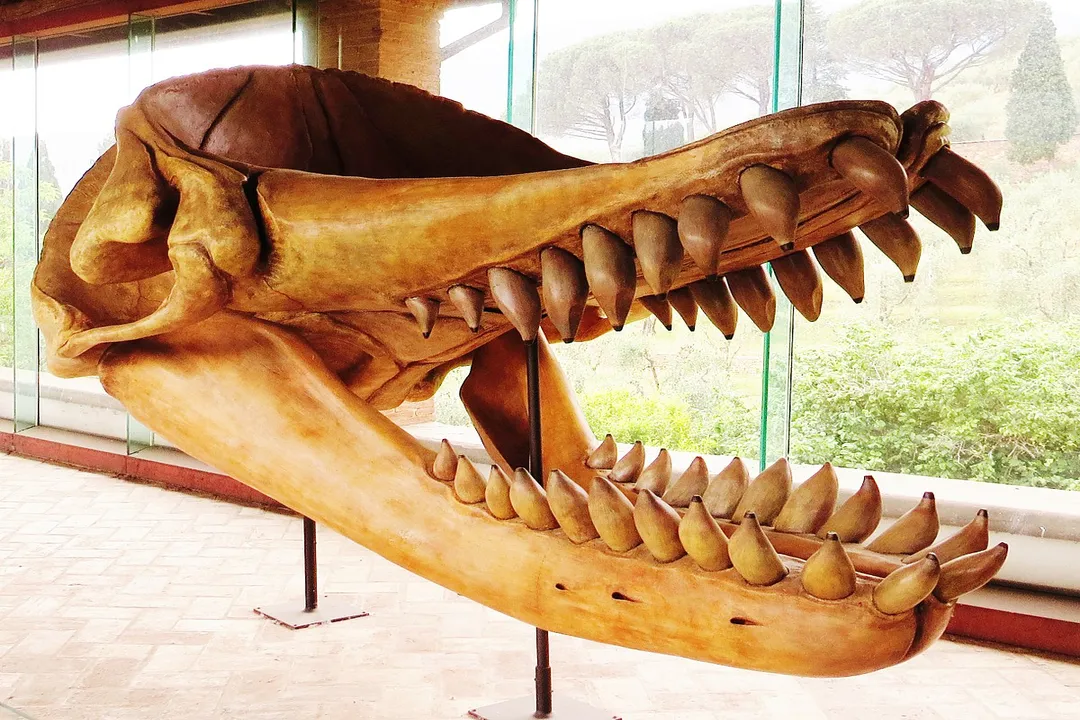
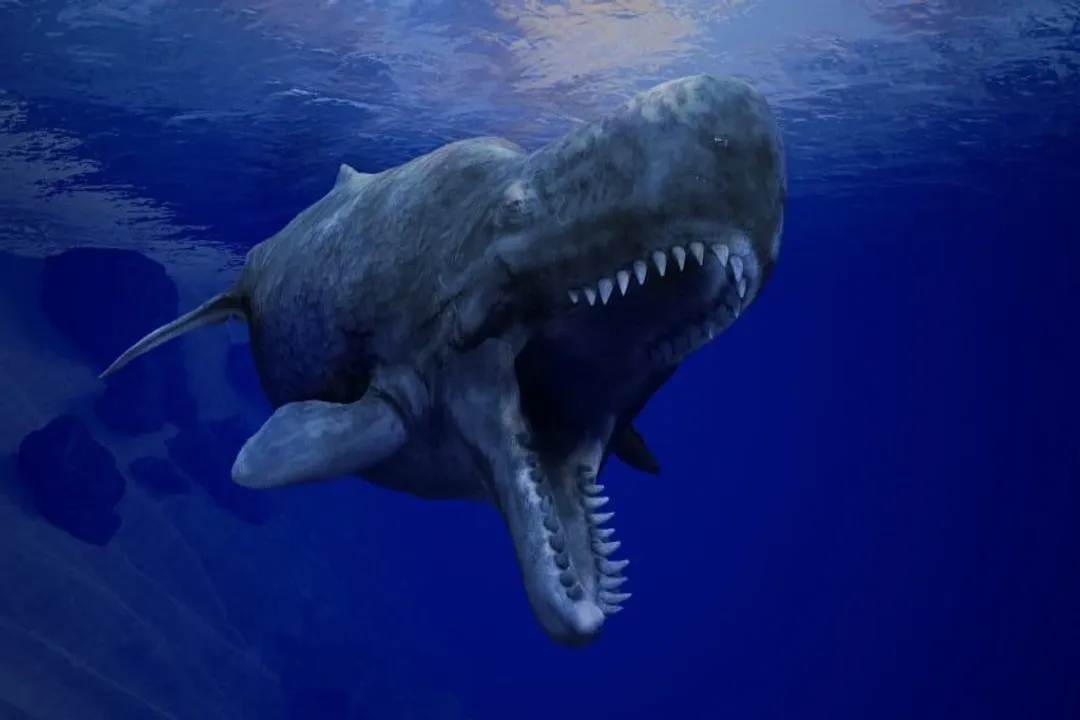
The largest prehistoric whale, Livyatan melvillei, inspires questions about its sheer scale, a subject complicated by the fact that paleontologists have only found limited fossil evidence, specifically a partially preserved skull and several teeth. [1][4] Because a complete postcranial skeleton has never been recovered, determining the absolute maximum size of this ancient predator requires careful extrapolation based on comparisons with its living relative, the modern sperm whale (Physeter macrocephalus). [4][7]
# Skull Basis
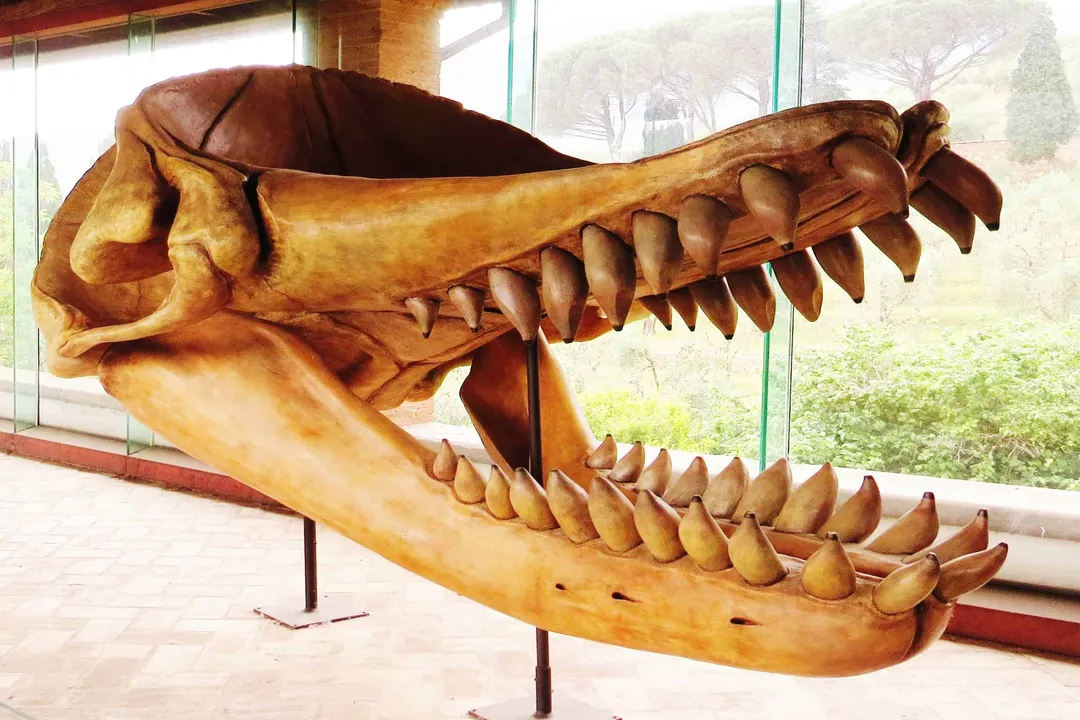
The foundation for all size estimates rests upon the holotype fossil specimen discovered in the Pisco Formation of Peru in $2008$. [3][4] This skull, impressive in its own right, measured approximately $3$ meters, or $9.8$ feet, in length. [4][7] This massive head structure, which housed the spermaceti organ, is disproportionately large, even when compared to modern sperm whales. [1][5] The structure of the skull, particularly the deep and wide supracranial basin, suggests an animal built for immense acoustic power or powerful impact. [4][5]
# Scaling Uncertainty
To move from the $3$-meter skull to an estimated total body length, scientists have employed scaling methods using both the modern sperm whale and another extinct raptorial sperm whale, Zygophyseter. [4][7] This comparative approach yields a notable range of potential maximum sizes, highlighting the limitations of the fossil record. When scaled against modern sperm whales, the lower end of the estimate suggests a length of about $13.5$ meters ($44$ feet). [4][7] Conversely, scaling using Zygophyseter pushes the maximum estimate up to $17.5$ meters ($57$ feet). [4][7] This difference of $4$ meters between the low and high estimates means that defining the "biggest" Livyatan is inherently statistical rather than definitive, dependent on which anatomical ratio proves most accurate for this extinct lineage. [4]
# Weight Estimates
Based on the upper-end length estimate of $17.5$ meters ($57$ feet), scientists have calculated a corresponding weight. This calculation places the mass of the largest known Livyatan individuals at approximately $62$ tons, or $57$ tonnes. [1][4][7] Other analyses suggest a slightly more conservative figure, estimating the whale weighed as much as $50$ tons. Regardless of the precise tonnage, this places Livyatan squarely as one of the largest known predators to have ever existed in Earth's oceans, comparable in bulk to the modern sperm whale. [4][5]
# Teeth Measure
While the body size is inferred, the teeth of Livyatan provide concrete, measurable evidence of its hypercarnivorous nature. These teeth are famous for being the largest biting teeth of any known animal, provided tusks are excluded from the comparison. [4] The largest teeth recovered from the holotype specimen, located on the left lower jaw, were calculated to be around $36.2$ centimeters ($1.2$ feet) high. [4][7] For context, this is significantly larger than the teeth of Tyrannosaurus rex. [5]
It is fascinating to consider that despite possessing the largest teeth of any known tetrapod, the estimated maximum weight of Livyatan (around $62$ tons) is similar to that of a large modern male sperm whale, which averages $16$ meters ($52$ feet) but can reach up to $20.7$ meters ($68$ feet). [4][5] This suggests that Livyatan was not necessarily a dramatically longer animal than the largest modern sperm whales—though it was certainly a significant presence—but was likely built with an entirely different purpose in mind. The sheer capacity of its jaws, capable of interlocking and shearing off large chunks of flesh, combined with the muscle attachment points suggested by the skull structure, implies a more robust and dedicated grappling predator, built to subdue and consume marine megafauna like large baleen whales, rather than the deep-diving squid hunter that its modern descendant has become. [1][4][5] This specialization in massive, functional teeth for tearing, rather than the suction feeding of its kin, is a key differentiator in understanding the animal's true dimensions of power. [5]
# Size Context
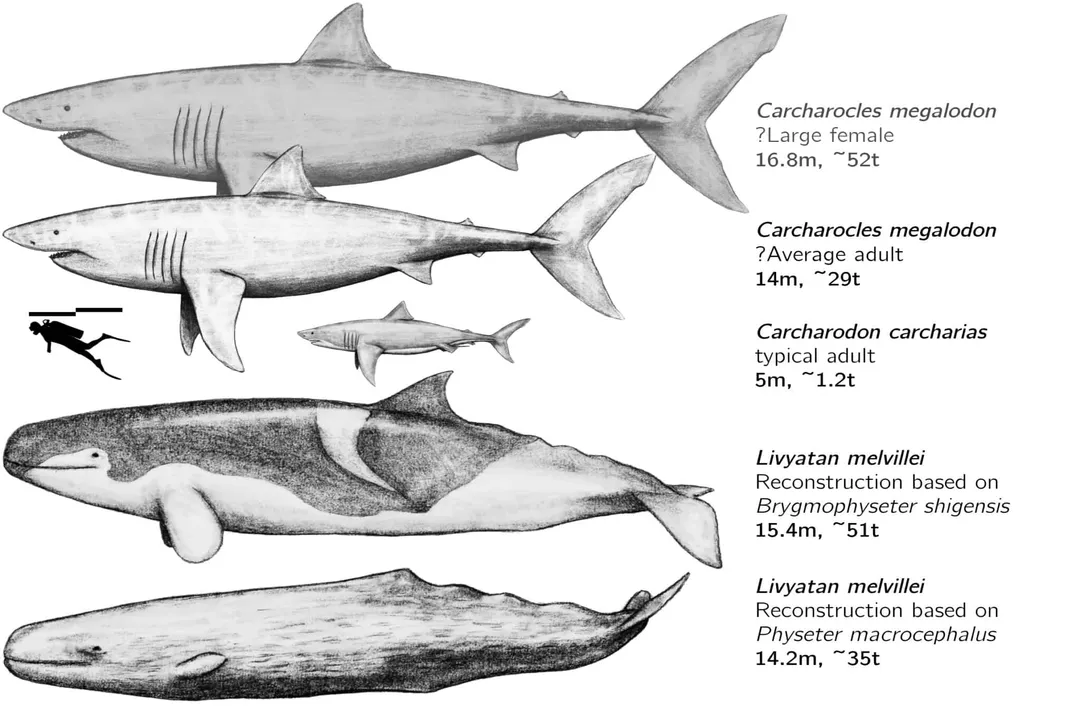
When placed alongside its contemporary apex predator, the Otodus megalodon shark, Livyatan was indeed a peer in terms of size estimates. [4][5] While Megalodon likely had a more powerful bite force, Livyatan's ability to handle struggling prey through interlocking, massive teeth meant it occupied a similar ecological space, possibly leading to competition over food resources like medium-sized whales. [1][4]
The distribution of fossils, found across the Southern Hemisphere in locations like Chile, Argentina, South Africa, and Australia, suggests that while the core species existed around $9.9$ to $8.9$ million years ago in Peru, its close relatives might have survived later and been geographically widespread. [3][4] The presence of a tooth in California suggests that the genus, or a very close relative, may have had a global presence and was not strictly confined to the Southern Hemisphere, as once hypothesized. [4]
To summarize the largest potential dimensions based on the current, though incomplete, scientific consensus, the biggest Livyatan was likely an animal approaching $17.5$ meters ($57$ feet) in length, weighing in the vicinity of $62$ tons, and armed with teeth that dwarfed nearly every other creature that has ever walked or swam on Earth. [4][7] This colossal size made it the largest known fossil sperm whale and a defining mega-predator of the Miocene seas. [4][5]
Related Questions
#Citations
Livyatan - Wikipedia
Meet Livyatan: The Hypercarnivorous Whale With Teeth Bigger ...
The Megalodon Had A Predator Too. The Livyatan!
The mouth of Livyatan is approximately six feet long and ... - Reddit
Livyatan - AlpheaPedia Wiki
Facts About Leviathan, the Giant Prehistoric Whale - ThoughtCo
Livyatan Animal Facts - †Livyatan melvillei - A-Z Animals