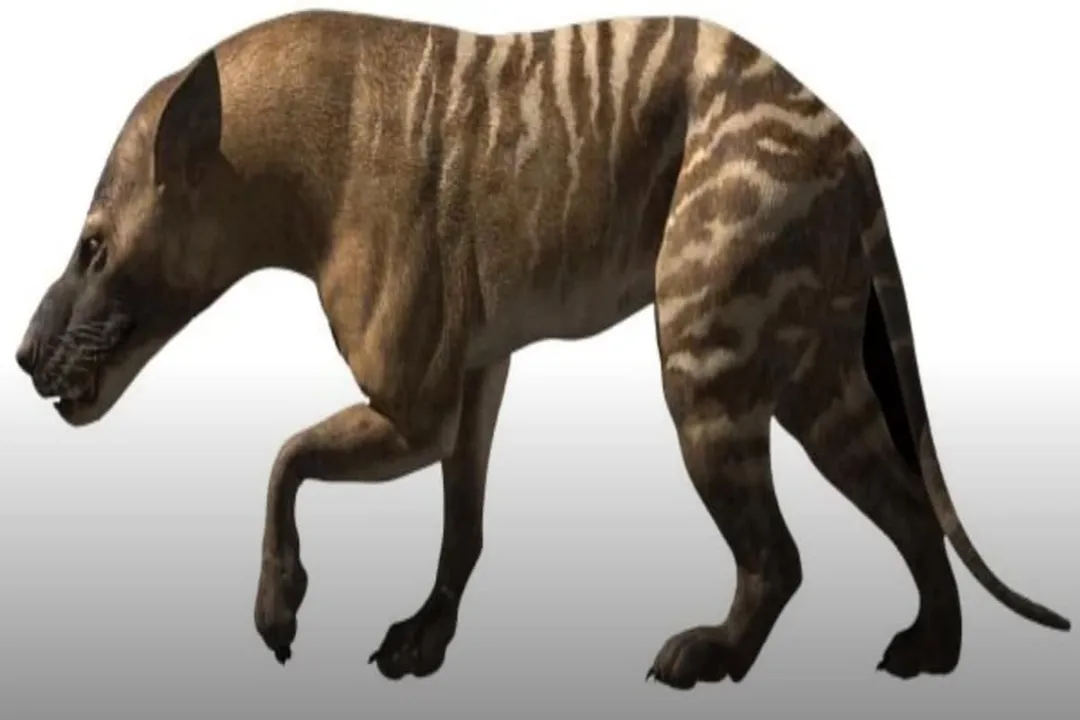
What type of stance is generally interpreted for the *Hyaenodon* limb structure, meaning it walked on its toes?
Answer
Digitigrade
Paleontologists generally interpret the limb structure as indicating a digitigrade stance, meaning the animal walked on its toes, similar to how cats and dogs walk today.
Related Questions
To which distinct mammalian order does the extinct predator *Hyaenodon* belong?During which geological epochs did *Hyaenodon* primarily roam the Earth?What hunting style was suggested by the robust physique of *Hyaenodon*?What was the primary function suggested by the specialized shearing carnassial teeth of *Hyaenodon*?What size comparison was used to describe the mass of the largest known species, *Hyaenodon gigas*?How is the skull of *Hyaenodon* described in relation to its body mass?What type of stance is generally interpreted for the *Hyaenodon* limb structure, meaning it walked on its toes?Across which continents have fossils of *Hyaenodon* been found?What was the intended function of the large canines in *Hyaenodon*?To what common modern animal size were the smallest *Hyaenodon* species comparable?Why is *Hyaenodon* often visually compared to modern hyenas despite being unrelated?What aspect of *Hyaenodon*'s physique suggests it relied on ambush or short bursts of speed rather than long chases?