What do harbour porpoises look like?
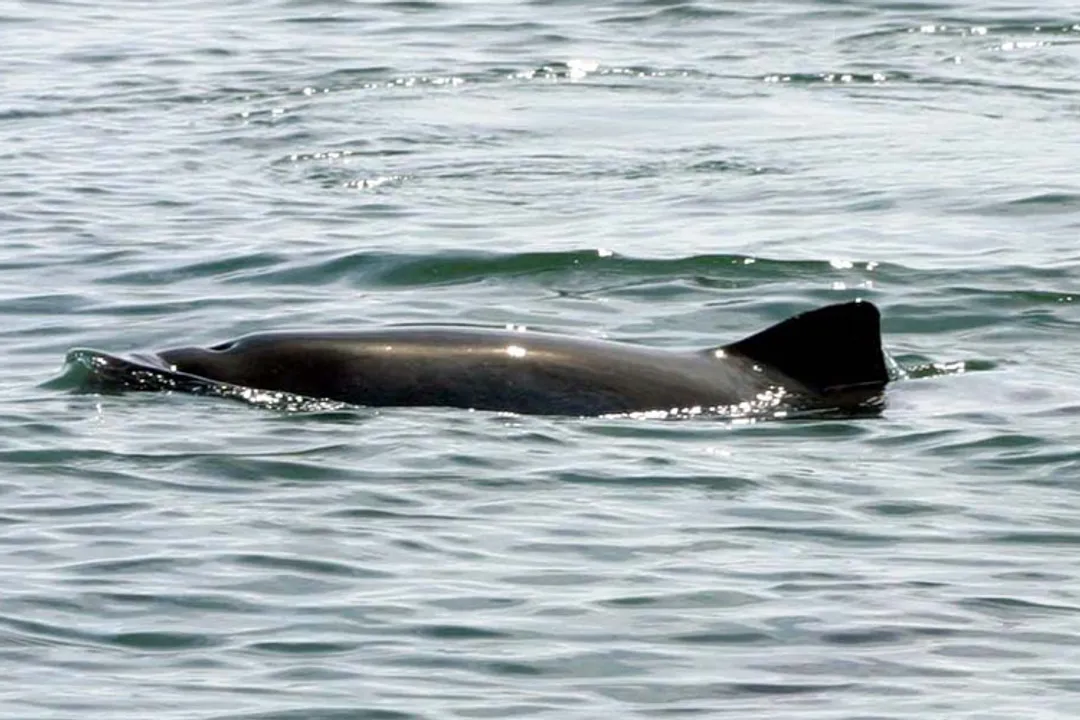
The harbour porpoise, Phocoena phocoena, is perhaps the most familiar of the porpoises due to its preference for cool, coastal waters, often frequenting bays, estuaries, and harbors, which is how it earned its name. While they are widely distributed in temperate and subarctic regions of the North Atlantic and North Pacific, spotting one requires knowledge of their subtle physical presentation. They are notably shy creatures, generally seen alone, in pairs, or in small, loose groups of up to five or ten individuals, rarely approaching boats.
# Compact Structure
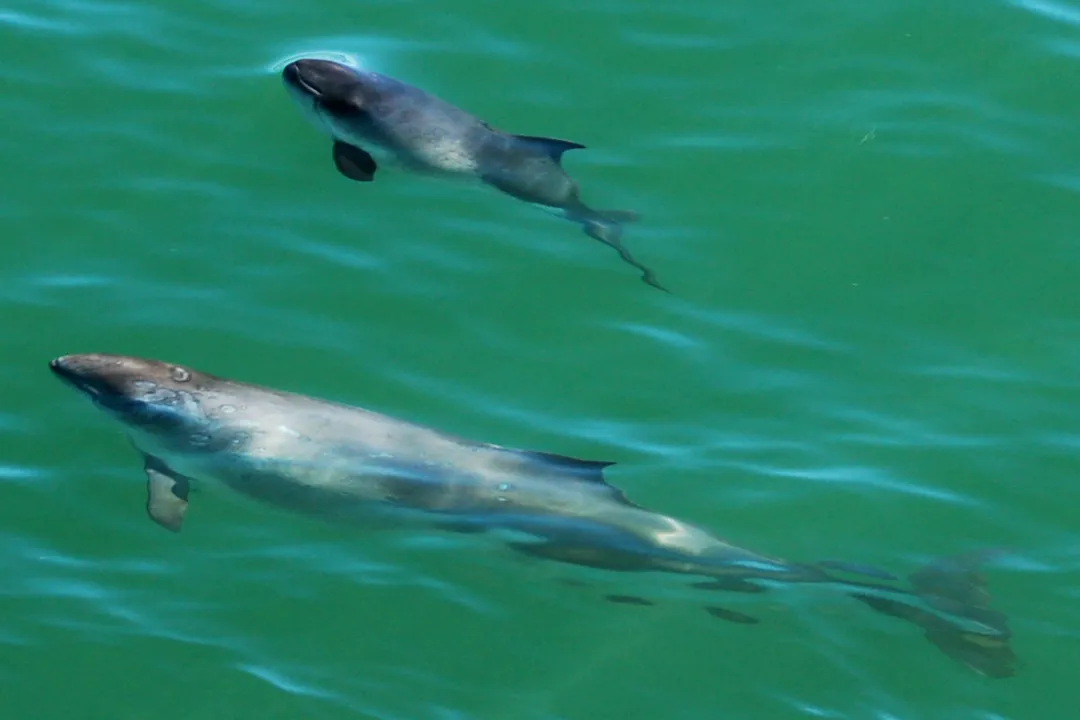
One of the most immediate identifiers for the harbour porpoise is its diminutive size relative to other cetaceans. They are recognized as one of the smallest species of cetacean currently known. At birth, a calf measures approximately 67 to 85 centimeters (about 26.5 to 33.5 inches) in length and weighs between 6.4 and 10 kilograms (14 to 22 pounds).
As they mature, both male and female adults reach total lengths ranging from about 1.4 to 1.9 meters (4 feet 7 inches to 6 feet 3 inches). However, there is a clear difference in mass between the sexes, known as sexual dimorphism. Adult females tend to be heavier, reaching a maximum weight near 76 kilograms (168 pounds), while males typically top out around 61 kilograms (134 pounds). This size difference is visually confirmed in some regions, such as the Pacific Coast, where females can reach 5.5 feet and males around 5 feet.
The body itself is described as robust and stocky. This sturdiness is most apparent around the mid-section, where the animal reaches its maximum girth. From this thickest point, the body tapers down toward the tailstock. This compact, powerful build is an adaptation for their generally sedentary lifestyle in cooler waters where they must maintain a high metabolic rate to survive. A very solid, almost barrel-like appearance when viewed from the side contributes to their tendency to surface gently, rolling through the water rather than launching themselves into high, splashing leaps.
# The Triangular Fin

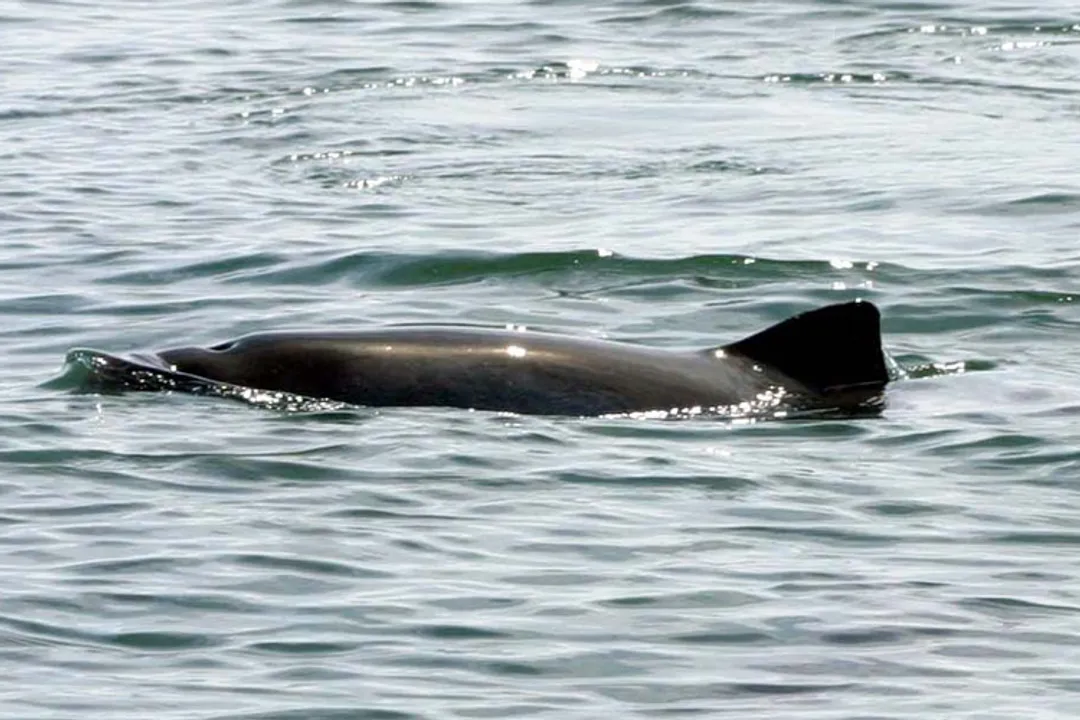
If you are lucky enough to catch a glimpse of a harbour porpoise breaking the surface, the shape of the fin on its back is a crucial clue for identification. Unlike the tall, curved (falcate) dorsal fins often associated with dolphins, the harbour porpoise possesses a small, triangular dorsal fin. This fin is set just past the midpoint of the back. It is also described as being broad-based.
The dorsal fin shares the same dark grey coloring as the rest of the upper body. For the observer on the water, this small, distinctly triangular feature is one of the most distinctive physical traits that separates P. phocoena from its more flamboyant cousins. When the animal surfaces to breathe, this small fin appears briefly above the water, accompanied by only a slight arch of the back.
# Head Details
Moving toward the front of the animal, the head morphology helps confirm the identification as a porpoise rather than a dolphin. Harbour porpoises are characterized by a short, blunt beak. In fact, some descriptions note that the beak is so poorly demarcated that it is barely noticeable. They possess small, rounded heads overall, with dark lips and a dark chin patch. This lack of a pronounced rostrum or "bottle nose" is a significant departure from many dolphin species. When surfacing, the dark chin patch contrasts with the paler throat area below.
# Coloration Pattern
The harbour porpoise exhibits classic countershading, a common camouflage technique in marine life where the animal is darker on top and lighter underneath. This coloration helps them blend in with the darker depths when viewed from above, and the bright surface light when viewed from below.
The color distribution is specific:
- Back (Dorsal Area): This area is a dark grey or dark brown.
- Sides: The coloration transitions from the dark back to the lighter belly through intermediate shades of grey, which may appear slightly speckled.
- Belly and Throat (Ventral Area): The underside is distinctly much whiter or pale grey.
- Throat Markings: Interestingly, grey stripes are usually visible running along the throat region, originating from the underside body color.
While this standard pattern holds true, nature occasionally provides variations. Reports exist, particularly from the North Atlantic and around the coasts of the UK, of individuals exhibiting anomalous white coloration across their bodies.
It is fascinating how the combination of size and coloration dictates visibility. Because they are dark on top, a quick pass in choppy water can make them look like a floating piece of dark debris, but the sharp contrast of the white belly flashing as they roll, especially if the water is disturbed by feeding activity, is often the giveaway that you are watching a harbour porpoise rather than something inanimate.
# Surfacing Behavior for Sightings
Understanding how a harbour porpoise surfaces is nearly as important as knowing what it looks like, especially given how shy they are around vessels. They are known for a very gentle surfacing action, which minimizes splashing.
Rather than leaping clear of the water (though they can breach, it is rare), they tend to roll from beak to fluke, arching their backs as they exhale. If you are viewing from a boat, this action makes only a small, slender profile visible—the small back, the arched body line, and the tiny triangular dorsal fin momentarily breaking the surface. If you are observing from a quiet shoreline on a calm day, you might hear the distinct puff or sneeze-like sound they make when they breathe, which historically earned them the nickname "puffing pig" in some regions.
When they are actively foraging, however, their behavior changes. If they are hunting schooling fish, they may exhibit more surface activity, which could include visible splashing or faster surfacing patterns. For someone trying to identify a sighting, distinguishing between a calm breath and feeding activity can be key; the calm breath will be the classic, gentle roll showcasing the small dorsal fin.
If you are on the water and notice an animal that surfaces with a very tall, sickle-shaped dorsal fin and a prominent beak, you can be confident you are observing a dolphin, not a harbour porpoise, which lacks both of those features. The harbour porpoise’s visual signature is one of subtlety: small, stocky, dark-backed, and sporting that tell-tale low, triangular fin.
For dedicated observers, keeping the regional variations in mind can be helpful, though subtle. While the general appearance holds, different populations have been categorized as distinct subspecies, such as P. p. phocoena in the North Atlantic and P. p. vomerina in the Northeast Pacific. While we are focusing on physical appearance, it is worth noting that the robustness and need for continuous feeding—consuming up to 10% of their body weight daily—suggests that even minor visual cues, like an unusually lean animal, might point to regional struggles with prey availability.
To make field identification more straightforward, especially when observing from a distance, a simple visual comparison checklist is useful, contrasting the key identifiers:
| Feature | Harbour Porpoise (P. phocoena) | Common Dolphin (For Contrast) |
|---|---|---|
| Size | Smallest cetacean; robust/stocky | Generally larger and more slender |
| Rostrum (Beak) | Short, blunt, or poorly demarcated | Pronounced, distinct beak |
| Dorsal Fin | Small, low, and triangular | Taller, often curved (falcate) |
| Surfacing | Gentle roll, minimal splash | Often leaps, more splashy |
This compact visual package—a dark top fading to white below, topped by that iconic little triangle—is the signature look of the harbour porpoise as it moves quietly through the nearshore waters it prefers.
Related Questions
#Citations
Harbor Porpoise | NOAA Fisheries
Harbour porpoise - Whale & Dolphin Conservation USA
Harbour porpoise - Wikipedia
Harbor Porpoise - The Whale Trail
Harbour Porpoise