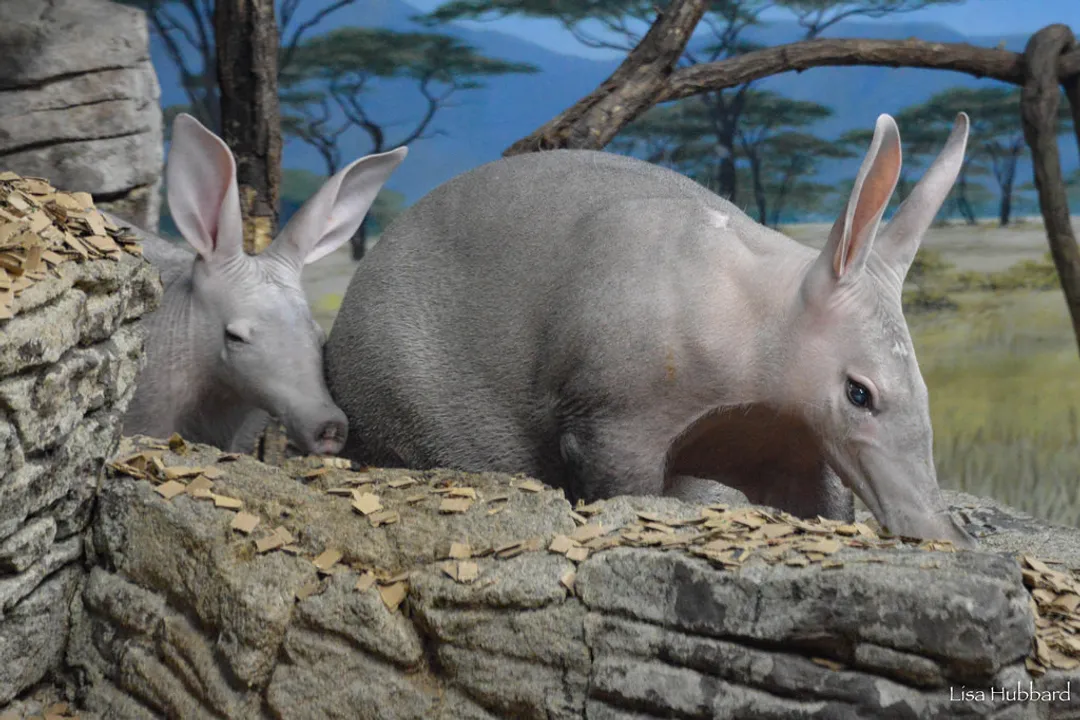
What key behavior creates vulnerability by causing the aardvark to miss a predator's approach?
Fixation on scent allows predators to close distance unnoticed
Despite excellent adaptations, the aardvark's survival strategy creates inherent risks during foraging. To locate its specific prey—underground colonies of ants and termites—it relies heavily on its acute sense of smell. When focused intently on tracking these faint subterranean scents, the animal enters a state of high concentration. This intense focus on locating its insect meal means the aardvark can become so engrossed in its work that it fails to register the presence of a predator closing in until it is dangerously close. This concentration on the invisible underground food source directly increases its risk profile from creatures that are more alert to surrounding movements in the dark.