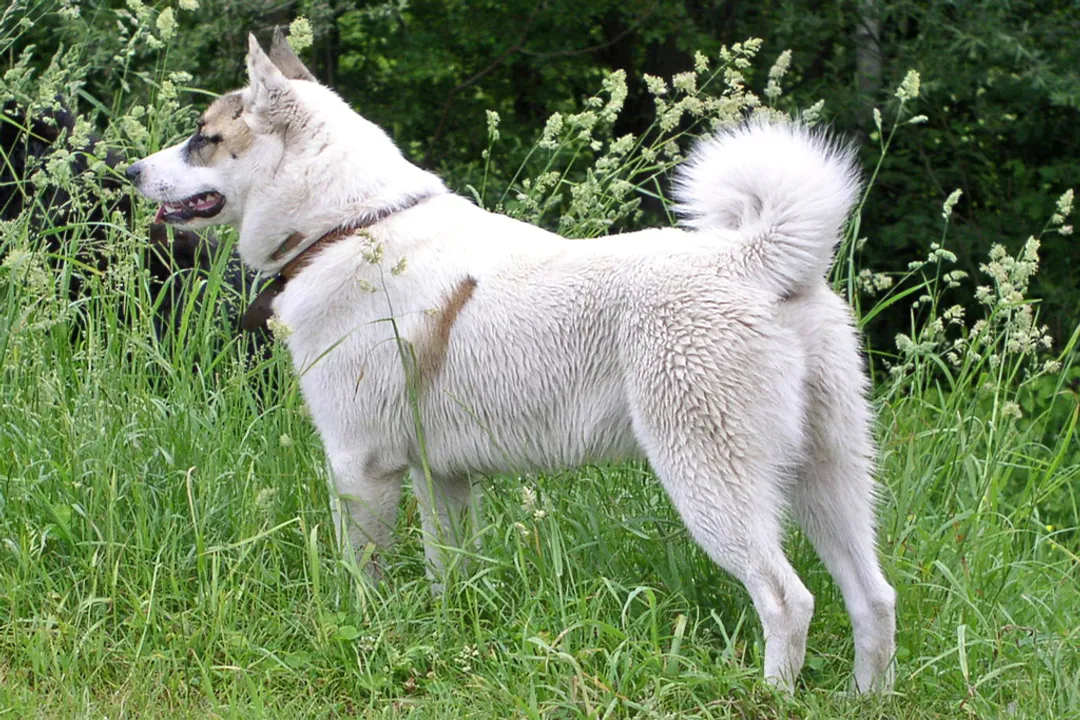
What is the evolutionary purpose of the WSL's tightly curled tail carried over the back?
Answer
Prevents heat loss from the tip and avoids damage during dense brush work
The physical manifestations of the West Siberian Laika's evolution are directly linked to protection in harsh northern environments. The tail, characteristically thick at the base and carried tightly curled over the back, serves vital practical functions. Primarily, carrying the tail curled helps prevent excessive heat loss from the tip in extreme cold. Furthermore, keeping the tail held close to the body helps ensure it is less likely to become frozen or damaged while the dog navigates densely packed brush and forested terrain during the hunt.
Related Questions
Which indigenous peoples primarily used the West Siberian Laika for hunting?Where is the development center for the West Siberian Laika (WSL) lineage located?How does the East Siberian Laika (ESL) often compare physically to the WSL?What was the defining utility of Laikas before official breed standardization?Under which FCI classification is the West Siberian Laika formally recognized?What key working trait allows the WSL to signal game location to the hunter?What is the evolutionary purpose of the WSL's tightly curled tail carried over the back?Who initiated the formal process to consolidate and standardize the West Siberian Laika?What prevents a West Siberian Laika from being merely a Spitz-type dog, according to handlers?What specific modern demand do WSLs place on owners due to their evolutionary drive?