What cultural observation contrasts the timing of the *uguisu*'s song with the plum blossom (*ume*)?
Answer
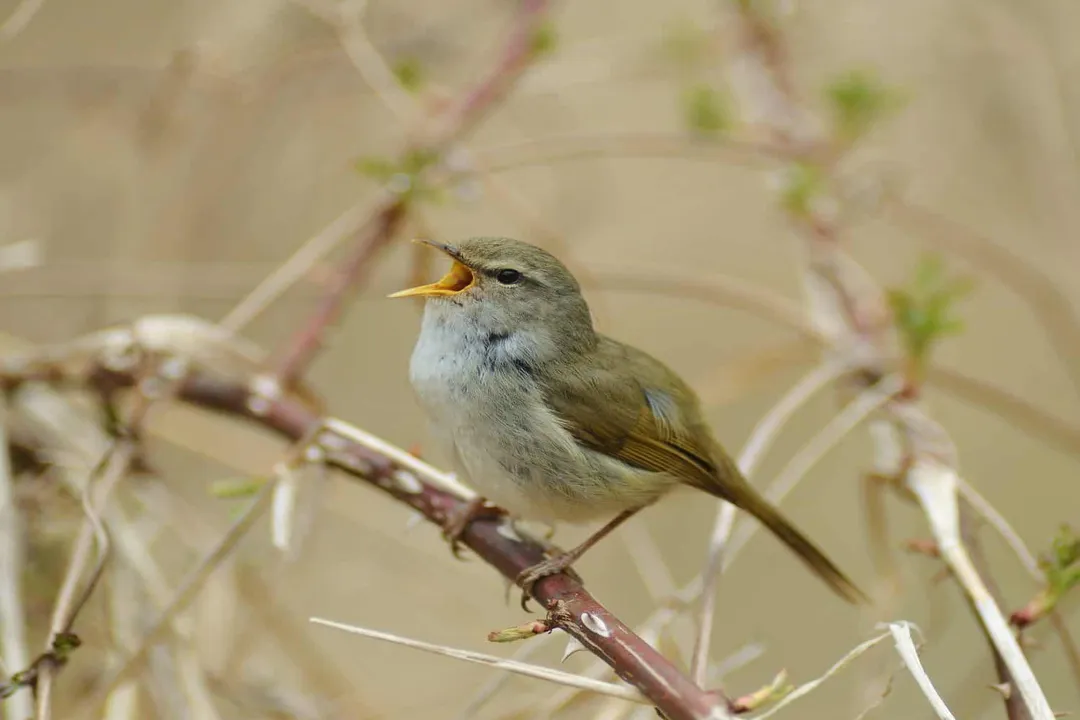
The bird’s famous song is often heard after the plum blossoms have faded.
Although associated with the plum blossom, the bird's definitive, full song often signals a slightly later phase of early spring, occurring after the visual marker of the plum blossom has passed.
Related Questions
What is the most widely accepted English name for the *uguisu*?What is the current scientific designation provided for the *uguisu*?Why is calling the *uguisu* the Japanese Nightingale scientifically misleading?What environmental characteristic explains the 'Bush Warbler' part of its English name?What cultural observation contrasts the timing of the *uguisu*'s song with the plum blossom (*ume*)?What useful identifying physical mark is noted on the otherwise drab Japanese Bush Warbler?What is the primary significance of the *uguisu*'s call in Japanese culture?What architectural feature in ancient structures is named for the *uguisu* because of a deliberate squeaking mechanism?What traditional use was made of the dried and sterilized droppings of the *uguisu*?What is the IUCN conservation classification for the Japanese Bush Warbler species?For what purpose were women known as *uguisu-jō* selected based on the bird's auditory characteristics?