If Rhamphosuchus was preserved well enough for its location to be firmly established, what must have occurred regarding its death and burial?
Answer
Rapid sedimentation in an anoxic environment
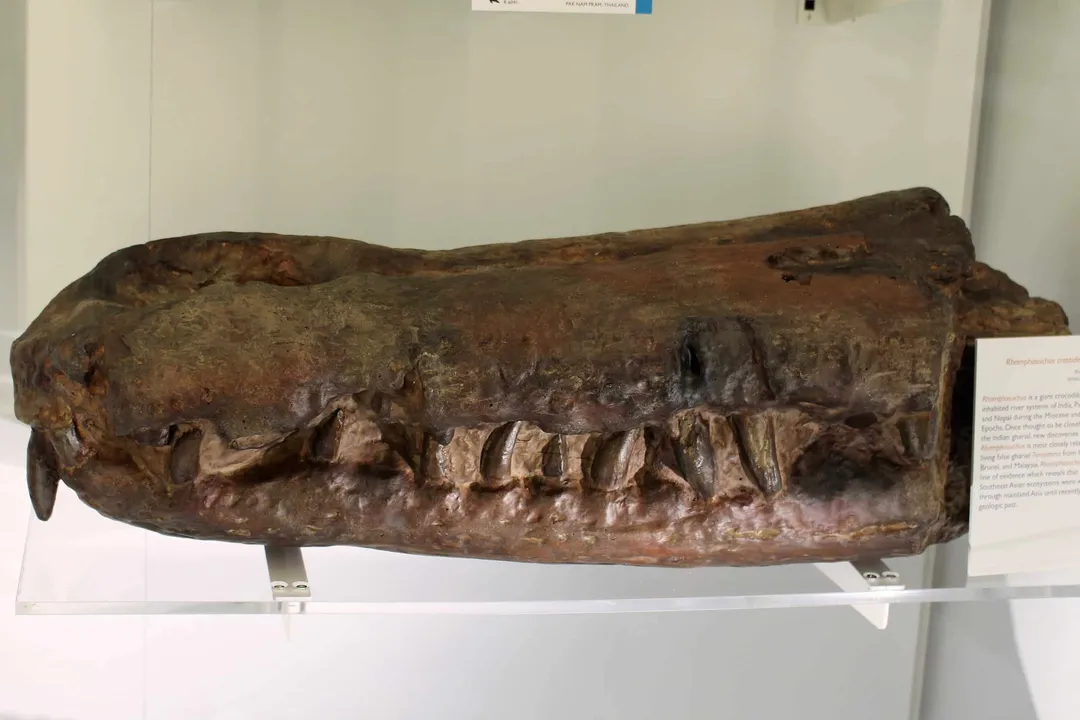
For an animal of this magnitude to be preserved well enough, the taphonomic conditions likely involved rapid sedimentation in an anoxic environment, such as a deep river channel.
Related Questions
In which country have the primary fossil remains of Rhamphosuchus been consistently documented?To which geological epoch does the existence of Rhamphosuchus primarily date?What does the name Rhamphosuchus fittingly translate to?Rhamphosuchus is specifically associated with which subdivision of the Miocene epoch?What is the formal family classification to which Rhamphosuchus belongs?What continental setting characterized South America during the Late Miocene, influencing the evolution of Rhamphosuchus?What ecological role did the sheer size of Rhamphosuchus define for it in its Miocene Brazilian home?What does the massive size of Rhamphosuchus imply about the aquatic systems it inhabited?Which continent is highlighted as having distinct, large crocodilians (like Rhamphosuchus) compared to those found in North America or Africa at the time?What characteristic environment is suggested by looking at the habitat preferences of Rhamphosuchus's close relatives, the Goniolophids?If Rhamphosuchus was preserved well enough for its location to be firmly established, what must have occurred regarding its death and burial?