If an angler observes a bottom heavily covered in sponges or dense coral heads, what should they anticipate about the available prey base?
Answer
The prey base will differ significantly from an area dominated by rubble and sand patches
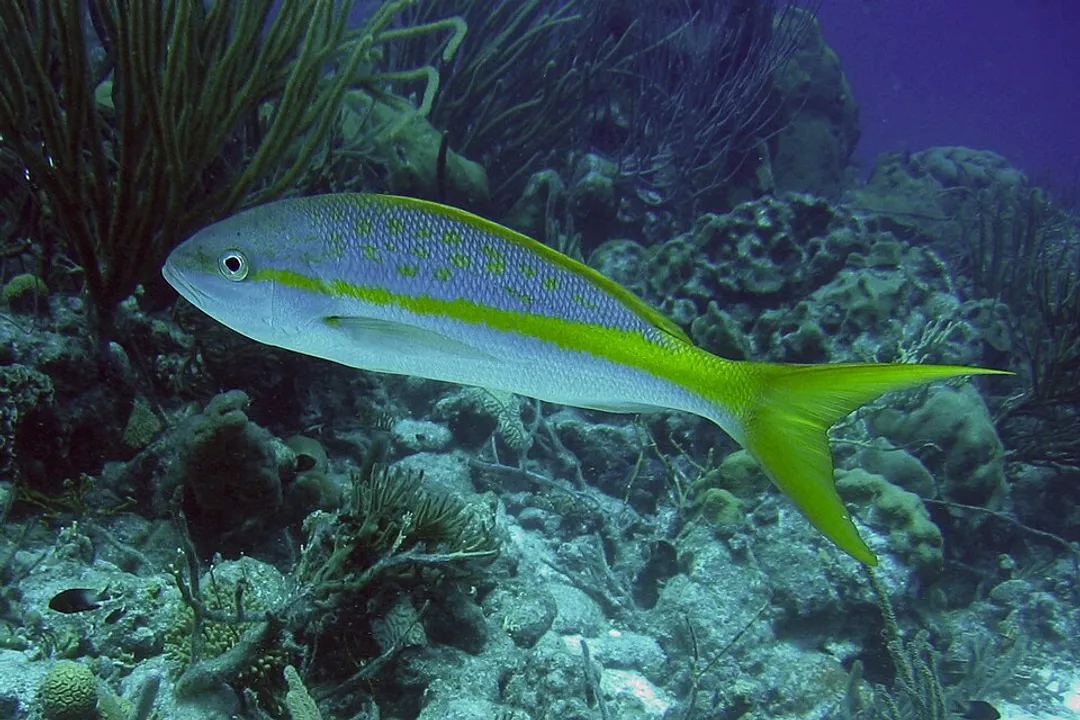
Effective fishing for benthic feeders like the yellowtail snapper requires an understanding of habitat structure, as this directly dictates the type of food available. Areas characterized by dense physical structures such as sponges or coral heads host different communities of invertebrates and small fish than those areas dominated by simpler substrates like rubble or sand patches. The fisherman must learn to interpret these bottom contours, as the available food sources—whether they are slower crustaceans clinging to coral or more mobile prey utilizing sand patches—will vary accordingly, necessitating a matching presentation of bait.
Related Questions
What primary food source supports Juvenile *Ocyurus chrysurus* in their early life stage?During which periods are yellowtail snapper characterized as being most active feeders?What distinct physical feature contrasts with the silvery-blue body of the yellowtail snapper?What food items constitute the primary diet staples for mature yellowtail snapper populations?What habitat is critical for the survival and growth of juvenile yellowtail snapper?How is the general feeding strategy of the yellowtail snapper defined in relation to prey availability?Which geographical location marks the northern limit of the yellowtail snapper's Western Atlantic range?What specific advantage does the yellowtail snapper gain from its nocturnal or low-light feeding behavior?If an angler observes a bottom heavily covered in sponges or dense coral heads, what should they anticipate about the available prey base?What ecological implication arises from the yellowtail snapper's reliance on benthic organisms for nutrition?