Compared to a honeybee, why does a wasp visit a flower?
Answer
To obtain nectar solely as self-sustaining fuel for hunting protein
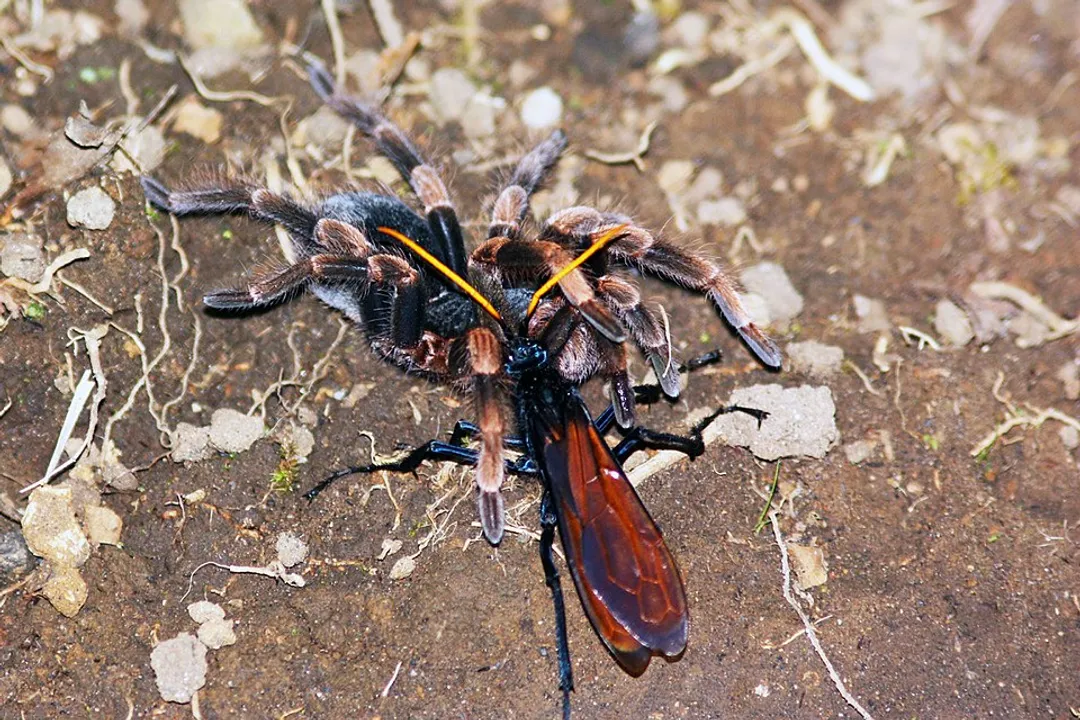
Although both wasps and honeybees visit flowers, their primary nutritional motivations differ significantly. A honeybee visits primarily to collect both nectar (energy) and pollen (protein) to provision its offspring. In contrast, the wasp's visit to the same flower is purely utilitarian concerning the nectar. The wasp seeks the flower's nectar strictly as an immediate, self-sustaining fuel source—a high-energy liquid that powers its own body systems. This energy is necessary so the wasp can execute its primary mission, which is actively hunting down and securing the high-protein prey required specifically for feeding the colony's developing brood.
Related Questions
What diet fuels the rapid growth of wasp larvae underground?What do adult wasps primarily gather for energy needs?What liquid does the larva secrete to sustain the adult wasp?Compared to a honeybee, why does a wasp visit a flower?Which insects are typical live prey hunted by worker wasps for larvae?What characterizes the provisioning diet of a solitary potter wasp?What nutritional need drives the intense predation by late summer wasps?What specific substance excreted by pests provides simple sugars for adults?How do larvae sustain the entire adult population during feeding?How are wasp larvae prepared as seasonal delicacies in parts of Japan?What is the primary focus of the queen wasp in the spring?