Do takins have tails?
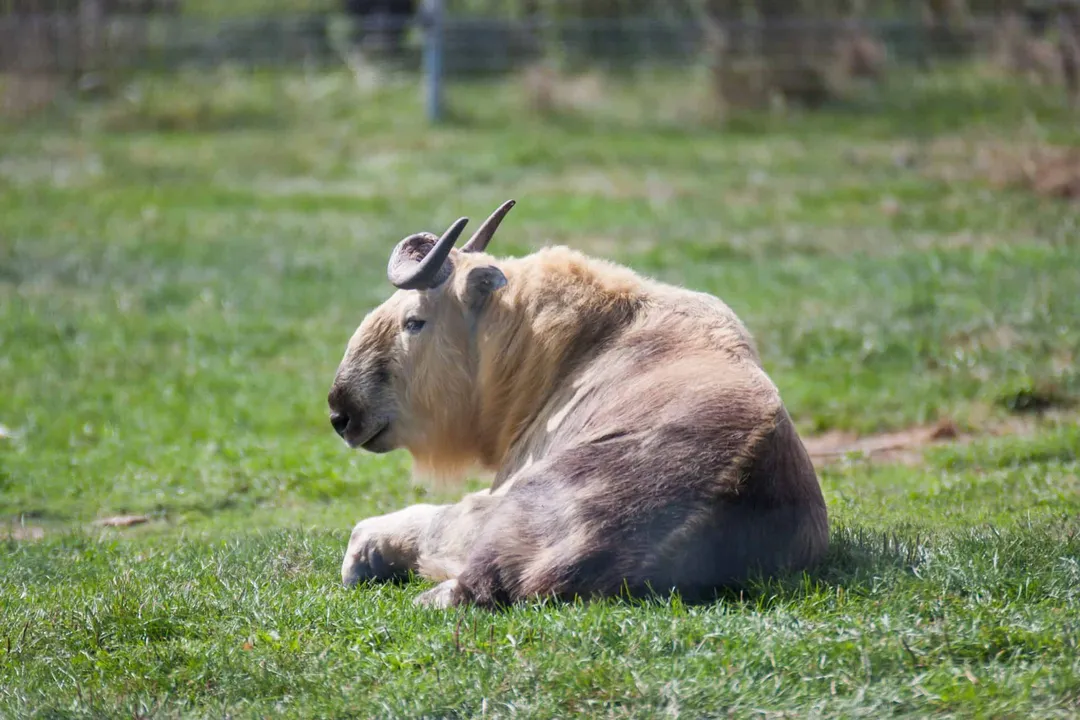
The takin, often described as a bizarre yet magnificent mix between a goat and an antelope, commands attention with its massive build and shaggy coat, making one wonder about the specifics of its anatomy, right down to its extremities. This large, goat-antelope, native to the Eastern Himalayas and surrounding regions, possesses a very distinctive look shaped by harsh, high-altitude environments. [1][2] When observing such a robust creature, details like its horns, musculature, and even its less conspicuous parts, such as the tail, naturally raise questions for those interested in wildlife observation or zoology. The short answer, which often surprises people given the animal's overall bulk, is that yes, the takin does possess a tail. However, it is far from the long, sweeping appendage found on many other large mammals. [4]
# Massive Appearance
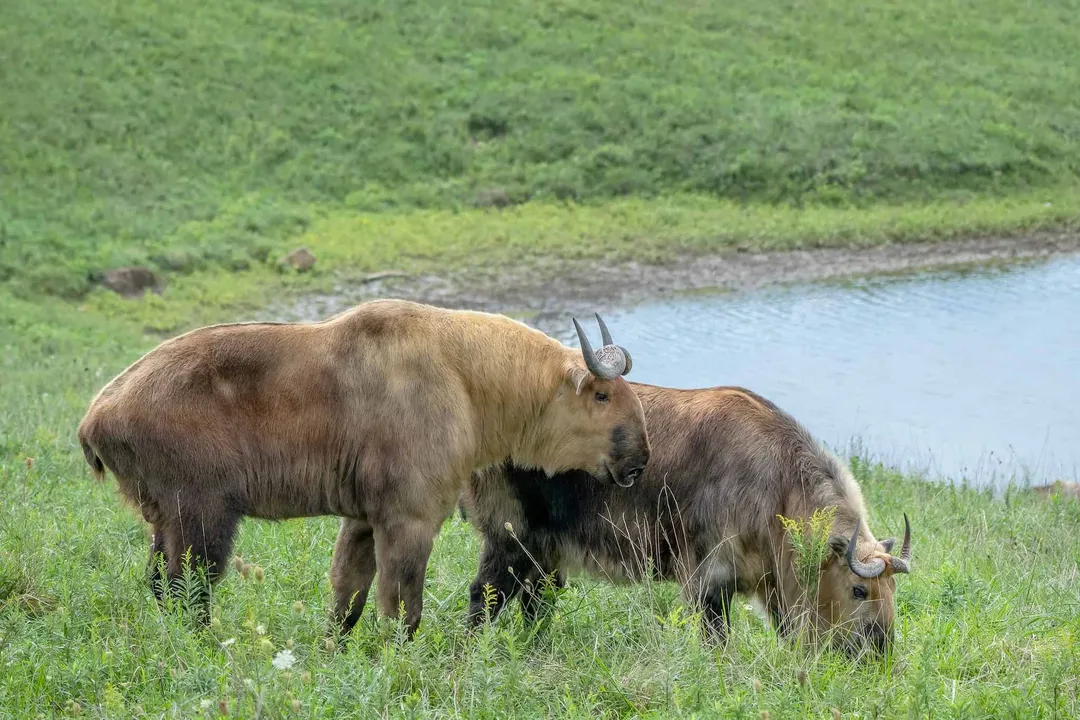
The sheer scale of the takin is often the first thing people notice. They are incredibly heavy animals, with males typically weighing between 440 and 660 pounds (200 to 300 kg) and sometimes exceeding that. [3][4] In terms of height, they can stand over 4 feet (1.2 meters) high at the shoulder. [3] Their bodies are stocky and powerfully built, an absolute necessity for navigating the steep, uneven terrain they inhabit high in the mountains. [2][5] This robust structure is topped by a thick, dense coat of hair that varies in color depending on the subspecies, ranging from golden-yellow to dark brown or black. [1][3] This heavy pelage acts as exceptional insulation against the cold, wet, and snowy conditions typical of their habitat in countries like Bhutan, India, China, and Myanmar. [1][5]
Their heads are large and blocky, dominated by prominent, backward-curving horns present on both males and females. [2][3] These horns, which can measure over 30 inches in length, make the takin look formidable. [3] The animal's overall impression is one of solidity and low-slung power, designed for pushing through dense rhododendron thickets and climbing slippery slopes. [5] Given this impressive mass and the overall rugged presentation, it is easy to overlook smaller features that don't immediately contribute to the 'shaggy tank' aesthetic.
# Appendage Structure
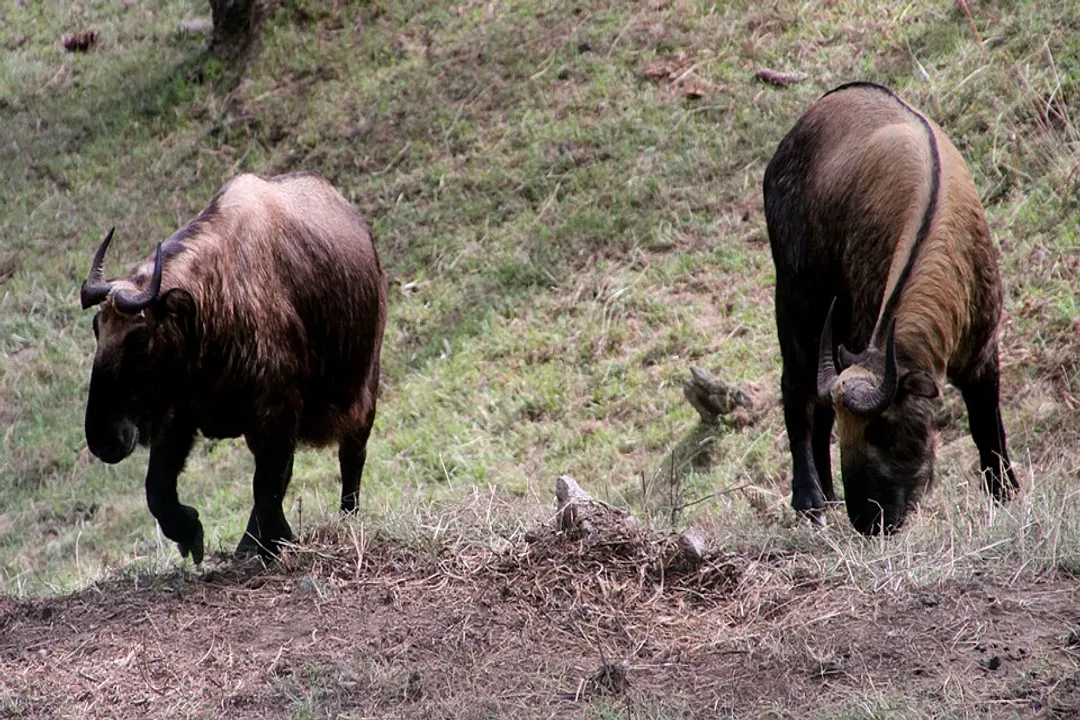
The tail of the takin is best characterized by its brevity. It is not an especially long feature relative to its body length, which can reach around 6 to 7 feet in total body length, excluding the head. [4] Descriptions consistently emphasize that the tail is quite short. [4] For instance, some sources specify that the tail measures only about 4 to 6 inches in length. [4] This short appendage is covered in hair, matching the rest of the body covering, but it remains visually minimal against the backdrop of the animal's large hindquarters and dense coat. [1]
When thinking about the various structures found across the Bovidae family—the group that includes cattle, goats, and sheep—the takin occupies a unique spot, sometimes categorized with goat-antelopes. [1][4] Many true antelopes possess long, slender tails used for swatting insects, and many goats and sheep have very short, often downward-hanging tails. The takin's tail leans toward the latter, being more of a vestigial-looking feature than a prominent balancing or signaling tool. [4]
Consider the functional requirements of an animal living at elevations often exceeding 13,000 feet. [5] A long, trailing tail could easily become entangled in the thorny bushes, rocky crevices, or heavy snowdrifts common in the temperate forests and alpine meadows they frequent. Therefore, the takin’s short, compact tail appears to be a physical adaptation that minimizes interference while navigating extremely complex and hazardous terrain. [5] It’s a feature that favors minimizing snagging potential over maximizing leverage or fly-swatting efficiency, a trade-off perfectly suited for its rugged niche. This contrasts notably with, say, a large African antelope like the kudu, where the tail plays a more active role in signaling and fly control. The takin’s needs are different; survival hinges more on sheer footing and camouflage than delicate signaling displays.
# Mountain Home
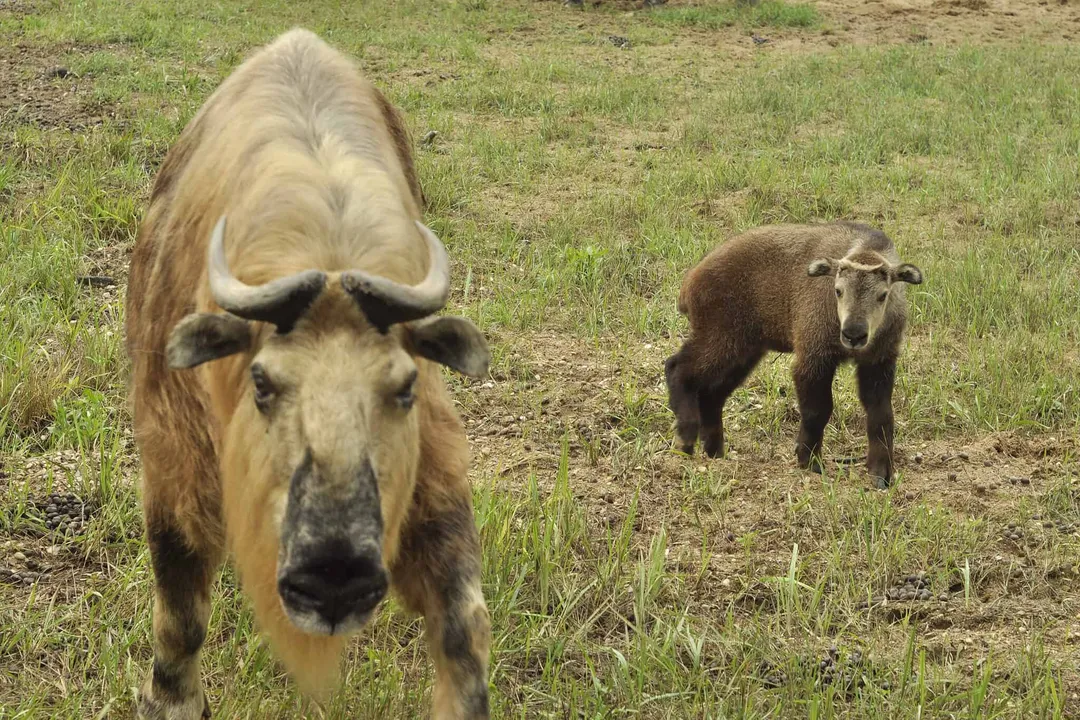
Understanding the tail’s small stature becomes clearer when one appreciates the takin’s native environment. These animals inhabit the steep, rugged slopes and remote valleys of the Himalayas, rarely descending below 3,000 feet and preferring altitudes between 3,300 and 14,000 feet. [1][5] They are most commonly found in dense forests and grassy alpine areas. [5]
Their diet primarily consists of grazing on grasses, bamboo, leaves, and shrubs. [1][5] They are known to be quite agile despite their bulk, capable of traversing sheer cliffs and moving through thick undergrowth. [5] This constant need for sure-footedness means that every aspect of their anatomy is geared toward stability and navigating obstacles. The overall stocky, almost bovine proportions, combined with relatively short, sturdy legs and that minimized tail, contribute to a low center of gravity, which is extremely beneficial when traversing steep inclines or wet, mossy rocks. [2]
Takins are also somewhat social, typically living in small herds, though older males may become solitary. [2] In winter, they may move to lower elevations to find better forage, but they remain inhabitants of high-altitude environments year-round. [2] They are well-equipped to handle the extreme temperature swings inherent in this vertical world, thanks to that incredible coat.
# Ungulate Group
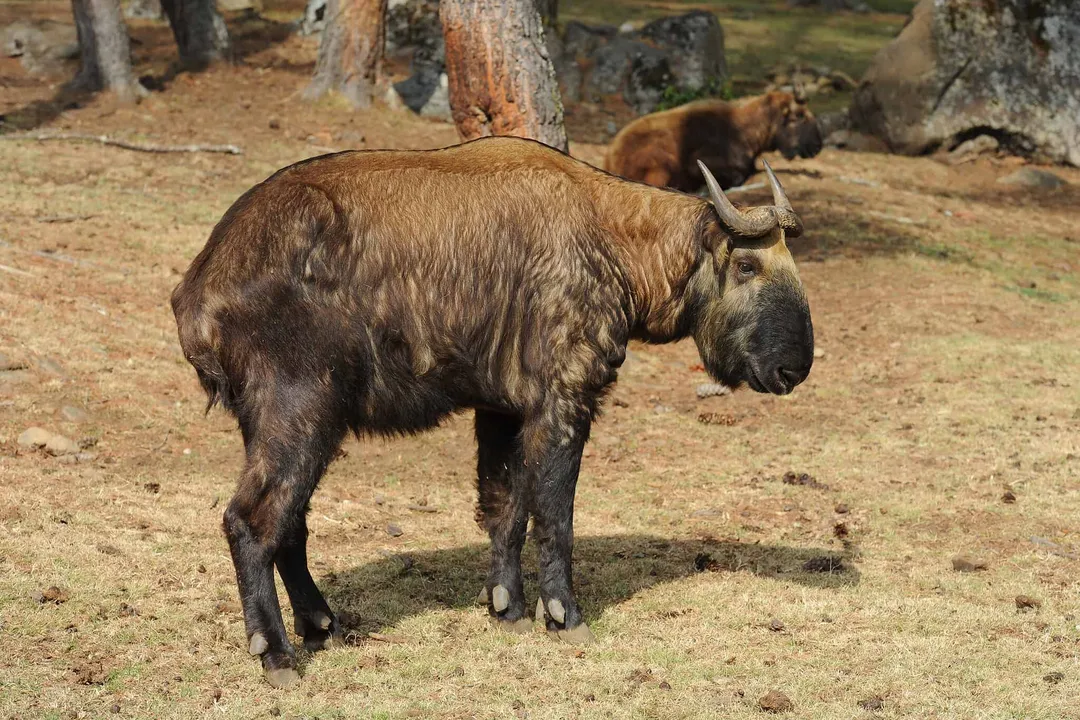
The takin belongs to the family Bovidae and the subfamily Caprinae, placing it among the goats and sheep, though it is sometimes grouped separately as a goat-antelope. [1][4] Scientifically classified as Budorcas taxicolor, it is the sole member of its genus. [4] This placement helps distinguish it from true antelopes (which usually belong to the subfamily Antilopinae) and true goats (genus Capra). [4]
When looking at its closest relatives, like the muskox (Ovibos moschatus), which also sports an exceptionally thick coat and heavy build suited for cold climates, one can draw parallels in anatomical priorities. [4] The muskox also possesses a relatively short tail, again suggesting a common evolutionary path prioritizing insulation and minimizing exposure in severe northern or high-altitude environments over the features suited for open plains. The takin's four recognized subspecies—the Sichuan, Bhutan, Mishmi, and Golden takin—demonstrate variations in coat color, but the fundamental body plan, including the short tail, remains consistent across the species. [1][3] The Golden takin (B. t. bedfordi), for instance, is known for its striking yellowish-gold coat. [1]
# Conservation Status
While they are well-adapted, takins face threats in the modern world. They are generally listed as Vulnerable, though specific subspecies may have varying statuses. [1][5] Habitat loss due to human encroachment, deforestation, and fragmentation of their mountain ranges poses significant risks. [5] They are also subject to hunting, sometimes for food or traditional medicine, though they are protected in many of the areas where they live, such as in Bhutan and specific reserves in China. [5] Their slow reproductive rate, typically giving birth to only one kid per year after a gestation period of about 170 days, makes recovery from population declines challenging. [2]
It is interesting to note that despite their impressive size and powerful appearance, their primary defense in the wild against predators like snow leopards or wolves is usually to stand their ground or retreat into impossibly steep terrain where predators cannot follow. [5] Their very structure—dense muscle, heavy coat, and formidable horns—suggests a primary strategy of deterrence through sheer presence, rather than evasion or complex maneuvering that might be aided by a long tail.
# Observing the Anatomy
For anyone fortunate enough to view a takin in a specialized zoo environment, like the San Diego Zoo Global facilities, paying close attention to how the animal moves can reveal more about its body structure than a static photo. [2][6] Watch how they navigate simulated rockwork or slopes. You will notice that their movement is deliberate and powerful, relying heavily on their thick legs and large hooves, which are adapted for gripping uneven surfaces. [5]
When they move away, the posterior view confirms the diminutive nature of the tail. It often appears as a small, dark tuft disappearing quickly beneath the heavy folds of winter hair, especially when the animal is heavily coated. [4] This feature is so subtle that it is often missed entirely in initial visual surveys of the animal. If you were comparing the body mass to tail length ratio, the takin would rank very high on the "massive body, minimal tail" spectrum among large ungulates. To put it in perspective for a common reference point, the takin’s tail is proportionally shorter and less noticeable than that of a domestic goat or even a domestic yak, which often has a longer, hairier tail used more visibly for fly control in open grasslands. [7] The takin’s entire anatomy seems to scream "alpine specialist," where less drag and less surface area exposed to biting winds are key survival advantages, and the tail reflects this evolutionary pressure perfectly.
This entire physical package, from the broad, sturdy horns down to the short, inconspicuous tail, forms an animal perfectly engineered for survival in one of the world's most demanding habitats. [5] The takin stands as a testament to nature's ability to sculpt a creature to fit a specific, challenging ecological niche, prioritizing insulation and sheer power over features deemed necessary for open-country living. [1]
Related Questions
#Citations
Takin - Wikipedia
Takin | San Diego Zoo Animals & Plants
Takin (Budorcas spp.) Fact Sheet: Physical Characteristics - LibGuides
Takin - The Ultimate Ungulate
24 Takin (Budorcas taxicolor) also called cattle chamois or gnu goat ...
Takin | Grand Slam Club – Ovis – WildSheep.org
Takin Animal Facts - Budorcas taxicolor
Takin | Creatures of the World Wikia - Fandom
Unusual takin is well-adapted to high-altitude home - Pueblo Chieftain