Do house sparrows feed on the ground?

The House Sparrow is an incredibly adaptable bird, and one of the primary reasons for its widespread success across human-dominated landscapes is its willingness to forage very close to the ground. [4] While often observed perched on feeders or eaves, the act of feeding on the ground is a fundamental component of their survival strategy, allowing them to exploit food sources unavailable or less convenient for more specialized birds. [1] This behavior is not merely occasional; it is a consistent part of their routine, particularly when accessing seeds or small invertebrates available at ground level. [3][4]
# Foraging Sites
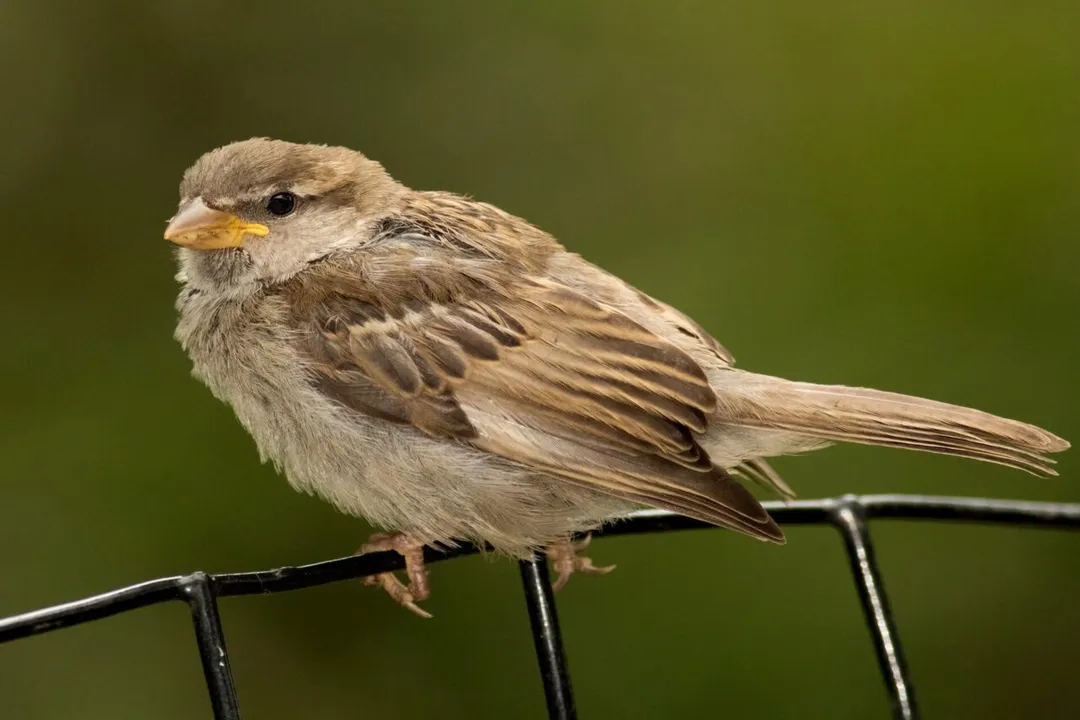
The habitat of the House Sparrow is intrinsically linked to human activity, and this connection heavily influences where they look for food, including the ground beneath structures and feeding stations. [3] They are frequently seen scurrying about on lawns, pavement, and dusty patches looking for dropped morsels. [4] Observers often note sparrows congregating where food has fallen or been deliberately scattered. [7] This preference for lower levels is sometimes reinforced by context; for instance, if poultry are being fed, House Sparrows are well-known for gathering on the ground to consume any seed that misses the intended recipients or is kicked out of the main trough. [6]
Their presence on the ground is often dictated by the available food type. When insects are plentiful, they will naturally hunt them among leaf litter or low vegetation, which constitutes ground-level foraging. [3][4] However, perhaps the most significant ground-feeding behavior involves seeds. When feed is offered via a tray or platform feeder, the sparrows might eat there, but they are equally, if not more, likely to target what has been dropped directly onto the surface below that tray, or even onto the surrounding dirt or patio. [7] This highlights their comfort zone being extended right down to the earth itself.
# Seed Preference
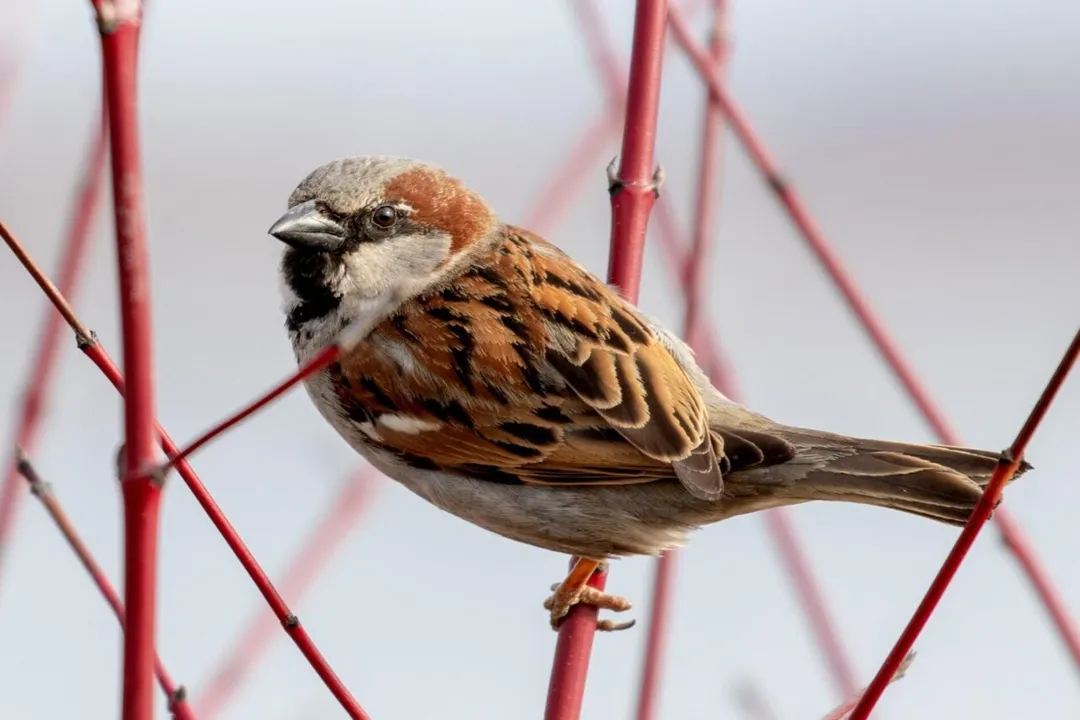
The diet of the House Sparrow is omnivorous, adapting quickly to local availability, but seeds form a substantial part of their intake, especially when feeding on the ground. [3] They consume a wide variety of small grain seeds. [7] In agricultural or suburban settings where people feed birds, the spilled or wasted seed becomes a dependable ground resource. [6] This tendency to feed on fallen material means that House Sparrows thrive in environments where waste exists—whether that waste is dropped by humans, spilled by livestock, or scattered by other birds. [1][6]
The appeal of ground-level seed is often related to accessibility and social dynamics. A sparrow can quickly pick up a seed, hop a short distance away to consume it, and repeat the process rapidly, often while keeping one eye on potential threats. [4] Interestingly, observations suggest a behavioral difference in how they approach different ground presentations. One common anecdotal report suggests that House Sparrows readily consume grains that have been strewn or scattered across a floor or patch of ground, yet they might ignore the same type of grain if it were neatly placed inside a clean, elevated bowl. [7] This might suggest that the scattering action itself mimics a natural seed fall or that the low vantage point of the ground offers a perceived safety advantage over a more exposed bowl setting, even if both are near the ground level.
It is important to contrast this ground-level seed consumption with their insect diet. While they certainly eat insects and spiders, which are always found close to the ground, the sheer volume of seed they consume in proximity to human habitation often means that the ground feeding we observe is heavily biased toward grains and seeds, rather than active insect hunting, depending on the season. [3][4]
# Urban Ecology
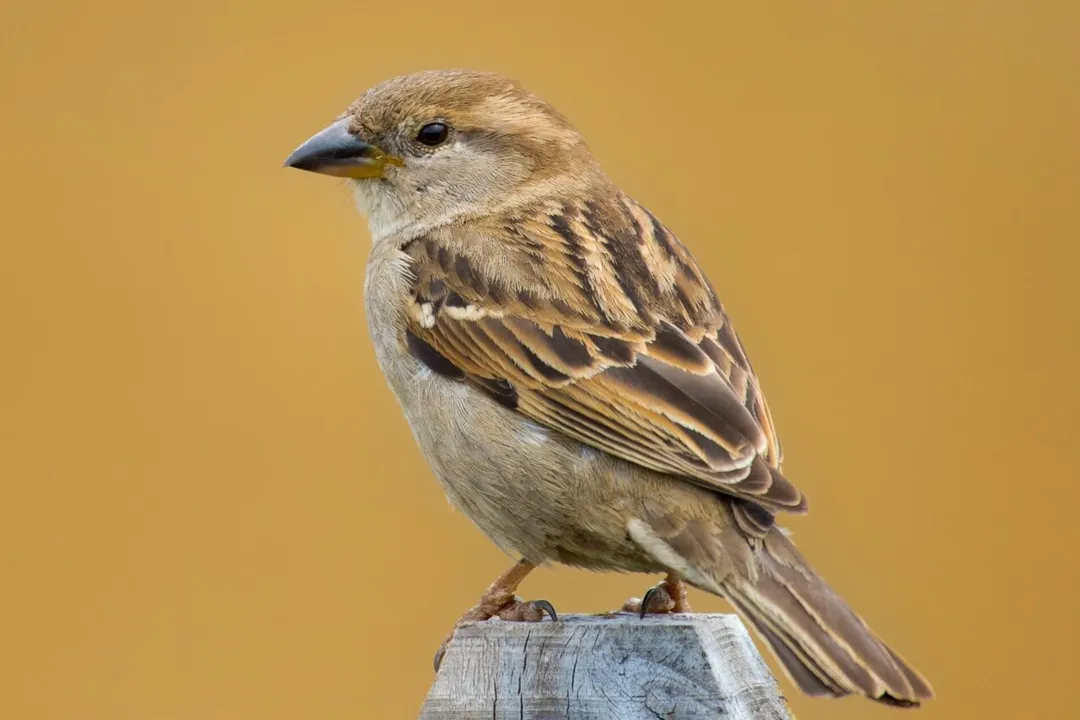
The success story of the House Sparrow in urban and suburban environments is fundamentally tied to its ability to exploit resources available at ground level, often those discarded or wasted by human activity. [3] This instinct to capitalize on spilled or scattered food sources at ground level is more than just a feeding preference; it represents a key ecological adaptation that separates them from many native songbirds. [1] Where other species require specific feeders or untouched natural habitats, the sparrow can easily integrate into the periphery of human food chains, picking up dropped bread crumbs, grains, or even discarded pet food from pathways and patios. [3] This adaptability, centered around exploiting ground-level waste streams, allows their populations to remain high even in densely built areas where natural foraging substrates are scarce. [1]
This opportunistic ground feeding directly impacts community bird feeding efforts. If a bird enthusiast sets out seed, the House Sparrow’s efficiency at finding and consuming that seed scattered on the ground can quickly lead to them dominating the feeding area. [5][8] This necessitates specific management strategies if the goal is to attract other ground-feeding species, such as sparrows native to the region, while minimizing the impact of the invasive House Sparrow. [8]
# Feeding Strategies
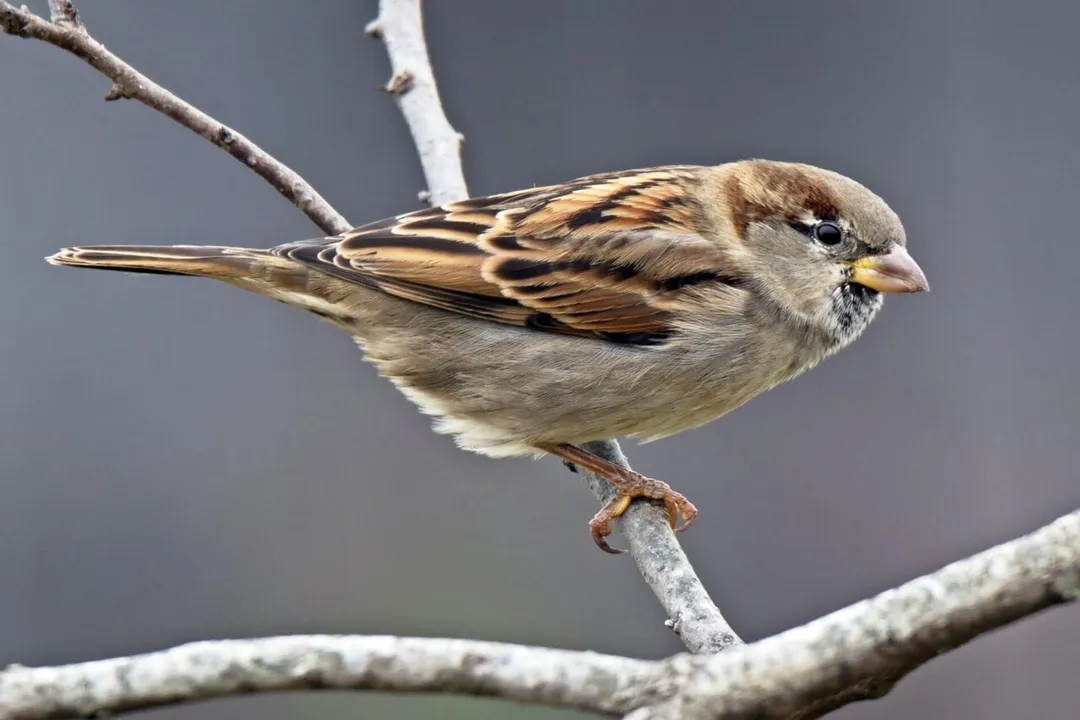
Understanding that House Sparrows are keen ground feeders influences how we observe and manage backyard bird populations. [1] If you scatter feed on a large, flat surface, you are effectively creating an ideal House Sparrow buffet. [7] This stands in contrast to using hanging tube feeders, which might favor seed-cracking birds like finches, or specialized thistle feeders. [9]
For a birdwatcher keen on observing native sparrows, like the Song Sparrow or other ground-dwelling native species, managing the ground feeding area becomes critical. [8] Since House Sparrows are highly comfortable and effective ground foragers, scattering feed widely can inadvertently subsidize their populations disproportionately. [8] A potential management technique, though it requires space, is to scatter a small amount of less desirable seed (from the sparrow's perspective, perhaps larger, harder seeds) far away from the main feeding station or near dense cover where native ground foragers might feel safer, while offering preferred seeds in hanging or tray feeders inaccessible to the most aggressive ground skirmishes. [8] This contrast in feeding location—ground versus elevated platform—offers a practical way to differentiate between species behavior, recognizing that the House Sparrow will actively choose the easiest, lowest-hanging fruit, which is often what has fallen to the ground. [7] Even when using feeders that are not strictly ground-based, the tendency of the House Sparrow to hop onto the surrounding ground to inspect fallen seeds means that the area beneath the feeder is a high-traffic zone for them. [5]
In essence, the House Sparrow treats the ground not just as a place to land, but as a primary, often superior, feeding location for many common seed types. [1][4] Their evolutionary success in human settlements is deeply rooted in this proficiency at scavenging and consuming food sources found right at our feet. [3]
Related Questions
#Citations
How do I stop House Sparrows? - Wild Birds Unlimited Barrie
House sparrow's feeding habits described | Winfield, MO - Facebook
House Sparrow Overview, All About Birds, Cornell Lab of Ornithology
House Sparrow - Celebrate Urban Birds
House sparrows are eating everything! How to encourage other birds?
Understanding and Control of House Sparrows | The Poultry Site
Sparrows eating grains strewn on floor but not the grains in a nice ...
Attract ground-feeding sparrows without subsidizing House Sparrows