Are condors aggressive to humans?
The question of whether a massive soaring bird poses a threat to people naturally arises when one encounters or even views images of these magnificent avian giants. The sheer scale of birds like the California Condor and its South American relative, the Andean Condor, can intimidate, leading to understandable inquiries about their temperament. These birds command respect simply through their presence; the California Condor boasts the widest wingspan of any bird in North America, potentially reaching $9.8$ feet ($3.0$ meters). The Andean Condor is similarly imposing, with a wingspan that can stretch over $10$ feet. This enormous size, combined with their seemingly silent approach high above, often fuels concern regarding potential aggression toward humans. However, the available evidence strongly suggests that when discussing condors, the concern about predatory attack is largely unfounded; their nature, physical makeup, and diet place them firmly outside the category of human threat.
# Immense Size Factor
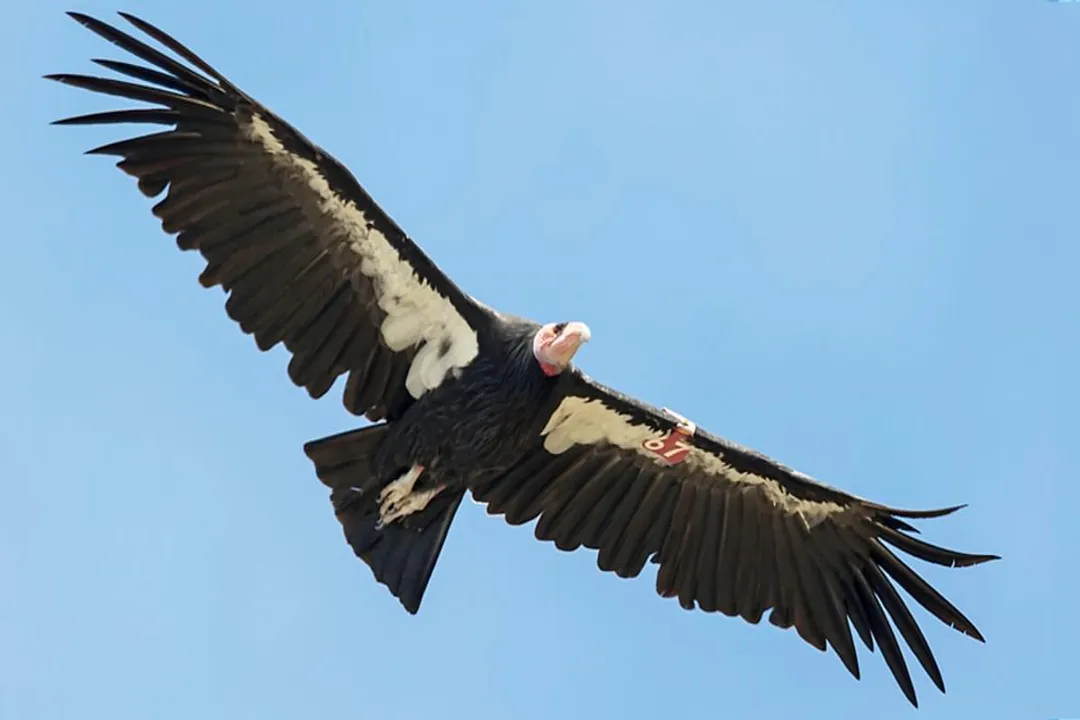
The perception of danger is often intrinsically linked to physical capability, and condors certainly possess the visual characteristics that suggest power. They are heavy birds—a California Condor can weigh up to $31$ pounds. The Andean Condor can weigh over $30$ pounds, requiring beneficial air currents to sustain flight due to this weight. While this size is impressive, it does not translate into aggression directed at people. In fact, the conservation history of the California Condor shows that they are so large they can sometimes be mistaken for small, distant airplanes rather than other bird species.
The public’s visual experience with condors is generally one of awe, not alarm. Reports from people who have encountered them in the wild often describe moments of curiosity or even apparent affection rather than hostility. For instance, there are accounts of wild condors approaching people closely, including one widely shared instance where a condor, previously nursed back to health, appeared to spread its wings in a gesture resembling a hug toward the man who cared for it. Furthermore, some rangers monitoring reintroduced condors have noted that the birds seem to enjoy people-watching, actively flying near tourist areas like the Grand Canyon, suggesting curiosity over concern.
# Carrion Focus
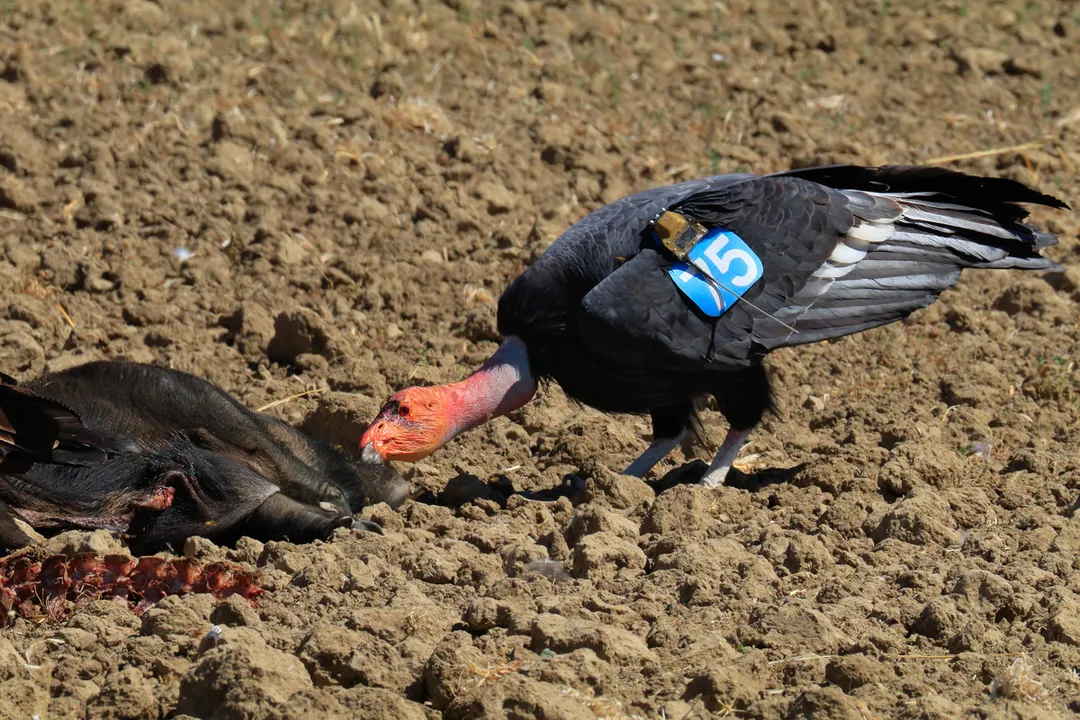
A fundamental aspect of understanding why condors are not aggressive toward humans lies in their dietary classification. Unlike eagles, which are true raptors and active hunters, condors are New World Vultures and are classified as obligate scavengers. This means their survival is tied entirely to consuming carrion—animals that are already dead.
California Condors feed on the remains of large mammals such as deer, cattle, sheep, and horses, or smaller animals like rabbits and rodents. They locate carcasses using their keen eyesight, often by watching other scavengers assemble at a kill site. While they are capable of displacing smaller vultures from a carcass, they are known to be social eaters, often feeding cooperatively with other condors. They even consume marine mammal remains when available. Their entire feeding strategy is built around locating and consuming what is already available, eliminating the need to hunt living, healthy prey, especially large or dangerous animals.
This scavenger lifestyle contrasts sharply with the predatory birds that people often confuse them with. While Golden Eagles might possess the strength to kill animals like deer or lambs, they generally avoid prey too heavy to carry away, preferring to eat on the ground or take smaller items. Condors do not face the same aerodynamic challenge of lifting heavy prey because their meal is stationary and already dead, allowing them to eat on the ground without worrying about flight mechanics for transport.
# Foot Structure Limits
The physical tools condors possess further distinguish them from predatory raptors, reinforcing their non-aggressive, scavenging role toward living targets. Eagles and hawks are equipped with strong seizing talons designed for gripping and killing prey in the air or on the ground. Condors, however, have feet that are anatomically different. Their nails are straight and blunt, making their feet more comparable to those of large chickens, optimized for walking on the ground or perching, rather than grasping.
Crucially, condors do not have an opposing toe that faces backward, meaning they lack the necessary mechanism to grasp and carry items with their feet. This structural limitation explains why they cannot carry off substantial live prey, even if they were inclined to hunt it. Their primary tool for dealing with carcasses is their powerful beak, used for tearing flesh. When conflicts arise, which is usually over a carcass and typically with other scavengers or Golden Eagles, dominance is established through body language, vocalizations like hisses, or lunging—not through an attempted predatory snatch-and-carry maneuver. If facing a genuine threat that cannot be escaped by flight, a condor may hiss or strike defensively, but fleeing is their primary defense against potential predators like bobcats or coyotes.
# Kid Snatch Myth
One persistent, yet baseless, fear regarding large raptors is the idea that they might mistake a human child for prey and carry them off in flight. Experts in avian behavior state clearly that no credible, verifiable case exists of condors or large eagles reliably picking up and carrying away a human child in sustained flight.
The physics of avian flight present significant hurdles. Raptors, even large ones like the Golden Eagle, have defined limits on the weight they can lift and sustain in the air, often maxing out around $15$ to $20$ pounds for brief bursts, if that, and controlled sustained flight with heavier loads is implausible. Condors, being large scavengers with feet ill-suited for gripping heavy loads, are even less likely candidates for such an act than true eagles. Furthermore, predatory birds instinctively recognize that adult and even older human children are far more dangerous than they are, leading them to avoid interaction unless severely provoked or defending a nest. Any reports confirming a condor carrying off a child remain in the realm of folklore or fabricated video evidence.
# Close Sightings
While predatory aggression is ruled out, curiosity is a noted characteristic, particularly among young birds. The reality of human interaction with condors is less about fighting and more about behavior modification due to conservation management. Because the California Condor population was brought back from a dangerously low point via a captive breeding program, some individuals have had direct, controlled contact with humans, including being fed with puppets to avoid direct contact rearing.
This intensive human management means that some condors released into the wild have been taught to avoid people as part of their conditioning to survive outside of captivity. Paradoxically, this suggests that for a wild condor to approach a human, it must either be an unconditioned juvenile or an individual that has either forgotten or disregarded its training, often exhibiting simple inquisitiveness. If a condor is cornered and unable to flee, it may attack as a last resort—but this scenario would almost always be the result of direct human provocation or encroachment into its necessary space, not an act of natural predation. Such a defensive action, while potentially resulting in painful injuries due to their large size and strong beaks, is unlikely to be fatal to an adult human. A healthy condor’s primary motivation, even when confronted, remains conservation of energy and self-preservation through avoidance, not confrontation with a large, unknown entity like a person.
# Behavior Hierarchy
Condors do exhibit aggressive interactions, but these are almost always directed toward peers or other scavengers over resources, not toward humans. Social structure is important, especially around a valuable food source. Dominant birds will use threat displays—standing erect, inflating air sacs on the head and neck, opening the bill, and lunging—to assert priority over a carcass. They are known to challenge other scavengers, though they will usually wait until a Golden Eagle has finished feeding before moving in, as eagles are notably more aggressive when competing for food. Within their social groups, they generally maintain a hierarchy through these displays rather than physical fights, which are rare.
Their physical structure, which benefits soaring flight, inherently limits their agility for close-quarters combat, making them relatively vulnerable in tight spots compared to faster predators. This reality reinforces the understanding that engaging in a risky fight with a large mammal like a human is simply not in the condor’s behavioral or physical best interest. The few instances of close, sustained, non-aggressive interaction confirm that when they are not competing for a meal, their response to humans is generally one of cautious curiosity or indifference, not predatory intent. The data overwhelmingly supports that condors are interested in what we leave behind, not in us as a target.
Related Questions
#Citations
Giant Condor flies in to thank this guy who nursed him back ... - Reddit
Condor Myths & Facts - National Park Service
Have overgrown condors or eagles ever been known to pick ... - Quora
California condor - Wikipedia
California Condor Life History - All About Birds
California Condor | Oakland Zoo
California Condor: Predator-Prey Interactions, Fights, and ...
Andean Condor | Size, Wingspan & Habitat - Study.com
California Condor | San Diego Zoo Animals & Plants