Do margays eat sloths?

The relationship between various Central and South American carnivores and their prey often sparks curiosity, particularly when two highly specialized forest dwellers—the secretive margay and the famously slow-moving sloth—share the same canopy. Determining the specific dietary habits of a wild animal relies heavily on direct observation, and while the margay is a known predator in its ecosystem, its menu preferences regarding sloths are not explicitly documented as a primary interaction in available ecological snapshots. What we can establish is the known diet of the margay, the established predators of the sloth, and the overlapping geography that makes such an encounter possible.
# Margay Profile

The margay, scientifically known as Leopardus wiedii, is often described as the long-tailed cat of the Americas. [2] It is a relatively small wild cat, sometimes referred to generally under the umbrella of jungle cats found in regions like the Nicoya Peninsula of Costa Rica. [4][8] This cat possesses remarkable adaptations for its arboreal lifestyle, spending much of its time high above the forest floor. [3][4]
One of the most distinguishing features of the margay is indeed its tail, which is quite long relative to its body size. [2] This tail provides essential balance as the cat navigates the complex, three-dimensional pathways of the forest canopy. [2] Beyond the tail, the margay exhibits physical traits that set it apart from its relatives, such as the closely related ocelot. Margays possess unusually flexible ankles, which are capable of rotating to allow them to descend trees head-first, a feat few other terrestrial carnivores can manage with such grace. [4] This extreme mobility is key to its hunting strategy in the trees. [4] They are generally nocturnal hunters, preferring the cover of darkness to seek their meals. [3]
In terms of size, the margay is compact. While exact measurements can vary, they are generally small felids. For instance, one reference describes them as weighing around 8 pounds. [9] Their coat typically features dark spots and rosettes against a lighter background, offering excellent camouflage within the dappled light filtering through the forest leaves. [3]
The general diet of the margay is varied, reflecting the opportunistic nature of many small carnivores. Their prey base commonly includes small mammals like rodents and opossums, birds, and sometimes reptiles or amphibians. [3][7][9] They are described as adept hunters, often leaping considerable distances between branches while pursuing prey. [9] Their agility suggests they target animals that are generally quicker and smaller than themselves, which is an important consideration when assessing potential prey like a sloth.
# Sloth Ecology
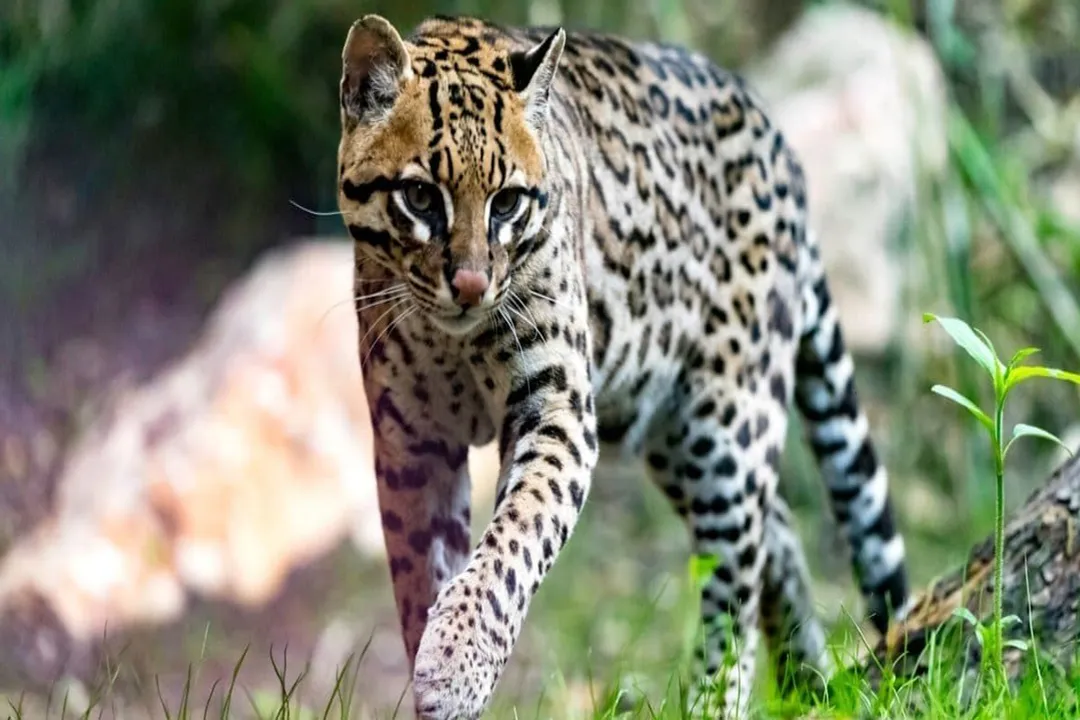
Sloths, famous for their deliberate, slow movements, occupy a very different niche in the Neotropical environment. They are primarily folivores, meaning their diet consists overwhelmingly of leaves, buds, and tender shoots. [5] This low-energy diet directly dictates their behavior, leading to an exceptionally slow metabolism and reduced movement patterns designed to conserve the little energy gained from their forage. [5]
Sloths spend the majority of their lives hanging upside-down from branches, a position that makes them highly vulnerable when they descend to the forest floor—an infrequent necessity for defecation—or when they are spotted moving slowly through the trees. [1][6] Their slow speed is their primary defense mechanism, offering them camouflage against predators that rely on sight and motion detection. [5]
The two-toed and three-toed sloths inhabit similar forest ecosystems to the margay, meaning their paths cross regularly in the wild. [1][6] However, the sheer difference in energy expenditure between the two animals suggests very different energy requirements for survival and hunting. A sloth represents a large, slow-moving calorie package, but one that is difficult to catch relative to its energy return, given the immense effort required to subdue and consume such a bulky animal for a small cat.
# Predator Landscape
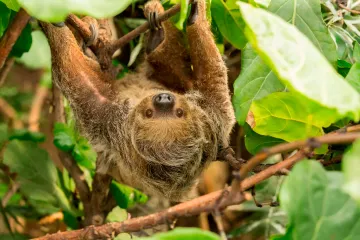
To understand if a margay eats a sloth, it is useful to examine the established list of animals known to successfully hunt and consume sloths. [1][6] Sloths have several formidable predators that operate at different levels of the canopy and forest strata.
The most significant threats to sloths often come from large apex predators and powerful avian hunters:
- Large Felines: Jaguars and pumas are documented predators of sloths. [1][6] These cats are substantially larger and more powerful than the margay, capable of overpowering an adult sloth relatively quickly. [1] Ocelots, another mid-sized cat that shares habitat with the margay, are also sometimes implicated in sloth predation. [1][6]
- Birds of Prey: The Harpy Eagle is perhaps the most specialized aerial hunter of sloths, capable of snatching them directly from the trees. [1][6]
- Other Mammals: In some areas, predators like the tayra, a member of the weasel family, have been documented as sloth predators. [1] Furthermore, large snakes are also recognized as threats, particularly to young or low-moving sloths. [6]
When comparing this list to the margay, a clear pattern emerges: the known predators are significantly larger or specialized for aerial attacks. The margay is in a different weight class entirely. While the margay is an expert climber, the size disparity between it and an adult sloth suggests that a successful hunt would be a high-risk, low-reward endeavor for the small cat.
If we consider the typical weight range for margays (around 8 pounds) versus even smaller adult sloths, a confrontation is often heavily weighted in favor of the sloth's defensive capabilities, which include sharp claws, even if they are slow to deploy them. [5]
# Niche Comparison
The ecological success of the margay is predicated on its specialization for hunting small, arboreal prey that requires speed and agility to catch, such as monkeys, birds, and lizards. [3] Its evolutionary path favored speed and dexterity in the branches over sheer brute strength. [9] This contrasts sharply with the sloth's evolutionary path, which favored energy conservation through extreme slowness and camouflage. [5]
It is insightful to compare the known prey of the margay, which includes smaller, quicker targets, with the sloth's defense profile. A common predator like the ocelot, which is larger than the margay, is still often listed alongside the margay as a contemporary, yet the ocelot is explicitly mentioned as a sloth predator while the margay is conspicuously absent from the same predator lists. [1][6]
This difference might suggest a form of behavioral partitioning among the mid-sized and small cats. The ocelot, being larger and heavier, might possess the necessary power to subdue a sloth effectively should the opportunity arise, perhaps targeting juveniles or infirm adults. The margay, operating at the lower end of the cat size spectrum in that niche, may simply find the risk of injury or the energy expenditure required to secure a sloth to be an inefficient use of its hunting time, favoring the reliable capture of smaller, faster prey that better matches its physical capabilities. [3]
If a margay were to consume a sloth, it would almost certainly have to be a very small infant sloth, perhaps one that has fallen from the mother or been orphaned. Even then, the mother sloth is a capable defender. [5] The established predation records suggest that for the majority of its active life, the margay likely avoids sloths as prey items.
# Feeding Strategies
When discussing the feeding habits of wild cats, it is helpful to think about the energetic calculus involved. A small predator expends a significant amount of energy to secure a meal. If a typical margay weighs around 8 pounds, [9] and adult sloths can weigh considerably more—depending on the species, sometimes up to 15 or 20 pounds—the caloric gain might not justify the high risk of injury from the sloth's defensive claws, especially when abundant, less-defended prey is available in the same trees. [5]
This leads to an interesting inference about the role of size in predator-prey dynamics, even in overlapping habitats. In the world of the rainforest canopy, where visibility is often limited, successful predation often relies on exploiting a significant size or speed advantage. The margay has the speed advantage over the sloth, but the sloth's bulk negates this once a confrontation begins, allowing it to resist being moved or subdued efficiently. This ecological constraint likely keeps the margay focused on prey items like small monkeys, lizards, and nocturnal rodents that make up its typical fare. [3][7]
A way to visualize this potential avoidance is by considering the distribution of their hunting efforts. A margay spends its time mastering incredible feats of agility, like climbing down tree trunks head-first, [4] which indicates specialization for rapid, vertical movement targeting arboreal animals that are similarly quick or are too small to fight back effectively. Sloths simply do not fit this profile.
# General Cat Habits
The broader context of wild cat behavior also informs this discussion. Cats, in general, are obligate carnivores, meaning their diet requires animal protein to survive. [3] However, the specific types of meat they consume depend entirely on what they can reliably subdue. The margay's success is tied directly to its unique physical makeup—its long tail for balance and specialized ankle rotation for descending trees. [2][4] These attributes are perfectly suited for hunting prey that lives and moves primarily in the canopy, but they don't necessarily equip the cat for taking down the heaviest, slowest resident of those same branches. The margay's diet reflects its physical tools: it is built for acrobatic pursuit, not for overpowering large, slow prey. [9]
In contrast, the larger cats listed as sloth predators—the jaguar and the ocelot—possess the necessary paw size and jaw strength to manage the struggle associated with taking down a sloth, which is a far more substantial meal than a common rodent or small bird. [1] Therefore, the absence of the margay from the known predator lists appears to be less about a lack of opportunity and more about a mismatch between the predator’s physical capabilities and the energy investment required to subdue a sloth successfully.
# Shared Environments
Both the margay and the sloth are creatures of the forests, found across similar swaths of Central and South America. [4][5] The Nicoya Peninsula, for example, hosts a variety of wildcats, including the margay, where they share the ecosystem with diverse other wildlife. [8] This geographical overlap ensures that encounters are not rare, but the documented outcome of those encounters remains skewed towards the margay pursuing smaller prey.
Understanding the conservation status and habitat needs of these animals is vital, regardless of their dietary interactions. For example, the celebration of International Sloth Day helps bring attention to the very real threats sloths face, many of which are related to habitat loss, which simultaneously impacts the margay's ability to hunt its preferred diet. [5] When the forest structure is degraded, the delicate balance of prey availability shifts, potentially forcing small carnivores like the margay into riskier hunting situations, though whether this pushes them toward attacking sloths remains speculative without further field data.
The picture that emerges is one of ecological specialization, where, despite sharing the same leafy highways, the margay and the sloth occupy different functional feeding roles. The margay is the agile, arboreal hunter of small-to-medium targets, while the sloth is the slow-moving, leaf-eating specialist, leaving the risky business of sloth hunting to its significantly larger relatives or specialized raptors overhead.
Related Questions
#Citations
Sloth Predators: These 5 Animals Kill and Eat Sloths - A-Z Animals
Meet the margay (Leopardus wiedii). Also known as the long-tailed ...
Wikijunior:Big Cats/Margay - Wikibooks, open books for an open world
Jungle Cats › Margay - La Paz Waterfall Gardens
international sloth day: 10 facts you probably didn't know about sloths
Sloth Predators | Sloth Tour La Fortuna | December
Margay | North American animals Wiki - Fandom
Costa Rica Wild Cats, Jaguar Ocelot Jaguarundi Margay Cat
Sennett Free Press: The Margay - Rory Schaefer