Do bullfrogs have teeth?
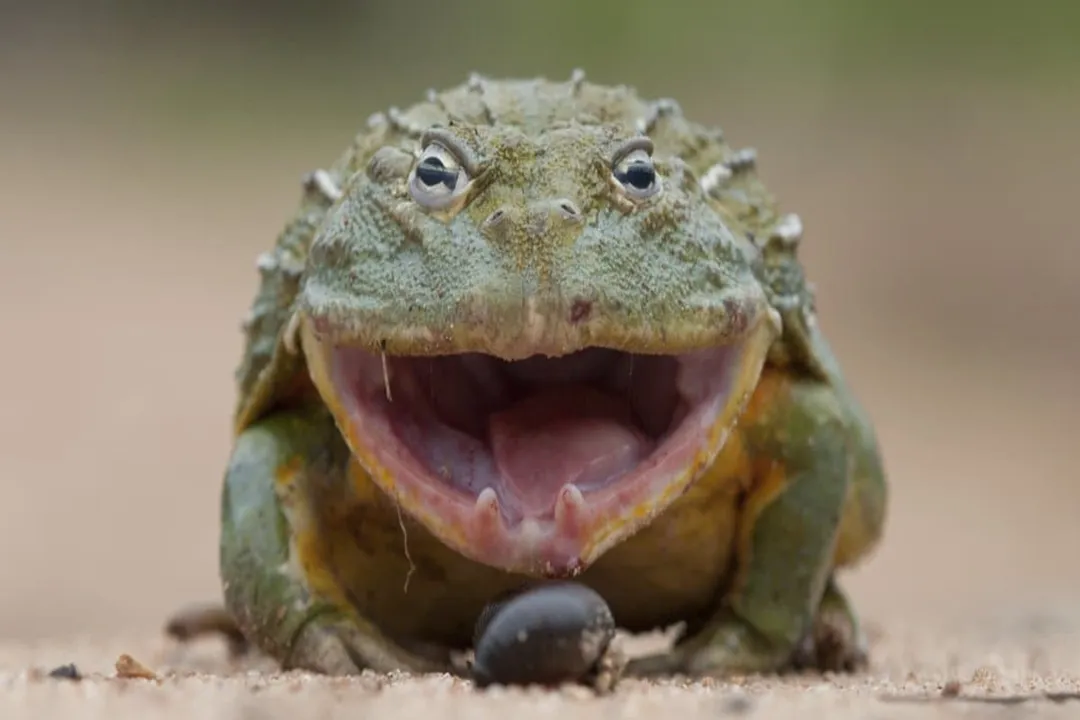
The question of whether a bullfrog possesses teeth often leads to confusion, largely because the term "bullfrog" itself isn't reserved for a single species. It’s a title frequently applied to any particularly large frog found in various parts of the world, meaning the answer you get depends entirely on which bullfrog you are observing. For many general readers, the image of a frog mouth conjures up a smooth, toothless interior, but when we look closely at the two most famous representatives—the North American and the African species—the reality of their oral anatomy diverges quite sharply.
# American Holdfasts
The American Bullfrog (Lithobates catesbeianus), known for its massive size and deep, cow-like call of "jug-o-rum," is the one most familiar across North America. When inspecting the mouth of this giant amphibian, you will not find the solid, deeply rooted teeth made of enamel, dentin, and cementum that you see in mammals. Instead, their dental equipment is highly specialized for retention rather than chewing, as frogs generally swallow their meals whole.
The American Bullfrog relies on a three-step process to secure and consume its varied diet, which ranges from insects to small rodents, snakes, and even other frogs. First, the long, sticky tongue is deployed ballistically to capture the prey and flick it back into the mouth. Once the prey is inside, the teeth structures take over the holding role.
They possess two main types of tooth-like structures:
- Maxillary Teeth: These are located along the outer perimeter of the upper jaw. They are incredibly tiny and conical, often difficult to spot even when the mouth is wide open. Their primary role is not to chew, but to help maneuver the captured prey within the mouth and hold it steady just long enough for the next step.
- Vomerine Teeth: Found on the roof of the mouth, these structures are even harder to see, sometimes being partially obscured by a mucous membrane. They usually appear in small clusters, perhaps just two sharp points. These teeth act like tiny barbs, digging into the prey to ensure it cannot wriggle free during the final moments before being swallowed.
Interestingly, sources sometimes vary in their description, with some emphasizing that the upper jaw is lined with ridges that help grab prey, while others explicitly mention the presence of small teeth used to keep prey from escaping before swallowing. This slight discrepancy likely comes down to whether one considers these bony projections genuine teeth or specialized gripping ridges, but their function remains the same: they are aids for retention, not instruments of mastication. The American Bullfrog lacks teeth on its lower jaw entirely.
# African Fangs
If the American Bullfrog has surprisingly reduced dental hardware, the African Bullfrog (Pyxicephalus adspersus) is the true exception among its common relatives, possessing a much more menacing set of structures. These colossal frogs are known to consume a wide range of items, including small mammals, birds, and other frogs, requiring a significantly stronger grip.
The African Bullfrog’s mouth configuration presents a stark contrast to its North American cousin:
- Maxillary Teeth: They possess maxillary teeth on the upper jaw, but these are described as being sharp and curved.
- Odontoids: This is the defining feature. African Bullfrogs have bony projections on their lower jaw known as odontoids. There are typically three of these projections—two larger ones on either side and a smaller one centrally located. While these are technically not true teeth because they lack the standard composition of enamel, dentin, and cementum, they are intensely sharp and, in the largest specimens, can resemble genuine fangs.
The African Bullfrog uses these formidable jaw structures to bite and hold prey, actively preventing escape before they manage to swallow it. For anyone keeping or encountering this species, this difference is vital; the odontoids are capable of delivering a painful bite, unlike the relatively passive retention mechanisms of the American Bullfrog.
# Replacement Cycles and Ancient Lineages
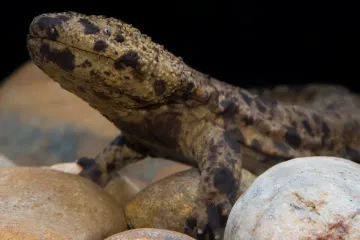
One fascinating similarity between the structures found in many modern frogs, including the American Bullfrog, and the true teeth of their ancient ancestors is their impermanence. Frogs do not have teeth set for a lifetime; they continuously replace them throughout their existence. As one structure wears or breaks, a replacement is already waiting beneath to take its place. This continuous shedding and regeneration system is a hallmark of their lineage.
Looking back in time reveals a much more toothy amphibian history. Around 250 million years ago, prehistoric frogs were equipped with a full set of true teeth, including large fangs and thousands of small, backward-hooked teeth covering the mouth's roof, making them formidable predators. Evolution, however, seems to have worked against dental retention, as evidence suggests frogs lost their bottom teeth approximately twenty times over their evolutionary history. This makes the persistence of any tooth-like structure today, even modified ones, remarkable.
# Beyond the Jaw Mechanics
The fact that the American Bullfrog uses bony structures on its palate and upper jaw, combined with its powerful, sticky tongue, points to a highly integrated feeding system where every component contributes to overcoming resistance. It is instructive to consider the biomechanics here: the tongue acts as the primary kinetic energy launcher, storing and releasing elastic force to achieve incredible speed—a speed independent of body temperature, which is vital for cold-blooded creatures. The maxillary and vomerine structures, therefore, do not need to provide the initial capture force; they are specialized to counteract the prey's last-ditch struggles after the tongue has done its job.
If we map the function of these structures against the known feeding habits, a pattern emerges that can help observers predict behavior. A frog with only maxillary and vomerine projections, like the American Bullfrog, is an ambush predator that specializes in swallowing larger prey whole, relying on swiftness and palatal grips to secure the meal. The presence of the African Bullfrog’s sharp odontoids signifies a slight shift in strategy toward active biting and holding, suggesting they tackle prey that might be more capable of immediate counter-struggle or escape from a simple palatal grip. When observing any large frog, noticing how quickly it retracts its eyes when it eats provides a visual clue to the internal mechanics supporting the food's descent, a necessity whether teeth are present or not.
# Tadpole Teeth and Evolutionary Anomalies
Perhaps the most surprising dental discovery is that the larval stage—the tadpole—often does possess teeth, though they are not the adult's structures. A tadpole develops an oral disc and begins forming teeth after about four weeks. These minuscule teeth, sometimes arranged in several rows, help the tadpole graze on algae and small organisms. As the tadpole undergoes metamorphosis, these specialized grazing teeth vanish, eventually being replaced by the adult's grasping or holding structures.
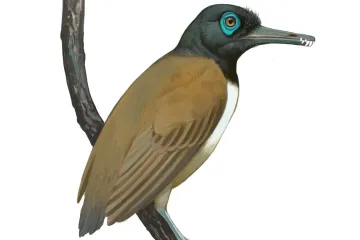
The story of teeth in amphibians is not entirely closed, either. While the general rule dictates that amphibians have lost their lower teeth over millions of years, one species, Guenther's marsupial frog, defies this expectation. This species managed to re-evolve teeth on both its upper and lower jaw within the last 20 million years, baffling scientists who noted this reversal against what is often cited as Dollo's Law of Irreversibility.
Ultimately, while the general notion that frogs are toothless is accurate for most species, the large and varied family of "bullfrogs" demonstrates that nature writes exceptions into the rulebook. Always confirm the species if you need to know about sharp edges; the North American Bullfrog manages its meals with bony grips on its palate, while the African Bullfrog brings sharp, fang-like projections to the table.
Related Questions
#Citations
Bullfrog Teeth: Everything You Need To Know - A-Z Animals
Bullfrogs: Expert Eaters! - Irvine Nature Center
TIL African bullfrogs actually have teeth, which are very sharp, and ...
Wonders of Wildlife: American Bullfrog - Alabama Wildlife Federation
North American Bullfrog Facts and Information - Seaworld.org
American bullfrog - Wikipedia