Are there bullfinches in the US?
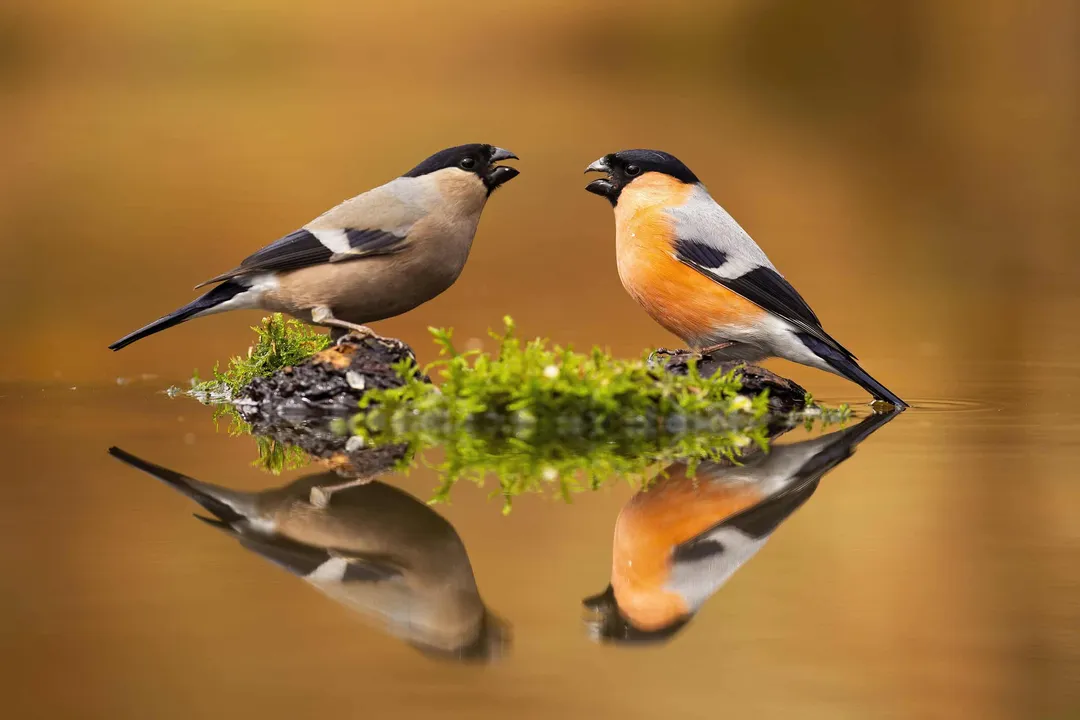
The sight of a vibrant, rosy-breasted bird flitting through a garden often conjures images of European woodlands, yet that very vision—that of a Bullfinch—occasionally sparks excitement across North American birding circles. The question of whether these striking finches naturally occur on the continent is complex, hinging on taxonomy, official records, and the difference between native residents and extremely rare visitors. [1][3][7] While the Pyrrhula genus certainly contains birds known by this name, their established presence in the United States is far from commonplace. [2]
# Genus Distinction
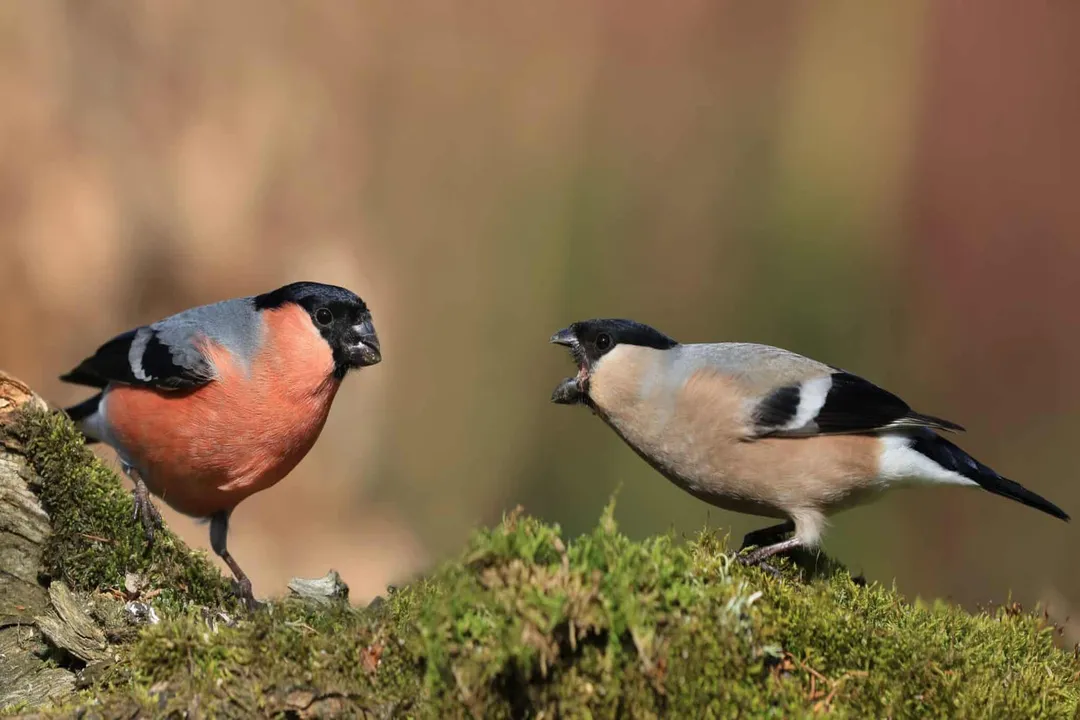
The birds globally recognized as Bullfinches belong to the genus Pyrrhula, which is part of the finch family Fringillidae. [2] This group includes several species, the most famous of which is the Eurasian Bullfinch, Pyrrhula pyrrhula. [2][5] This species is widespread across Europe and Asia. [5][7] When North American birders discuss the presence of a "bullfinch" in the US, they are almost exclusively referencing the potential sighting of this Eurasian visitor, as there are no species in the Pyrrhula genus native to the continent. [1][7] It is important to distinguish these birds from North America's native red-hued finches, such as the Pine Grosbeak (Pinicola enucleator), which, while sometimes sharing a general description of a "chunky red bird," belongs to a different genus altogether. [1]
# Eurasian Status
The Eurasian Bullfinch is native to much of temperate Europe and Asia, inhabiting woodlands, parks, and gardens across its extensive Old World range. [5][7] The U.S. Fish and Wildlife Service lists the Eurasian Bullfinch under its species profile, primarily acknowledging it as a foreign species. [9] For a species to be considered established in the United States, it must have self-sustaining, breeding populations, which the Eurasian Bullfinch does not possess. [9] Therefore, any occurrence in the US is either an escape from captivity or an exceptionally rare vagrant blown far off course from its native range. [3][4]
The American Birding Association (ABA) Rare Bird Alert system occasionally acknowledges reports of species far outside their established ranges, and such posts on platforms like the ABA Rare Bird Facebook group reflect the excitement surrounding these truly unusual events. [4] These sightings are scrutinized heavily because of the potential for misidentification, given the bird's striking appearance. [3]
# Field Marks
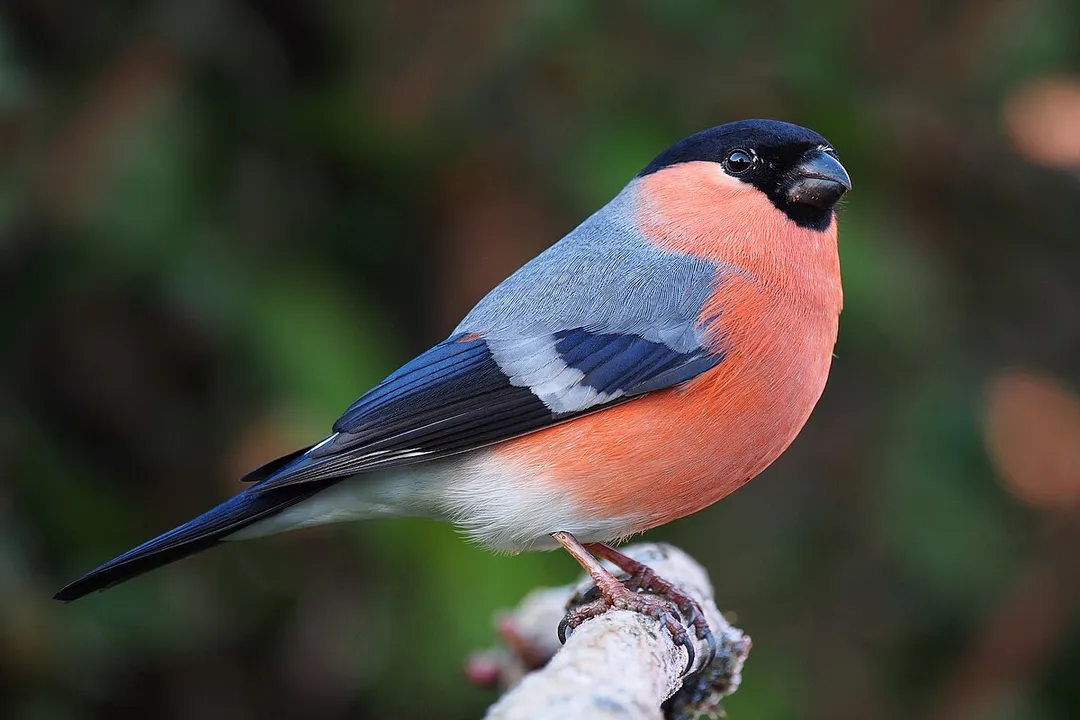
A positive identification of the Eurasian Bullfinch is usually straightforward due to its highly distinctive plumage. Adult males are unmistakable: they possess a bright, rosy-pink or reddish-orange breast and cheeks, contrasting sharply with a dark gray or black cap and wings. [1][5][7] The back is generally a pale gray. [5] Females share the same pattern but feature duller, more buffy-brown or pale-brown underparts instead of the male's vivid rose. [5][7] Both sexes have a distinct black cap and a thick, black bill specialized for cracking seeds. [1][5] They are described as plump, stocky birds, which contributes to their slightly hesitant or lethargic appearance when observed feeding. [1][5]
A true expert studying a potential sighting in the US would pay close attention to the precise shade of red on the breast and the subtle details of the wing markings, comparing them against known descriptions of North American finches. [1][3] For instance, while a male Pine Grosbeak is also reddish, its overall structure, the distribution of color (often more yellow/orange in the male), and the lack of the Eurasian Bullfinch's signature dark cap make separation possible with a clear view. [1] The overall impression—stocky, short-tailed, with that prominent dark cap—is the key differentiator for the Pyrrhula species. [7]
# Vagrancy Patterns
When a bird like the Eurasian Bullfinch shows up in the US, it is a significant event precisely because it requires an extraordinary migratory deviation. [4] Most recorded occurrences have been limited to the eastern or northeastern coasts, suggesting that if a bird does cross the Atlantic or become displaced, it is likely to arrive in these regions first. [3] These events are rare enough that they are often documented through photographs or collected specimens, indicating that they are not brief, unverified flashes of color. [4]
One critical factor in assessing any sighting is whether the bird originates from a captive population. The pet trade for exotic and colorful birds means that escapes are a constant, though often unprovable, possibility for any non-native species appearing inland or far from coastal entry points. [9] Distinguishing between a hardy vagrant that crossed the ocean and an escapee that flew out of a backyard aviary is often the hardest part of confirming a US Bullfinch record. [3]
If you are monitoring potential vagrant hotspots along the Atlantic flyway, especially during the autumn migration when other species are moving south, paying extra attention to unusually structured finches with heavy bills might be worthwhile. [1] However, the chances of confirming a Eurasian Bullfinch are exceptionally low; treating any potential sighting as a case for photographic proof and careful documentation, perhaps submitting evidence to state or regional bird records committees, is the best approach for participating in this level of ornithological discovery. [4]
# Behavioral Context
In their native European habitats, Eurasian Bullfinches often feed on the buds and seeds of trees and shrubs, with a particular fondness for fruit tree buds, which can occasionally bring them into conflict with orchard owners. [5][7] Their diet primarily consists of seeds, fruits, and insects. [7] They are generally described as somewhat shy, often keeping to dense cover, though they can become surprisingly tame around reliable feeding stations. [5] This tendency to forage in dense vegetation might explain why some sightings, even in their native range, might be missed until the bird is comfortable enough to feed openly. [1]
Their song is comparatively subtle, often described as a soft, high-pitched whistle, less remarkable than the bold colors of the male. [7] This quiet vocalization means that relying solely on hearing to identify one in an unfamiliar North American environment might not be as effective as it would be for a more vocally assertive native species.
# Estimating Likelihood
To put the rarity into perspective for a US birder planning a trip, consider that established, well-known vagrants from Europe might appear every few years in a specific state, like Maine or Massachusetts. [4] A bird like the Eurasian Bullfinch is significantly rarer than even those already uncommon visitors. If we look at the number of birders actively scanning for rarities annually across the entire eastern seaboard, the probability of any single birder encountering one in a given year approaches near zero. A helpful way to frame this rarity is by examining historical records; a search through major North American bird databases might yield only a handful of documented instances over the last century, likely concentrated near major ports or islands where transatlantic travel is more probable. [3][9] Therefore, while the bird has been recorded—implying an official, documented presence—it is not a bird you can realistically seek out with any expectation of success, unlike, say, looking for a wayward Iceland Gull or a Pink-footed Goose. [4] The presence is factual but statistically negligible for the average observer. [9]
This inherent rarity means that when a credible photograph surfaces, it generates immediate, intense scrutiny within the community, which ultimately solidifies the authority of the records committee that accepts it. [4] It speaks volumes about the dedication of birders that these elusive visitors are often documented at all. [1]
# Conservation Status
Globally, the Eurasian Bullfinch is typically listed as Least Concern by major conservation bodies, reflecting its large range and relatively stable population across Europe and Asia. [7] This status contrasts sharply with the intense local conservation focus that might be applied to a genuinely rare North American native species. [9] The management of the Eurasian Bullfinch in the US context, as implied by FWS records, pertains only to regulating its importation and preventing the establishment of non-native populations, rather than active conservation efforts for wild populations. [9] This lack of domestic conservation management underscores its status as a non-established, exotic visitor.
Related Questions
#Citations
Bullfinches (Pyrrhula) - Birds of North America - North American Birds
Pyrrhula - Wikipedia
Red Birds Seen in North America - Eurasian Bullfinch
Eurasian bullfinch spotted in Watson Lake, Yukon - Facebook
Eurasian Bullfinch Bird Facts - A-Z Animals
Eurasian Bullfinch Facts For Kids | AstroSafe Search - DIY.ORG
Puerto Rican Bullfinch - Melopyrrha portoricensis - Birds of the World
Eurasian Bullfinch - Pyrrhula - U.S. Fish and Wildlife Service