Are California kingsnakes immune to rattlesnake venom?
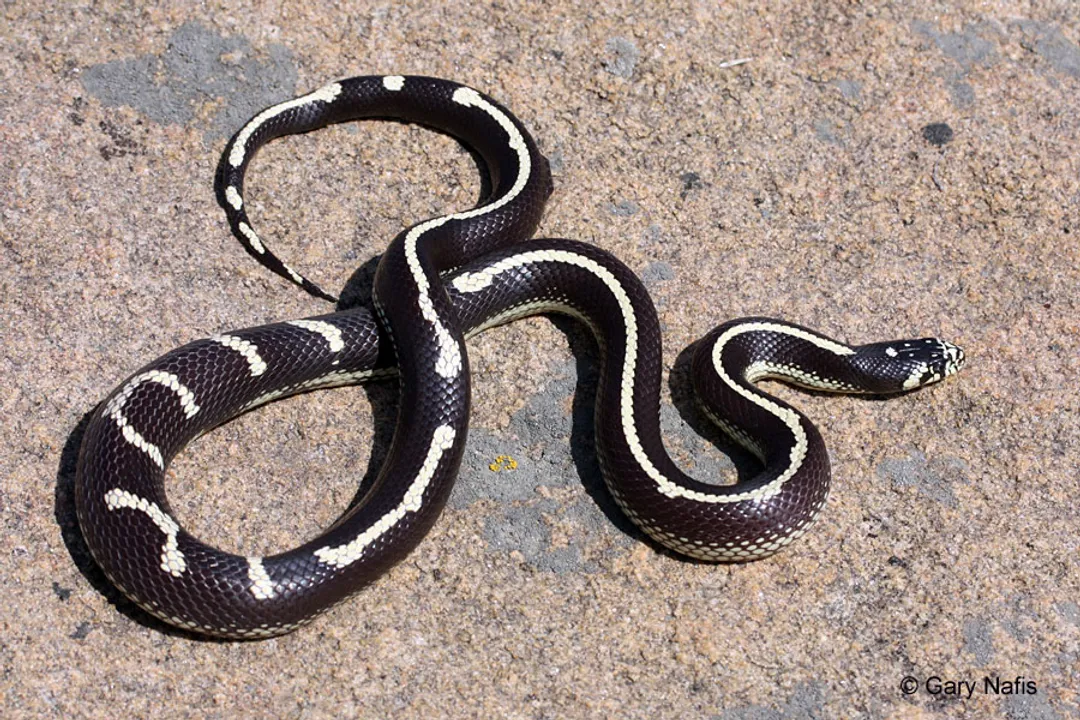
The striking California kingsnake, often recognized by its bold bands of black and white or cream, carries a reputation that far surpasses its gentle nature as a non-venomous constrictor. [5][6] This fame stems almost entirely from its peculiar appetite: the kingsnake regularly includes rattlesnakes among its primary food sources. [2][3][5][6] In the arid landscapes and woodlands where they coexist, the encounter between a California kingsnake and a venomous pit viper, such as the Western Diamondback or Mojave Rattlesnake, often results in the smaller snake consuming the larger, venom-injecting one. [3][7] This predatory capability immediately raises the fundamental question about how such a meal is possible without the kingsnake succumbing to the potent toxins involved.
# Serpent Diet

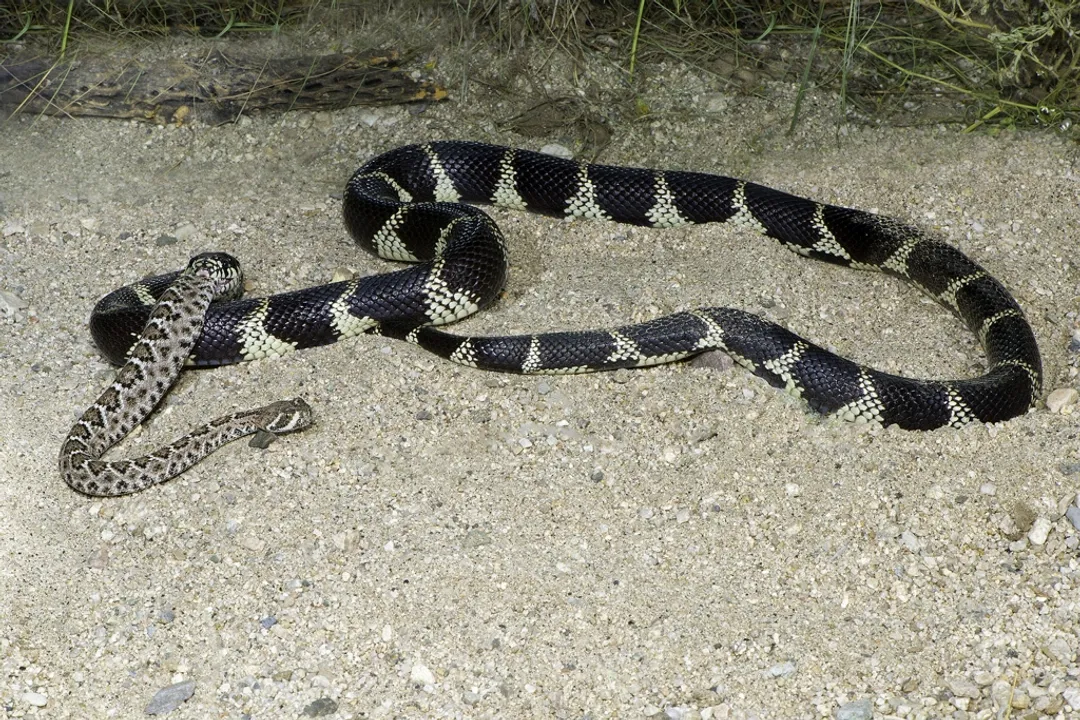
The diet of the Lampropeltis californiae is broad, consisting of rodents, lizards, birds, and amphibians. [5] However, ophiophagy—the practice of eating other snakes—is a defining characteristic of the kingsnake genus. [1][9] This behavior is not just opportunistic; it is a specialized survival strategy in regions where dangerous snakes are common. [5] For instance, in areas like the Oakland Zoo's habitat or the wild regions of California, seeing a kingsnake near a rattlesnake den is not unusual. [6] The act of subduing a rattlesnake involves the kingsnake relying on its sheer physical strength, rapidly coiling around the venomous snake to restrict its movement and ultimately suffocate it, long before the venom can be effectively deployed against the attacker. [2] Even when a venomous snake manages to strike during the ensuing struggle, the outcome remains remarkably consistent: the rattlesnake usually ends up as prey. [9]
# Toxin Defense

The key to this surprising predator-prey relationship lies in the kingsnake’s specialized physiology, which grants it significant, though not absolute, protection against pit viper venom. [1][7] While the kingsnake is not venomous itself, its body has evolved a defense mechanism that neutralizes the primary effects of neurotoxic venom components found in rattlesnakes. [1][7]
The active ingredients in many rattlesnake venoms are proteins that attack the nervous system, specifically targeting the nicotinic acetylcholine receptors (nAChRs) found at the junctions between nerves and muscles. [1] When these receptors are blocked by the venom, the victim cannot transmit nerve signals, leading to paralysis and eventually respiratory failure. [1] California kingsnakes possess receptor proteins that have structural differences from those found in non-resistant animals. [1][7] These molecular variations prevent the venom toxins from binding effectively to the snake’s own receptors. [1] Think of it as having a lock that the snake’s venom key simply doesn't fit properly; the lock remains functional despite the key's presence. [1] This difference in receptor structure is a profound evolutionary adaptation that allows the kingsnake to safely consume prey that would prove fatal to nearly any other local animal. [7]
# Degrees of Protection
It is important to clarify the terminology when discussing the kingsnake's survival skills. While often described as immune, a more scientifically accurate term might be highly resistant or tolerant. [1][9] Absolute, 100% immunity against every possible toxin dose or variant is difficult to confirm definitively in the wild. [9] Sources confirm that kingsnakes can survive encounters that would kill mammals, birds, and other reptiles, demonstrating a powerful resistance to the neurotoxins. [1][7] However, if a kingsnake were to sustain a massive injection of venom, or if the venom contained specific components its receptors were less effective against, the outcome might change. [9] The fact remains that in natural confrontations, this resistance is overwhelmingly successful. [1] It is fascinating to consider that this resistance likely developed over millennia as an evolutionary arms race, where the snakes that could better tolerate the venom of their primary reptilian competitors gained a reproductive advantage by securing a high-calorie food source that others avoided. [1][7] This ongoing biological contest shapes the fauna of the American West far more than casual observers might realize.
# Local Ecology

The presence of the California kingsnake has significant, positive consequences for local ecosystems where rattlesnakes are present. [9] By regulating the rattlesnake population, the kingsnake helps maintain a natural equilibrium. [9] Rangers and wildlife experts often point to the kingsnake as a natural check-and-balance mechanism in habitats like those found in the Channel Islands National Park. [4] Their role is to keep the numbers of venomous snakes in check, which ultimately benefits other, non-immune species sharing the environment. [4] This ecological service means that when you spot a kingsnake slithering through dry grass or near a rocky outcrop, you are likely observing an animal that is actively managing the local danger level. [6]
For those who spend time outdoors in areas populated by both species—from backyard gardening in suburban California to hiking in protected areas—understanding this dynamic offers a unique perspective on wildlife observation. Since the kingsnake is often active during the day, it sometimes gets misidentified as a threat simply because it is near a rattlesnake or because of its own striking coloration. [5] It is helpful for hikers and naturalists to remember that if they observe a constriction event, they are witnessing nature’s own biological solution in action, and direct intervention is rarely necessary or advisable. [2][3] If you ever find the carcass of a rattlesnake near a recently departed kingsnake, it serves as concrete proof of this natural regulatory process at work, signaling a healthy, if rugged, local food web. [2][3] Furthermore, because kingsnakes are constrictors, they are typically slow-moving and relatively docile unless handled roughly, making them far less dangerous to humans than the snakes they consume. [6]
# Habitat Needs
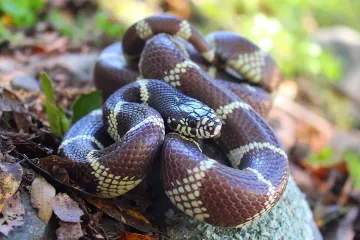
California kingsnakes thrive in a variety of settings, generally favoring areas that provide cover and access to water, which can include grasslands, woodlands, marshes, and even semi-arid regions where rattlesnakes also reside. [5] Their distribution stretches across much of California and parts of the southwestern United States. [5] Because they are non-venomous and depend on constriction, they need areas where they can successfully ambush or corner their prey, which often means hiding near rodent burrows or rocky crevices where rattlesnakes might also shelter. [5] Their survival is intrinsically linked to the presence of these prey animals, including the venomous ones. [5] Protecting the habitats of the California kingsnake, therefore, indirectly helps manage populations of more dangerous reptiles in the area. [4][9] For instance, when considering land management or backyard wildlife practices, creating brush piles or leaving undisturbed natural cover benefits both the essential rodent controllers and the ecosystem’s unique venom-resistant predator. [5]
# Misconceptions and Encounters
Despite their remarkable biology, public perception often leans toward fear of all snakes. The distinctive banding pattern of the California kingsnake, while beautiful, can sometimes be confused with that of a coral snake in some regions, although the pattern difference is generally reliable: kingsnakes usually feature black bands adjacent to lighter bands, while the dangerous red bands touch yellow bands in the true venomous coral snake (though this rule is strictly for the Eastern Coral Snake, making visual identification risky regardless). [6] When encountering a kingsnake, especially one that has recently eaten or is near a rattlesnake, the best approach is simply to observe from a safe distance. [2][6] They are not aggressive toward humans and will usually try to flee if they sense danger. [6] The very existence of this snake in an ecosystem serves as a natural defense against the more immediate threat of rattlesnake bites to other wildlife, and even to humans who might otherwise encounter more venomous reptiles in high concentrations. [4] Their specialized tolerance is a compelling example of how evolution provides unique solutions to environmental challenges, turning a deadly threat into a reliable meal ticket. [1][7]
Related Questions
#Citations
Venom resistance in kingsnakes - Life is short, but snakes are long
I almost stepped on a king snake killing a rattlesnake on my hike in LA
Kingsnakes prey on rattlesnakes in orange county - Facebook
The King of Snakes - Cabrillo Field Notes - National Park Service
California Kingsnake - Nature Collective
California Kingsnake - Oakland Zoo
Here's what gives kingsnakes the edge in snake-to-snake combat
California Kingsnake - Sacramento Splash
Nature's Antivenom - Rattle Rescue - Snake Removal