Are red-tailed bumblebees rare?
# Common Status
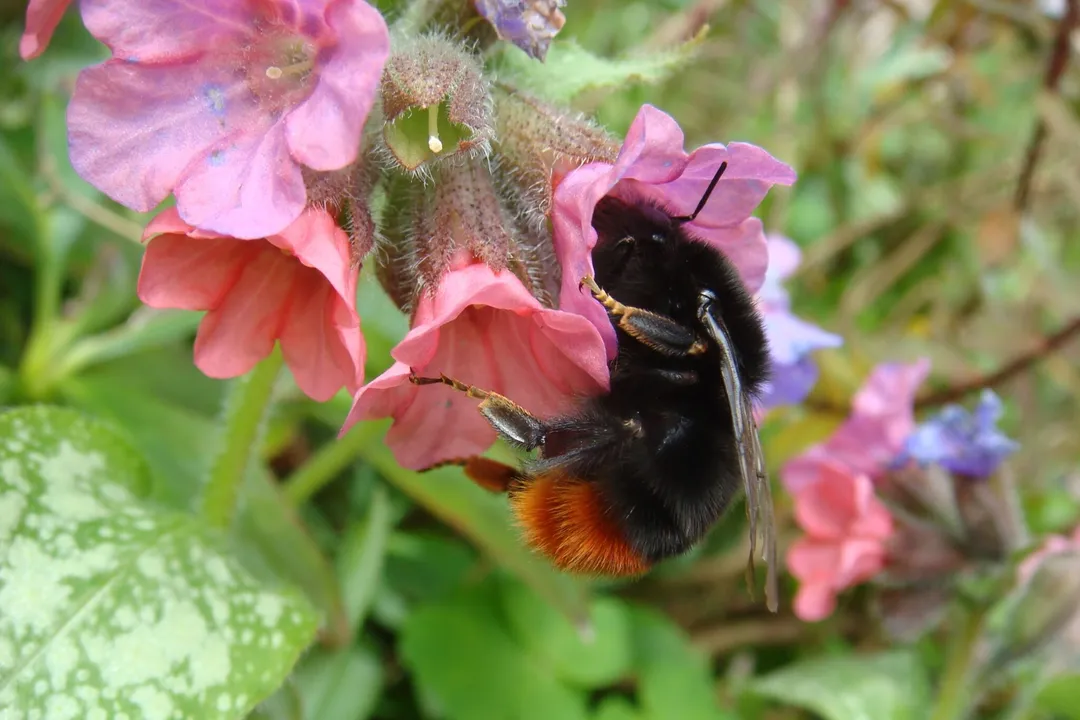
The status of the red-tailed bumblebee (Bombus lapidarius) isn't a simple yes or no answer; its perceived rarity heavily depends on where in the world you happen to be standing. In many parts of Central Europe, this species is recognized as being among the most common and easily identified bumblebees. [2] Similarly, within the North East of England, this distinctive bee is considered common and widespread across various settings, including parks and gardens, and it was even the most recorded species during the North East Bee Hunt in 2020. [1][4] It is often counted as one of the Big Seven common bumblebees found throughout Britain. [4]
However, this picture of abundance shifts significantly when the focus moves to the island of Ireland. Here, B. lapidarius is designated as Near Threatened. [2] This designation stems from its localized distribution within the country, primarily favoring coastal dunes and unimproved grasslands—habitats that are currently in decline. [2] In stark contrast to its widespread presence elsewhere, in Ireland, it is described as being near absent from agricultural areas. [2] This discrepancy in conservation standing, where a species is common in one region and threatened in another, underscores how crucial local habitat quality and land management practices are to the survival of any insect population. [2]
# Striking Markings
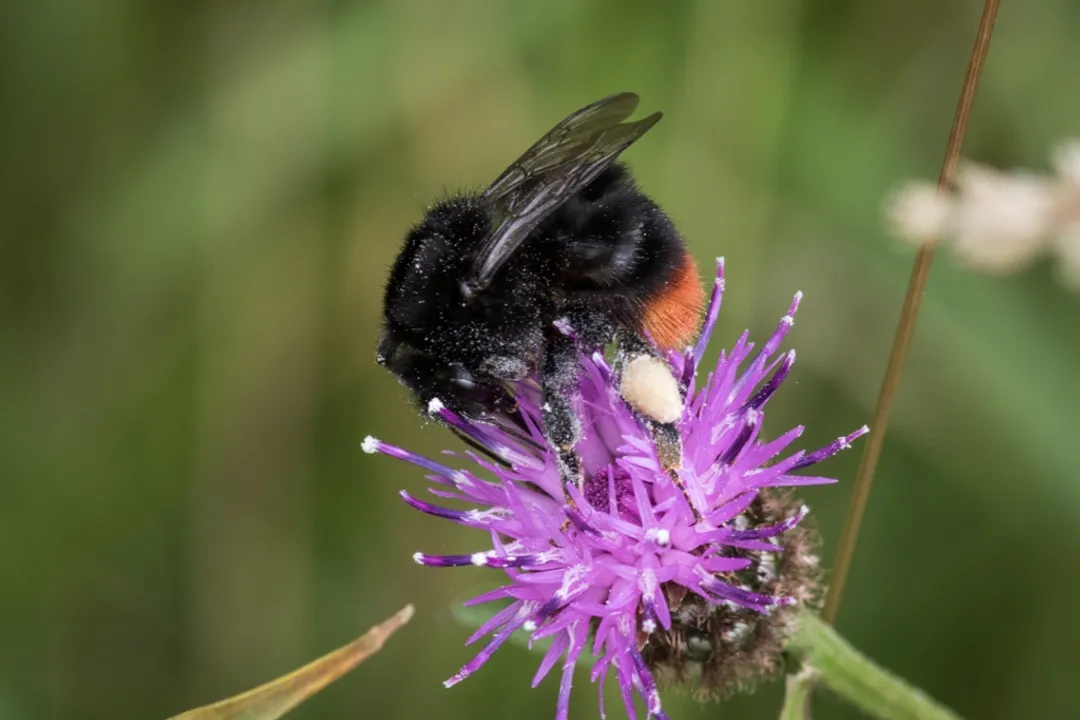
What makes this bee so recognizable, regardless of its local abundance, is its striking appearance. The red-tailed bumblebee is defined by a predominantly black-haired body contrasted sharply with a vibrant, crimson red tail. [1][2][3] This signature red tail is present on the queen, the worker, and the male, though differences in other features clearly distinguish the sexes. [1][4]
For the queens and workers, the body is entirely black except for that distinctive red tail, which can account for up to a quarter of the abdomen's length. [1] Queens are notably larger than the workers, which can resemble smaller versions of the queen. [1][4] A key feature for identifying the females is that their hind legs, which carry the pollen baskets, appear shiny and black when not carrying pollen, and they possess no yellow hair. [3][4] It is worth noting that the bright red tail of workers can sometimes fade to an orange hue due to prolonged sun exposure. [1]
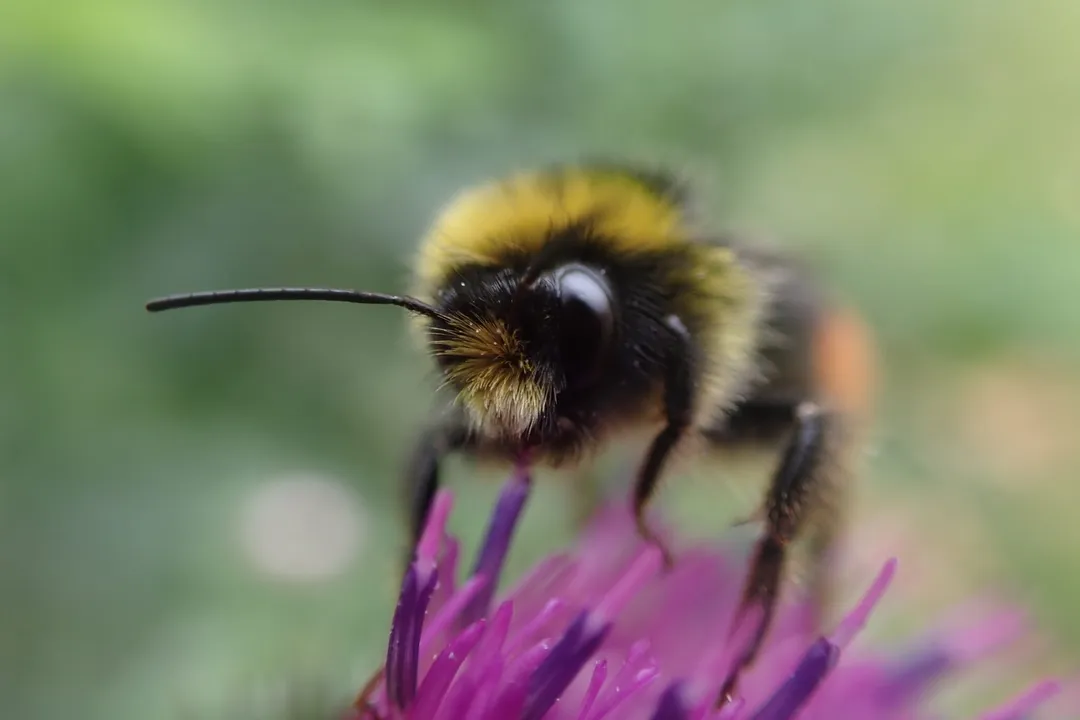
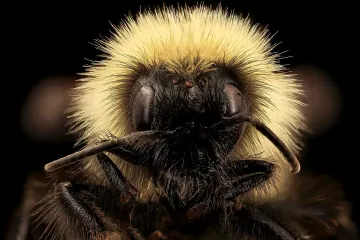
The males, which emerge later in the season toward the end of the colony's life, carry the same red tail but exhibit significant yellow markings. [1][4] Specifically, males possess a distinct yellow band or "ruff" immediately behind the head on the thorax, and often a less defined yellow band across the middle of the thorax. [1][4] Furthermore, the male face features yellow facial hair, sometimes described as a "moustache". [1][4] The extent and intensity of this yellow banding can vary. [4]
To help keep them straight in the field, especially when observing the males, the key is to look for these less extensive yellow markings compared to some other species. [1] The following table summarizes the most obvious visual differences between the sexes:
| Feature | Queen/Worker (B. lapidarius) | Male (B. lapidarius) |
|---|---|---|
| Body Color | Velvety black [4] | Black with yellow markings [2] |
| Tail Color | Crimson red [1][3] | Crimson red [1] |
| Thorax Markings | Black (no yellow collar) [1][4] | Strong yellow collar band behind head [1][4] |
| Facial Hair | Black | Yellow ("moustache") [1][4] |
| Hind Legs | Bare, shining, with pollen baskets [3] | Densely hairy (compared to some lookalikes) [1] |

# Habitat and Nesting Habits
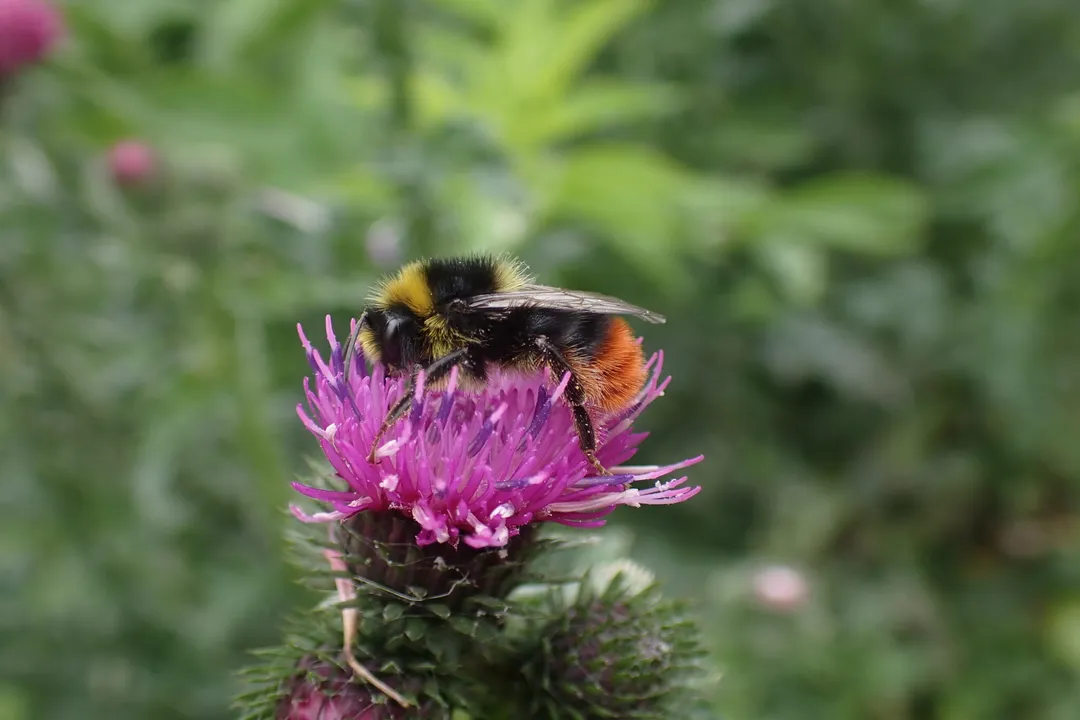
The Latin name, Bombus lapidarius, translates roughly to "of or related to stone," which points directly to the preferred nesting strategy of this social bumblebee. [1] Nests are typically established underground or in enclosed spaces, often utilizing locations beneath stones or, in modern settings, beneath patio slabs. [1][4] These colonies are substantial for a bumblebee species, often containing around 300 workers at their peak. [1][4]
When searching for food, B. lapidarius shows a preference for open terrain over heavily forested landscapes. [2] The workers, who are responsible for foraging throughout the spring and summer, generally remain closer to the nest compared to the males. [1][2] A fascinating aspect of their foraging behavior is their tendency toward high “patch fidelity,” meaning an individual bee will repeatedly return to the same successful food locations. [2] While they can fly quite far—up to 1500 meters—they are generally characterized as having an intermediate foraging distance when compared to some other Bombus species. [2] This preference for specific patches and intermediate range suggests a highly tuned local environmental mapping system within the foraging workforce. When resources are available, they have been observed to exhibit high feeding density relative to other bee species. [2]
# Distinguishing Lookalikes
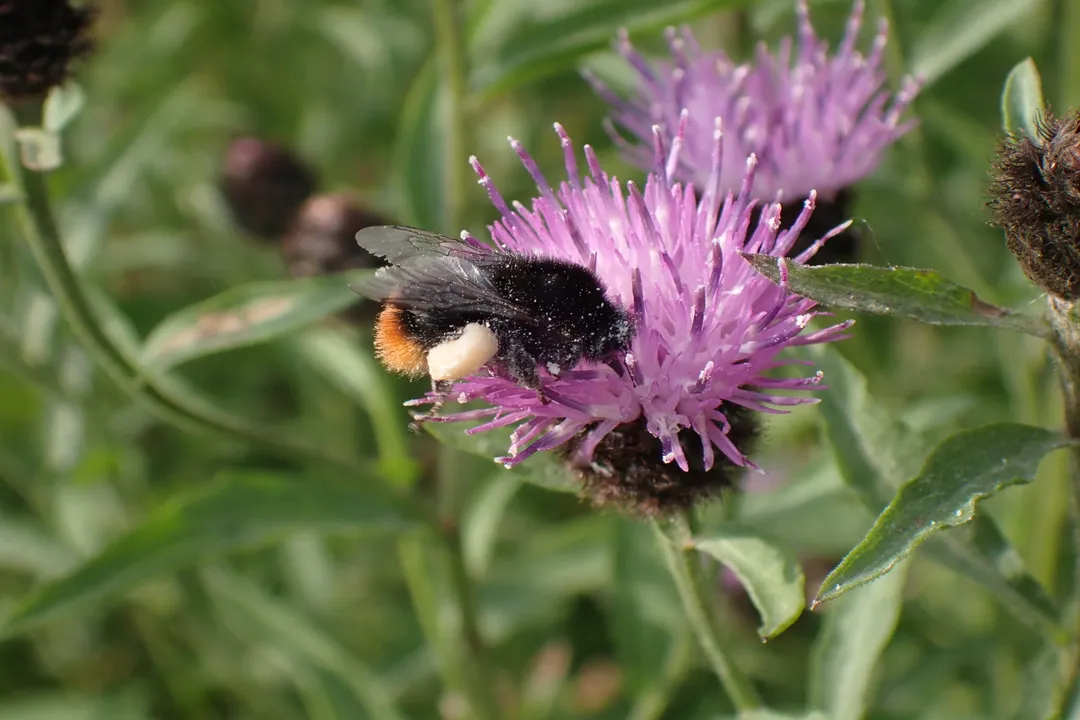
Because the red tail is such a prominent feature, the red-tailed bumblebee is often confused with other similarly colored bees, which is a critical distinction for conservation monitoring. [3] Misidentification can skew population data, making a rare species seem common or vice versa. [2]
One major confusion arises with the Red-shanked Carder Bee (Bombus ruderarius), a species noted as declining and mainly found in wildflower-rich grasslands. [3] While both have red/orange tails, the B. ruderarius queen and worker have a distinct difference in their legs: their pollen baskets are fringed with orange hairs, whereas B. lapidarius females have bare, black, shining legs. [3][4] Furthermore, B. ruderarius generally appears fluffier and dumpier. [3][4] Male B. ruderarius also possess black facial hair, unlike the yellow-faced males of B. lapidarius. [4]
The Red-tailed Cuckoo Bee (Bombus rupestris) is another close match, as the female shares the exact same color pattern as the female B. lapidarius. [1][3] The key identifier for the female cuckoo bee is her dark, smoky wings, which contrast with the transparent wings of the true red-tailed bumblebee. [3][4] The male Red-tailed Cuckoo also differs, often displaying grey bands of hair rather than the yellow banding seen on male B. lapidarius. [1]
Finally, the Early Bumblebee (Bombus pratorum) can cause confusion, particularly with the males. [1] While females of B. lapidarius lack yellow thoracic bands, the female B. pratorum has them. [4] Male B. pratorum also possess a yellow abdominal band, which is absent in male B. lapidarius. [4] B. pratorum is also generally described as being fluffier and smaller. [4]
# Inside the Colony and Value
Beyond identification, understanding the B. lapidarius colony reveals complex social interactions. Like other social bees, they can generate significant heat through thoracic muscle contraction to incubate the brood and regulate nest temperature. [2] In terms of social structure, workers in B. lapidarius colonies do not appear to have a hierarchy among themselves, which is unusual compared to many other bumblebee species. [1]
This lack of worker hierarchy leads to fascinating, and slightly aggressive, internal dynamics. Workers have been observed attempting to eat the eggs laid by the queen. [1] While the queen actively defends her eggs, threatening workers with her mandibles or by head-butting them, the workers are frequently successful in this endeavor. [1] Research suggests that the workers, rather than the queen, may actually control the allocation of sexes within the colony, a common feature in the Hymenoptera order. [2]
This species is highly valued ecologically for its pollination services. [2] Their medium-length tongue allows them to access a wide variety of flowers, including certain species of Viscaria that only bees and butterflies can effectively pollinate. [2] An important ecological trait is that B. lapidarius has been documented foraging successfully at higher temperatures than several other bumblebee species. [2] This capability means they can maintain pollination services when other bees might retreat, potentially stabilizing crop and wild plant reproduction during hotter parts of the day or in warming climates. Considering that foraging distance varies greatly among individuals within a species—some traveling significantly farther than the average 500-meter radius—it suggests that the genetic makeup and individual specialization for long-haul versus local resource gathering are essential components of the colony's overall foraging success. [2] Understanding these fine-grained differences in how bees perceive and exploit their environment, whether on a 500-meter scale or a 1500-meter scale, is vital for tailoring effective habitat protection plans, especially in regions where they are already struggling, such as the declining grasslands of Ireland. [2]
Related Questions
#Citations
Bombus lapidarius - Wikipedia
Red-tailed Bumblebee - Natural History Society of Northumbria
Facts about red-tailed black bumblebees | Friends of the Earth
Red-tailed bumblebee