Are elephant beetles fuzzy?

The question of whether the massive Megasoma elephas, better known as the elephant beetle, is fuzzy is one that often arises when people first see high-quality photographs of this Neotropical rhinoceros beetle. Looking at images of this giant insect, one might expect a hard, glossy shell typical of many beetles, but the reality is often softer to the touch, at least visually. The definitive answer is yes, they possess a covering that gives them a notably different texture than one might initially assume.
# Hairy Covering
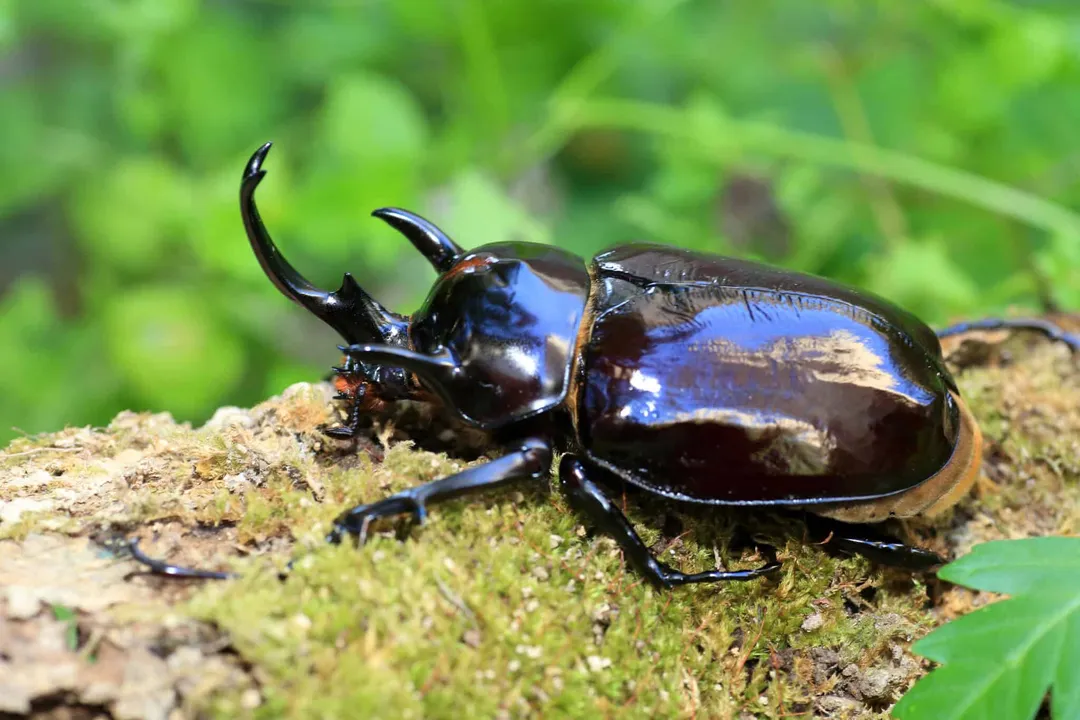
The appearance of the elephant beetle is largely defined by a dense coating of fine, microscopic hairs that blanket its body. This is a key characteristic setting it apart from many other large beetles in the Scarabaeidae family. These fine hairs are not randomly distributed; they are particularly thick across the beetle’s elytra, which are the hard wing covers that protect the more delicate hindwings.
This layer of hair is responsible for the beetle’s overall coloration upon first observation. Although the underlying exoskeleton of the elephant beetle is fundamentally black, the dense, fine hairs typically appear orange-brown or yellow. This gives the insect a distinct yellowish-black overall look, or, as some descriptions note, a velvety or flocked appearance. It is this texture, created by the microscopic hair coat, that leads many to describe them as fuzzy.
In one casual observation shared online, when a user inquired if the beetle had hair on its back, another commenter confirmed the tactile sensation, stating that it "does feel almost fuzzy". This sensory description validates the visual impression provided by the light-reflecting microscopic hairs.
# Texture Changes
The presence of these hairs is not always permanent throughout the beetle’s life, which can lead to confusion about its natural texture. Over time, through abrasion, movement through the rainforest undergrowth, or during mating rituals, these delicate hairs can rub off. When this shedding occurs, the true color of the exoskeleton is revealed, and the beetle appears completely black. Therefore, encountering an elephant beetle that appears smooth and dark does not mean it is not a Megasoma elephas; it might simply be an older individual or one whose fine, fuzzy exterior has been worn away.
The elephant beetle, Megasoma elephas, is a large member of the Dynastinae subfamily, inhabiting the rainforests of Southern Mexico, Central America, and South America. Males are easily distinguishable from females by their impressive horns, which can reach up to 13.7 cm in length on the largest recorded specimens, resembling an elephant’s trunk. Females lack these prominent projections. Size comparisons place them generally between 7 and 12 cm in length, though the horns contribute significantly to the measurement of the male.

# Visual Strategy Analysis
The dual nature of the elephant beetle’s appearance—sometimes fuzzy and yellowish, sometimes bare and black—suggests an interesting interplay with its environment. Since the adults are primarily active at night, feeding on tree sap and fallen fruit, the appearance during their active hours might be less about camouflage and more about signaling or thermoregulation. However, during the day, resting on lighter-colored decaying wood or foliage, that thick yellowish coat, described as velvety, could provide effective disruptive coloration, breaking up the beetle’s massive outline against the dappled light of the tropical canopy. The density of the hair on the elytra, the main visible surface area, strongly supports the idea that this feature is significant for the adult stage. Considering that they are large insects capable of maintaining a relatively high internal body heat, this hair coat might also offer some degree of insulation against cooler night temperatures common in some elevated rainforest areas. It is fascinating that an insect this large, which is essentially a heavy black structure, can present such a deceptively soft facade simply due to a covering of microscopic filaments.
# Life Cycle Vulnerability
While the adult beetle is large and carries impressive horns for defense, the life cycle of the Megasoma elephas offers a stark contrast in terms of vulnerability, particularly concerning their texture. An elephant beetle spends the vast majority of its existence—up to three years—in the larval stage, commonly known as white grubs. The larvae develop within large, decaying logs. It is during these lengthy underground or inside-wood stages that they lack the protective, hard elytra and the fine, fuzzy hairs that characterize the adult.
This prolonged larval period means that the majority of the population exists in a soft, less armored state. The destruction of their primary nursery—decaying logs through logging—poses a severe threat, as this removes the crucial environment where the next generation develops its hard, hairy adult shell. Furthermore, the short adult lifespan, often only one to three months, places immense pressure on successful mating and egg-laying to sustain the population that has invested so much time developing underground. This ecological dependency highlights why habitat preservation is critical, as the iconic fuzzy adult is just the final, brief expression of a very long, vulnerable development process.
# Size and Classification
The sheer size of the elephant beetle contributes to its renown. While they are often called rhinoceros beetles, the Megasoma elephas belongs to this group and shares the characteristic of having horns, though they are most famously recognized for the one that mimics an elephant’s trunk. This impressive scale is a defining feature, often requiring two hands to hold one comfortably. They are members of the order Coleoptera, the beetles, a group that represents about a quarter of all known animal species on Earth.
In summary, the elephant beetle is not entirely smooth; it is covered in fine, microscopic hairs that give its black body a distinct yellowish or velvety color and texture. While this fuzziness can wear away, revealing the underlying black shell, the soft, almost fuzzy feel is a hallmark of this magnificent insect in its prime.
Related Questions
#Citations
Elephant beetle - Facts, Diet, Habitat & Pictures on Animalia.bio
Elephant beetle : r/awwnverts - Reddit
Elephant Rhinoceros Beetle - Insect Identification
Elephant Beetle Insect Facts - Megasoma elephas - A-Z Animals
The Elephant Beetle (Megasoma elephas elephas)