How many Blue Death Feigning Beetles per gallon?
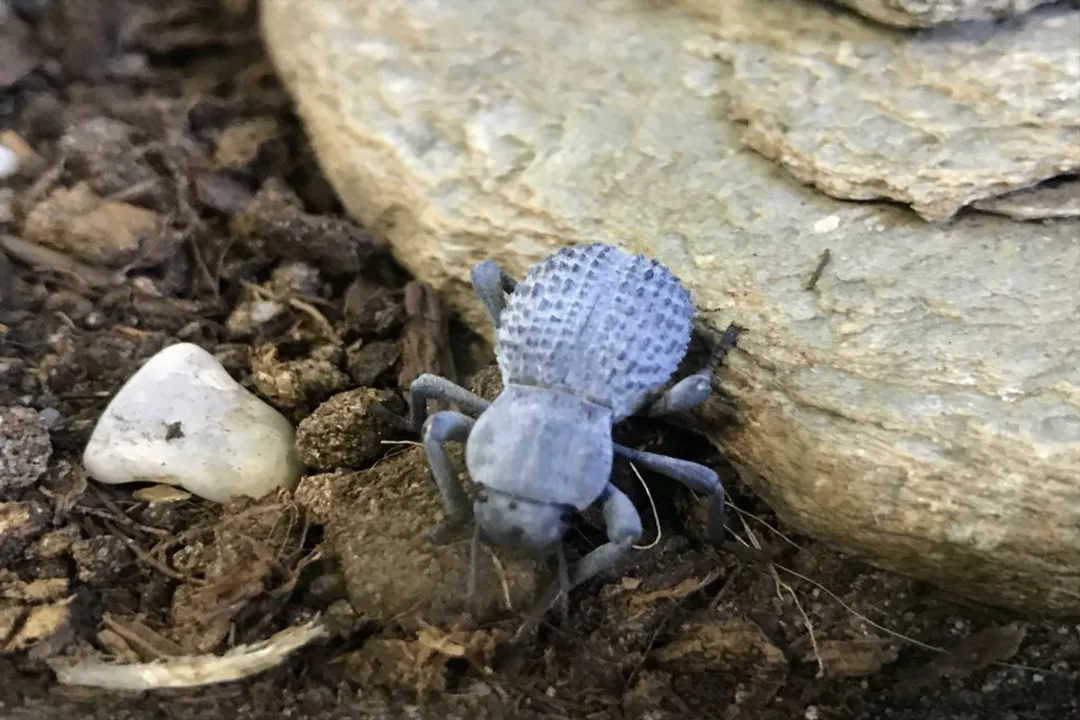
Keeping Blue Death Feigning Beetles, or Asbolus verrucosus, has surged in popularity due to their striking color and relatively simple care requirements. [3][9] As prospective or current keepers look to set up the ideal habitat, one of the most common, yet sometimes confusing, questions revolves around stocking density: precisely how many of these fascinating desert dwellers can safely share a gallon of enclosure space? The answer isn't a single, hard number, but rather a principle based on providing enough room for natural behavior, adequate resources, and airflow, which tends to favor slightly lower densities than one might initially assume for such small creatures. [1][10]
# Space Minimums
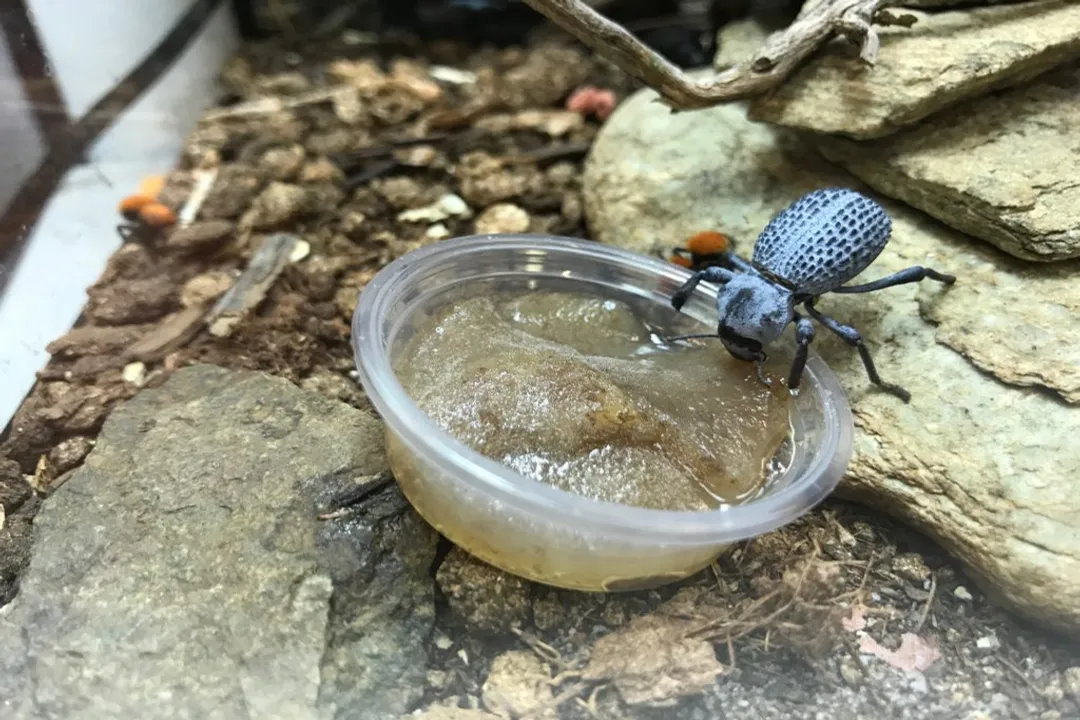
The Blue Death Feigning Beetle (BDFB) is a terrestrial species, meaning floor space often dictates comfort more than height, though vertical space is still necessary for climbing and burrowing into substrate. [2][6] When looking at the bare minimum for keeping just one or two individuals, keepers often cite very small volumes, though context matters greatly. Some guidance suggests that a 1-gallon container might suffice for a single beetle. [10] However, this is usually considered the absolute lower limit, appropriate only if the keeper is meticulous about maintenance and planning for quick upgrades should the beetle breed or if one decides to add a second companion. [10]
When moving from a single specimen to a very small group, the recommendations scale up slightly but still emphasize moderation. For instance, keeping two or three beetles comfortably is often suggested for an enclosure around 2.5 gallons. [10] This small jump in volume reflects the need for individual foraging space and a buffer against localized waste buildup, even in a low-humidity environment. [3]
# Colony Sizing
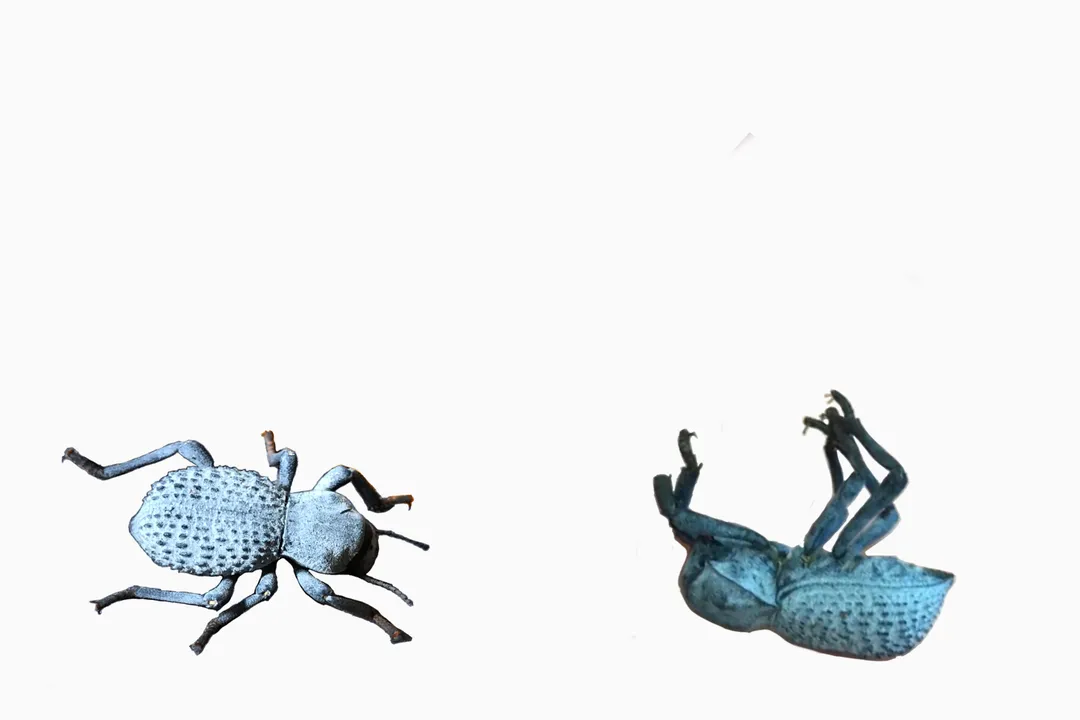
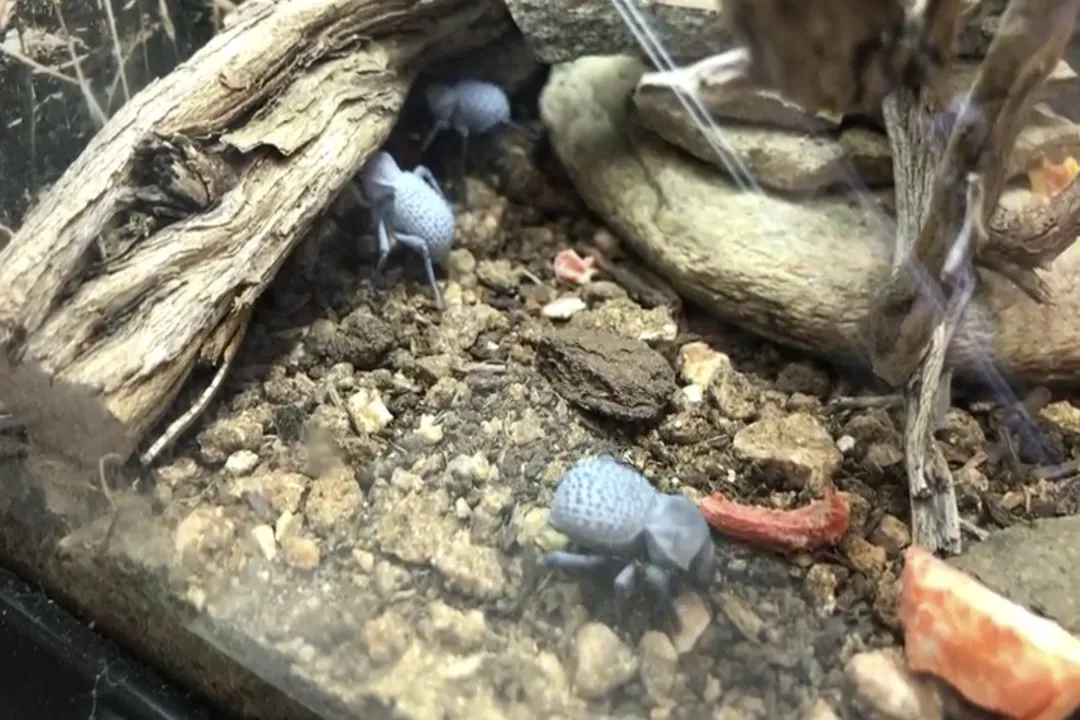
For those looking to establish a small, manageable colony, the goal shifts from minimum survivability to optimal husbandry. A common starting point for a small group of BDFBs is often a 5-gallon tank. [1][10] This size provides a good balance between maintaining necessary environmental parameters—like appropriate temperature gradients and low humidity zones—and offering enough ground area for several beetles to roam without constant physical competition. [2][6] A 5-gallon tank is large enough that the substrate depth can be managed effectively, which is essential for these beetles that enjoy digging. [3]
When thinking about a colony size, it is helpful to visualize the space. If a 5-gallon tank is a good starting point for a few beetles, one could reasonably estimate that a capacity of perhaps four to five beetles is appropriate for that volume, assuming a standard rectangular setup where surface area is prioritized. [1] Pushing this number higher, say to eight or ten beetles in five gallons, begins to introduce potential stress factors that experienced keepers try to avoid, such as increased competition for scarcer food resources or localized humidity spikes if water dishes are not managed perfectly. [5]
One helpful way to think about stocking, especially for new keepers, is to look at the ratio of surface area to the number of beetles. While the sources primarily use volume (gallons), a seasoned keeper knows that for most terrestrial invertebrates, the perimeter or floor space is the real limiting factor for activity. If we take a standard 5-gallon tank, it might have a footprint of roughly . This gives about of floor space. If we suggest four beetles occupy this, that is 32 square inches per beetle. If you were to use a 10-gallon tank, which often has a footprint closer to (), you could comfortably house six to eight beetles, maintaining a similar density of about per individual, demonstrating that volume alone is not the key metric. [5]
# Substrate Depth Factor
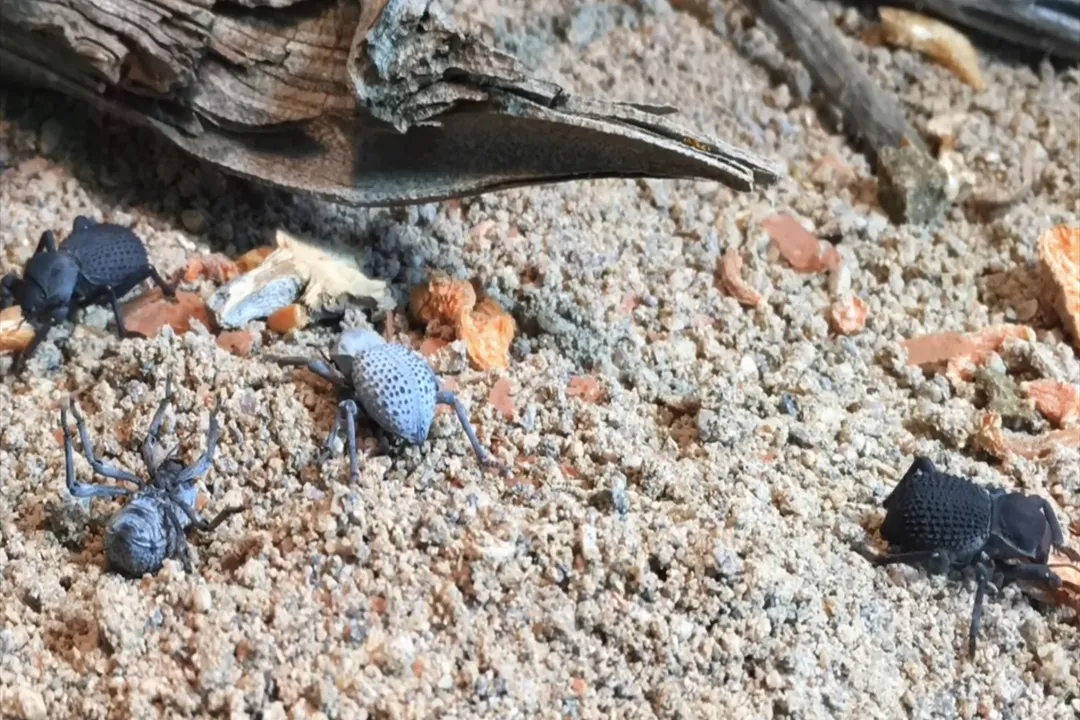
The discussion about how many beetles fit per gallon must also account for the vertical dimension of the enclosure, specifically how much of that volume is taken up by substrate. Blue Death Feigning Beetles need a deep layer of substrate, often several inches deep, to burrow, hide, and thermoregulate effectively. [3][6][9] If you are using a standard glass tank, you might want at least 2 to 3 inches of a safe substrate mix, such as sand and organic topsoil mix. [3]
This deep substrate layer effectively reduces the usable air volume available for the beetles to move around in. In a 5-gallon tank where you pour in 3 inches of substrate, the actual open air space decreases, meaning the effective stocking density based on air volume is lower than calculated by the total gallon rating. [2] This is an important consideration because overcrowding vertically can lead to issues with ventilation near the top of the tank and restricts the beetles' ability to utilize the entire three-dimensional space intended for their habitat.
# Long Term Vision
Another factor influencing the immediate answer to the stocking question is the keeper's intent. Are you aiming for a static display, or are you hoping to witness natural breeding behavior? If breeding is a possibility, even a small, seemingly appropriate colony size will quickly become overcrowded as larvae develop, even though the larvae occupy a different niche than the adults. [10] Furthermore, while BDFBs are generally solitary, some interaction occurs during foraging. Providing ample space ensures that resource guarding—even over a piece of dried mealworm—is minimized, contributing to overall colony health. [2] A good rule of thumb, especially for novice keepers, is to always err on the side of providing more space rather than less, opting for a 10-gallon enclosure for a small colony of six to eight beetles to give them room to spread out and reduce stress signals between individuals. [5]
# Setup Checklist
Determining the correct beetle-to-gallon ratio directly impacts the required support structure for the enclosure. Before adding beetles, verify these environmental factors based on your chosen density:
- Substrate Depth: Ensure substrate is at least 2 to 3 inches deep for a 5-gallon or larger enclosure, allowing for full burrowing capability. [3]
- Ventilation: Confirm that the lid provides adequate cross-ventilation. Lower densities are more forgiving of minor ventilation gaps, but higher densities demand excellent airflow to manage potential moisture buildup. [2][6]
- Hides: Even with a spacious setup, provide several anchor points like cork bark or sterilized rocks for security. More beetles mean more necessary hiding spots to ensure everyone feels secure. [9]
- Water Source: Use a shallow water dish, positioned only on one side of the enclosure to maintain the necessary arid gradient. Higher beetle counts necessitate careful monitoring of this dish to prevent localized dampness. [3]
Ultimately, while a strict mathematical density might suggest fitting a certain number of beetles into a gallon based on size alone, successful keeping of Asbolus verrucosus points toward a density guideline that prioritizes habitat quality over sheer numbers. [1][10] Aiming for a lower density ensures a healthier, more active display that requires less intensive day-to-day management regarding humidity and waste control. [2][3]
#Videos
Blue Feigning Death Beetle Care Guide (And Juice's Hot Take)
Related Questions
#Citations
Blue Death Feigning Beetle tank size? : r/InvertPets - Reddit
Blue Death Feigning Beetle Care Guide - Orion's House Of Jumpers
How to keep Blue Death-Feigning Beetles (Asbolus verrucosus)
What are the best practices for keeping blue death feigning beetles ...
what size tank is recommended for blue death feigning beetle | Forums
Blue Death Feigning Beetle Care - Chicago Exotics Animal Hospital
Blue Feigning Death Beetle Care Guide (And Juice's Hot Take)
Asbolus verrucosus (Blue Death Feigning Beetles) BDFB Care Sheet
Just a few questions on BDFBs (Blue Death Feigning Beetles)
What are Blue Death Feigning Beetles? - Pets on Broadway