Are Asian carps already in the Great Lakes?
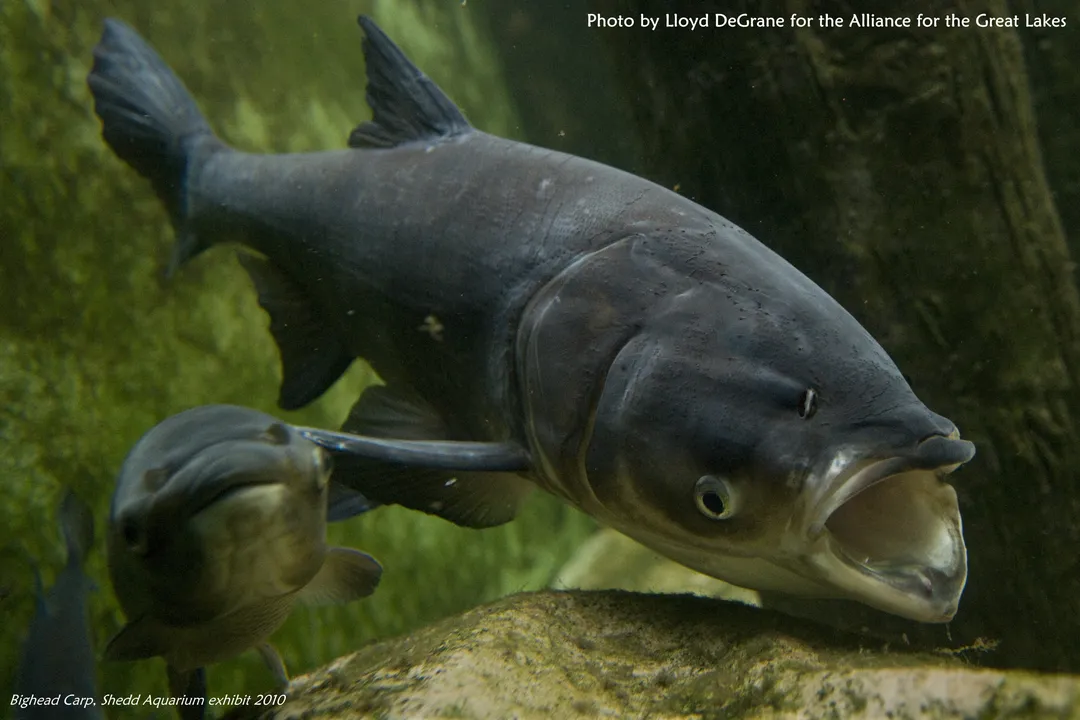
The presence of Asian carp in the Great Lakes is a question that generates significant concern across the region, touching upon the livelihoods dependent on a multi-billion dollar fishery and the health of the world's largest freshwater ecosystem. While the definitive answer is not a simple yes or no, the facts reveal a scenario where the invaders are perilously close, with evidence of isolated individuals actually inside the basin, though a self-sustaining population has not yet taken hold in the main lakes themselves. [4][7] These Asian carp—a group encompassing bighead, silver, black, and grass carp—originated in Asia and were brought to the southern United States in the 1960s and 1970s primarily for use in aquaculture ponds, often for controlling algae or snails. [4][5] Flooding events allowed them to escape into the Mississippi River system, from which they have spread aggressively northward. [5]
# Species Defined
The term "Asian carp" covers four distinct species, each posing a unique set of threats to the delicate balance of the Great Lakes environment. [5] Understanding what they eat helps explain why their establishment would be so devastating.
The Bighead Carp (Hypophthalmichthys nobilis) and the Silver Carp (H. molitrix) are classified as planktivores. [4] They possess voracious appetites, filtering massive amounts of phytoplankton and zooplankton—the microscopic base of the entire aquatic food web—from the water daily, sometimes consuming 5 to 20 percent of their body weight. [3][4] Their success in the Mississippi and Illinois Rivers has been staggering, where they now dominate fish biomass in some areas. [3]
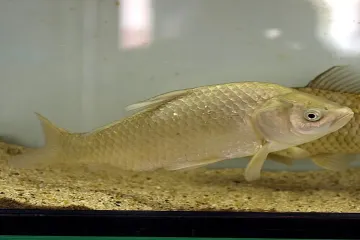
The Grass Carp (Ctenopharyngodon idella) has a different diet, focusing instead on rooted aquatic vegetation. [5] While this might seem less threatening to the plankton-dependent sport fish, their feeding habits destroy valuable wetlands, which serve as crucial spawning and juvenile cover habitats. Their foraging also increases water cloudiness, making it harder for native fish to locate food. [4] Grass Carp are also sold commercially in parts of the U.S. for aquatic plant control, often using sterile, or "triploid," versions, though the sterilization process is not always 100% effective. [3]
Finally, the Black Carp (Mylopharyngodon piceus) primarily consumes freshwater mussels and snails, using its teeth to crush shells. [4] Because many native mussel species in U.S. rivers are already imperiled, the Black Carp poses a direct threat to already vulnerable populations. [6]
These fish are capable of reaching impressive sizes, sometimes over four feet long and weighing nearly 100 pounds. [3][5] This size, combined with their prolific breeding habits, means that if they establish a foothold, they can rapidly reorganize nutrient and energy flow, potentially causing unpredictable and irreversible ecosystem damage. [3] Furthermore, there is an added, less quantified risk related to the potential introduction of new parasites and diseases, such as the Asian Tapeworm, hosted by these invasive species. [4]
# Waterway Link
The primary concern regarding the Great Lakes invasion centers on a manmade connection: the Chicago Area Waterway System (CAWS). [3] This series of canals and rivers artificially links the Great Lakes Basin with the Mississippi River watershed, providing the most likely corridor for the northward migration of Bighead and Silver Carp. [3][5]
The control measures currently in place focus heavily on this choke point. [3] The U.S. Army Corps of Engineers (USACE) operates an electrical barrier system within the CAWS designed to repel fish approaching Lake Michigan by creating an increasing level of discomfort that forces them to turn away. [3][4] Research tracking radio-tagged fish near the canal has historically shown a 100 percent success rate for this electrical defense in repelling fish when tested. [4] However, critics and researchers acknowledge that physical barriers are short-term solutions, and the complexity of the Chicago Water System, which handles shipping, wastewater, and storm water, makes permanent hydrological separation a massive undertaking. [3][5]
It is essential to note the differing proximity of the four species to the Great Lakes region via established populations in the Mississippi River basin. While Bighead and Silver Carp have advanced to within miles of Lake Michigan (and have been found in the Chicago River itself), [5][7] the Black Carp population is geographically much further away, estimated to be nearly 300 miles from Lake Michigan. [6]
One point of analysis often discussed in defense planning involves the difference between direct invasion pathways and indirect ones. While the CAWS is the obvious route for continuous movement, the possibility of temporary connections, such as overland flooding events connecting low-lying marshes like Eagle Marsh in Illinois to the waterways, represents an acute, episodic risk that a fixed electrical barrier cannot address alone. [3] This highlights why multiple layers of defense, including physical barriers like proposed berms and fish fences during flood events, are necessary alongside the canal defenses. [3]
# Evidence Found
The question of whether Asian carp are already in the Great Lakes hinges on the distinction between established breeding populations and the discovery of individual specimens. As of recent reports, no established breeding population of Asian Carp has been confirmed in the Canadian waters of the Great Lakes. [4] However, individual captures paint a different picture for the US side of the basin:
- Lake Erie Captures: Three individual Bighead Carp were collected in the western part of Lake Erie between 2000 and 2003, strongly suspected to have been intentionally released by individuals. [4]
- Grass Carp Sightings: Since 2012, approximately 23 single captures of Grass Carp have occurred across the waters or tributaries of Lake Huron, Lake Ontario, and Lake Erie, with the most recent being in 2018 in Lake Erie. [4] A significant finding is that most of these captured Grass Carp were sterile (triploid). [4]
- Reproduction in Tributaries: Crucially, juvenile Grass Carp have been caught in the Sandusky River, an Ohio tributary flowing into Lake Erie, indicating natural reproduction within the Great Lakes drainage system, even if the main lakes remain uncolonized. [4]
- DNA Confirmation: Perhaps the most alarming evidence comes from environmental DNA (eDNA) testing. [3] This technique detects the presence of the fish by sampling the water for shed skin, scales, or waste. [3] Reports confirm that Asian Carp DNA has been found in Lake Michigan, close to Chicago, and even closer than the closest live capture. [5][7] This suggests that fish are actively moving through or existing in the immediate vicinity of the lakes, even if they haven't established a stable colony yet.
We can synthesize these findings to form a layered understanding of their presence. The captures in Lake Erie represent a history of isolated, likely human-mediated introductions into the lake. [4] The eDNA detections near Chicago, however, signal that the planktivorous Bighead and Silver Carp are successfully navigating the final barrier area and are present in the waters immediately preceding the main basin, creating an imminent threat of colonization. [7] The successful containment of sterile Grass Carp is encouraging, but the confirmed reproduction of Grass Carp in a tributary like the Sandusky River demonstrates that the environmental conditions for establishing some species are already met within the broader Great Lakes drainage, making the containment of the more ecologically dominant Bighead and Silver Carp even more critical. [4]
# Ecological Impact
If Bighead and Silver Carp establish themselves, the impact could be catastrophic, potentially destroying the $7-billion fishery. [3] The parallel drawn by experts is stark: the Asian carp, as a plankton-eating machine, is likened to a 100-pound zebra mussel. Zebra and quagga mussels, which already filter plankton from the water, have caused profound ecological changes in the lakes; Asian carp would dramatically amplify these effects by stripping the food base supporting native fish populations. [3]
What makes the threat potentially greater than initially modeled is new research suggesting Asian carp are far more adaptable than previously thought. [7] Early models underestimated their survival prospects. [1] A 2019 study indicated that Bighead Carp, in particular, can feed on fecal matter from zebra and quagga mussels. [7] This means the invasive mussels, already established, could inadvertently create a supplementary food source for the invading carp, effectively buffering the carp population against initial food scarcity. [7] This new dietary flexibility allows Bighead Carp to potentially sustain themselves across at least 97% of Lake Michigan from June through November, suggesting the lake could become a vast migration corridor rather than a hostile environment for the invaders. [7] The destruction of native fish species and the resulting biodiversity loss could make the entire ecosystem more fragile. [3][4]

# Defense Strategies
The multi-pronged defense against Asian carp involves blocking passage, monitoring for failure, and enacting strict regulations. [3]
# Barrier Action
The primary line of defense remains the electrical barrier system in the Chicago Sanitary and Ship Canal. [3] In addition to this, USACE has proposed advanced physical barriers and deterrents at the Brandon Road Lock and Dam near Joliet, Illinois, to create a more comprehensive defense at a critical choke point. [7] Furthermore, research is ongoing into alternative barriers, such as those using high-pressure water bursts or sound to repel fish, which could potentially supplement the electrical fields or be deployed as portable defenses in threatened rivers. [3]
# Regulation Enforcement
A significant non-engineering defense is the legal framework prohibiting the movement of live specimens. [3] All U.S. Great Lakes states and the province of Ontario have legislation making it illegal to buy, sell, or possess live Asian carp. [3] Canadian enforcement agencies, like the Ontario Ministry of Natural Resources and Forestry, conduct thousands of hours of inspections annually to check importers and retailers. [3] They have even stopped live shipments where carp were found still alive after being packed in ice for days. [3] This has led the Great Lakes Fishery Commission to advocate for rules requiring that Asian carp transported as food must be dead and eviscerated to prevent accidental releases of live fish. [3]
# Monitoring Science
The proactive detection of any breach relies heavily on advanced science, particularly environmental DNA (eDNA) sampling. [3] This scientific approach is a cornerstone of modern surveillance, used in partnership between U.S. and Canadian biologists to search for evidence of carp presence in critical areas of Lakes Huron and Erie, as well as tributaries like the Detroit River. [3] A confirmed eDNA detection triggers a rapid response plan involving follow-up netting and electrofishing to determine if the presence is an isolated event or the start of an established population. [3] This collaborative effort, overseen by bodies like the Asian Carp Regional Coordinating Committee (ACRCC), is vital for adaptive management. [3][5]
# Future Outlook
Preventing the establishment of these species is seen by fishery and environmental agencies as the only truly effective way to safeguard the Great Lakes ecosystem and its economy. [5] The consensus among experts who study the Great Lakes Fishery Commission's findings is that ecological separation—physically isolating the two watersheds—remains the only permanent, sustainable method of defense. [3][5] While the implementation of such a project involves overcoming immense logistical, engineering, and cost hurdles associated with altering the Chicago Waterway System, the potential economic and ecological cost of inaction is viewed as far higher. [3] The battle is ongoing, requiring constant vigilance, from federal funding for immediate barrier upgrades to individual boaters ensuring their bait buckets are emptied before heading home. [5][3] The speed at which new scientific findings—like the carp's enhanced diet capabilities—alter the risk assessment suggests that the defense strategy must be constantly reviewed and strengthened to match the invaders' surprising adaptability. [7]
Related Questions
#Citations
Asian Carp: The War Isn't Over - Great Lakes Fishery Commission
Asian Carp
Asian Carp risk assessment - NOAA
New Study Finds Asian Carp Threat to Lake Michigan Is Greater ...
Asian Carp | U.S. Department of the Interior
[PDF] from Asian Carp - National Wildlife Federation