What does Great Kiskadee eat?
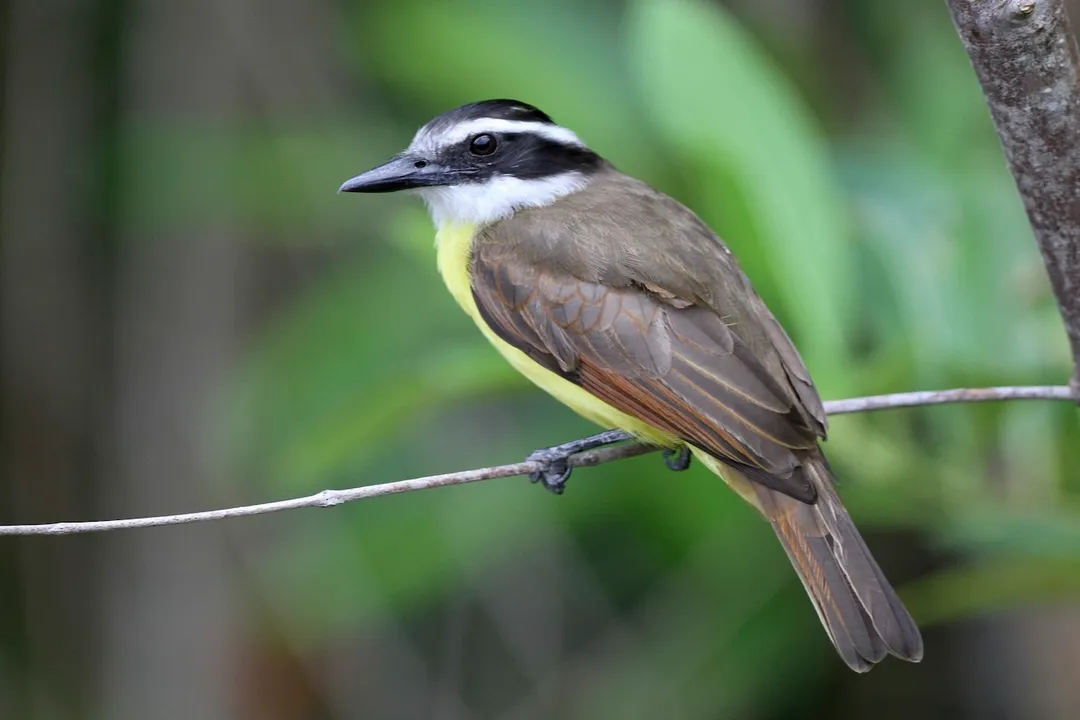
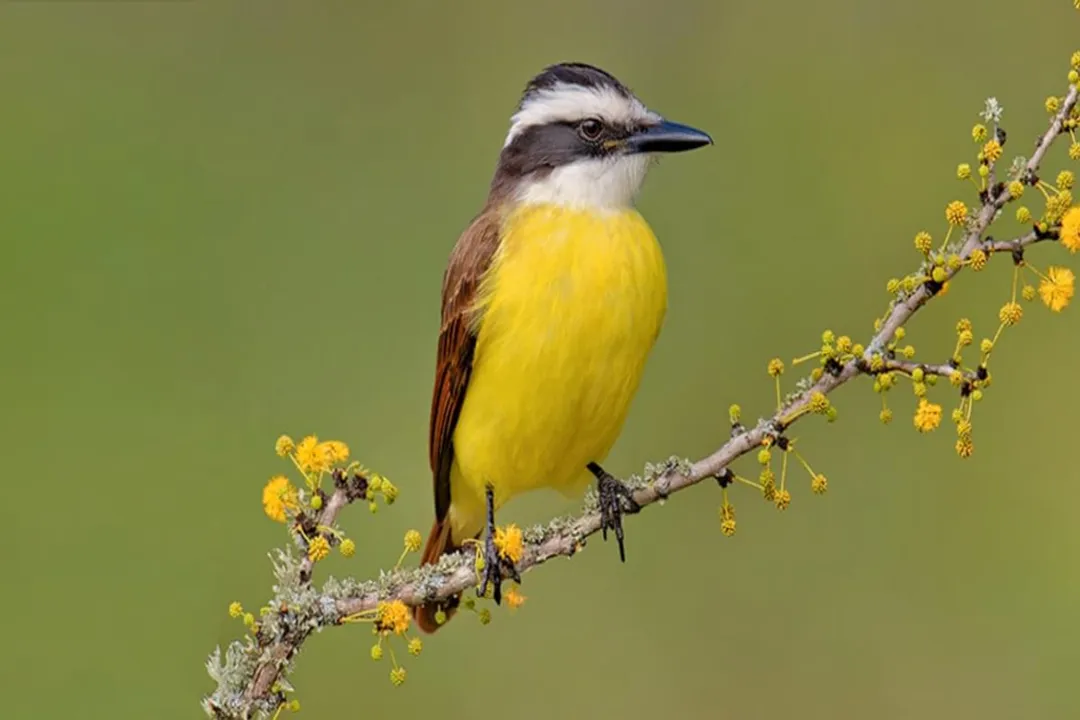
The Great Kiskadee, often announced by its loud, unmistakable "kis-ka-dee!" call, is one of the most conspicuous and frequently encountered flycatchers across its extensive range. [1][4] This bright yellow-bellied bird, easily recognized by its bold black-and-yellow markings and distinctive crest, does not adhere to a narrow culinary path. Instead, the Kiskadee is perhaps best defined by its remarkable dietary flexibility, adopting an opportunistic approach that allows it to thrive in diverse habitats from semi-open woodlands to bustling urban parks. [4][9] Its menu reflects a palate that spans the entire food chain, incorporating invertebrates, small terrestrial animals, and a significant amount of plant matter depending on the season and availability. [2][5]
# Insect Focus
Invertebrates form the backbone of the Great Kiskadee’s diet throughout much of the year, especially when they are actively feeding young or when preferred fruits are scarce. [1][7] However, they are not content with merely catching small gnats or tiny flies; the Kiskadee shows a distinct preference for larger, more substantial insect prey. [5][9]
The sheer variety of insects they pursue is impressive. One can expect to find items like grasshoppers and crickets featuring heavily in their captures, offering a significant protein payload per successful hunt. [2][5] Beyond these ground-dwelling jumpers, they actively hunt other large arthropods. Dragonflies, beetles, wasps, bees, moths, and butterflies are all considered fair game. [2][5][9] Their hunting style, which often involves snatching prey directly from foliage or the air, makes them adept at pursuing flying insects with speed and precision. [8] Even creatures that might deter other birds, such as stinging Hymenoptera, are sometimes added to the bill, suggesting the Kiskadee has developed mechanisms to handle or dispatch them safely. [5] Furthermore, spiders, which are often overlooked by less ambitious predators, are a regular component of their invertebrate intake. [5][9]
# Vertebrate Prey
What sets the Great Kiskadee apart from many other birds in the Tyrannidae family is its willingness, and ability, to consume small vertebrates. [4] This carnivorous tendency moves them beyond the typical insectivore classification into a more generalized predator role. [9] The pursuit of these larger items speaks to an efficiency in foraging—securing a single lizard or frog can provide a much greater caloric return for the energy expended in the hunt compared to consuming several tiny insects sequentially. [1][2]
The scale of their vertebrate victims is small, but they are consistently taken when the opportunity arises. Common additions to the menu include lizards and various small amphibians, such as frogs. [2][9] Perhaps most notable among their aquatic conquests is their documented ability to catch small fish. [1][5] Unlike some specialized fish-eaters, the Kiskadee often snatches its aquatic targets from the surface rather than performing a deep dive, though they are known to dip into the water while foraging near edges. [5][9] Even in terrestrial hunting, they are not above taking surprisingly large prey like small snakes or even mice, solidifying their status as an opportunistic generalist predator within their environment. [2]
# The Role of Fruit
While protein from insects and vertebrates fuels their active hunting lifestyle, plant matter, specifically fruit, becomes an essential part of the diet during certain times of the year. [1][9] This dietary shift is often dictated by seasonal availability, becoming particularly prominent as invertebrate populations might decline or as energy demands require a readily available, high-sugar source. [2]
The sources confirm that Kiskadees consume a wide array of fruits, including various berries and figs. [2] In regions where they reside year-round, understanding the fruiting cycles of local flora is key to predicting where these bright birds will congregate. For instance, in more developed or semi-urban settings common to their range, the presence of ornamental fruit trees or easily accessible garden produce can significantly influence their feeding locations, drawing them into areas one might not typically associate with a primary insect-eater [Synthesis/Contextualization]. This reliance on fruit demonstrates a crucial adaptability; when the energy expenditure required for chasing high-value vertebrate prey or flying insects increases, switching to stationary, energy-dense fruit provides an effective fallback strategy [Synthesis/Inference]. They consume these fruits directly, often swallowing them whole or tearing them apart as needed. [2]
# Foraging Techniques
The impressive diversity of the Great Kiskadee’s diet is directly supported by the versatility of its foraging methods. They are not restricted to one posture or location but adapt their technique to the specific prey item they are targeting. [3]
One of their most characteristic hunting styles is the perch-and-sally technique, common to many flycatchers. [4] The Kiskadee will sit prominently on an exposed branch, wire, or post, patiently surveying the surrounding area. [4][9] Upon spotting suitable prey—whether an insect flying by or a lizard moving on the ground—it launches itself out, captures the target, and often returns to the original perch to consume the meal. [9]
However, they are equally capable of aerial maneuvering. They will capture insects in mid-air, sometimes snatching them in an acrobatic flight display. [1][8] When targeting ground-dwelling prey or insects resting on foliage, they often employ a hovering motion, pausing briefly in the air before dropping down quickly to snatch the meal from the surface. [3][7] The specialized technique for taking aquatic prey involves flying out over the water and dipping or quickly snatching food right off the surface layer. [5][9]
This combination of active aerial pursuit, stationary ambush, and specialized surface strikes allows the Great Kiskadee to effectively exploit nearly every ecological niche where a suitable perch is available. [9] Their physical tools—a broad bill for catching insects and the strength to handle larger items—are perfectly matched to this broad dietary strategy. [1][5]
# Dietary Comparison and Range
When comparing the Great Kiskadee to some of its smaller flycatcher relatives, its dietary breadth stands out. [9] While many Tyrant Flycatchers stick almost exclusively to aerial insects, the Kiskadee’s inclusion of significant fruit and small vertebrates broadens its ecological niche considerably. [4] This wide-ranging diet is likely a key factor contributing to its success across environments ranging from Central America up into the southern United States. [4] A bird that can rely on insects during a dry spell, switch to abundant summer fruit, and occasionally supplement its intake with a frog or lizard during migration or breeding seasons possesses a superior survival buffering capacity [Synthesis/Analysis].
The diet in the northernmost parts of its range, such as Texas, often shows a heavier emphasis on insects and fruits, especially before migration, as they bulk up on readily available calories. [2] As temperatures drop and insect activity wanes, fruit intake increases dramatically to sustain them. [2] In contrast, tropical populations might maintain a more consistent balance throughout the year, given the generally higher year-round availability of both large insects and fruiting plants. [9]
# Summary of Consumption
To summarize the feeding habits of this flamboyant bird, one can visualize its diet as falling into three broad, highly overlapping categories based on availability:
- Insects: Large prey items dominate, including grasshoppers, beetles, dragonflies, wasps, and moths. [2][5]
- Vertebrates: Small-scale predation on fish, frogs, lizards, and even mice. [2][9]
- Plant Matter: Essential seasonal inclusion of various fruits and berries. [1][9]
This opportunistic, omnivorous approach, executed via varied and adaptable hunting styles, ensures the Pitangus sulphuratus remains a consistent presence, heralded by its loud calls, across diverse landscapes wherever a suitable perch and a meal can be found. [3][4]
Related Questions
#Citations
Great Kiskadee Overview, All About Birds, Cornell Lab of Ornithology
GREAT KISKADEE | The Texas Breeding Bird Atlas
Great Kiskadee - Pitangus sulphuratus - New Hampshire PBS
Great kiskadee - Wikipedia
Pitangus sulphuratus (great kiskadee) - Animal Diversity Web
Great Kiskadee Bird in Edinburg Texas Nature Preserve - Facebook
Great Kiskadee - Birds | Bermuda Zoological Society
Diet and Foraging - Great Kiskadee - Pitangus sulphuratus