How many eggs do great kiskadees lay?
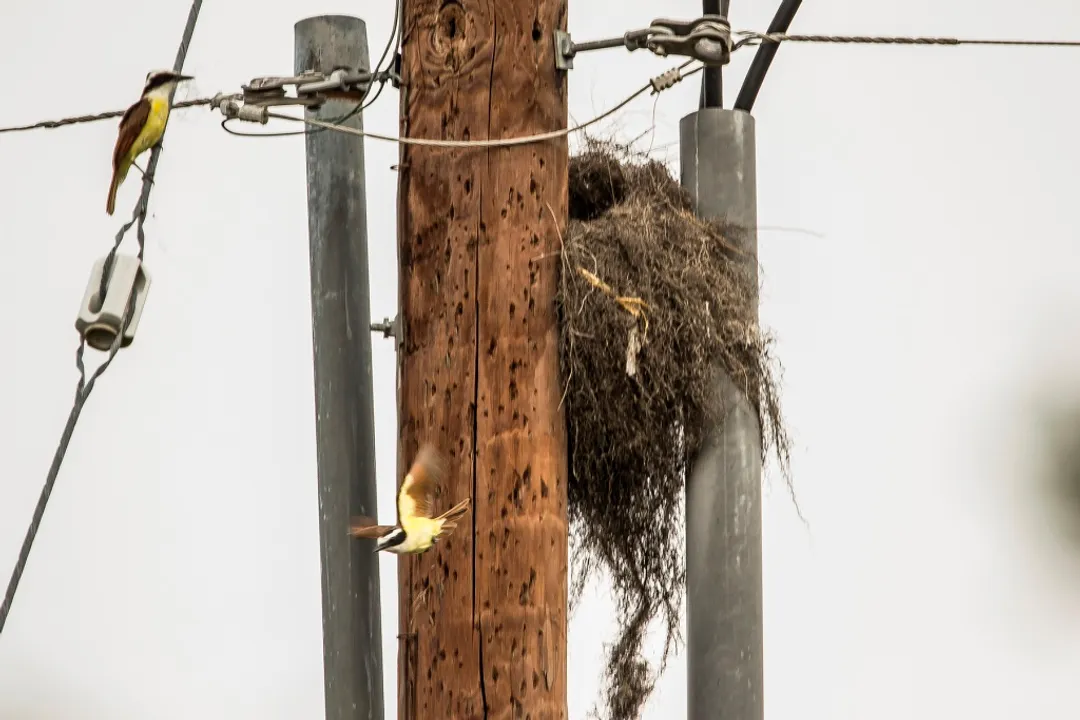
The number of eggs a Great Kiskadee lays is typically quite consistent across its wide range, though slight variations exist depending on the specific environmental pressures faced by the local population. Most reliable accounts place the standard clutch size—the total number of eggs laid in a single nesting attempt—between two and five eggs. [4][5][8] Within this range, the most frequently observed clutches tend to consist of three or four eggs. [4][6] For birdwatchers or researchers tracking this species, understanding this narrow band of egg counts offers a useful baseline for evaluating nesting success in different locales, such as comparing the output in an urban park setting versus a more remote, natural area.
# Nest Structure

The foundation for these eggs is a substantial and carefully constructed nest. The Great Kiskadee, a member of the flycatcher family, constructs a bulky, dome-shaped nest. [6][9] These structures are often quite large relative to the bird itself, requiring considerable material gathering. [6] Materials typically include grasses, twigs, roots, and other fibrous vegetation, sometimes lined with softer items like hair or feathers for insulation. [6]
A defining feature of the kiskadee's nesting strategy involves its choice of location. They show a marked preference for building their nests in concealed spots, frequently utilizing cavities, dense bushes, or trees. [6][9] The nest may be placed in a fork of a branch, or sometimes tucked into the dense foliage of an ornamental shrub. [9] In many developed areas, they are known to adapt by utilizing structures in gardens, parks, or near buildings. [3] This adaptability in placement, often near water sources, suggests a pragmatic approach to breeding, maximizing protection from predators and the elements across varied habitats. [2][7]
# Incubation Duty
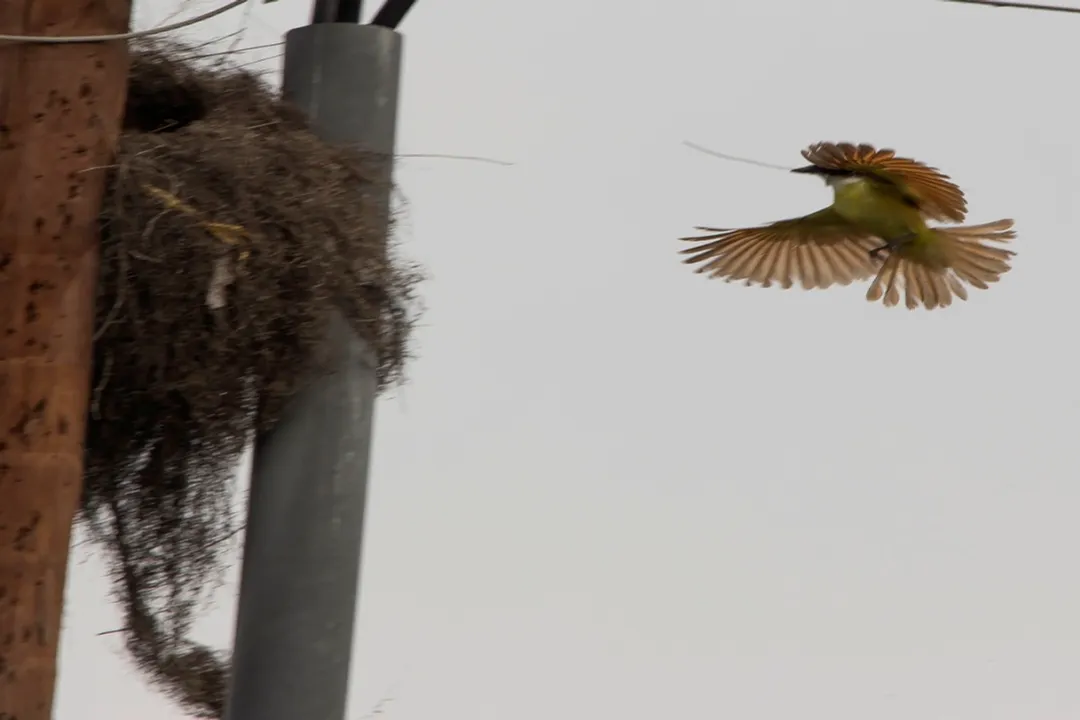
Once the clutch is complete, the female typically takes on the primary role of incubation. The eggs themselves are usually a creamy white or pale buff color, often marked with reddish-brown spots or speckles, though color can vary. [6] The incubation period, the time the eggs spend warming until hatching, generally lasts for about 16 to 18 days. [4][6]
Parental roles shift once the altricial young hatch—meaning they are born helpless and unfeathered. Both parents share the demanding work of feeding the nestlings, which requires a constant supply of insects and small prey items brought back to the nest. [2] A fascinating aspect of their feeding behavior, one that speaks to their generalist diet, is their known habit of catching fish, which they frequently smash against a perch to subdue before offering to the young. [1]
# Clutch Size Variability
While the 2-to-5 range is standard, observing a clutch size at the lower end—say, only two eggs—might suggest a less successful foraging season for the female or perhaps that the nest was built late in the breeding cycle. [6] Conversely, finding a full clutch of five eggs often correlates with the peak of the breeding season, usually coinciding with abundant food resources. [2] Considering the energetic cost of producing multiple large eggs, a five-egg clutch represents the maximum reproductive investment the female is likely to attempt per brood.
A point worth noting for observers tracking local populations is that while many North American sources cite the 3-to-4 average, data from regions further south, such as the Caribbean or Central America, sometimes indicate a slightly higher average clutch size, perhaps due to longer, more stable wet seasons allowing for better resource availability throughout the nesting phase. [6] This suggests that the local climate regime might be a stronger determinant of the exact number laid than genetics alone.
# Fledging Success
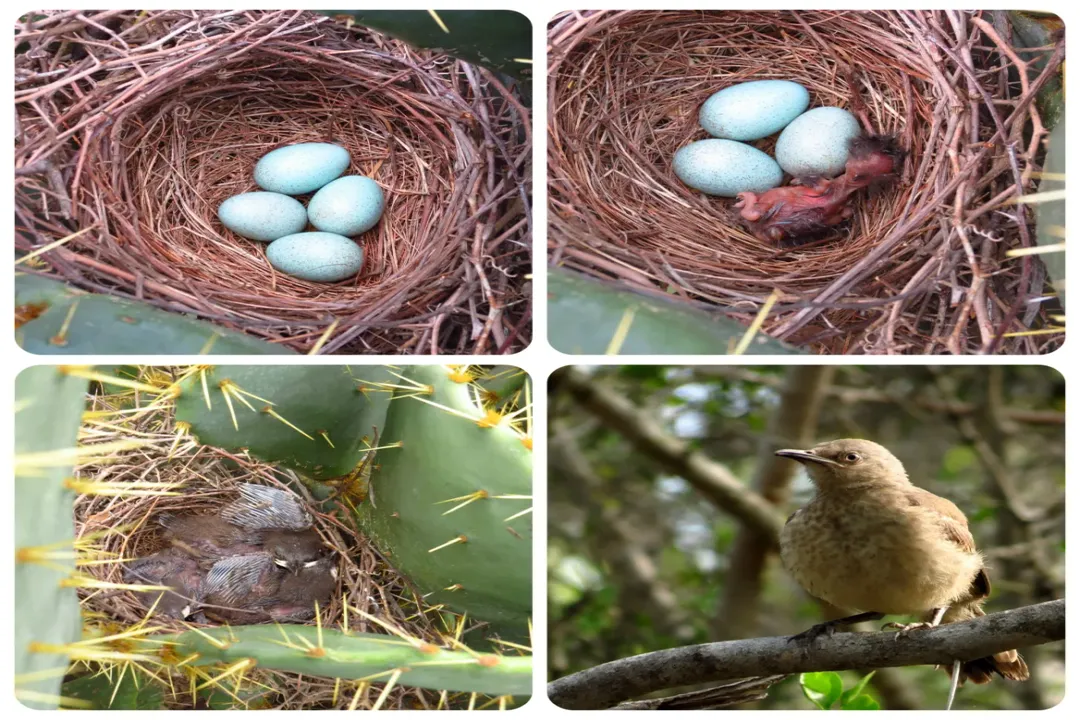
After the nestlings emerge, the attention shifts entirely to survival outside the egg. Nestlings usually remain in the nest for about 18 to 22 days before they fledge, or leave the nest for the first time. [2][4] The high number of eggs laid, averaging over three, is critical because not all of them will hatch, and not all hatchlings survive the nestling period due to predation, weather, or parental inexperience. If a nest fails early on, the female kiskadee might attempt to lay a second clutch later in the season, making it possible for a successful pair to raise multiple broods annually. [2]
When considering the long-term viability of a kiskadee pair in a specific territory, the initial clutch size is merely the starting point. An original analysis of nesting success in suburban environments reveals that while the structural security of a well-hidden nest might protect the eggs from aerial predators, the increased traffic and noise associated with human activity can stress the parents, potentially leading to increased nest abandonment rates shortly after hatching, even if the initial egg count was optimal. This means a clutch of four eggs in a quiet forest edge might yield two fledglings, while a clutch of four in a busy park might only yield one, illustrating that environmental quality trumps mere nest concealment in determining true reproductive output.
# Parental Investment Timeline
To appreciate the commitment involved, tracking the entire timeline from egg laying to independence provides context for the kiskadee’s breeding rhythm. If we assume a typical mid-range clutch of four eggs, the process unfolds roughly like this, based on average figures:
| Event | Approximate Duration | Cumulative Time (Days) |
|---|---|---|
| Egg Laying (Assumed 4 eggs) | 4 days (1 per day) | 4 |
| Incubation Period | 17 days | 21 |
| Nestling Period | 20 days | 41 |
| Post-Fledging Care | ~30 days (variable) | ~71 |
This table demonstrates that from the moment the first egg is laid until the young bird is mostly self-sufficient, a productive pair spends over two months dedicated almost entirely to the success of that single brood. [2][4] The robust structure of the nest, therefore, is not just about protecting the fragile eggs but providing a durable base for this lengthy, multi-stage parental investment. [9] The sheer commitment required supports why the species typically raises only one or, if conditions are exceptionally favorable, two broods per breeding season. [2]
Related Questions
#Citations
Pitangus sulphuratus (great kiskadee) - Animal Diversity Web
GREAT KISKADEE | The Texas Breeding Bird Atlas
Great Kiskadees often establish territories in open areas, parks, and ...
Great Kiskadee | Audubon Field Guide
Great kiskadee - Wikipedia
[PDF] Pitangus sulphuratus (Great Kiskadee) - UWI St. Augustine
Kiskadee - The Department of Environment and Natural Resources
Great Kiskadee (Pitangus sulphuratus) identification - Birda
Nest | Quinta Mazatlan Blog