How can you attract great kiskadees?
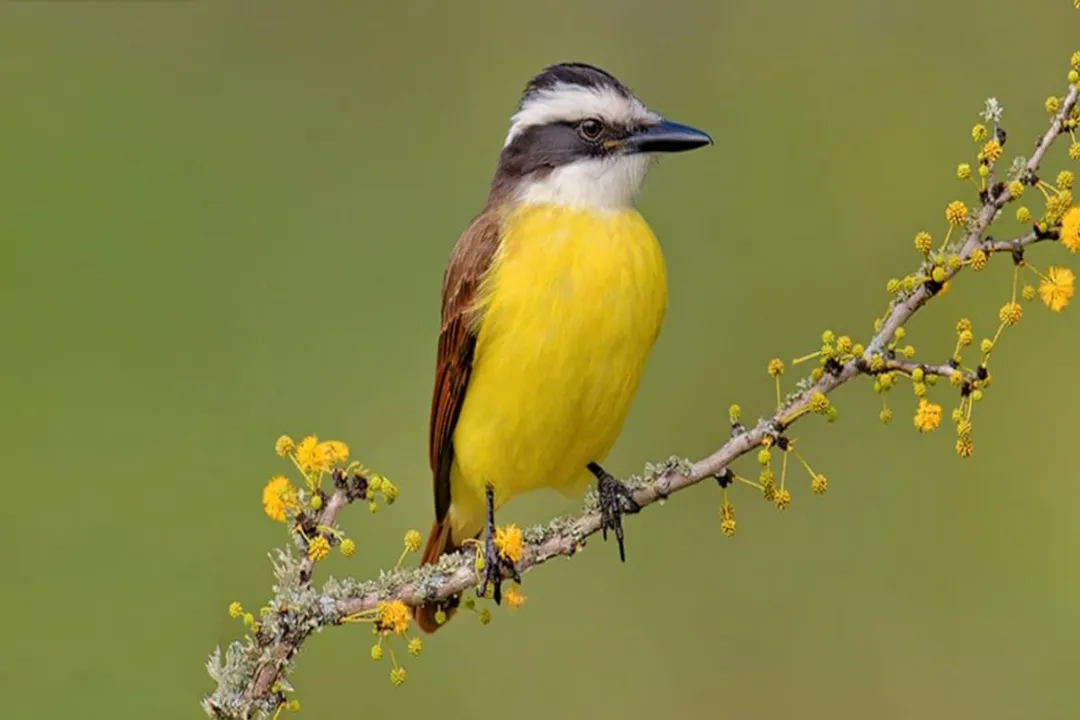
The sight of a Great Kiskadee flashing its brilliant yellow underparts is hard to miss, provided you live within its range and know what elements of your landscape appeal to this striking flycatcher. These bold birds are known for their loud, unmistakable calls—a harsh, ringing kis-ka-dee sound that often announces their presence long before they are seen. Unlike many smaller songbirds that frequent standard backyard feeders, attracting a Kiskadee requires a thoughtful approach focused more on habitat structure and natural food sources than on suet cages or sunflower seeds. Getting this large, energetic tyrant flycatcher to regularly visit your property involves understanding where it feels comfortable staking its claim.
# Bird Profile

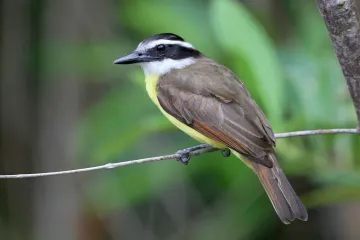
The Great Kiskadee is unmistakable once you get a good look. It’s a large flycatcher, easily recognizable by its bright yellow belly and chest, sharply contrasting with its white throat and a prominent black stripe running across its eye. Its head is relatively large, often sporting a slight crest which it can raise when agitated or excited. When in flight, an observer may catch a glimpse of its yellow rump, which is a key identifier from a distance. They are robust birds, and their assertive behavior matches their bold appearance.
# Range and Setting
Understanding the geographical distribution is the first step. Great Kiskadees are found across a broad swath of the Americas, ranging from the southern United States down through Mexico, across Central America, and continuing well into South America. This wide distribution means that your success in attracting them is entirely dependent on whether your location falls within their migratory or year-round territories.
Within those established ranges, the Kiskadee isn't typically found deep within dense forests. Instead, they prefer areas that offer a mix of cover and open space for hunting. They often establish their territories in settings like open woodlands, semi-open areas dotted with scattered trees, parks, and yes, even gardens, as long as the basic structural needs are met. The proximity to water seems important; they are frequently observed near streams, rivers, or ponds.
If you are trying to encourage a pair to settle in, think about how your yard relates to these preferences. A yard that backs up to a wooded edge but maintains a fairly open lawn or clearing might fit the bill better than a completely enclosed, shaded garden.
# Hunting Behavior
To attract any bird, you must cater to its diet, and the Kiskadee’s eating habits are specialized. These birds are formidable hunters that rely heavily on aerial maneuvers to secure their meals. They are known for sallying—launching themselves from a favored perch to snatch an insect right out of the air.
However, their diet is not limited to airborne prey. They actively hunt by gleaning food from vegetation or by picking items directly off the ground. While insects form the bulk of their meals, Kiskadees are opportunistic and will take advantage of larger prey if the chance arises. This can include small fish, frogs, lizards, and even small rodents. They have also been documented eating berries at certain times of the year.
One of their most fascinating dietary habits involves food preparation. If they catch something substantial, like a large insect or a small aquatic creature, they often take it back to a specific, favored perch. There, they will forcefully beat the prey item against a hard surface—perhaps a branch, a rock, or even a railing—to subdue it or break it into manageable pieces before consumption. Observing this behavior can confirm you have a Kiskadee resident, as this is quite distinctive.
This habit of smashing food against a hard object suggests that having varied, rough, or solid surfaces available in your yard—such as large, flat stones near a water feature, or sturdy, horizontal dead branches—could inadvertently become part of their feeding routine, adding an interesting dynamic to your outdoor space.
# Creating Kiskadee Habitat
Since Kiskadees are not typically drawn to conventional bird feeders, the focus shifts entirely to environmental engineering and support. You are essentially creating an environment where they naturally want to stay and hunt.
# Water Features
Given their tendency to be found near water sources, providing a reliable water feature is highly recommended. This doesn't necessarily need to be a large pond, but a consistent source of clean water, such as a birdbath or a small, gently moving water feature, can be a significant draw. For a Kiskadee, this water source might serve a dual purpose: drinking and bathing, and potentially providing access to small amphibians or aquatic insects they might hunt near the edge.
# Perch Availability
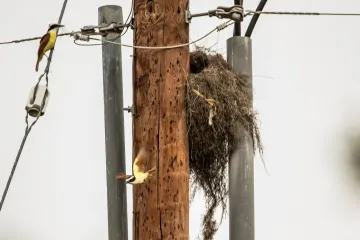
Because their primary feeding method involves sitting and waiting before making a quick flight to capture prey, Kiskadees require good vantage points. Think about installing or maintaining a few exposed, sturdy perches that overlook open ground or open air. A tall, bare branch on a native tree works well, but for an urban or suburban setting, a dedicated, high perch structure—like a tall shepherd's hook without feeders attached, or a bare pole—could serve this purpose. The key is visibility; the bird needs a clear line of sight to spot movement below or in the air.
# Supporting the Insect Base
If you want Kiskadees to stay, you must ensure their primary food source is abundant. This is where many well-meaning gardeners unknowingly sabotage their chances. Kiskadees rely on abundant insects. A yard managed with broad-spectrum insecticides will quickly become uninteresting to these flycatchers because they cannot sustain themselves on a sterile landscape. Allowing for some natural 'messiness'—perhaps leaving some leaf litter or brush piles in a designated, out-of-the-way corner—encourages the invertebrate life that forms the foundation of the Kiskadee’s diet. A diverse native planting scheme, which naturally supports a wider variety of insects, is more beneficial than a manicured, non-native lawn.
# Feeding Alternatives
While Kiskadees are not seed eaters, a determined enthusiast might try to offer suitable alternatives, though success is not guaranteed and depends heavily on the bird's immediate needs and the availability of natural food. If insects are scarce—perhaps during a cold snap or dry spell—you can sometimes attract them by providing access to small pieces of fish or perhaps mealworms, though the latter is more commonly associated with other species.
Since they carry food to a hard perch to bash it, an ideal offering might be small pieces of fish fillet or chunks of hard-boiled egg placed on a sturdy, flat rock or piece of wood rather than inside a traditional feeder tray. This accommodates their specific handling behavior.
Actionable Insight for Kiskadee Observation:
When attempting to offer supplemental food, consider the Kiskadee’s strong territorial nature. If one bird establishes a territory, it might aggressively defend a particular perch or area from other insectivorous birds, viewing it as its primary hunting ground. If you place a supplemental food source, place several similar, small offering stations across the territory boundary rather than concentrating everything in one spot. This might appease the resident bird while perhaps attracting a mate or a transient individual without provoking a direct, aggressive confrontation over resources.
# Behavioral Notes for Observation
Attracting a Kiskadee is often less about passive feeding and more about providing an interesting environment to observe. Their personalities are as loud as their voices. They are highly active and can be quite aggressive, often chasing away other birds, especially smaller ones, from their chosen perches or feeding zones.
Their striking appearance combined with their loud vocalizations means that once you have one, you usually know it! If you hear that distinctive kis-ka-dee call, take a moment to scan the highest, most exposed branches in your vicinity—that is where they prefer to sit while surveying their domain.
# Comparison with Other Birds
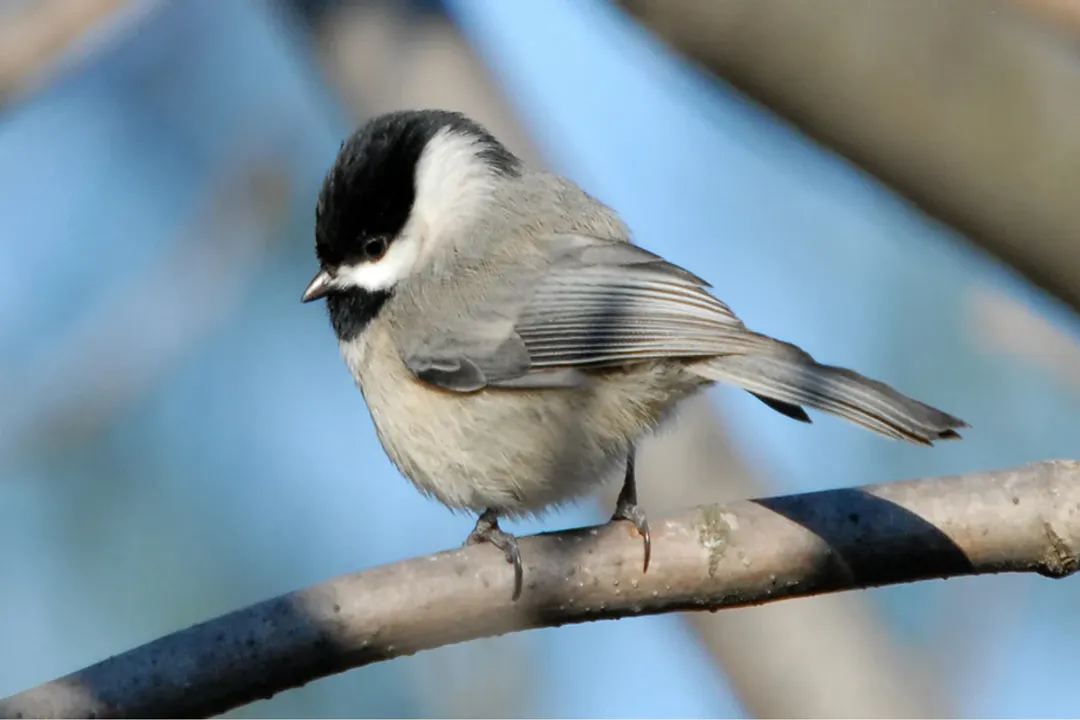
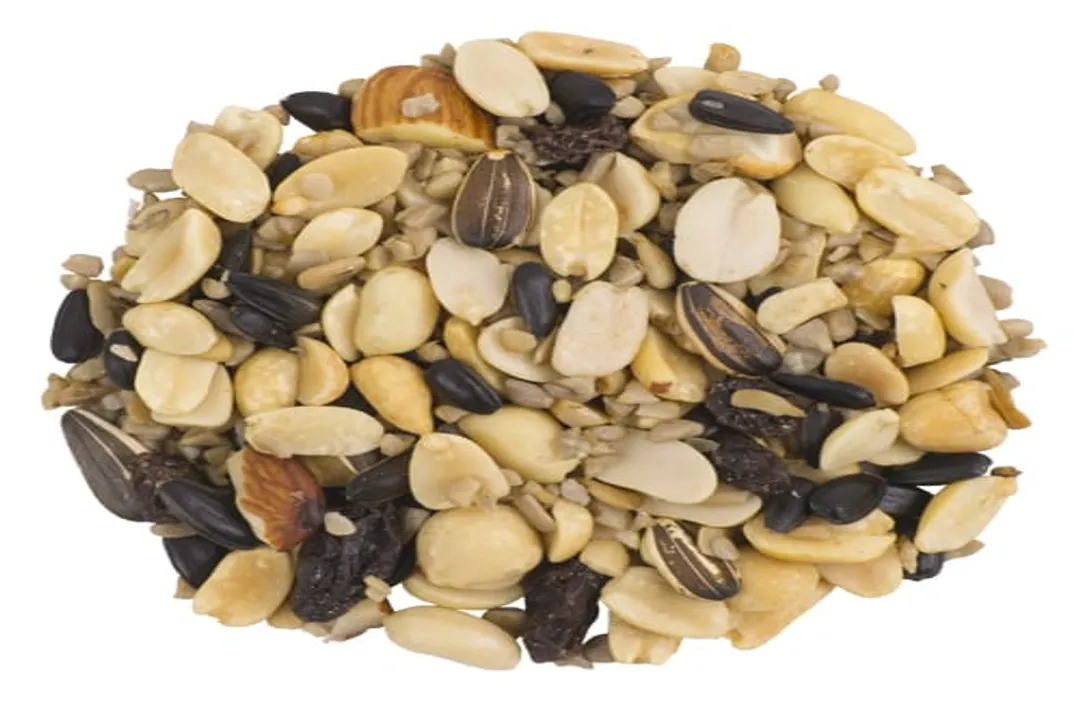
It is worth contrasting the Kiskadee's needs with those of smaller, more common backyard visitors, such as chickadees, to avoid misdirecting your efforts. Chickadees, for instance, are primarily attracted to seeds, especially black oil sunflower seeds and suet, and they readily use small platform feeders or hang feeders. They are more comfortable in densely wooded areas, though they can be attracted to yards that offer varied habitat. The Kiskadee, being a large flycatcher, shows virtually no interest in these seed offerings. If you are trying to cater to both, you need two distinct habitat strategies: dense cover and seed feeders for the smaller birds, and open sightlines with water and insect support for the Kiskadee.
Original Analysis on Habitat Layering:
The key to success with a Kiskadee lies in layering the habitat elements. A simple open lawn is not enough, nor is a dense shrub border. The ideal Kiskadee zone is a vertical mix: tall, exposed canopy (for hunting perches) transitioning down to a more open understory or mid-story, and finally meeting an area that might include a permanent, clean water source near a slightly denser edge for quick cover. If your property has a large deciduous tree that drops its leaves in winter (if you are in a migratory zone), this can actually improve visibility for the bird during the non-breeding season, potentially making the area more attractive as a temporary stopover point or wintering spot by increasing sightlines for prey detection.
In summary, attracting the Great Kiskadee is a test of landscape design rather than feeder stocking. Provide an open, safe, watery environment where they can survey their territory, and supplement that environment by minimizing chemical use to support a rich insect population. Listen for that loud call, look for the flash of yellow, and you’ll know your efforts to create an ideal flycatcher haven have succeeded.
Related Questions
#Citations
What to do to attract black-capped Chickadees
All About Chickadees and How to Attract Them
Great Kiskadee
Great Kiskadees often establish territories in open areas ...
Attract Black-Capped Chickadees to Your Backyard
Discover Chickadee: Attracting These Charming Birds
Great Kiskadee | Audubon Field Guide
How to attract Chickadees to your yard? : r/borbs