Zonkey Physical Characteristics
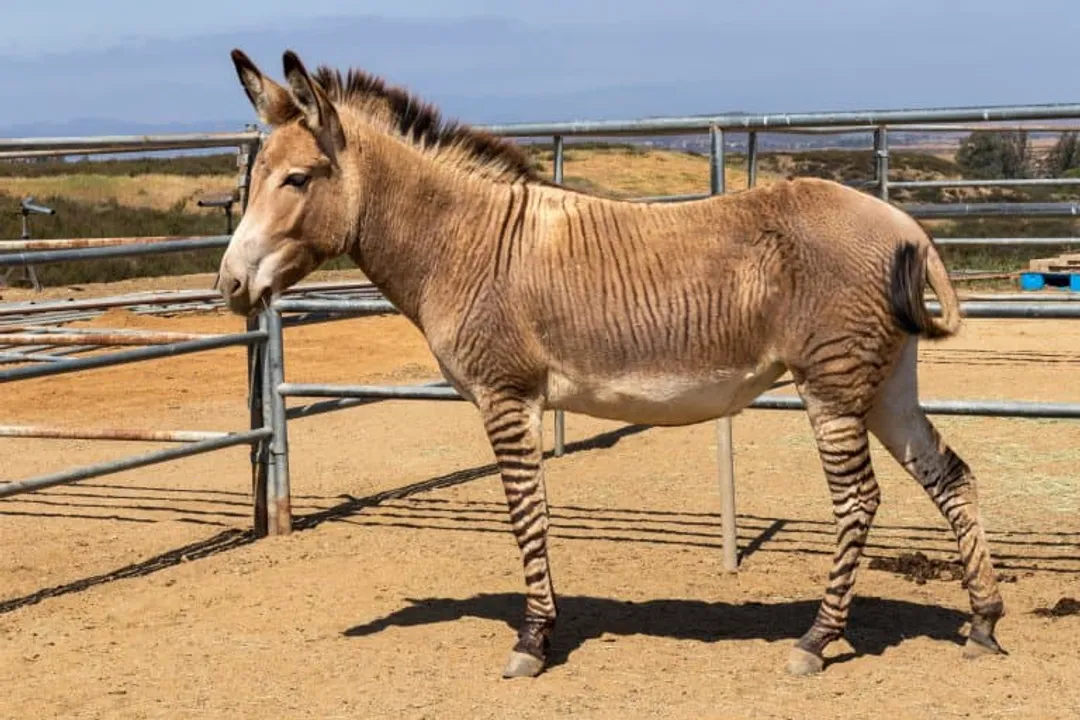
The very first thing one notices about a zonkey is the striking visual contradiction it embodies: the refined, yet wild, striping of a zebra overlaid upon the sturdy, familiar frame of a donkey. This hybrid, resulting specifically from the union of a male zebra and a female donkey, rarely presents a fifty-fifty split in its physical presentation. Instead, the general physical form tends to lean heavily toward the donkey parent, often described as looking much like a mule but undeniably marked with black. It is this distinctive coat pattern that immediately sets the zonkey apart from its donkey dam and is the primary visual signature inherited from its sire.
# Stature and Build
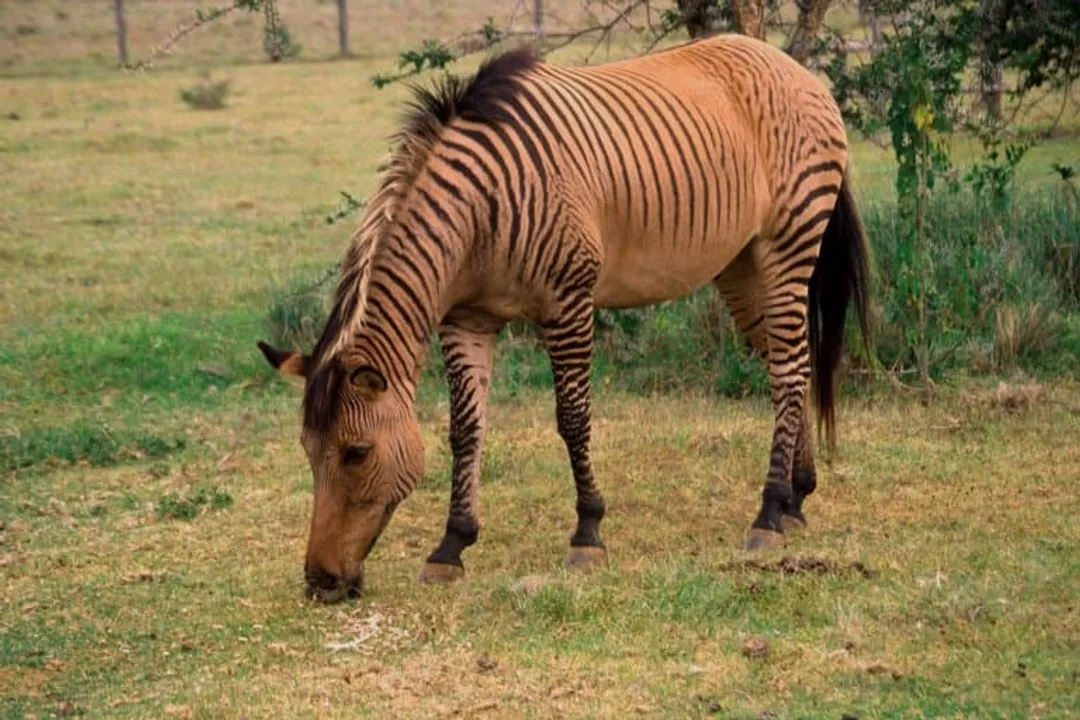
When assessing the size of a zonkey, one must look at the combined lineage, though the donkey's influence is clearly dominant in mass and structure. Quantitative measurements show this blend results in a creature of significant, though variable, heft and height. A zonkey’s shoulder height typically falls between $42$ and $60$ inches ($107$ to ). Its overall standing height can range slightly larger, from $45.3$ to $65$ inches ($115$ to ). In terms of weight, these animals generally fall between $500$ and $700$ pounds ($227$ to ), though some reports place the upper limit slightly higher at around . The body length is also substantial, measuring between $53.1$ and $76.8$ inches ($135$ to ).
The zonkey inherits a sturdy build, often described as having the broad, stocky frame characteristic of a donkey. However, the underlying muscle structure presents a mix of the two parent species, lending it a combination of the donkey's stamina and the zebra's inherent strength. While its shape leans toward the bulkier donkey, the way it moves can possess a touch of the zebra's quickness. If we consider that a typical domestic donkey (the mother) might weigh between $400$ and $500$ pounds, and a zebra can range from $440$ to $990$ pounds depending on the species, the zonkey’s consistent weight range suggests that the donkey mother’s physical template strongly dictates the overall mass, while the zebra father contributes potent muscular density and patterning rather than simply adding half its own weight.
# Coat Patterning
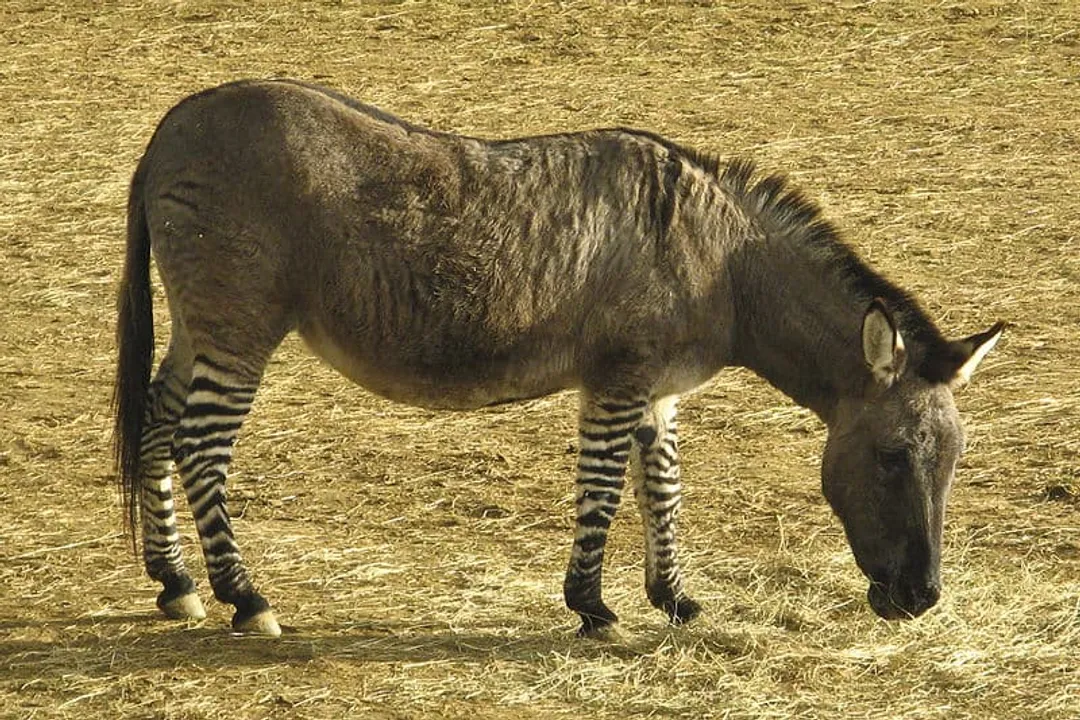
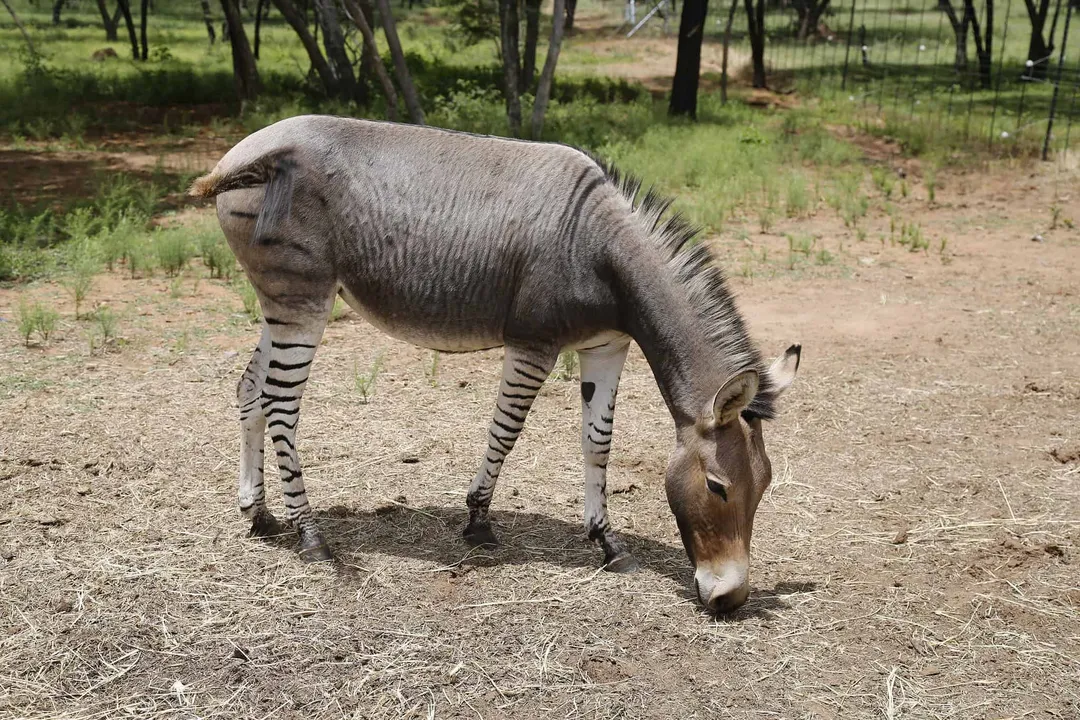
The most compelling physical aspect of the zonkey is, without question, its coat. It is a living canvas displaying the genetic negotiation between two distinct equine patterns. The base color generally mirrors that of the donkey parent, presenting as shades of brown, tan, or gray. This foundation coat then serves as the backdrop for the zebra’s signature dark striping.
The placement and intensity of these stripes are highly individual. In some cases, the striping may be quite pronounced, covering the entire body, giving the animal a heavily patterned appearance. More commonly, however, the stripes are concentrated on the lighter areas of the body. They show up most prominently on the legs and the lighter, often white or cream-colored, underbelly. It is not unusual to see stripes concentrated on specific areas such as the head or the rump, while the main torso remains primarily the solid base color. This partial striping creates a visually arresting contrast, a feature that contributes significantly to their appeal as a curiosity.
# Head and Appendages
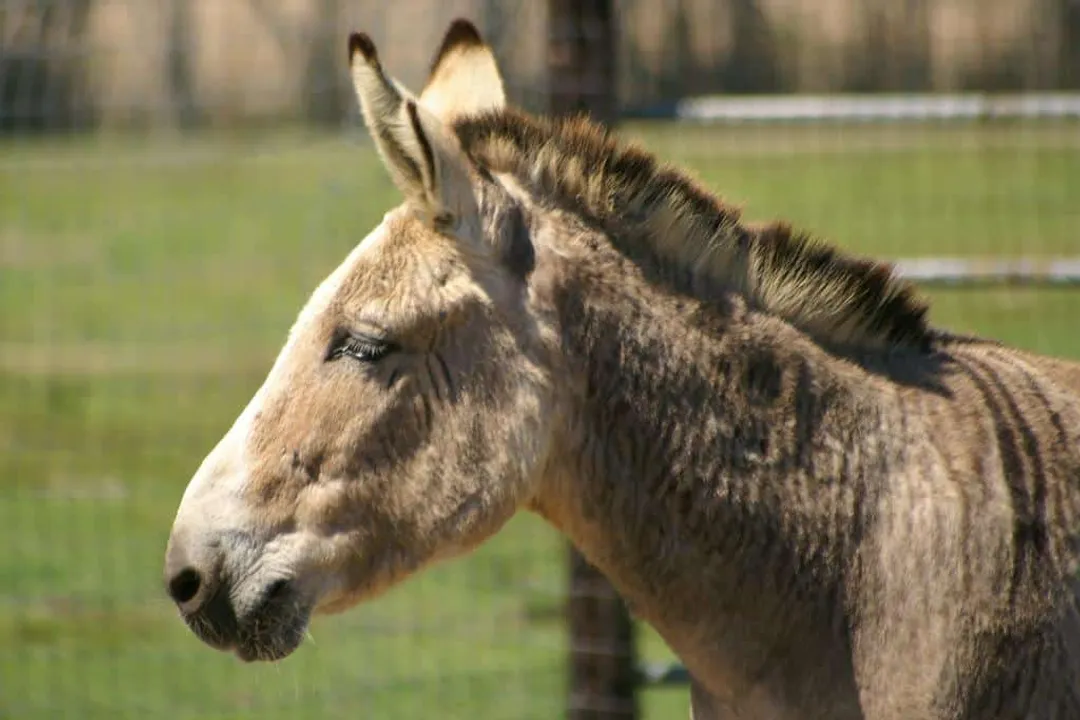
The head structure of the zonkey is another area where the donkey's characteristics frequently predominate over the zebra's. Zonkeys typically feature a large head relative to their overall form, coupled with large ears, features strongly reminiscent of the donkey.
Further along the body, the mane is usually dark, often described as black, and it runs along the ridge of the back, extending all the way to the tip of the tail, which is also typically black. This dark mane contrasts sharply with the mixed striping patterns found elsewhere on the body. The overall silhouette remains distinctly equid, but the combination of the large head and pronounced ear size often makes the animal more readily identifiable as a donkey-type hybrid than a zebra-type hybrid, such as a zorse.
# Genetic Limits on Form
The unique physical appearance is directly linked to the underlying genetic mechanism that defines the zonkey as a hybrid. Zebras and donkeys, although both belonging to the Equus genus, carry a different number of chromosomes. For example, a Plains zebra may carry $44$ chromosomes, while a domestic donkey carries $62$. The resulting zonkey inherits a mixed, and critically, an odd number of chromosomes—such as $53$ in the example given—which creates an incompatibility that almost always renders the animal sterile.
This chromosomal mismatch has physical consequences beyond reproductive viability. Sources indicate that zonkeys often exhibit higher rates of dwarfism and may suffer from other general abnormalities. When considering the uneven distribution of genetic material, it is reasonable to postulate that this disparity disrupts the precise signaling required for coordinated skeletal growth. The reported instances of dwarfism likely stem from this unequal genetic input influencing the rate and final extent of bone development, rather than simply inheriting a small stature from one parent; it's a physical manifestation of developmental uncertainty inherent in the genetic combination.

# Longevity and Speed Metrics
The lifespan of a zonkey, in managed care, appears relatively stable, generally cited to be between $15$ and $25$ years, with some figures extending that up to $30$ years. This longevity is somewhat surprising given the reported general health concerns and higher juvenile mortality rates associated with these hybrids.
Regarding movement, speed is a inherited trait with conflicting reports. One source notes that the top speed is not recorded. However, another source estimates a top speed of up to $35$ miles per hour. Given that zebras are prized for their speed on open plains, and donkeys for their endurance in rugged terrain, the zonkey is expected to possess a hybrid capacity for movement. If we compare the reported speed to the parent species—where zebras can certainly exceed this, but domestic donkeys are significantly slower—the zonkey’s maximum speed appears to be capped, perhaps by the heavier donkey frame, preventing it from fully reaching the top-end agility potential of its zebra sire.
# Quantitative Physical Summary
To better compare the physical dimensions gleaned from different sources, a standardized look at the quantifiable traits is helpful. Note that the most precise measurements come from recent dimensional studies, while older estimates provided broader ranges.
| Characteristic | Range (General/Older Estimate) | Precise Range (Source) |
|---|---|---|
| Weight | Up to | () |
| Shoulder Height | Up to () | $42''-60''$ () |
| Overall Height | N/A | $45.3''-65''$ () |
| Body Length | Up to () | $53.1''-76.8''$ () |
| Lifespan | Around $20$ years | $15-25$ years |
| Gestation Period | Over a year | $12$ months (one source) |
The consistency between the weight range and the $42''-60''$ shoulder height suggests that when a zonkey is produced, the resulting physical stature tends to fall toward the mid-to-large end of the donkey size spectrum, reinforcing the visual impression that the donkey parent sets the boundaries for the hybrid's mass and structure. The physical characteristics of the zonkey, from its color palette to its basic skeletal structure, are a testament to the strong, yet incomplete, genetic inheritance from both the zebra and the donkey.
Related Questions
#Citations
The Zonkey Has a Donkey Mom and Zebra Dad | HowStuffWorks
Zonkey Facts, Worksheets, Evolution, Anatomy & Appearance For Kids
Zonkey Animal Facts - Equus zebra x Equus asinus - A-Z Animals
8 Zany Zonkey Facts - Fact Animal
Zonkey (Equus zebra x Equus asinus) Dimensions & Drawings