Yellowthroat Physical Characteristics

The Common Yellowthroat is immediately recognizable, especially when you catch sight of the male flashing through dense marsh vegetation. This small warbler, scientifically known as Geothlypis trichas, presents a study in contrasts: a muted, olive-toned body punctuated by one of the most striking facial markings in the North American avian world. [1][3][7] While its primary identification marker is unmistakable on the adult male, understanding the physical characteristics across all age and sex classes reveals a more nuanced picture of this widespread species. [2]
# General Stature
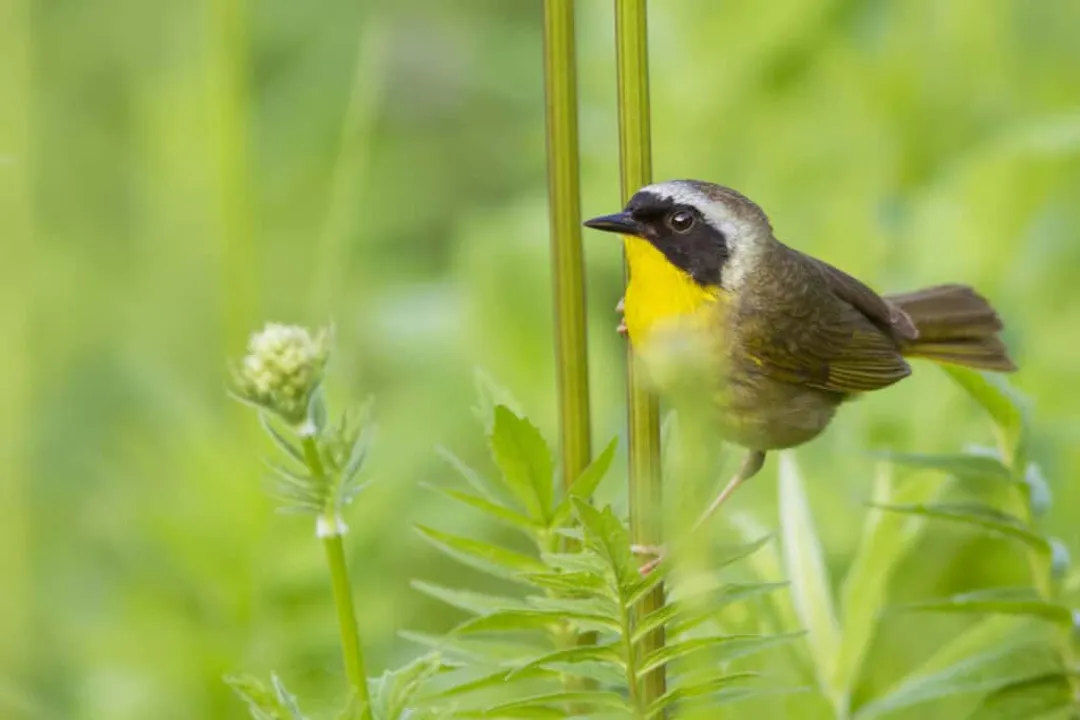
Physically, the Yellowthroat is a diminutive bird, fitting neatly into the category of small songbirds. [1][5] Its total length typically measures around five inches from the tip of the bill to the end of the tail. [1][5][7] This size places it among the smaller occupants of its scrubby habitats. Despite its small size, it is usually described as having a relatively slender build. [2] When comparing its overall dimensions to more familiar objects, imagine a bird barely larger than a robust sparrow, though its overall impression in the field is often one of quick movement within dense cover rather than static size comparison. [1][5]
# Coloration Differences
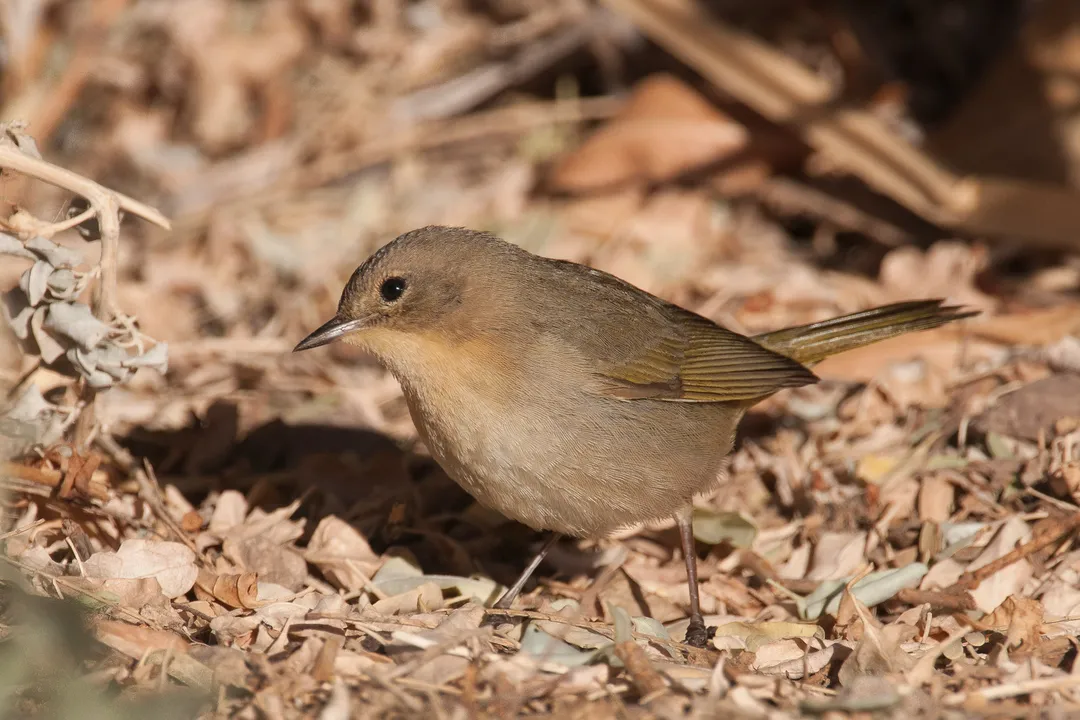
The most significant variation in physical presentation occurs between the sexes and across age groups. [2][3] This dimorphism is key to accurate identification in the field.
# Male Appearance
The adult male possesses the signature field mark: a bold, solid black mask that stretches across the face, encompassing the eyes and extending backward toward the ear coverts. [2][3][7] This mask creates a stark, almost bandit-like appearance against the otherwise bright coloration of the head and throat. Below this mask, the throat and the upper breast display a vibrant, rich yellow. [2][7] This yellow saturation is usually the brightest feature on the bird, contrasting sharply with the rest of the underparts, which transition quickly to a grayish-white shade. [3]
# Female Profile
The female, by contrast, is significantly plainer, lacking the male’s dramatic facial accessory. [2][3] She is typically duller overall, exhibiting olive-green plumage across her back, wings, and tail, similar to the male’s dorsal coloring. [1][7] Where the male boasts bright yellow, the female’s throat and breast are usually a pale, duller yellow or yellowish-gray wash, which fades into a whitish belly. [2][3] Although she lacks the solid black mask, a keen observer might notice subtle, dusky, or dark feathering surrounding the eye area on a female, suggesting the outline of the mask that will define her mate. [2][7] Immature birds generally resemble the females in their lack of bright markings. [3]
# Distinctive Markings
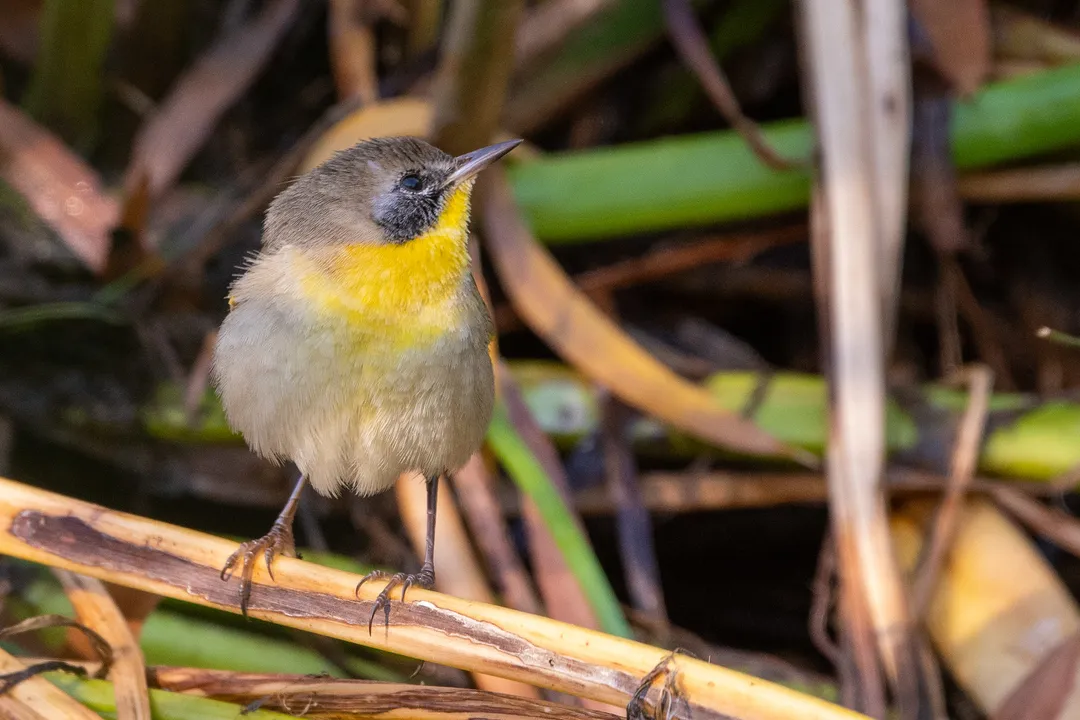
The black mask on the male is so central to the species' identity that it often overshadows other details. It functions as a clear visual beacon, likely important for species recognition and mate attraction within the often visually obstructed wetland environments they inhabit. The intensity of this black can appear absolute when the bird is well-lit.
The yellow coloration that frames this mask and covers the upper chest deserves closer attention. While described as yellow, the exact shade can vary geographically and seasonally. [1][3] In some subspecies or individuals, this yellow might be almost lemon-bright, while in others, it can appear more orangey or mustard-toned. [3] When viewing a bird in the field, particularly a male, focusing on the transition zone between the bright yellow throat and the duller olive-green of the upper breast is crucial for confirming the species, especially when the bird is partially obscured. [1]
For those learning to distinguish Yellowthroats from other warblers, remember this: very few other species in their range combine that specific olive-green back with a distinct yellow throat and a black mask on the male. [1][7] The lack of significant streaking on the breast—unlike many other warblers—is another critical identification feature that reinforces the physical profile. [2]
# Structural Details
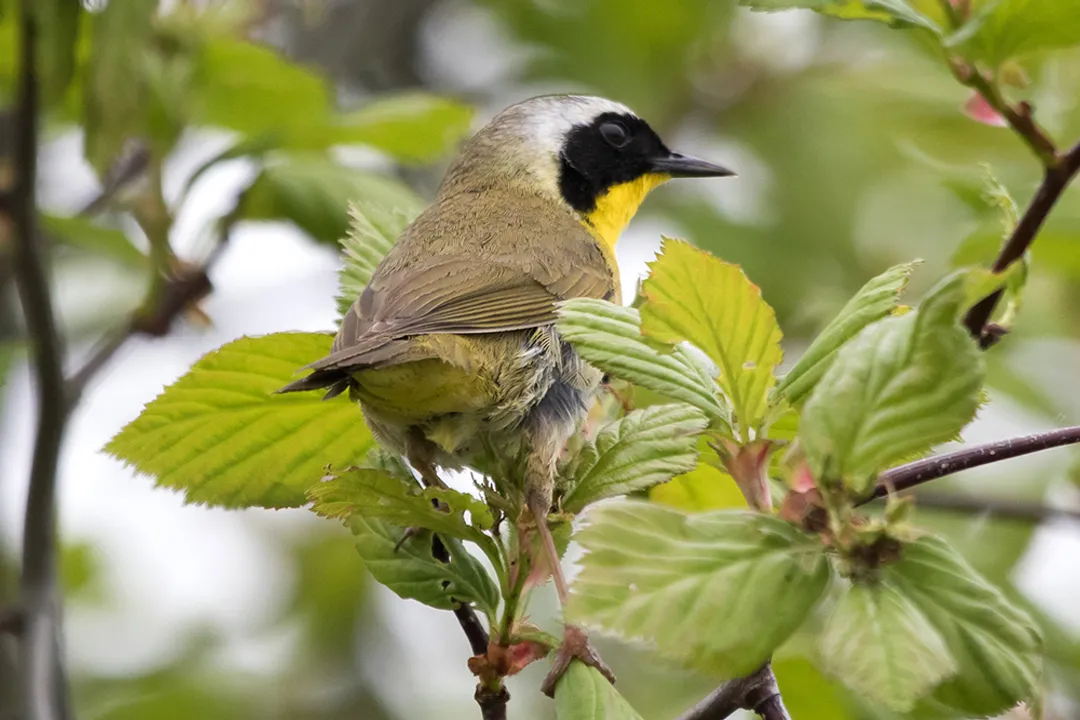
Beyond color, several structural elements define the Yellowthroat’s appearance. Their bill is relatively thin, typical for an insectivorous warbler, suited for gleaning small prey from foliage or catching insects in flight. [2] The legs and feet are generally described as pinkish in color. [1] In terms of general shape, they are compactly built, often appearing somewhat upright when perched, although their restless nature means they are frequently seen actively moving through low vegetation. [5]
# Field Identification Insights
When observing Yellowthroats, particularly when trying to distinguish between sexes or first-year birds, it is easy to become fixated only on the male’s mask. However, a key point for accurate field practice is learning to judge size and posture based on the seemingly drabber individuals. Because the female is so much less ornate, if you spot a small, olive-green warbler with a pale breast moving quickly through cattails, confirming its identity relies more heavily on noting the lack of other defining marks (like wing bars or strong eye-lines found on other warblers) and recognizing its characteristic low, scrubby habitat preference. [2][7] If you see a bird that is entirely olive-green above and grayish-white below, but it possesses that tell-tale bright yellow smudge at the throat—even a faint one—you are likely looking at a female or juvenile male. This subdued plumage means that beginners often overlook females because they lack the visual punch of the males, resulting in an undercount of the actual population present in an area. [3]
| Feature | Adult Male | Adult Female |
|---|---|---|
| Facial Mark | Bold, solid black mask | Dull or absent mask; may show dark eye shadow |
| Throat Color | Bright, distinct yellow | Pale yellow to grayish-yellow |
| Upperparts | Olive-green | Olive-green |
| Underparts | Yellow throat fading to grayish-white belly | Pale wash fading to whitish belly |
| Length | Approx. 5 inches | Approx. 5 inches |
| Legs | Pinkish [1] | Pinkish [1] |
The subtle physical differences mean that while the male declares his presence loudly with his song and his mask, the female requires a more patient, detailed look at the subtle color gradients on her chest and head to be definitively identified as a Yellowthroat rather than another small, drab species inhabiting the same dense thickets. [3][7]
Related Questions
#Citations
Common Yellowthroat Identification - All About Birds
Common yellowthroat - National Zoo
Geothlypis trichas (common yellowthroat) - Animal Diversity Web
Common Yellowthroat Bird Facts - Geothlypis trichas - A-Z Animals
Monticello Park Birds - Common Yellowthroat - MPNature
Yellowthroat - Wikipedia
Common Yellowthroat - Montana Field Guide
Bird of the Week: Common Yellowthroat - Travis Audubon
Common yellowthroat bird characteristics and habits - Facebook