Yellow Perch Physical Characteristics
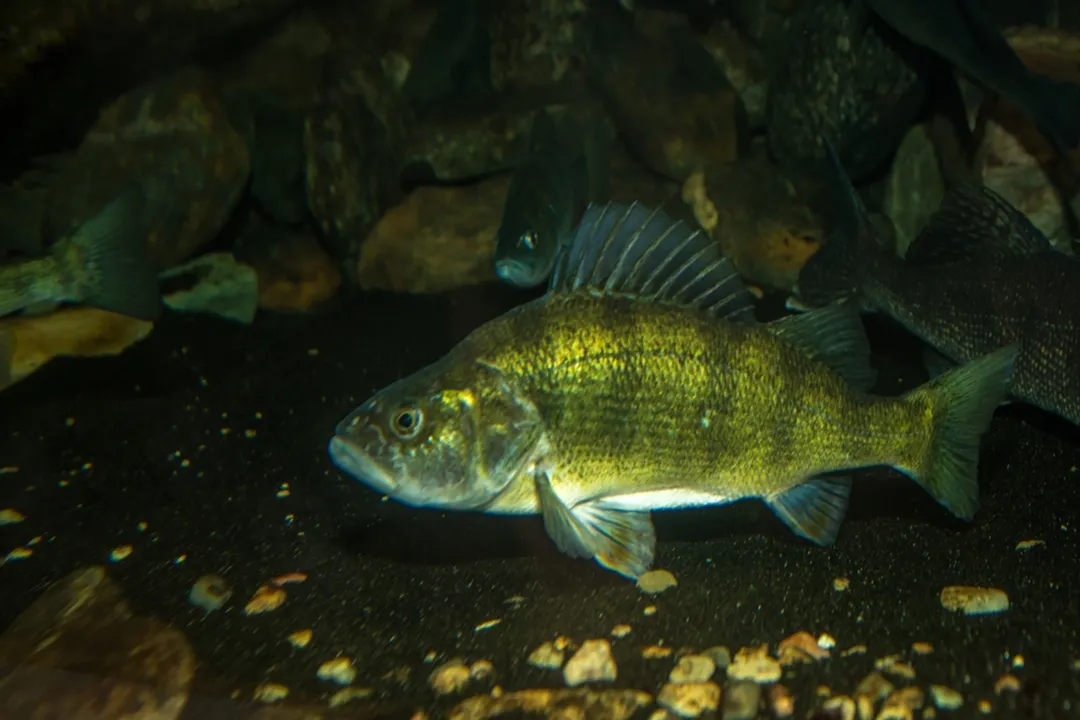
The Yellow Perch, Perca flavescens, presents a distinct and familiar silhouette in North American freshwaters, characterized by its bright, golden hue punctuated by bold, vertical striping. Determining the exact shade can sometimes be tricky; generally, adults present as golden yellow or yellow to gold. However, descriptions can range slightly, mentioning a coloration that leans toward brassy green or extends to bright green through olive or golden brown across the upper head and body. This variability in base color often depends on the specific water body and light conditions it inhabits. Young fish, in contrast, tend to be noticeably paler, sometimes possessing an almost whitish background color before developing their mature vibrancy. The fish’s underside, or belly, provides contrast, being white or yellow, with the pelvic and anal fins often sharing this lighter tone or exhibiting hints of orange or red, particularly in males during the spawning ritual.
# Markings Distinctive
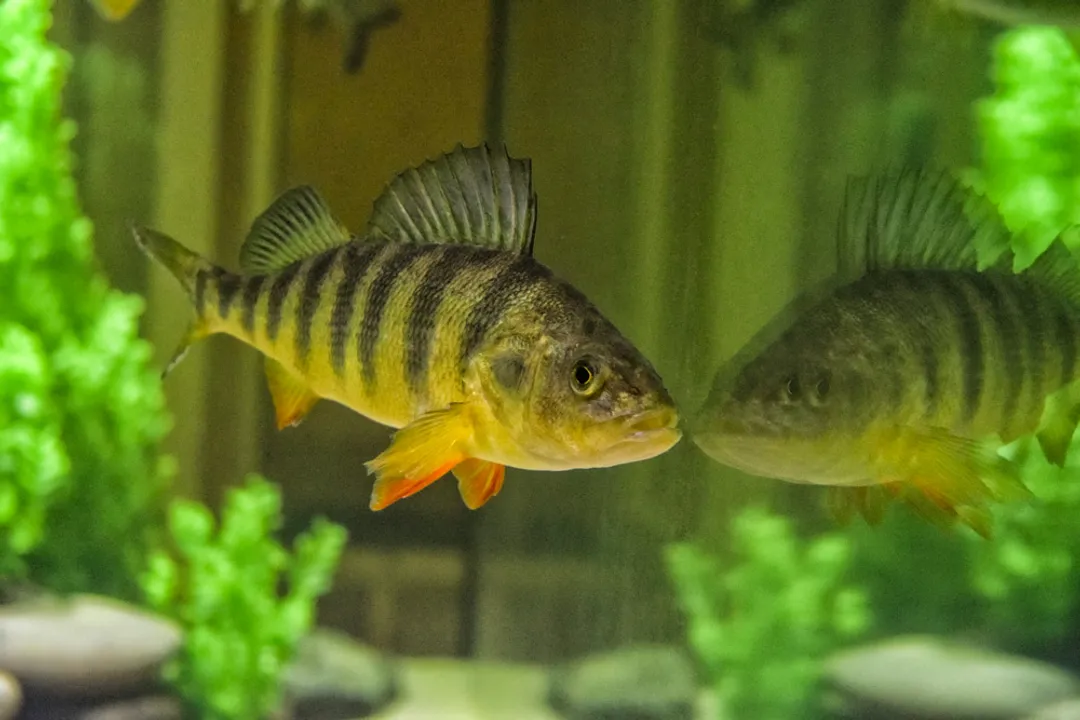
The most unmistakable physical marker of the Yellow Perch is the pattern of dark vertical bars that traverse its sides. While one source notes these as triangular-shaped olive-green stripes, the consensus points to six to eight distinct dark vertical bands running across the back and flanks. Interestingly, Iowa DNR specifies seven dark, vertical bars. In addition to these dominant bars, a subtle but consistent feature is the presence of a blackish blotch located on the membrane surrounding the rearmost three or four spines of the first dorsal fin. Examining the lateral line, the count of scales is noted to range between 51 and 61, while data from Iowa suggests a slightly higher range of 57 to 62. The body itself is described as elongate and laterally compressed, giving it a streamlined, yet somewhat stocky appearance for a panfish.
# Fin Structure
As members of the perch family, Yellow Perch possess two separate dorsal fins, a characteristic shared with their relatives. The first, or anterior, dorsal fin is distinctly spiny, consistently housing 12 to 14 spines. The second dorsal fin is a softer counterpart, containing fewer spines—typically only 2 or 3—followed by 12 to 13 soft rays. The anal fin is also noteworthy, equipped with two spines, supported by 7 or 8 soft rays according to one regional report, or 6 to 8 soft rays per another source. The pelvic fins, positioned close together beneath the body, and the caudal (tail) fin, which is forked, complete the array of primary stabilizers. The opercula (gill covers) also feature spines.
The lower fins—the anal and pelvic—are where breeding males display their most vivid secondary sexual characteristics, often developing pronounced red or yellow coloration during the spawning season, which is especially notable compared to the relatively clear pectoral fins.
# Body Texture and Mouth
Running a hand along a fresh catch reveals a definite roughness, a tactile quality imparted by the fish's ctenoid scales. Beyond the scales, the mouth structure is a key identifier, though regional observations show slight differences in description. Most commonly, the mouth is described as subterminal, meaning it is positioned slightly below the snout, allowing for efficient bottom feeding. However, a report from Maryland describes the mouth as large and terminal, where the upper and lower jaws form the extreme anterior of the head. Regardless of the exact placement, the mouth is armed with many small teeth, though critically, the Yellow Perch lacks the large canine teeth characteristic of close relatives like the walleye or sauger. This dentition, paired with a relatively long but blunt snout, suggests an opportunistic diet that shifts from tiny plankton to larger prey as the fish develops. Considering their diet progression—starting with zooplankton and moving to small fish—the slightly subterminal mouth makes perfect sense for picking food off the substrate, whereas a truly terminal mouth might suggest a more active pursuit of pelagic prey. If anglers observe fish holding tight to the bottom and seeming to prefer smaller, slow-moving baits, it aligns more closely with the subterminal mouth morphology commonly noted.
# Size Growth Variation
In terms of sheer mass and length, the Yellow Perch exhibits significant variability across its range, a point echoed by multiple authorities. While the common length is often cited around 7.5 inches or 4 to 10 inches, they can achieve impressive sizes. The maximum recorded total length approaches 50 centimeters (20 inches), though a fish reaching 19.7 inches has been documented. A weight over a pound is considered rare in some areas, yet the world record stands impressively at 4 lb 3 oz (1.9 kg).
This divergence in size is often linked to regional differences in environment and life history. A pronounced sexual dimorphism exists: females generally grow faster, achieve greater ultimate sizes, and live longer than males. For instance, a seven-year-old female might exceed her male counterpart by about 2.5 cm in length. This differential growth rate means that fish populations in northern waters may live longer but grow at a slower pace overall. A phenomenon known as stunting, where a population remains smaller than others in the same geographic area, is particularly common in Yellow Perch. This stunting might be exacerbated in dense schools, where the sheer number of fish competing for resources limits the energy available for growth, even if the fish possess the physiological capacity for larger size, as demonstrated by the observable difference between sexes under similar conditions. A population experiencing widespread stunting, particularly in systems where they rely heavily on plankton, might never reach the physical dimensions implied by the maximum recorded sizes, meaning that size alone is a poor indicator of the species' overall potential.
Related Questions
#Citations
Yellow Perch (Perca flavescens) | U.S. Fish & Wildlife Service
Perca flavescens - Yellow perch - Animal Diversity Web
Yellow perch - Wikipedia
Yellow Perch | Department of Natural Resources - Iowa DNR
Yellow Perch | Squam Lakes Natural Science Center
Yellow Perch | Ohio Department of Natural Resources
Maryland Fish Facts: Yellow Perch
Yellow Perch - Montana Field Guide