Yak Evolution
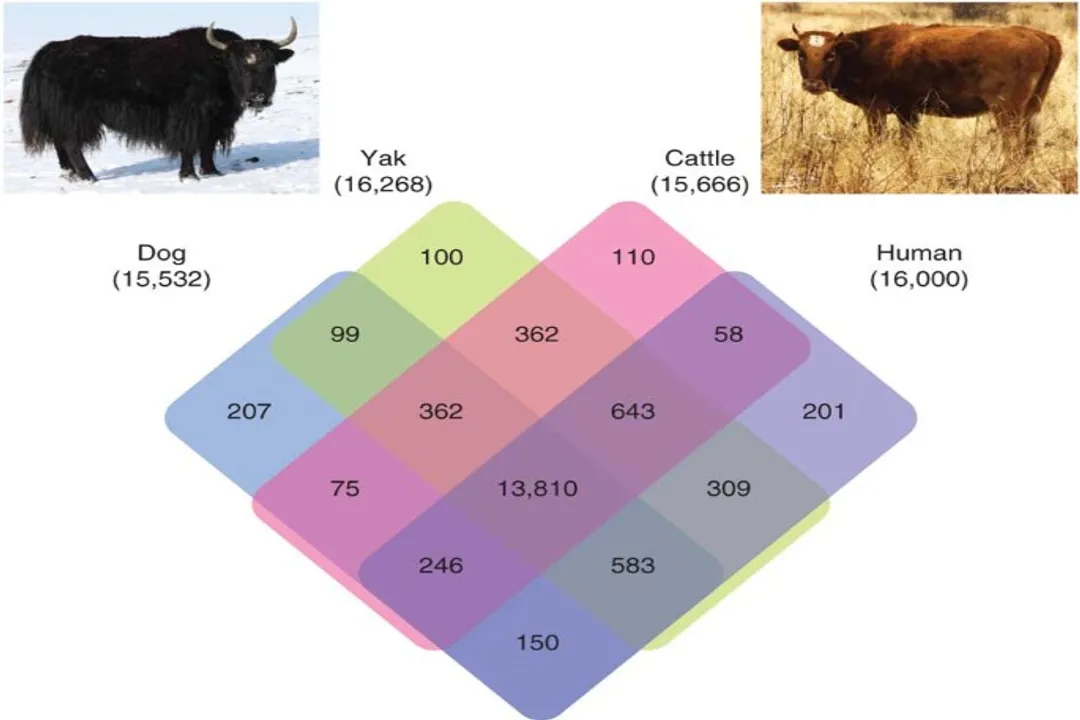
The story of the yak, Bos mutus, is intrinsically linked to the highest, harshest landscapes on Earth. Far from being a simple cousin to domestic cattle, the yak represents a distinct evolutionary triumph, having engineered itself—both naturally and through human intervention—to thrive where oxygen is scarce and temperatures plummet. Tracing its evolution requires looking back through deep time to understand its divergence from other bovids, and then tracking the relatively recent, but rapid, adaptation under the shadow of human settlement across the Tibetan Plateau. [5][6]
# Wild Ancestor
The foundation of the yak's existence lies with its wild progenitor, the wild yak (Bos mutus). [9] These formidable animals are built for extreme altitude, possessing physiological traits unmatched by most other large mammals. They are native to the vast, cold, high-altitude grasslands and plateaus of Central Asia, historically roaming areas above 3,000 meters (about 9,800 feet). [9] Their survival in an environment characterized by hypoxia—low oxygen availability—is perhaps their most defining evolutionary achievement.
Genomic studies help map this divergence. Research suggests that the common ancestor of domestic yaks and cattle diverged from bison thousands of millennia ago. [5] More specifically regarding the yak lineage, genetic analysis places the split between the wild yak and the domestic yak at around the time of the late Pleistocene to early Holocene transition, although the precise timing of the initial domestication event is a topic of ongoing research, often cited within the last few thousand years. [6] One study estimated the divergence time between the two lineages to be around 10,000 years ago, indicating a long period of isolation for the wild population before intense human influence began shaping the domestic form. [6] The wild yak, in comparison to its domesticated relative, is significantly larger, darker in color, and possesses a more formidable horn structure. [9]
# Domestication Timeline
Domestication transformed the yak from a purely wild herbivore into an indispensable partner for high-altitude pastoralists. The exact genesis point remains debated, but archaeological and genetic evidence points firmly toward the Tibetan Plateau as the primary center of domestication. [6] While some sources suggest the divergence began earlier, the most concrete evidence of established herding practices points to a more recent period. Intriguingly, ancient genetic traces hint at a surprisingly sophisticated, early human breeding program.
In what might be considered one of the earliest examples of genetic engineering for environmental necessity, evidence suggests Tibetans created a "super yak" approximately 2,500 years ago. [4] This early selective breeding aimed at producing animals better suited for arduous tasks and resource utilization than the wild counterpart. This achievement underscores that the evolutionary path of the domestic yak is not solely a product of natural selection but heavily influenced by artificial selection favoring traits like docility, high milk production, and robust work capacity. [4] This contrasts with the natural selection pressures on the wild yak, which favor pure survival, camouflage, and defense against predators like wolves. [9]
# High Altitude Physiology
The ability of yaks to sustain physical exertion at altitudes where cattle would quickly succumb is due to unique anatomical and physiological modifications that represent significant evolutionary adaptations. This adaptation is particularly evident in their circulatory and respiratory systems. [7][8]
One of the most critical adaptations involves hemoglobin. Yaks possess a high concentration of red blood cells and hemoglobin, which is crucial for oxygen uptake in thin air. [8] Furthermore, their hemoglobin exhibits a specific characteristic that allows it to bind oxygen more readily at low partial pressures, meaning they can scavenge the limited available oxygen more efficiently than lowland species. [7] This is a profound change compared to animals like cattle, which rapidly develop altitude sickness above 3,000 meters. [7]
The respiratory system also plays a part. Yaks have larger lungs and thoracic cavities relative to their body size compared to domestic cattle, allowing for greater air intake with each breath. [8] Beyond immediate respiratory mechanics, studies have identified specific genes that have undergone strong positive selection in yaks, directly related to adaptation to high-altitude hypoxia. [1][5] These genetic signatures point to molecular pathways that regulate oxygen sensing and utilization, illustrating evolution acting directly at the cellular level. [1][5] For instance, certain genes involved in metabolic adaptation show clear selective sweeps in yak populations compared to low-altitude bovines. [8]
When examining the historical development of these traits, it becomes clear that the genetic bottlenecks associated with early domestication may have acted as an accelerator for retaining or enhancing certain high-altitude survival genes that were already present in the wild population. [6] The interplay between the extreme environment and the initial small founder population during domestication likely solidified these physiological advantages quickly.
Here is a comparison summarizing the adaptive differences between the wild and domestic yak physiology, focusing on traits critical for their environment:
| Trait | Wild Yak (Bos mutus) | Domestic Yak (Bos grunniens) | Evolutionary Significance |
|---|---|---|---|
| Size/Build | Larger, heavier | Generally smaller, more variable | Selection for utility over raw bulk [9] |
| Coat Density | Extremely thick, long lower coat | Variable, often slightly reduced | Selection for easier shearing/management |
| Hemoglobin Affinity | High (adapted for extreme hypoxia) | High (retained from wild type) | Essential for oxygen transport at altitude [7] |
| Behavior | Wary, aggressive | Docile, trainable | Result of strong artificial selection [4] |
# Managing the Herd
The utility of the domesticated yak is multifaceted, rooted deeply in the cultural and economic survival of the people living on the plateau. Historically, yaks have provided everything necessary for life in harsh, isolated environments. [2] They are essential sources of milk, meat, and fiber, and their dried dung is often the only available fuel source in treeless regions. [2] Furthermore, they serve as draught animals for transport, pulling carts and sleds across difficult terrain. [2]
The transition from wild Bos mutus to domestic Bos grunniens involved a significant reduction in overall size and changes in reproductive patterns, primarily driven by management goals. [9] While wild yaks can live over 20 years, the intense management and resource allocation in domestic herds create different life-history trade-offs. [2] The selective pressure favored animals that could maintain energy reserves through harsh winters while providing sustained yields of products like milk, which is remarkably high in butterfat content, another useful adaptation for energy dense nutrition in a cold climate. [2]
In a practical sense for modern herders, understanding the genetics behind health is also becoming important. Recent research has focused on diseases and genetic diversity within domestic populations, which is critical for sustainable management. [3] For example, studies comparing different regional breeds can highlight which lines have retained better genetic diversity or resistance to specific local pathogens, informing breeding strategies today. [3] Recognizing that domestication creates vulnerabilities—such as reduced overall genetic breadth compared to the wild type—is essential for preserving the species' long-term resilience. [3]
# Genomic Insights
Modern sequencing technology has allowed researchers to pinpoint the specific genetic changes that underpinned the yak's remarkable evolution. Genomic analysis confirms that the divergence from cattle is substantial enough that yaks are generally classified as a separate species, despite their close relation. [5] Studies comparing the yak genome to that of Bos taurus (domestic cattle) have identified numerous regions of the genome under strong, positive selection in yaks. [1][5]
These selected regions are often associated with metabolic efficiency, adaptation to low temperatures, and, most significantly, hypoxia tolerance. [8] For instance, several studies have highlighted selection signals in genes related to the central nervous system and cardiac function, mechanisms that must coordinate the body's response to chronic low oxygen levels. [1] The identification of these specific genetic markers provides concrete evidence of the evolutionary pressures shaping the species over millennia.
One interesting finding that bridges the gap between deep evolution and recent breeding efforts involves the identification of genes related to coat quality. While the wild yak's coat is naturally insulating, the domestic yak's long, fine outer hair has been prized for textiles, leading to its selection for increased quantity and quality in certain breeds. [2] This demonstrates a dual evolutionary pathway: natural selection driving basic survival traits, immediately followed by human selection amplifying traits that offer economic advantage. [4]
If one were to look at the accumulation of adaptive changes, it’s insightful to note that the primary driver for the physiological machinery (the hemoglobin system, lung capacity) was the extreme environment itself—natural selection acting over a long period. [7] However, the explosion of diversity seen in coat color, size variation, and temperament across modern herds is almost entirely attributable to the focused, intense artificial selection applied by pastoralists over the last few thousand years. [4][6] This continuous dual-selection process results in a species uniquely tuned to its environment by nature, and specifically tailored for human needs by culture.
# Future Trajectories
The evolutionary arc of the yak is not complete. Today, the species faces new pressures, including climate change impacting the fragile plateau ecosystems and increased interaction with cattle and hybrid offspring, known as dzo or dzomo. [9] Understanding the distinct genetic profiles of wild versus domestic yaks is increasingly important for conservation efforts aimed at preserving the unique genetic heritage of Bos mutus. [9]
The genomic blueprints uncovered by science—from the molecular machinery managing oxygen uptake to the genes governing coat growth—provide not just a history lesson but a roadmap for managing these animals in a changing world. [1][3] Ensuring the survival of purebred wild yaks, though challenging given their dwindling numbers and habitat fragmentation, remains a biological priority to maintain the raw genetic material that first allowed this species to conquer the roof of the world. [9] The evolution of the yak stands as a powerful example of how life finds a way to flourish, even in the most inhospitable corners of the globe, shaped both by the unforgiving laws of nature and the deliberate hands of humanity. [5]
Related Questions
#Citations
Evolutionary origin of genomic structural variations in domestic yaks
History and Uses - Firebird Farms
Genetic structure analysis of yak breeds and their response to ...
Tibetans Created a Super-yak 2,500 Years Ago - Archaeology
The yak genome and adaptation to life at high altitude - Nature
Evidence for early domestic yak, taurine cattle, and their hybrids on ...
“The Yak”—A remarkable animal living in a harsh environment
Genetic diversity, phylogeography, and maternal origin of yak (Bos ...
Wild Yak | Animal Database | Fandom