Xiongguanlong Evolution
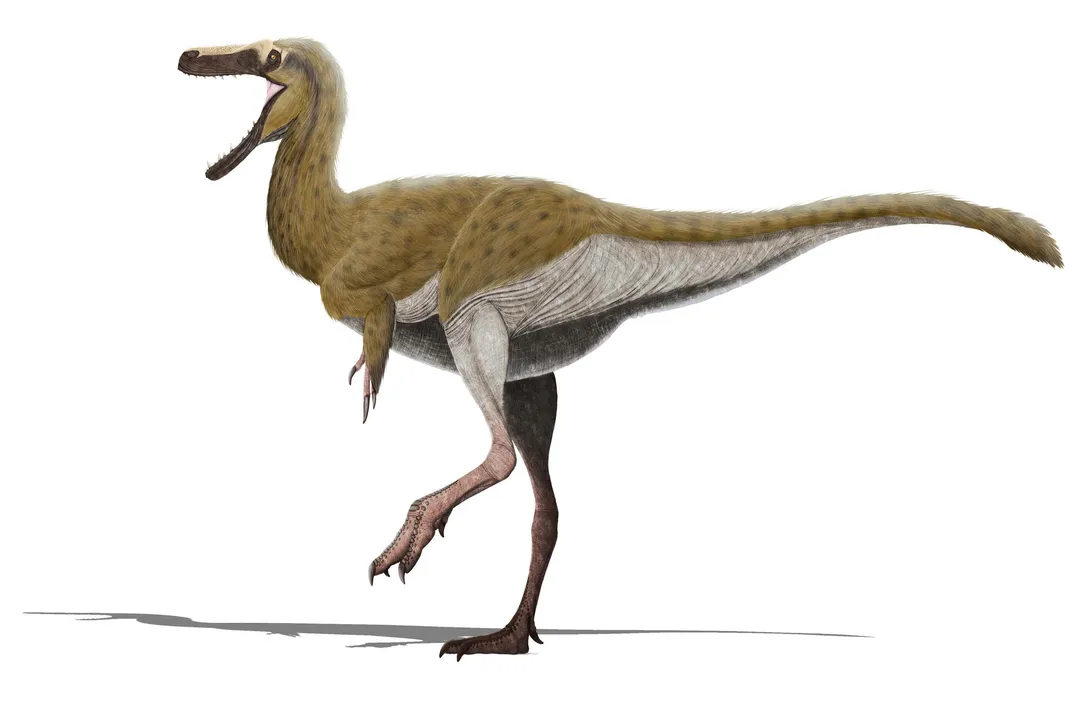
The creature known as Xiongguanlong offers a fascinating, albeit fleeting, glimpse into the early stages of the lineage that would eventually produce some of the largest terrestrial predators in Earth's history. This dinosaur, whose name roughly translates to the "Tyrant-Dragon from Xiongguan," was unearthed in the fossil-rich deposits of China, painting a clearer picture of how tyrannosaurs began to diversify during the Middle to Late Jurassic Period. [1][2][7] Its existence confirms that the core evolutionary trajectory of the tyrannosaur group was already underway long before the giant carnivores dominated the Cretaceous world. [3][6]
# Jurassic Origin
The fossil evidence for Xiongguanlong bohaiensis comes from the Yixian Formation in Liaoning Province, China. [1][5] This region has proven invaluable for paleontologists studying feathered dinosaurs and early bird evolution, but it also preserves crucial data on other dinosaur groups, including the tyrannosauroids. [8] The rocks containing Xiongguanlong date back approximately 160 million years, placing this animal firmly within the Late Jurassic epoch. [1][5] This timing is significant because it represents a period where gigantic predators were not yet the norm for this group; rather, tyrannosaurs were generally medium-to-small-sized hunters. [2][6]
At an estimated length of about three meters (roughly ten feet), Xiongguanlong was far from the imposing bulk of its later relative, Tyrannosaurus rex, which could reach lengths exceeding 12 meters. [2][5] Comparing these two species separated by tens of millions of years highlights a stark divergence in ecological niches early on. While T. rex evolved into a massive apex predator relying on sheer bite force and a robust skull, Xiongguanlong occupied a smaller predator role, possessing anatomical characteristics that point toward a different set of adaptations. [2][3] This contrast suggests that the evolutionary pathway to gigantism was not a straight line but involved varied experiments in morphology and lifestyle across the Jurassic landscape. [3]
# Nasal Structure
The most immediately striking feature distinguishing Xiongguanlong from many other theropods, and even some of its tyrannosauroid cousins, is its skull, specifically the nasal bones. [2][3] Unlike the typically short, deep, and heavily built snouts associated with later, bone-crushing tyrannosaurs, Xiongguanlong possessed a remarkably elongated snout. [2][5] The premaxillae and maxillae contributed to this length, but the nasal bones themselves were exceptionally long and slender. [2][3]
This extended facial structure is reminiscent of some long-snouted, fish-eating or gracile predators found in other dinosaur groups, a morphology that contrasts sharply with the common image of a tyrannosaur. [2] Paleontologists examining the holotype specimen noted that the nasal bones made up a substantial portion of the skull length. [2][7] Furthermore, the structure of these bones indicates that the nostrils were positioned relatively far forward on the snout. [3]
In assessing the skeletal architecture, one can observe that while the snout was long, the overall skull maintained a relatively light construction when viewed against later, short-faced tyrannosaurs. [2] If we consider the mechanics of biting, a long, thin snout is generally less capable of withstanding the extreme compressive forces that a very deep, short snout can manage. [3] This suggests that Xiongguanlong's feeding strategy likely did not revolve around the bone-shattering power characteristic of Cretaceous tyrannosaurs. [2]
# Family Ties
To properly situate Xiongguanlong within the dinosaur family tree, we must look at its classification. [1][5] It is considered a member of the superfamily Tyrannosauroidea. [1] More specifically, it is placed within the family Proceratosauridae. [1][5] This placement groups it alongside other primitive, often crested, tyrannosauroids such as Guanlong and Proceratosaurus. [1][5]
The relationship between these basal forms is critical for understanding the early dispersal of the group. [6] Guanlong, which lived slightly earlier than Xiongguanlong, also had a somewhat more gracile skull than later forms and possessed a distinctive crest on its snout. [1][5] Xiongguanlong, lacking the prominent crest seen in Guanlong but retaining the elongated nasal elements, appears to represent a side branch or a sequential morphological stage within the Proceratosauridae family tree. [2][7] Analyzing the subtle differences between these closely related species, such as comparing the extent of nasal elongation or the structure of the lacrimal bone, helps scientists map out the evolutionary pressures acting on the group during the Jurassic. [3]
The presence of these distinct, long-snouted forms in Asia during the Late Jurassic suggests that the initial stages of tyrannosauroid evolution—the phase before the rise of the giant predators—was characterized by significant morphological variety rather than a singular, directed march toward large size. [6]
# Lineage Data
The discovery of Xiongguanlong provided concrete data points that helped constrain the timing of several key evolutionary acquisitions in the tyrannosauroid line. [3][6] For instance, the evolution of the massive skull and powerful neck musculature seen in the Cretaceous giants was preceded by these lighter, more elongated forms. [2]
When mapping out the sequence of traits, it appears that characteristics like the elongated snout were present relatively early in the lineage, potentially before the shift toward gigantic body size became common. [3] This suggests that the initial adaptations focused on traits perhaps related to sensory perception, display, or handling smaller, agile prey, rather than simply maximizing crushing power. [2] The phylogenetic analysis places Xiongguanlong as a distinct offshoot that demonstrates the group's early success in different ecological niches across Asia. [1][5]
For researchers reconstructing the environment of the Yixian Formation, Xiongguanlong adds another layer to the ecosystem dynamics. We can infer a predatory lifestyle, but one geared toward smaller dinosaurs, early mammals, or perhaps even larger reptiles and fish, given the facial structure. [2] This stands in contrast to the known diets of the much later, heavier tyrannosaurs, solidifying the idea that the group had significant ecological flexibility in its youth.
If we were to create a simple comparative table of traits for these early Asian tyrannosauroids, the differences become quite clear, though precise measurements can vary based on estimation methods:
| Feature | Guanlong (Earlier) | Xiongguanlong (Later) |
|---|---|---|
| Estimated Length | ~3.5 meters [1] | ~3 meters [2][5] |
| Snout Profile | Elongated, Distinct Crest [1][5] | Elongated, Less prominent crest/ornamentation [2] |
| Classification | Proceratosauridae [1] | Proceratosauridae [1][5] |
| Time Period | Mid-Late Jurassic [1] | Late Jurassic [1][5] |
This comparative structure helps illustrate that evolution isn't always a linear progression from small to large; sometimes, lineage branches refine existing features, like the snout, before other major evolutionary shifts occur. [3]
# Form Function
The specific function of the incredibly long nasal bones in Xiongguanlong remains an area of active scientific consideration. [2] One compelling functional interpretation centers on sensory capabilities or intraspecific signaling, rather than purely biomechanical feeding requirements. [2]
Elongated facial structures in other animals, both extinct and extant, often house specialized sensory tissues or are used prominently in visual displays between members of the same species. [2] Because the snout appears relatively lightly built compared to the deep jaws of later forms, it is plausible that Xiongguanlong relied on different sensory inputs—perhaps an enhanced sense of smell concentrated in that long passage, or visual cues provided by the elongated bone structure itself—to locate and secure its prey. [2][3] This represents a different evolutionary investment compared to the arms race for bite strength seen much later in the group's history. [3]
In a hypothetical scenario, if Xiongguanlong was using its snout for ritualized pushing contests or threat displays—akin to how some modern deer use antlers—the long, perhaps keratin-covered bone structure would serve a communicative role. [2] This perspective shifts the focus from how much it could bite to how it interacted with its environment and peers. [2] The evidence suggests that the core tyrannosauroid body plan had already adapted distinct strategies for survival well before the group settled into the massive, singular predatory role that characterized the end of the Cretaceous. [6] The appearance of this elongated morphology in a relatively small animal shows that the building blocks for diversification were present early in their evolutionary history. [3]
Related Questions
#Citations
Xiongguanlong - Wikipedia
Xiongguanlong: A New, Long-nosed Tyrannosaurid
A longirostrine tyrannosauroid from the Early Cretaceous of China
Xiongguanlong baimoensis - A-Z Animals
Xiongguanlong - Grokipedia
Tyrannosaur 'Missing Link' Among New Dinosaurs From China
A longirostrine tyrannosauroid from the Early Cretaceous of China
Sino- American Paleontologists Found Tyrannosaur Fossils in China
Xiongguanlong | Dinopedia | Fandom