Xenoceratops Physical Characteristics
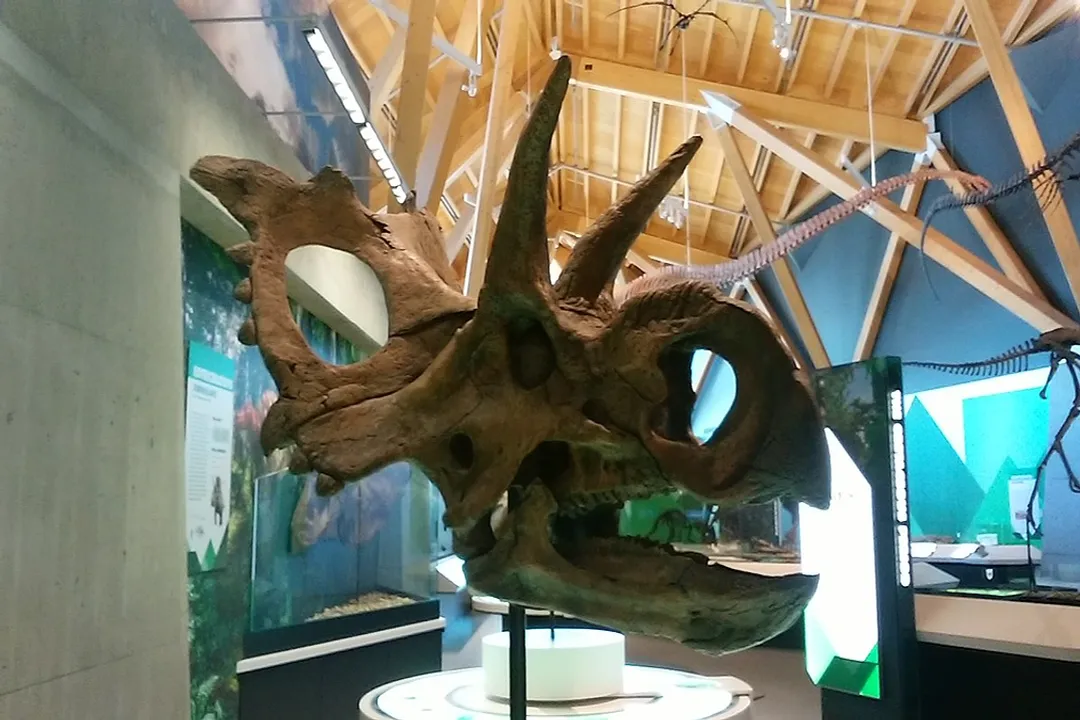
The physical reality of Xenoceratops foremostensis presents a fascinating glimpse into the early diversity of the horned dinosaurs, a group whose most famous members, like Triceratops, arrived much later in the fossil record. Unearthed from rock layers that predate many of its famous cousins, Xenoceratops earned its name, meaning “alien horned face,” from the strange combination of cranial features that distinguished it from later species. The known anatomy, primarily derived from skull fragments belonging to at least three adult individuals, reveals a creature already possessing the defining hallmarks of the Ceratopsidae family.
# Size Stature
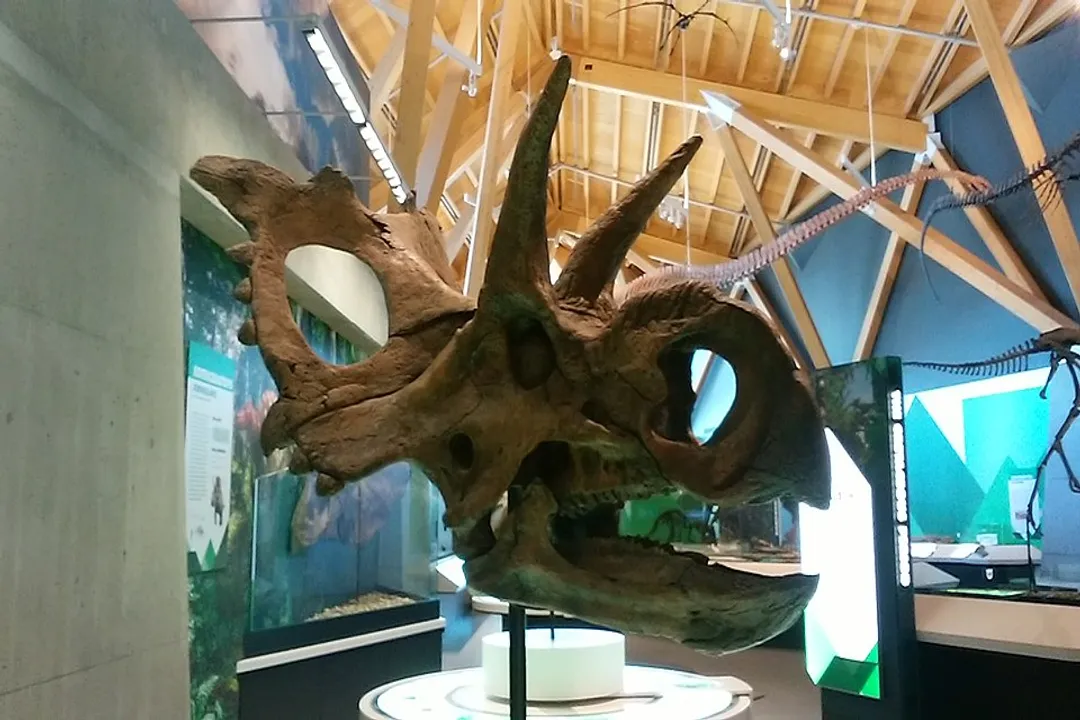
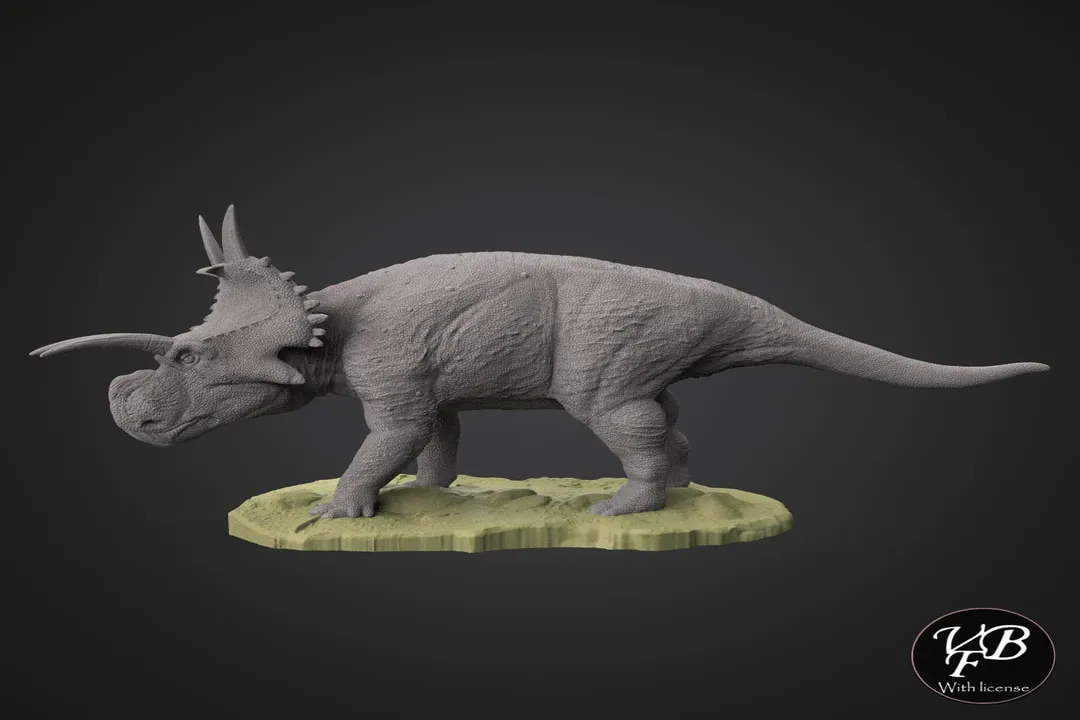
Xenoceratops was a solidly built, medium-to-large herbivore, certainly substantial enough to discourage casual harassment from predators that shared its Campanian-age world. Estimates place its total length at approximately 6 meters, or about 20 feet. In terms of bulk, the mass is generally agreed upon to be around 2 tonnes, with specific figures landing near 4,000 pounds or 1.8 tonnes. This places it squarely in the size class of a modern rhinoceros, an apt comparison given its quadrupedal, heavy-set frame. While the overall height isn't always detailed, one estimate suggests it stood roughly seven feet tall. These dimensions confirm it was one of the largest, if not the largest, ceratopsids roaming North America about 80 million years ago.
# Skull Features
Like all members of the Ceratopsidae family, Xenoceratops presented a distinctive head structure, characterized by a large, solid bony frill extending from the back of the skull, and keratinous sheaths covering its facial projections. The front of the face terminated in a powerful, parrot-like beak, perfectly adapted for shearing off tough vegetation such as ferns, cycads, and other low-lying Cretaceous flora. The teeth behind this beak formed dental batteries designed to efficiently grind this fibrous plant matter. While the face is incompletely known, the structure of the nasal bone fragment suggests it supported a substantial nasal horn or at least a heavily textured boss, similar in form to the structure seen in Medusaceratops. Additionally, the Royal Tyrrell Museum material indicates the presence of large brow horns situated over the eyes, comparable to other basal centrosaurines.
# Frill Ornamentation
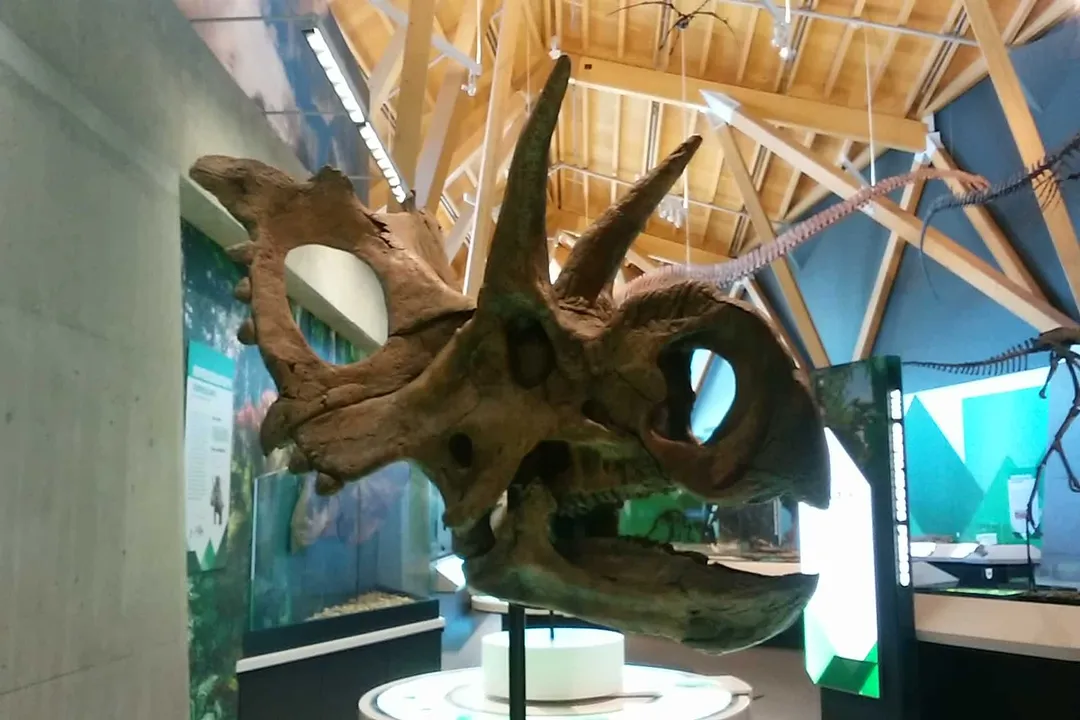
The frill is where Xenoceratops truly diverges from its later relatives, offering critical evidence for the evolutionary path of the Centrosaurinae subfamily. Paleontological scrutiny of the parietal bones—the elements forming the midline of the frill—reveals a unique pattern of bony outgrowths that are key to its identification. Instead of the extensive series of small hooklets or long spikes seen in many later forms, Xenoceratops featured two relatively thick knobs situated close to the midline, angled slightly inward. Immediately adjacent to each of these knobs was a single, long, flattened spike projecting distinctly backward and outward (laterally). Furthermore, the front corners of the parietal featured a large, distinctively triangular knob. A notable absence, which sets it apart from some relatives, is the lack of any ornamentation along the midline bar of the frill itself. This specific combination of thick central knobs paired with single lateral spikes offers a morphological stop on the evolutionary road to the more extravagantly adorned frills of dinosaurs like Styracosaurus, which often sported many long, straight spikes protruding from its margin. The Xenoceratops design appears to represent an earlier, perhaps more basic, elaboration of the display structures common in the centrosaurines. The frill and horns were likely utilized for display, perhaps signaling fitness to mates or intimidating rivals, rather than solely for defense against formidable predators like tyrannosaurids.
# Stance Support
Considering Xenoceratops moved on four legs and bore a weight approaching two tons, its skeletal structure, particularly the limbs and feet, must have been powerfully built to support that mass in its habitat. The Foremost Formation represents an ancient coastal plain, characterized by river deltas, swamps, and generally humid conditions. Walking across soft, potentially muddy or alluvial ground, much like its modern comparison, the rhinoceros, would have demanded specialized load-bearing capabilities. The sheer mass necessitates a low ground-pressure configuration, likely involving broad, columnar limbs and wide feet to prevent the animal from sinking into the mire common in ancient riverine environments. This substantial build was certainly an asset when sharing territory with large theropods, including relatives of Tyrannosaurus rex.
# Classification Context
Xenoceratops is formally classified within the Ceratopsidae family and the Centrosaurinae subfamily, placing it on a distinct branch from the Chasmosaurinae (which includes Triceratops). Its existence is vital to paleontology because it is the oldest known large-bodied ceratopsid fossil identified from Canada, with its rock layers dating back approximately 80.3 to 79.5 million years ago. This places it in a crucial position for understanding the initial radiation of large ceratopsians in North America, appearing several million years before more derived giants arrived. Its physical arrangement suggests a close kinship with other early centrosaurines such as Diabloceratops, offering a comparative study point for understanding how the specialized cranial decorations evolved across the group. The fossil material, initially collected in 1958 by Wann Langston, Jr., remained unstudied for decades before being recognized as a new genus in 2012 by Michael J. Ryan and colleagues. This delayed recognition underscores how easily significant morphological information can remain hidden within museum collections, waiting for focused re-examination.
#Videos
Meet Xenoceratops: Canada's newest horned dinosaur - YouTube
Related Questions
#Citations
Xenoceratops Animal Facts - A-Z Animals
Xenoceratops - Wikipedia
Xenoceratops Facts For Kids | AstroSafe Search - DIY.org
[PDF] Xenoceratops - Cloudfront.net
Xenoceratops foremostensis - Dinosauria Creatures
Xenoceratops - - Dinos and Designs
Meet Xenoceratops: Canada's newest horned dinosaur - YouTube