Whippet Evolution
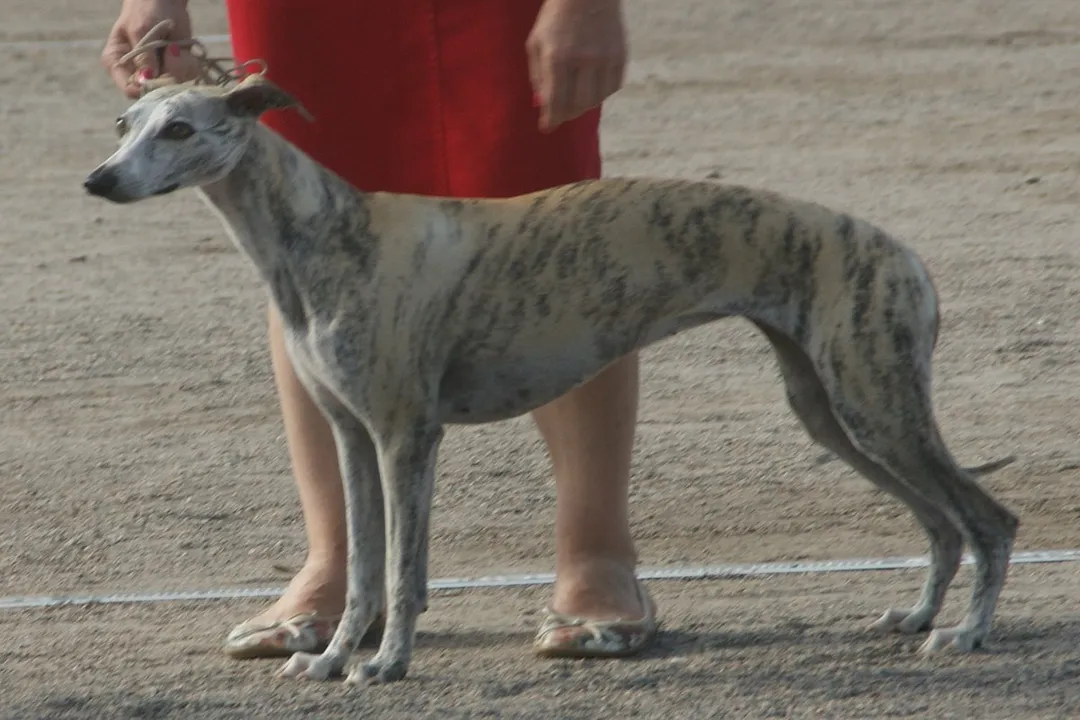
The Whippet’s story is a relatively recent chapter in the grand history of dog breeds, yet it is powerfully shaped by the societal and economic forces of the Industrial Revolution in England. [9] Unlike ancient breeds whose lineage stretches back millennia, the Whippet was deliberately engineered in the 19th century as a creature of speed and necessity, tailored specifically for the working class who needed a dog capable of both sport and companionship. [2][5] These agile canines were the result of targeted crossbreeding, pairing the supreme velocity of the larger Greyhound with the hardiness and tenacity of various Terriers. [1][6] The goal was singular: to create a smaller, more affordable sighthound that could participate in the fast-paced sport of coursing. [3]
# Ancestral Mix
The foundation of the Whippet lies squarely in combining two distinct canine profiles: the streamlined power of the Greyhound and the spirited drive of the Terrier breeds. [1] Greyhounds provided the essential blueprint for speed—the deep chest necessary for lung capacity, the arched loin for propulsion, and the lean physique built for sustained velocity. [7] However, the Greyhound was too large and expensive for the average factory worker or miner in the north of England to maintain. [5] The introduction of Terrier stock brought down the size and increased the hardiness, perhaps even lending the necessary "gameness" for catching quarry during rabbit coursing events. [6] This combination yielded a dog that possessed the elegant outline of its larger cousin but was compact enough to be owned and housed by those with modest means. [2] The resulting dog needed to be fast enough to win a purse but small enough to be kept in a small dwelling without extensive upkeep. [5]
# Sporting Origins
The primary proving ground for these developing Whippets was not the dog show ring, but the local rabbit chase, often organized informally among working men. [5][9] This practice, known as coursing, involved setting the dogs upon a live rabbit, with points awarded for speed, agility, and turns taken during the pursuit. [3][6] The dogs were often trained using live quarry early on, which cemented their drive and focus. [9] Due to their intensity during these contests, they sometimes earned the nickname "snap dog" in these early circles, suggesting a readiness to engage fiercely in the chase or perhaps a need to secure the quarry quickly before a rival dog could interfere. [3][5] The early Whippet population was valued strictly on performance; a dog that couldn't run was simply not bred, regardless of its pedigree or appearance. [9] This intense functional selection ensured that the genetic traits responsible for speed became highly concentrated in the lineage very quickly.
It is interesting to note that while the Terrier influence was crucial for building the dog’s frame and spirit, as organized coursing replaced ad-hoc vermin control as the main outlet, the need for the ratting-specific tenacity likely diminished over time. The breed’s evolution thus saw a subtle drift from purely utilitarian function (part-terrier survival traits) toward a specialized, standardized expression of sighthound performance. [6]

# Standardization Efforts
As the breed matured and proved its merits in the field, fanciers began to recognize the need to define and preserve the attractive, functional standard they had created. [9] This period marked the transition from a local working dog type to a recognized breed entity. [3] Initial attempts to establish a formal standard sometimes led to confusion, as breeders in different areas might have emphasized slightly different characteristics based on their local competitive styles. [9]
The official recognition process began to take hold, which inevitably meant that looks started to matter alongside ability. The American Kennel Club (AKC) granted recognition to the Whippet relatively early in its formal history, solidifying its status in the United States. [1] In Britain, while the type was established, formal acceptance by the Kennel Club took time, eventually coming decades after the breed was established in North America. [3] This administrative step formalized the ideal Whippet: a medium-sized dog blending Greyhound grace with Terrier pluck, engineered for speed but possessing the gentle nature required of a family pet once the work was done. [7]
# Transatlantic Movement
The Whippet’s migration to North America was a key step in securing its future, especially as working conditions and sporting regulations changed in Britain. [1][9] American enthusiasts embraced the breed, often setting their own standards for excellence in performance events, though always respecting the core physical structure inherited from the English crosses. [3] The development of lure coursing—a mechanized chase using a mechanical lure instead of live animals—provided a modern, humane outlet for their innate drive, further encouraging breed popularity. [2]
The successful establishment of the breed across the Atlantic suggests that the Whippet’s temperament was also highly desirable for the average American home. While the sources stress their phenomenal athletic capabilities—often calling them the "poor man's racehorse" [5]—their quiet, affectionate nature indoors must have been equally persuasive for their owners. [7]

# Adaptability and Modern Form
The physical structure of the Whippet is a testament to selective breeding focused on aerodynamic efficiency. They feature a long, refined head, a powerful, flexible back that arches over the loin for that crucial spring in their stride, and a tucked-up abdomen. [4] Their coat is short and smooth, offering minimal wind resistance. [2]
When comparing the finished Whippet to its Greyhound parent, the most significant evolutionary difference is size. [4] While a Greyhound might weigh 60 to 70 pounds, the Whippet typically falls between 25 and 40 pounds. [2][4] This reduction in bulk, while retaining the sighthound profile, is perhaps the most crucial adaptation that allowed the breed to survive the transition from the industrial fields to modern living. [1] Large sighthounds require significant space and resources. The smaller Whippet, however, can often thrive in smaller homes or apartments, provided their need for short, intense bursts of speed is met outdoors. [7]
One might observe that this moderated size became an even greater factor in the breed's continued success into the 21st century than the initial coursing speed alone. In an increasingly urbanized and resource-conscious world, the ability of the Whippet to transition effortlessly from an intense sprinter in a securely fenced area to a calm, couch-loving companion indoors cemented its position not just as a sporting dog, but as a highly versatile household member. [7] This quiet domesticity, hidden beneath the sprinter's build, ensures the breed remains highly favored by enthusiasts who value both history and contemporary lifestyle compatibility. [3] The evolution of the Whippet, therefore, is a story of achieving maximum speed efficiency within a manageable, companionable package.
Related Questions
#Citations
Whippet History: Where the Breed Originated - American Kennel Club
Whippet - Wikipedia
History of the Whippet by Bo Bengtson
Echoes of the Past: The History and Naming of the Whippet - elmorio
The Snap Dog – The History of the Whippet | Canine Chronicle
Breeding History - Whippet Data
Dog Breed Spotlight: The Whippet | Willow Bend Animal Clinic
History of the Whippet - South West Whippet Club
The Origin of the Whippet