Whinchat Evolution
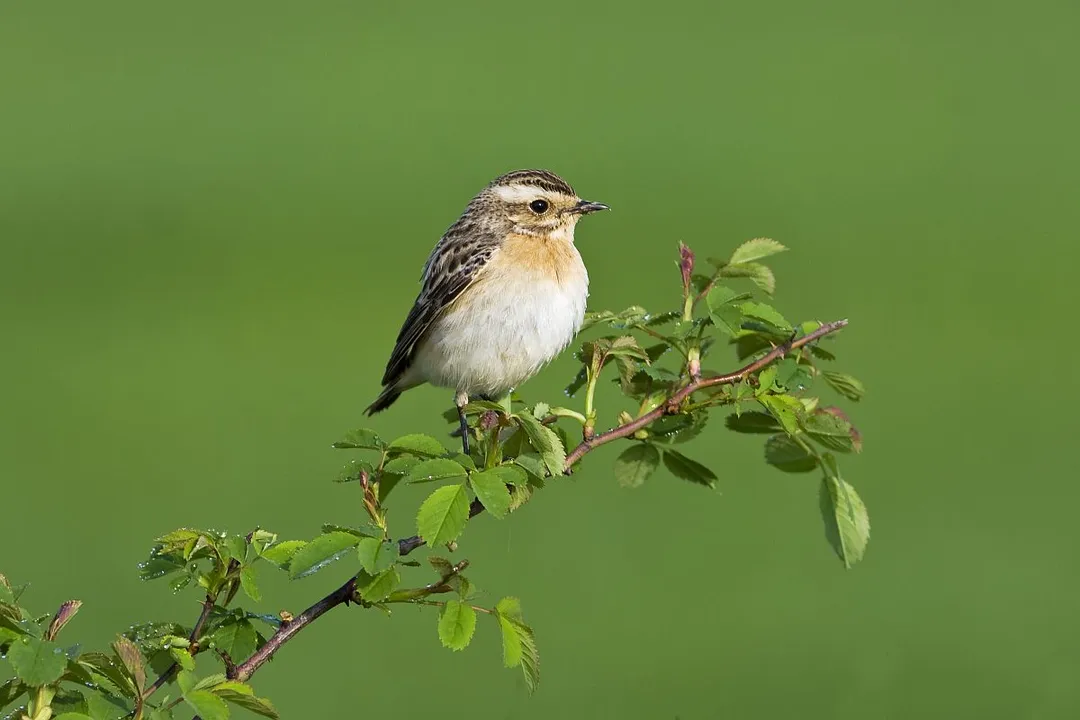
The Whinchat, scientifically known as Saxicola rubetra, presents a fascinating study in avian adaptation, showcasing physical traits and migratory habits honed over millennia to exploit specific ecological niches across continents. Though often overshadowed by more common songbirds, this species embodies the pressures of selection in open landscapes, requiring sharp distinctions between the sexes for breeding success and a powerful internal map for navigating epic annual journeys. [1][5]
# Physical Traits
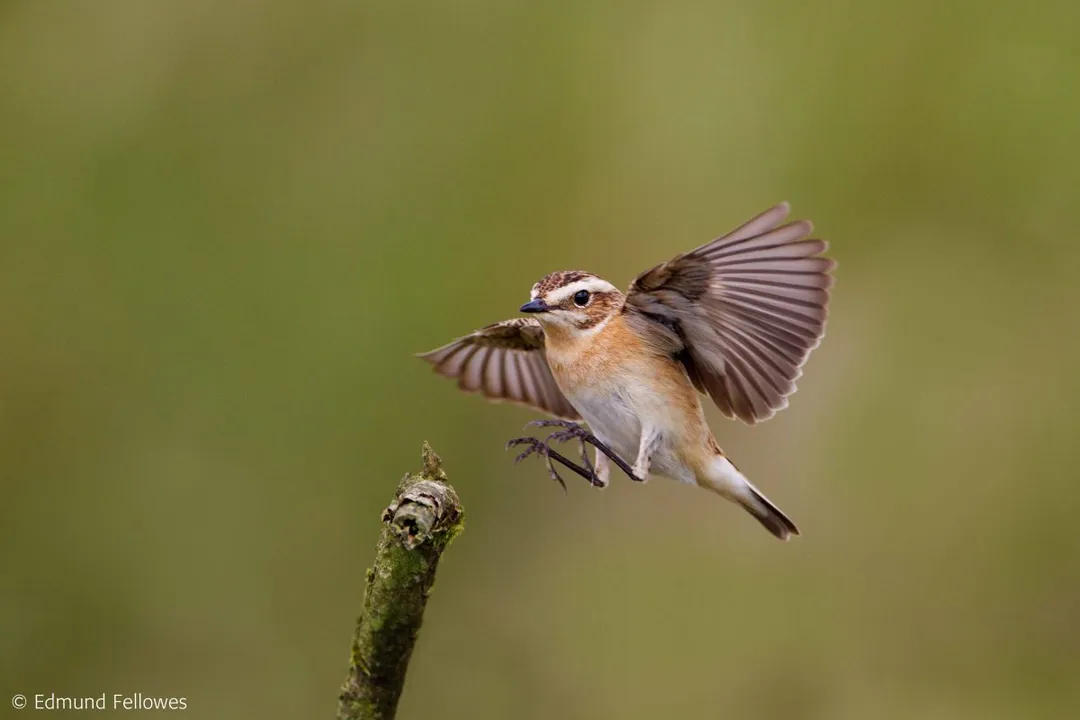
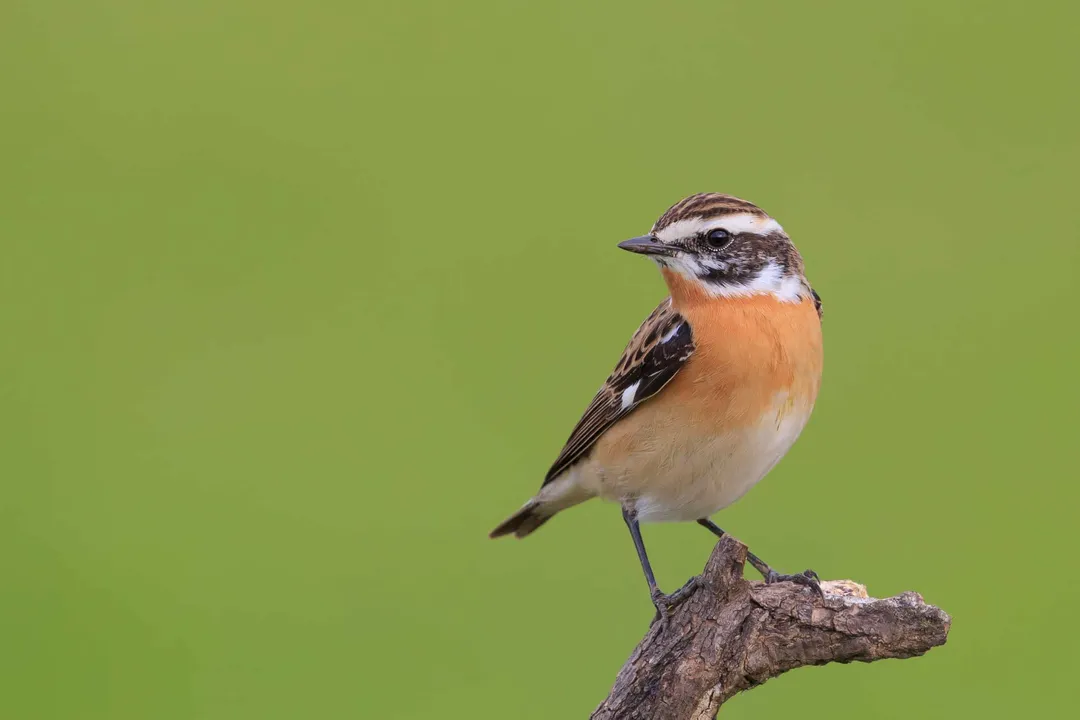
Distinguishing Whinchats, particularly outside the breeding season, requires a keen eye, as pronounced sexual dimorphism shapes their appearance throughout the year. [1] The breeding male is instantly recognizable by his striking plumage. He sports a deep black face set against a clean white supercilium—the prominent white stripe above the eye—and a bright orange-rufous breast that contrasts sharply with his greyish-black back. [1][2][3] This vibrant display is essential for attracting a mate and defending territory during the short summer months. [1]
In contrast, the female is significantly duller, possessing an overall brownish hue, lacking the male’s stark black and white facial pattern, and showing a paler, buffy wash on her chest. [1][5] Juvenile birds share the female's subdued coloration, often appearing streaked, which aids in camouflage during their vulnerable early life stages. [1][8] As the non-breeding season approaches, even the brightly adorned male undergoes a molt, replacing his sharp colors with more muted, buff-edged feathers, making him much harder to differentiate from the female while on his wintering grounds. [1][5] This seasonal change in appearance underscores the differing immediate evolutionary demands placed upon the sexes: visibility for breeding versus camouflage for survival during migration and winter. [1] The Whinchat is a small bird, generally measuring around 13 to 14.5 centimetres in length. [2][8]
# Open Habitat
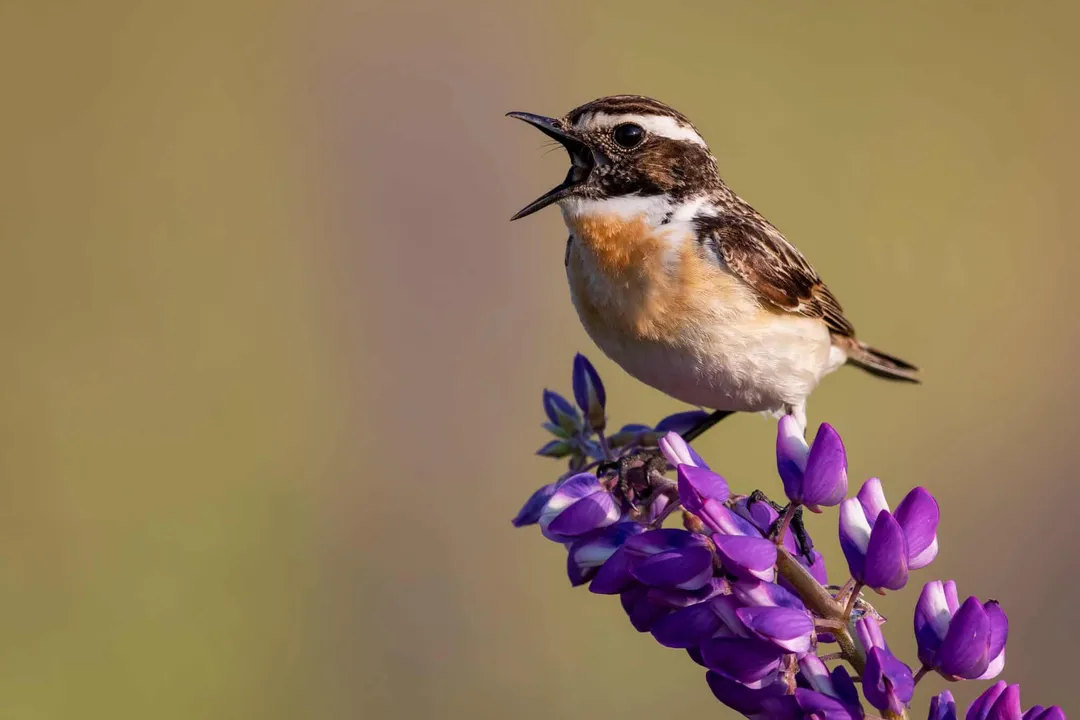
The species' ecological requirements are tightly bound to open country, reflecting a specialization that has defined its niche within the Saxicola genus. [5] Whinchats thrive in low-growing vegetation, preferring areas characterized by heather, moorland, rough grassland, and coastal scrub, often with scattered perching points like low bushes or fence posts. [1][3][5] This preference for low stature habitat means they are rarely found deep within dense woodland, relying instead on the clear sightlines offered by these open structures for territory defense, foraging, and vigilance against predators. [5][6][8]
Their feeding strategy perfectly complements this environment. Whinchats are insectivores, though they will supplement their diet when necessary. [1][3] They primarily hunt aerial insects and invertebrates gleaned from the ground or low vegetation, often employing a characteristic 'sally-and-return' foraging technique, darting out from a perch to catch prey before returning to the same or a nearby vantage point. [1][5] In autumn, as insect availability drops, their diet naturally incorporates small berries, a dietary flexibility that aids survival during the pre-migratory period. [5] Considering their reliance on structured, low-lying vegetation, it is noteworthy how sensitive they are to land management changes. The intensification of agriculture or the abandonment of traditional grazing that allows scrub to grow too tall or too dense can quickly render former breeding grounds unusable, effectively shrinking their viable habitat faster than the species can adapt behaviorally. [4][5] This tight coupling between specialized habitat structure and feeding strategy represents a key aspect of their ecological specialization.
# Reproductive Cycles
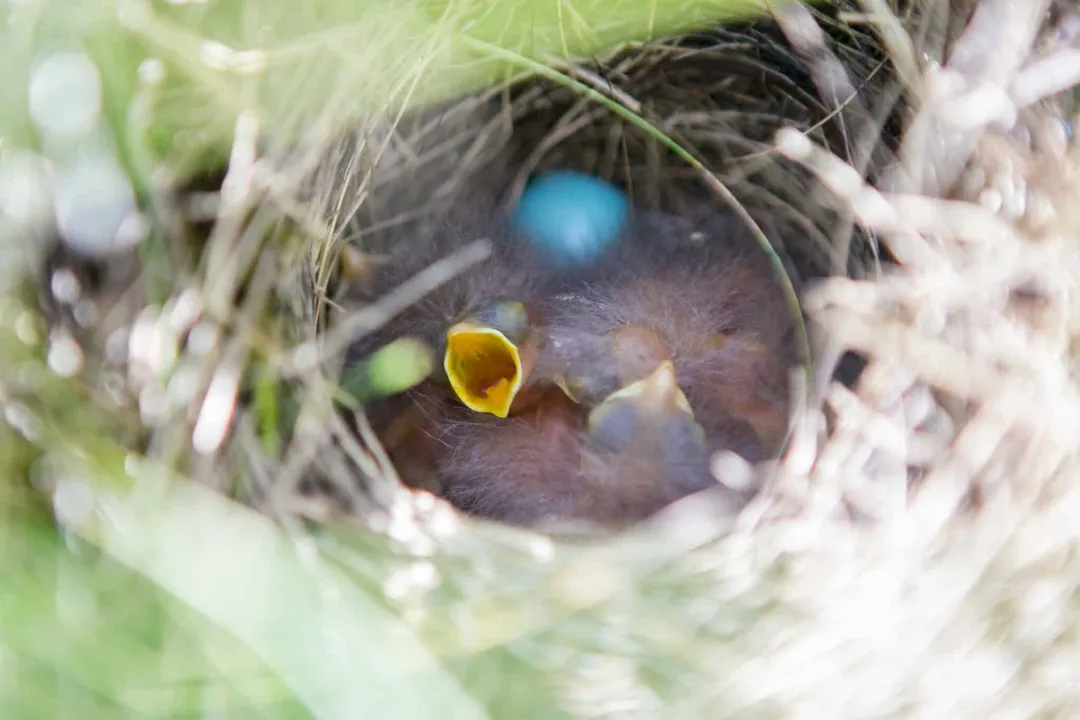
The breeding season is intense and comparatively brief, centered around the late spring and early summer months in their northern breeding range. [6] Successful reproduction hinges on rapid nesting and fledging before the long migration south begins. [5] The female is the primary nest builder, constructing a neat, cup-shaped structure hidden close to the ground, usually concealed in a tussock of grass, a dense clump of heather, or a depression in the ground. [3][5][6][8] The nest materials often include dry grasses, moss, and fine rootlets, lined with softer materials like hair or feathers. [6]
Clutch size is relatively consistent across various northern populations, typically ranging between four and six eggs. [3][5][6][8] Noticing this uniformity across different regional reports—whether from Ireland, Finland, or Austria—suggests a stable, evolutionarily optimized reproductive output given their short breeding window and the sheer energy demands of fueling a return migration afterwards. [3][5][6][8] The female undertakes the majority of the incubation, which lasts for roughly thirteen days. [6] Once hatched, the altricial young are fed by both parents, growing quickly enough to fledge after another twelve to fifteen days. [6] In some regions, particularly where conditions are favorable or if the first attempt fails, the female may attempt a second brood. [5] The male's role during this period is territorial defense and providing some sustenance, allowing the female to focus on the demanding incubation stage. [1]
# Migratory Patterns
Perhaps the most demanding evolutionary trait of the Whinchat is its dedication to long-distance migration. This species is categorized as a long-distance migrant, undertaking significant southwards journeys from its breeding grounds across Europe and Asia to winter in sub-Saharan Africa. [1][5]
Birds breeding in Fennoscandia, for example, undertake extensive travel, moving across European landmasses and potentially crossing major geographical barriers like the Mediterranean Sea or the Sahara Desert to reach areas such as West Africa. [5][7] The migration routes are complex, but there are general trends: Western European breeders often winter in West Africa, while Eastern breeders might travel further south or east within the continent. [5] This multi-stage commitment—breeding in open European scrub, resting and refueling on passage, and surviving the harsh, often insect-scarce, conditions of the African winter—demands an exceptional level of navigational accuracy and physiological preparation. [5][7]
The species' reliance on long-distance migration imposes significant selective pressure on its physical condition in both spring and autumn. A bird arriving in poor condition after the southbound journey may not be able to breed successfully that year, and likewise, insufficient fat reserves for the northward return trip can be fatal. [7] The precise timing of departure and arrival, governed by photoperiod and internal clocks, must be perfectly synchronized with the arrival of suitable insect food sources at both ends of the journey. [5] This tight temporal dependency on environmental cues across thousands of kilometres highlights how deeply embedded this migratory strategy is in the species' biology.
# Modern Challenges
While its historical adaptations allowed the Whinchat to thrive across diverse European landscapes, the modern environment presents severe hurdles, leading to significant population declines in many areas, including the UK and Ireland. [2][4] The species is considered Near Threatened globally by the IUCN, but it is listed as Red status in the UK, indicating a very high risk of extinction in Great Britain. [1][2]
The primary driver of these declines is habitat degradation across both breeding and wintering grounds. [4][5] On the breeding areas, changes in agricultural practices are critical. The cessation of traditional low-intensity farming, grazing, or burning that maintained the required open, scrubby structure leads to scrub encroachment or over-management, destroying nesting sites. [4][5] Furthermore, the impact of habitat loss on the African wintering grounds cannot be overstated, as losses there directly impact the number of individuals returning the following spring. [5][7]
The combination of specialized habitat needs in summer and the inherent risks of long-distance travel creates a particularly challenging survival bottleneck. Their success hinges on finding suitable and connected stopover sites that match their specific visual and structural habitat needs during passage, a tight coupling that may present a greater evolutionary challenge to overcome in the modern landscape than a more adaptable, sedentary species currently faces. [5][7] To survive, conservation efforts must address the entire flyway, ensuring that the open landscapes they require are maintained not just in protected reserves but also in the broader matrix of agricultural land where many individuals attempt to breed. [4] The future viability of the Whinchat population rests on acknowledging that its survival is dependent on a connected chain of suitable open habitats stretching from the Arctic summer fields down to the African plains. [5]
Related Questions
#Citations
Whinchat - Wikipedia
Whinchat - BTO
Whinchat Bird Facts - Saxicola rebetra - A-Z Animals
WHINCHAT (Saxicola rubetra) - songbird factfile
Whinchat - Saxicola rubetra - Birds of the World
Whinchat - Wiesenkönigreich Zell am See
Early life conditions influence fledging success and subsequent ...
Whinchat, Saxicola rubetra - Birds - NatureGate - LuontoPortti
Whinchat - BirdWatch Ireland