Where did the Oriental Dwarf Kingfisher come from?
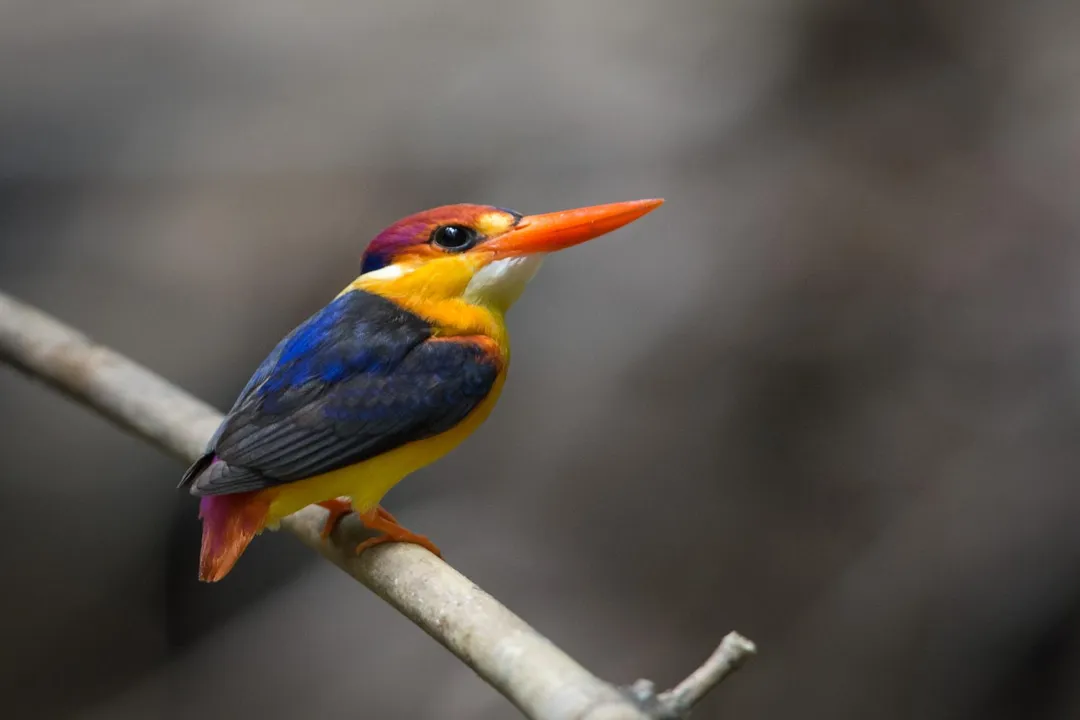
The pocket-sized bird known commonly as the Oriental Dwarf Kingfisher presents a fascinating case study in avian taxonomy and biogeography. Its origins are not rooted in a single place but rather trace back through a complex evolutionary history spanning continents, reflected partly in the shifting names applied to it over time. [2] For a long period, the collective group of these tiny, brightly colored birds was referred to simply as the "oriental dwarf kingfisher," a name that encompassed what is now frequently recognized as the black-backed form, Ceyx erithaca, and the rufous form, Ceyx rufidorsa. [2] Molecular genetics now strongly suggests that these two color variations represent distinct taxa, leading to taxonomic revision and complicating the story of the species complex. [2]
# Naming History
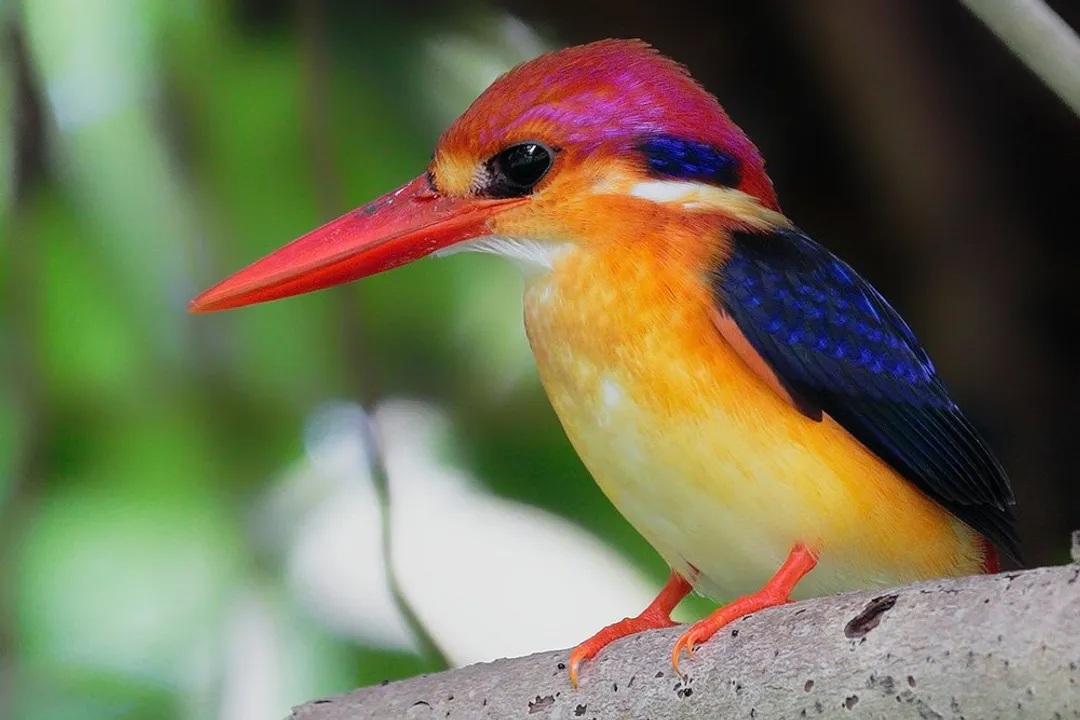
The formal scientific description dates back to 1758 when Carl Linnaeus classified it under the genus Alcedo, giving it the name Alcedo erithaca. [2] The specific epithet erithaca is derived from the Latin for "robin," referencing a "red-breasted" appearance. [2] Later, it was moved to the genus Ceyx, which groups together about 23 species of these relatively tiny kingfishers, often characterized by their terrestrial habits, insect-heavy diets, and flattened orange bills. [2] The correct spelling, following the rules of zoological nomenclature, remains Ceyx erithaca, even though Ceyx erithacus has sometimes appeared in literature. [2]
# Evolutionary Lineage
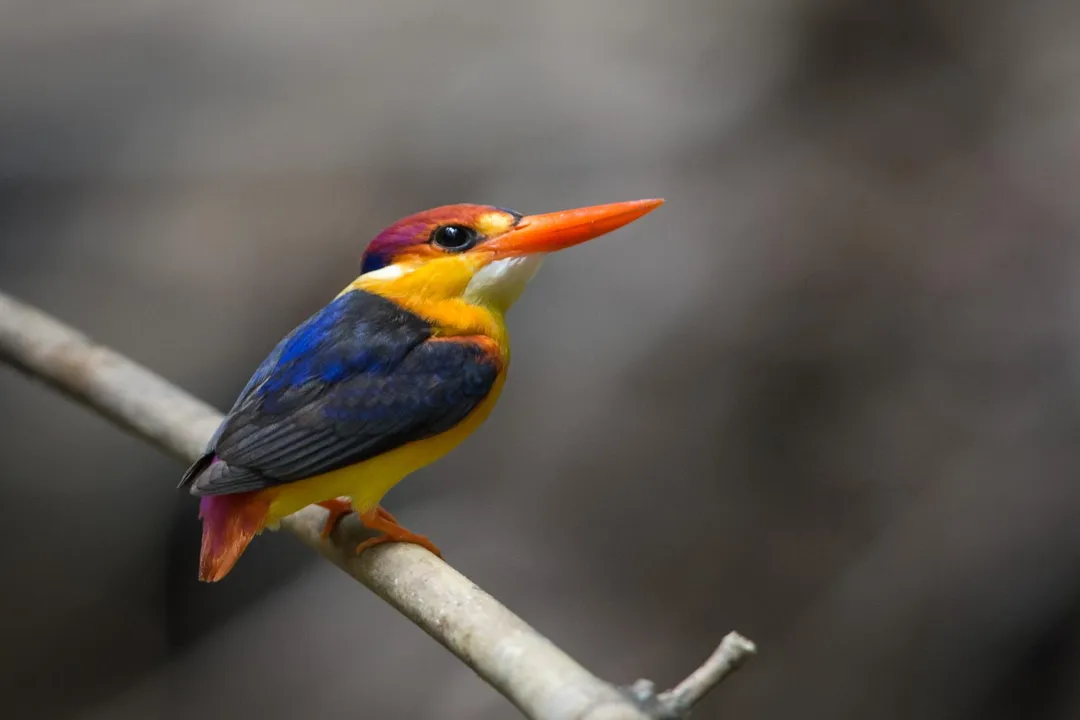
To understand where Ceyx erithaca came from in the grand scheme, one must look at its wider family, the Alcedinidae. These kingfishers belong to the pantropical avian order Coraciiformes. [2] Within this family, the pygmy kingfishers, which include the genus Ceyx, are primarily found across tropical Africa and Asia, extending down into northern Australia and Melanesia. [2] Deeper phylogenetic studies, however, point toward a clear biogeographical conclusion for this lineage: molecular data indicates that the kingfishers housing C. erithaca have an Indomalayan origin. [2] This suggests the foundational evolutionary split that led to the Ceyx group occurred within the region encompassing the Indian subcontinent and Southeast Asia, which aligns perfectly with the bird's current extensive distribution. [2]

# Geographic Presence
The current breeding range of the Black-backed Dwarf Kingfisher confirms its deep ties to this Indomalayan zone. It is found across eastern Bangladesh, northeastern India, Myanmar, the extreme south of China, Laos, Cambodia, and Thailand. [2] Furthermore, there are notable disjunct populations in southwest India and Sri Lanka, suggesting historical connections or different dispersal routes. [2] The Thai National Parks data expands this known range to include Bhutan, Brunei, Indonesia, Malaysia, Singapore, and Viet Nam, classifying it as a widespread resident across much of this area. [2]
The apparent split between the black-backed and rufous forms offers a compelling clue about its geographic history. One study suggested a possible north-south differentiation, with the black-backed form inhabiting the northern parts of the range, and the rufous form established further south in areas like Sumatra, Malaysia, Borneo, and Java. [3] If this pattern holds, the northern populations represent the species' core Ceyx erithaca habitat, while southern populations experienced localized evolutionary divergence, perhaps due to island effects or geographical barriers that persisted long enough for color variation to become fixed. [3] This pattern of color polymorphism linked to geography is relatively rare in birds, making the dwarf kingfisher an interesting subject for studying speciation in action. [3]
# Migratory Behavior
Its origin story isn't static, as the species engages in partial migration. Populations in the northern parts of the range undertake seasonal movements, heading south toward the Malay Peninsula and Sumatra during the non-breeding season, typically departing between August and September and returning north around March. [2] This migratory behavior connects the northern forest systems with those further south, suggesting that the origin points of these birds must have had access to reliable, connected tracts of suitable lowland forest habitat. [2] The local observation of these birds migrating to Mumbai, India, specifically for the breeding season, underscores that these movements are localized but significant within the broader South Asian portion of their range. [3]

# Habitat Specificity
The "where" of its origin is tied closely to the "what" of its habitat. The species is fundamentally a lowland forest dweller, favoring densely shaded areas near small streams or ponds, typically at elevations not exceeding 1000–1300m. [2] While they stick close to water sources for foraging, the nest sites themselves are often excavated well away from water, sometimes in stream banks, road cuttings, or terrestrial termitariums. [2] This preference for dark, humid, primary, and secondary forests defines the ecological niche established by its ancestors in the Indomalayan realm. [2]
A remarkable physical adaptation helps this bird thrive across its humid habitat, which requires it to frequently transition between air and water. The bird possesses two foveae in each eye, unlike humans who have only one. [3] This structure, dense with light-collecting photoreceptors, allows the bird to rapidly adjust for the dramatic light refraction and glare encountered when diving to catch prey near the surface. [3]
Considering the dual nature of its prey—terrestrial insects, spiders, and lizards alongside aquatic creatures like small crabs and frogs—this specialized vision system is more than just a neat fact; it represents a key adaptation that allows Ceyx erithaca to exploit the full spectrum of resources available along the forest stream margins throughout its wide range. This biological tool likely solidified its success in the varied lowland ecosystems from India through to Southeast Asia.
# Status and Interpretation
Examining conservation reports reveals a subtle complexity regarding the bird’s modern status, which indirectly speaks to the history of its population distribution. While the IUCN Red List classifies C. erithaca as "Near Threatened," citing a decreasing population trend due to habitat loss, the data provided by Thai National Parks lists its status as "Least Concern". [1][2]
This contrast between a global assessment of "Near Threatened" and a regional listing of "Least Concern" is a valuable data point for understanding the species' true origin and current status. It is likely that the "Near Threatened" classification reflects serious threats and scarcity in the northern, more intensively human-impacted parts of its range (like parts of India or China), whereas the species may remain relatively common and stable in well-protected areas of Southeast Asia, such as the national parks in Thailand. [1][2] A declining trend overall, coupled with wide distribution, suggests the species is highly fragmented—its origin points are numerous, but not all those historical territories remain viable.

# Description and Diet
The physical characteristics are striking and uniform for the black-backed form: a bright red bill, lilac-rufous crown, pale yellow-orange underparts, and the defining dark blue-black back and wings. [2] These colors set it apart from other local kingfishers. [2] The diet is highly varied for a kingfisher, reflecting its terrestrial hunting style: it consumes mantises, grasshoppers, flies, ants, spiders, worms, and small vertebrates like geckos and frogs, in addition to small aquatic items like fish and crabs. [2] For prey caught away from the water, the bird returns to a perch to repeatedly strike the meal before swallowing, a behavior suited for processing hard-shelled terrestrial prey. [2]
# Nesting Site Selection
The breeding ecology further defines its link to the forest floor habitat where its ancestors likely evolved away from strictly riparian nesting sites common to larger kingfishers. Breeding typically aligns with the monsoon season in regions like southwest India. [2] The nest is a horizontal tunnel, sometimes up to a meter long, ending in an unlined chamber, excavated by both parents in soft earth—stream banks, road cuttings, or even termitariums. [2] An interesting architectural feature observed is that the tunnel is inclined upward, a design feature thought to facilitate the flow of waste material out and minimize water seepage into the egg chamber. [2] This method of utilizing terrestrial substrates for nesting, even far from water, reinforces its ancestral roots as a pygmy kingfisher rather than a classic water-diver.
Related Questions
#Citations
Black-backed dwarf kingfisher - Wikipedia
Oriental dwarf kingfisher (Ceyx erithaca) - Thai National Parks
Oriental dwarf kingfisher, a rainbow by any other name
Oriental Dwarf Kingfisher : r/SonyAlpha - Reddit