Where do Alpine Dachsbrackes originate from?

The lineage of the Alpine Dachsbracke immediately points toward the rugged, high-altitude environments from which it hails, even before one delves deep into breed registries. The very name, a compound Germanic term, provides a significant clue: "Dachs" refers to the badger, suggesting the low-slung build of the Dachshund, while "Bracke" denotes a type of tracking scent hound. [1][4] This combination hints at a dog specifically engineered for scent work in challenging conditions, not merely a casual companion. [5] These hounds are distinctly tied to the Central European mountain ranges, establishing their primary geographic origin firmly in the Alpine regions. [1][10]
# Alpine Roots
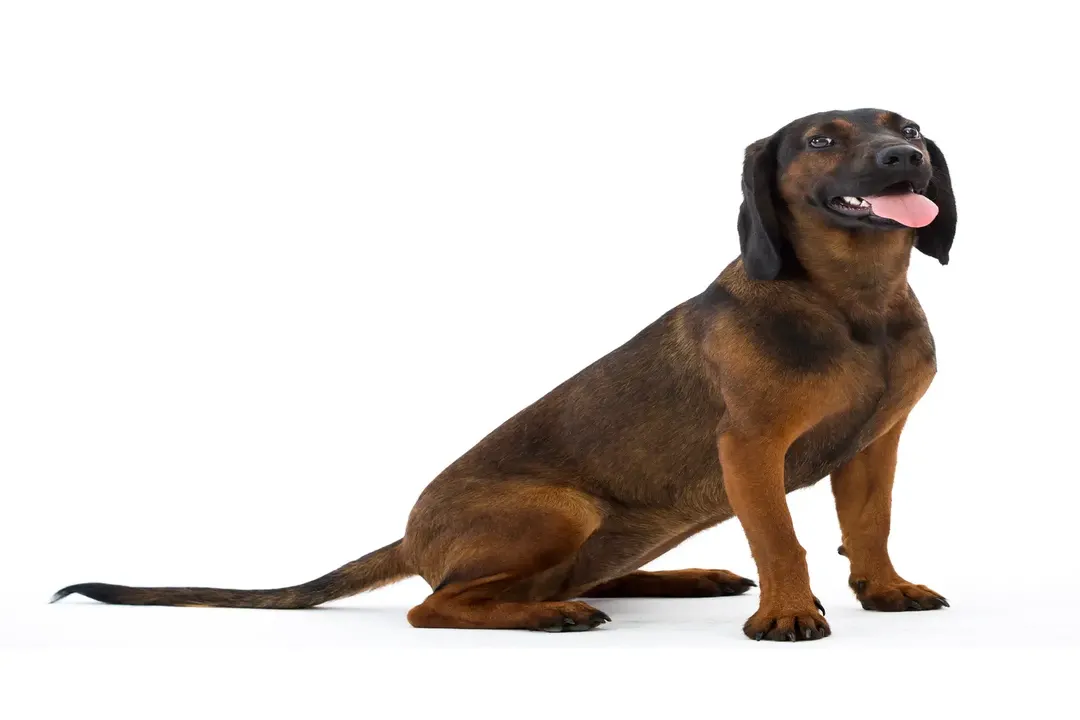
The consensus among breed historians and kennel clubs places the development of the Alpine Dachsbracke in Austria. [1][4][10] This region, characterized by steep slopes, dense forests, and rocky terrain, necessitated a hunting dog with unique physical attributes. [4] While the exact year of formation is sometimes debated or less formally documented than for more globally widespread breeds, their refinement occurred within the Austro-Hungarian Empire, where hunting traditions were deeply ingrained. [10]
These dogs were not developed for general farm work or companionship; their very existence is predicated on serving a very specific, high-stakes role in the mountains. Imagine the conditions: tracking large, wounded game like red deer, boar, or even chamois through steep scree and over uneven ground where larger dogs might struggle for purchase or risk injury. [5][10] This environment demanded both tenacity and low-to-the-ground stability, a paradoxical requirement that shaped their morphology. [1] It’s fascinating to consider that the development of this breed wasn't simply about creating a smaller dog, but about optimizing a scent hound for vertical terrain, which meant leveraging the low center of gravity inherent in the Dachshund lineage while maintaining the stamina and tracking ability of a true Bracke. [4] This specialized focus likely means that, unlike some breeds which spread quickly across continents, the Alpine Dachsbracke remained largely concentrated in its native area for a significant time, breeding true to its hunting purpose. [1]
# Breeding Goal

The primary, singular function driving the creation of the Alpine Dachsbracke was tracking wounded game. [4][5] They are classified as scent hounds, meaning they rely almost exclusively on their nose to follow a scent trail, which is crucial when game is hidden from view or has fled far into the brush. [4]
Their essential task was to follow the blood trail of an injured animal—a job requiring immense patience, precision, and endurance, often over distances that would exhaust less specialized breeds. [10] A key requirement for this work was their ability to hunt solo or in very small teams, patiently following the scent until the hunter could catch up or the animal was located. [1] This necessity of operating independently in difficult terrain shaped their temperament as much as their body structure. [5] The ideal dog needed to be tenacious enough to follow a cold trail for hours but obedient enough to respond when the hunter finally arrived. [10]
# Ancestral Mix
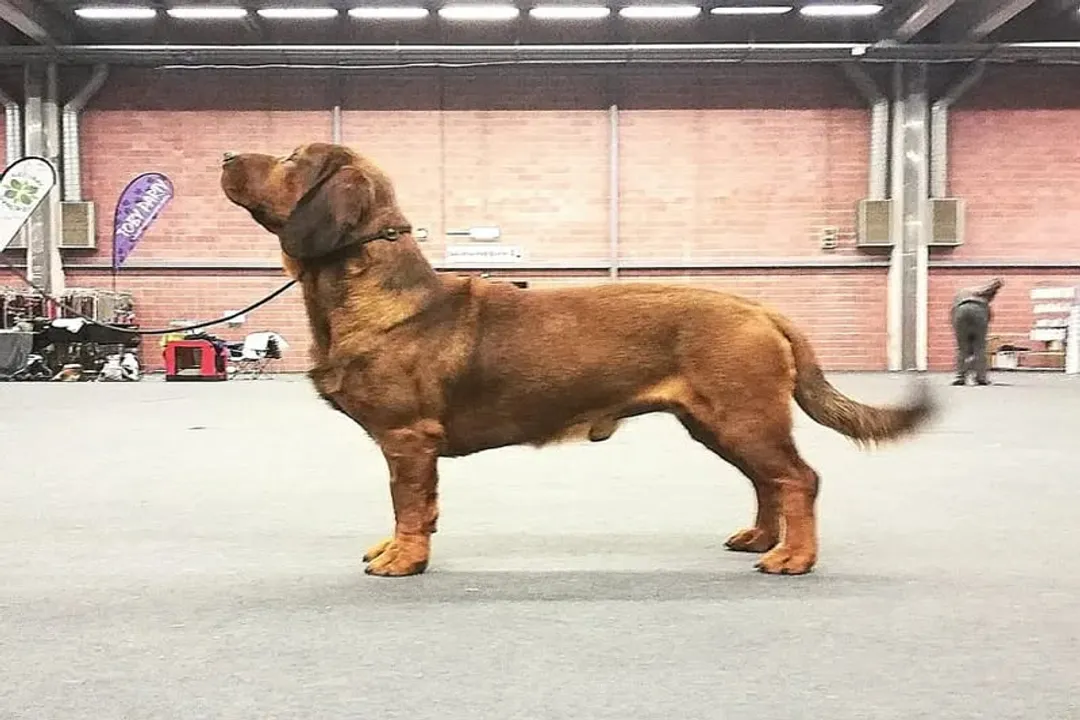
As suggested by its name, the Alpine Dachsbracke is the result of crossing the standard Dachshund with native, smaller scent hounds prevalent in the Alpine areas. [1][10]
The Dachshund contribution provided the short legs and long body. [1] While often associated with badgers, in this context, the low profile provided an advantage by keeping the dog closer to the ground scent while potentially navigating dense undergrowth without overheating or losing ground contact. [5]
The Bracke component introduced the necessary scenting ability and stamina required for long-distance tracking. [4] These native hounds were likely similar to other European scent hounds but were selected specifically for their suitability to mountain work. When you see the final result, it is clear that the breeders were successful in balancing these two seemingly disparate traits: the low stature of the Dachshund and the tireless nose of the Bracke. [10]
It’s worth noting a comparison here: while the standard Dachshund was historically bred to go into burrows (earth work), the Alpine Dachsbracke was bred primarily to follow trails over rugged ground (tracking work). [1] This subtle difference in their primary historical function is critical to understanding why, despite the shared heritage with the Dachshund, the Alpine Dachsbracke is classified as a hound rather than a terrier or utility dog in many modern contexts. [4]
| Trait Contributor | Primary Physical Trait | Primary Behavioral Trait |
|---|---|---|
| Dachshund | Low stature, long back | Tenacity (within the context of a badger dog) |
| Native Scent Hounds (Bracke) | Moderate bone structure | Excellent nose, stamina, directional tracking |
# Recognition History
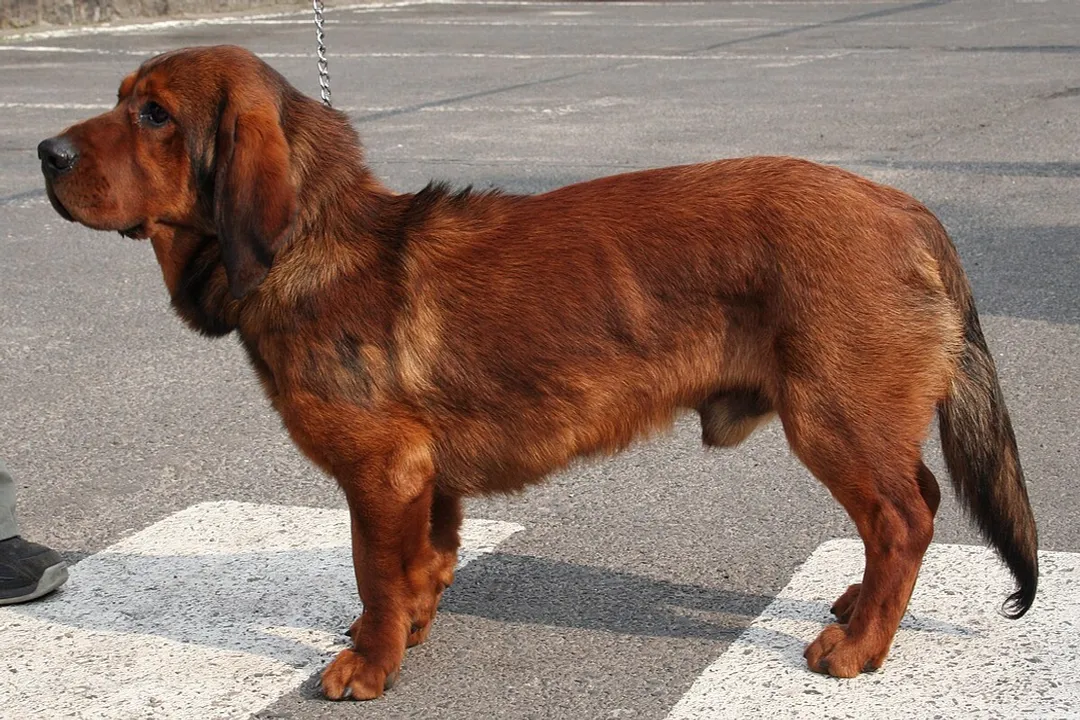
While deeply rooted in Austrian hunting tradition, the formal recognition of the Alpine Dachsbracke took time, much like many breeds developed primarily for utility rather than show. [1] The breed was officially recognized by the FCI (Fédération Cynologique Internationale) relatively late compared to some of its cousins. [4]
The FCI groups the Alpine Dachsbracke under Group 6, Scenthounds, Section 2, Dachsbracke. [4] This official classification reinforces its identity as a trailing hound rather than a short-legged terrier type. [1]
In terms of global standing, the breed remains relatively uncommon outside of Central Europe, particularly Austria and Germany. [2] For instance, while DNA testing services can identify the breed through genetic markers, it is not as widely represented in popular databases as breeds that achieved global popularity sooner. [6][8] The very fact that the breed’s history includes an early champion like Giorgio Navone, who owned the first two registered Alpine Dachsbrackes, points to an organized effort to preserve and standardize the breed from a specific point in time, often signaling the transition from a regional working type to a recognized breed standard. [7] The lack of ubiquitous international recognition can sometimes lead to inconsistencies in breeding practices if documentation is localized, making the standards set by organizations like the FCI and its national affiliates (like the Austrian Kennel Club) particularly important for maintaining the breed's specialized hunting qualities. [1][4]
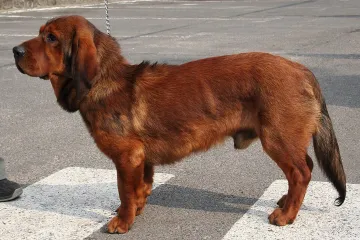
# Breed Standard Details
The success of the Alpine Dachsbracke as a hunting dog is intrinsically linked to its physical dimensions, which are codified in the breed standard. [4] They are typically classified into two sizes: the Small Alpine Dachsbracke and the Standard Alpine Dachsbracke. [1]
The height at the withers for the larger type usually falls between 34 and 42 centimeters (about 13.4 to 16.5 inches), whereas the smaller version is slightly shorter. [1] Their weight tends to be moderate, allowing them to be agile yet hardy enough to withstand the rigors of mountain work. [10] The coat is typically rough or smooth, providing protection against harsh weather and undergrowth. [1][5] Their eyes are dark, reflecting an intelligent and keen expression necessary for reading their handler's commands even when far away. [10]
The low build, essential for scent work, is maintained through careful breeding, ensuring the dog remains closer to the ground scent. [5] However, unlike some overly exaggerated short-legged breeds, the Alpine Dachsbracke retains substantial bone and muscle mass, which are non-negotiable for navigating icy streams or scaling rocky inclines throughout a long hunting day. [4] The breed’s endurance appears disproportionate to its size when compared to larger hounds, a direct testament to the selection pressure applied in the Alps. [5]
# Modern Function
While the breed's origin is tied to hunting wounded game, the modern Alpine Dachsbracke remains a capable working dog, though its role is often supported by modern technology. [4] Owners who value true hunting ability look for dogs that demonstrate the innate drive to track. [5] Even for those who keep them primarily as devoted companions, understanding this intense drive is important for management. [2] A dog bred for hours of intense, solitary tracking needs significant physical exercise and mental stimulation that goes beyond a simple walk around the block. [9] Their protective and loyal nature makes them excellent watchdogs, a trait often developed as a byproduct of their independent working life. [5] They generally possess a friendly disposition toward their family but can be reserved with strangers, a characteristic common in breeds developed to be wary protectors of the hunter’s location in the wilderness. [9]
Their continued presence, even as a less common breed, underscores a dedication among Austrian and German enthusiasts to preserving a specific piece of hunting history and canine engineering. [1][4] The Alpine Dachsbracke is, therefore, more than just a dog with a German name; it is a living artifact of Alpine hunting culture, perfectly shaped by the unforgiving mountains of its birthplace. [10]
Related Questions
#Citations
Alpine Dachsbracke - Wikipedia
Alpine Dachsbracke Facts - Dog Breeds - Wisdom Panel
All about Alpine Dachsbracke breed - Animalia
Alpine Dachsbracke - Europetnet
Alpine Dachsbracke: Your Complete Guide to This Loyal Hound
Alpine Dachsbracke - Dog breed genetic test
First two Dogs owned by Giorgio Navone The Alpine Dachsbracke ...
Alpine Dachsbracke Breed Information & Insights | Basepaws
Alpine Dachsbracke | Dogs and Puppies Wiki | Fandom
Alpine Dachsbracke Dog Breed Information and Pictures