Where can you see rockhopper penguins?
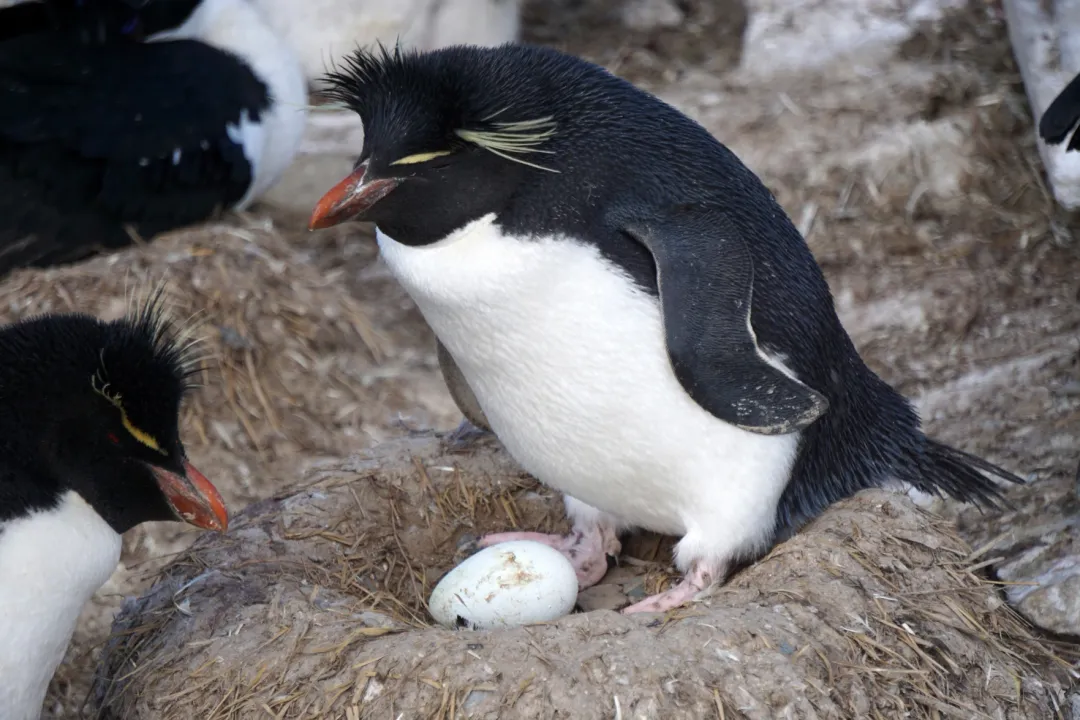
The sight of a rockhopper penguin, easily recognized by its bristly, bright yellow-orange supraorbital crests that jut out over its eyes, is a highlight for any wildlife enthusiast venturing to the wilder corners of the Southern Hemisphere. [1][5][6][9] These small, energetic seabirds get their name from their characteristic hopping movement, or "rocking," as they navigate the steep, rocky terrain surrounding their breeding colonies. [5][9] To successfully find these fascinating birds, one must know the precise latitude and longitude of their scattered, remote island homes across the subantarctic zone.
# Three Types

There are actually three recognized subspecies of rockhopper penguin, and where you can see them depends entirely on which one you are hoping to spot: the Northern, the Southern, and the Eastern Rockhopper. [1][5][6] While they share a general appearance, their ranges are geographically distinct, separated by vast stretches of open ocean.
The Northern Rockhopper Penguin (Eudyptes moseleyi) has a more northerly distribution compared to its relatives, inhabiting islands in the South Atlantic and Indian Oceans. [1][5][6] Key locations for this species include Tristan da Cunha and Gough Island. [1][5][6] Tragically, the Northern Rockhopper population has experienced severe declines, leading to its listing as Endangered. [6]
The Southern Rockhopper Penguin (Eudyptes chrysocome) is found on islands located south of the South American mainland. [1][5][6] Major strongholds include the Falkland Islands and various islands near Cape Horn, such as Isla de los Estados, the Wollaston Islands, and the Hermite Islands. [1][5][6] Like the Northern group, the Southern Rockhoppers are also facing serious population issues. [1][6]
Finally, the Eastern Rockhopper Penguin (Eudyptes filholi) populates subantarctic islands further east, spanning parts of the Pacific and Indian Oceans. Specific islands associated with this subspecies include Campbell Island and Macquarie Island. [1][5][6]
It is fascinating to compare the population trajectories of these three groups. While all rockhoppers have struggled, the Southern Rockhopper's decline is particularly stark when viewed against its historical numbers, representing a profound shift in the ecosystem dynamics of the South Atlantic and Pacific islands where they breed. [1][6] Any trip aimed at viewing these birds must first establish which subspecies inhabits the specific island chain being visited.
# South Atlantic Strongholds

For many wildlife watchers planning a trip to see rockhoppers, the Falkland Islands (Malvinas) stand out as one of the most accessible and rewarding destinations for observing the Southern Rockhopper Penguin. [2][7] These islands host numerous colonies, allowing visitors to witness thousands of birds gathered together during the breeding season. [2]
When viewing them ashore in the Falklands, you will often find the Southern Rockhoppers nesting in colonies situated on steep, rocky slopes, sometimes interspersed with tussock grass. [2] The environment is harsh, defined by constant wind and the relentless proximity to the Southern Ocean.
Another critical location, particularly relevant for the Northern Rockhopper subspecies, is the archipelago of Tristan da Cunha, which includes its dependency, Gough Island. [1][5][6] These remote, volcanic islands in the mid-South Atlantic are vital breeding grounds for the Northern Rockhopper. Access to these specific islands is extremely limited due to their isolation and strict conservation management, making sightings here rare and typically reserved for scientific research or highly specialized, regulated expeditions. [1][6] Seeing the Northern variety requires planning voyages deep into the South Atlantic far from common shipping lanes.

# Pacific and Indian Views

If the goal is to find the Eastern Rockhopper Penguin, the itinerary must shift eastward toward the Pacific and Indian Ocean subantarctic regions. [1][6] Islands like Macquarie Island and Campbell Island are crucial habitats for this subspecies. [1][5][6] These locations are often included in longer, more comprehensive Antarctic or subantarctic cruising routes, as they lie further afield from the typical Antarctic Peninsula circuit. The experience here is similar in terms of colony observation but occurs within a distinct oceanic and ecological context compared to the Falklands.
# Experiencing Them in the Wild

Directly observing rockhopper penguins in their natural habitat is nearly always done through organized expedition cruises or specialized wildlife tours that travel to subantarctic islands. [8] These voyages are typically the only way to reach the remote breeding grounds where the penguins congregate. [8]
When planning such a trip, understanding the penguin's life cycle provides an actionable tip for maximizing viewing success. The best time to see them ashore in large numbers, actively nesting or with chicks, generally aligns with the Southern Hemisphere's summer months, specifically from October through March. [2] This period covers their courtship, egg-laying, incubation, and chick-rearing phases. [2] Outside this breeding window, the penguins spend much more time foraging at sea, making land sightings scarce. [2]
It is important to remember that while these birds are known for their curiosity, they are still wild animals. [5] Ethical viewing protocols are always in place, usually dictated by tour operators and international guidelines, to ensure human presence does not disrupt nesting or fledgling activities. [8] Expect to observe the colonies from designated landing sites or from the zodiacs used for shore excursions, maintaining respectful distances from the noisy, bustling rookeries. [8] Viewing them is often characterized by the birds' distinctive calls and their sometimes aggressive, head-bobbing displays when disturbed, though they generally tolerate careful human observers. [5]
# In Aquariums and Zoos
While the primary draw is the wild encounter, some individuals may seek the opportunity to see rockhoppers in a controlled environment. Aquariums and zoos that maintain populations can offer a reliable way to observe their unique behaviors up close, especially during the non-breeding season when they are not on their distant island homes. [3][10]
For example, the Shedd Aquarium in Chicago has housed rockhopper penguins. [3] These captive settings allow visitors to see the birds’ hopping gait and plumage detail up close, something that can be difficult to appreciate through binoculars from a distance at a wild colony. [3] Similarly, the New England Aquarium has cared for the Southern Rockhopper species. [5] These managed care settings serve not only as public exhibits but also as centers for research and public education, connecting visitors with species that are geographically distant and often imperiled. [3][5][10]
If you visit an institution like the Shedd Aquarium, look closely at how the keepers manage their habitat. It’s an interesting contrast to their natural environment: artificial rockwork must mimic the rugged, steep terrain they prefer for nesting, while water quality and temperature are strictly controlled to approximate subantarctic conditions. [3] This specialized husbandry is a testament to the dedication required to keep these populations healthy outside their native range. [10]
# Conservation Context
Understanding where rockhoppers live is inseparable from understanding their precarious situation. The conservation status of the Northern Rockhopper is listed as Endangered, and the Southern Rockhopper faces significant population drops as well. [6] Organizations dedicated to protecting them track their health across all major breeding sites. [4]
The reality is that the places where you can see rockhopper penguins are also places under increasing environmental pressure, from localized impacts like pollution or fishery interference near foraging grounds to broader climate change effects impacting ocean temperatures and food sources. [4] Therefore, the very act of traveling to see these birds, particularly via reputable, environmentally conscious operators, contributes to the awareness and potential funding streams necessary for their long-term survival. [4][8] An added consideration for any potential traveler is to choose expedition companies that explicitly adhere to guidelines set by the Antarctic and Southern Ocean Coalition (ASOC) or similar bodies, ensuring their presence supports, rather than harms, the local wildlife populations they have come to admire. [4] This choice moves the viewing experience from mere tourism to responsible engagement with conservation efforts.
Related Questions
#Citations
Rockhopper penguin - Wikipedia
Rockhopper Penguins | Where to See Them in the Wild - Secret Atlas
Rockhopper penguin ranges - Center for Biological Diversity
Rockhopper Penguins - Antarctic and Southern Ocean Coalition
Southern Rockhopper Penguin - New England Aquarium
southern rockhopper penguin (Eudyptes chrysocome) - ECOS
See Penguins in Chile & Argentina - Swoop Patagonia
Facts, pictures & more about Rockhopper Penguin
Rockhopper Penguin | Shedd Aquarium
Southern Rockhopper Penguin - Eudyptes chrysocome