Where are spotted pythons found?
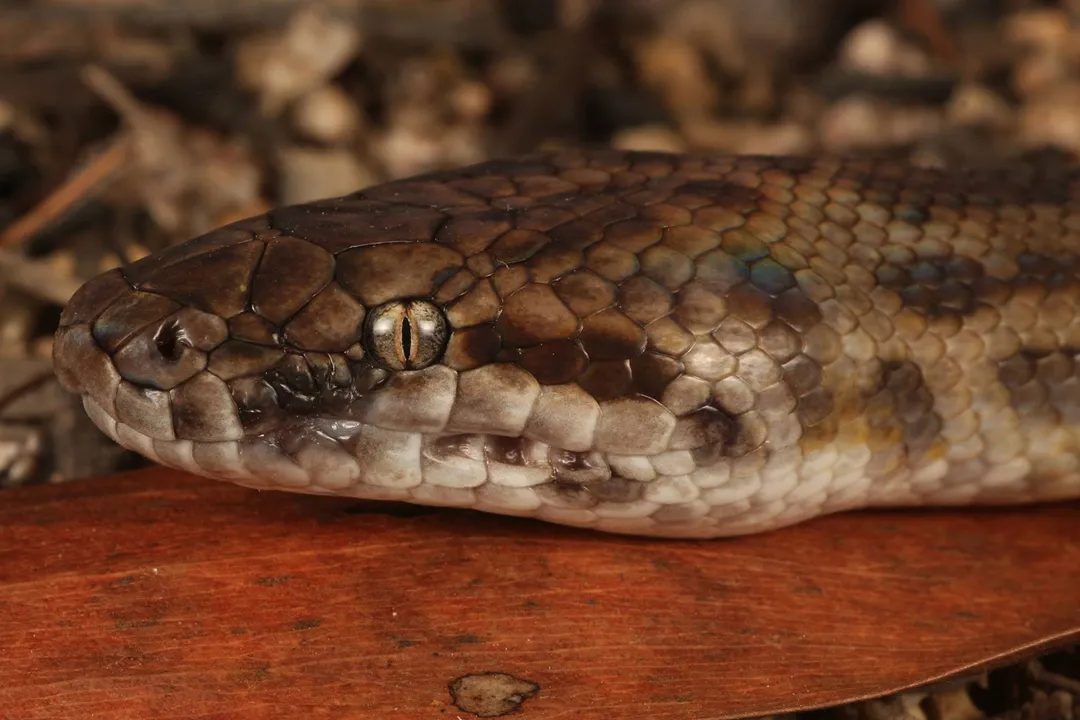
The spotted python (Antaresia maculosa) maintains a fascinating, yet somewhat restricted, geographical footprint that primarily hugs the fertile eastern coastline of Australia, stretching into the tropics and even across the sea to New Guinea. [2][3][7] Describing where these pythons are found is less about listing random coordinates and more about tracing a very specific biogeographical corridor defined by altitude, climate, and geology. It is a species that seems highly partial to the transitional zones where denser vegetation meets exposed rock formations. [5][6]
# Coastal Span
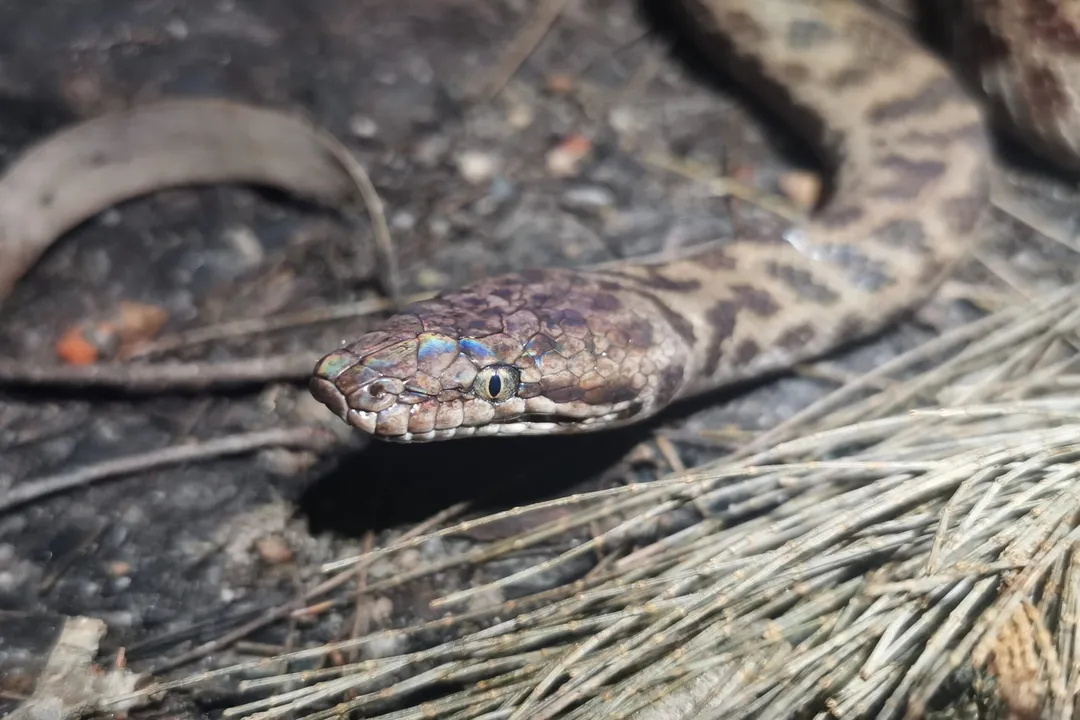
The core distribution area for Antaresia maculosa is concentrated along the eastern edge of the Australian continent. [9] This range begins in the south in northern New South Wales (NSW) and proceeds northward, encompassing the entirety of eastern Queensland. [1][3][6] As you trace this path north, the distribution reaches its apex at the northernmost tip of Queensland, specifically the Cape York Peninsula. [1][3][7] This extensive stretch places them firmly within the Australasian realm. [2]
Interestingly, this entire mainland distribution is effectively bounded on its western flank by a major geographical feature: the Great Dividing Range. [1] This mountain system appears to act as a natural demarcation line, preventing the spotted python from moving further inland into the dryer central regions, thus keeping the species concentrated along the wetter, more climatically stable eastern slopes and coastal plains. [1][9]
Beyond the mainland, the reach of the spotted python extends to numerous islands situated off the coast of Queensland. [3][6] This suggests that historical sea levels or dispersal events allowed populations to colonize these adjacent landmasses, where they have persisted, likely adapting slightly to the insular environments. [3]
# Habitat Selection

While their range spans a significant latitudinal distance, the spotted python is noted for its habitat flexibility, being found in a variety of environments compared to some other Antaresia species which favor drier areas. [1][9] However, even within this variety, a distinct preference emerges for areas providing complex, secure shelter. [2]
A prevailing theme across their documented range is an affinity for rocky hillsides and outcrops that offer ample crevices and caves. [2][3][6] These formations provide essential refuge from predators and the intense daytime heat, allowing them to remain hidden during their inactive hours. The species has shown excellent adaptation to utilizing these rocky hiding spots, which is supported by their relatively small size allowing them to hunt and hide within tight rock crevices. [8]
The range covers several distinct biome types, highlighting their adaptability. These include:
- Forests: Both wet forest and drier open forest settings are utilized. [1][6]
- Grasslands: Areas characterized by open grassy plains are also known habitats. [1][8]
- Woodlands: They inhabit dry sclerophyll areas and the margins of dry rainforests. [5]
It is important to note that this adaptability extends right into areas modified by human activity. [1] Spotted pythons are resilient snakes found in agricultural areas and have even been recorded surviving in suburban landscapes. [1][5] For residents living within their established range in places like the Gold Coast or Sunshine Coast, this means that rocky retaining walls, sheds, or areas with substantial debris can inadvertently become suitable habitat components, making secure storage a minor consideration for coexistence. [5][6] Understanding the importance of these rocky structures or dense cover near homes is key to understanding where you might encounter one, as they rely on these features year-round, regardless of whether the surrounding area is wild bushland or suburban sprawl. [5]
# Trans-Oceanic Presence
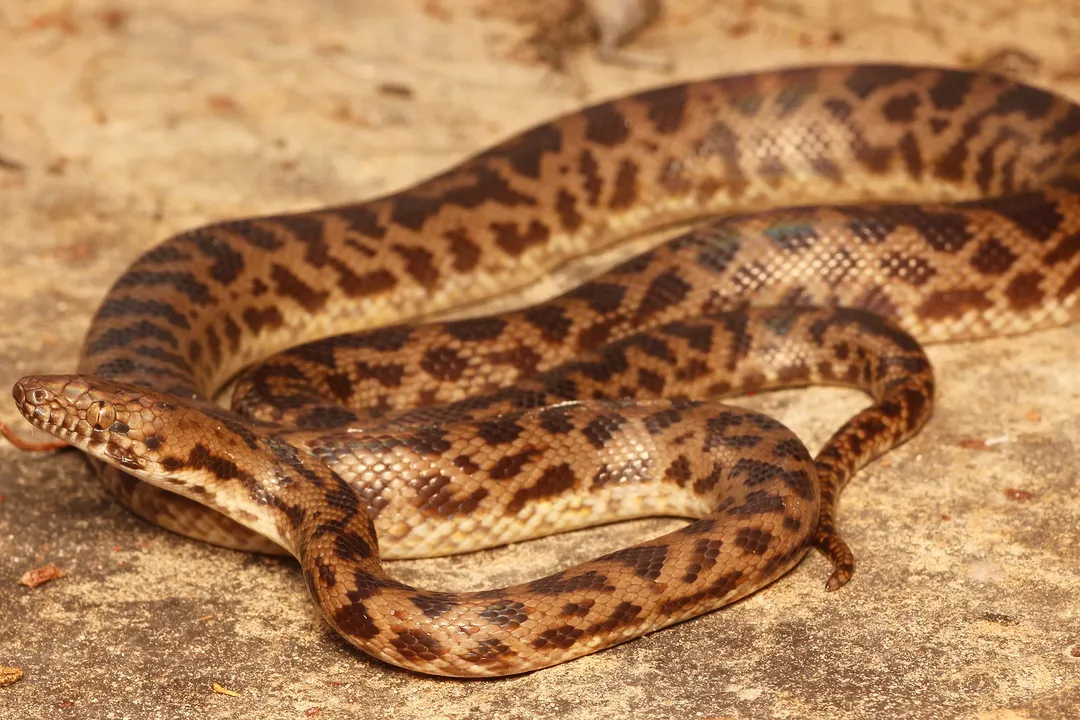
The distribution of Antaresia maculosa does not strictly terminate at the northern tip of Cape York. Records confirm their presence in New Guinea. [2][3] Specifically, they have been recorded in the southern Trans-Fly region of Papua New Guinea, with documented sightings at Weam in the Western Province. [2][3]
The environment recorded for these specific New Guinean individuals is telling: they were found in Eucalypt savanna-woodland habitat characterized by numerous termite mounds. [2] This suggests a slight shift in preferred cover compared to the deep rock crevices often favored in Australia, instead utilizing features like the mound structures or discarded materials, such as corrugated tin sheets found near a disused airstrip in one account. [2] Due to their presence across the border, there is concern that exploitation for the international pet trade may place pressure on these populations in Indonesian New Guinea, though the general conservation status is listed as Least Concern globally. [2][3]
# Geographic Variation and Taxonomy

The physical manifestation of the spotted python changes depending on which part of its range it occupies, leading to discussions within herpetology about possible subspecies divisions. [1] The spotted pythons originating from the Cape York Peninsula—the northernmost extent of their range—are often distinguishable from their more southern counterparts. [1]
These northern Cape York animals tend to be larger, with exceptional specimens reaching up to 5 feet in length. [1] Furthermore, they exhibit a lighter overall color compared to the southern snakes, accompanied by a greater contrast between the base color and the blotches. [1] These larger northern individuals typically feature yellow or cream-colored ventral scales. [1]
In contrast, the southern populations, those found closer to NSW and potentially the Central Coast lineage mentioned by one source, are generally darker. [1] The species is considered the darkest within the Antaresia genus, often possessing markings ranging from dark brown to nearly black. [1] The blotching pattern itself varies; while generally irregular, it can manifest in jagged markings, or in certain mutations or localities, the blotches may connect into zigzag patterns or even break down into many tiny spots, a pattern sometimes referred to as "granite". [9]
These regional differences have prompted taxonomic review. As of 2020, two mainland subspecies were recognized: A. m. maculosa and A. m. peninsularis. [3] Furthering this complexity, the New Guinea populations were proposed in 2021 to be reclassified as their own species, A. papuensis, though some databases still list them as synonyms of A. maculosa. [3] This internal variation within a relatively small geographic range suggests that the Great Dividing Range and the subsequent climatic shifts across the eastern coast have created isolated pockets where local selection pressures molded slight variations in size and coloration over millennia. [1]

# Coexistence and Ecological Function
The distribution pattern of the spotted python is intrinsically linked to its feeding habits, particularly its famous specialization. [6] One of the most remarkable behaviors associated with their range is their penchant for hunting insectivorous bats. [2][3][6] This behavior is highly dependent on the presence of suitable caves—a key habitat feature. [2] In the wild, spotted pythons have been observed hanging from their tails from cave ceilings near the entrance, waiting to snatch bats as they fly in or out at dusk. [6] Therefore, any area along the eastern coast that combines rocky outcrops with cave systems is a prime location for this snake, regardless of whether that area is protected forest or borders private property. [2][6]
While bats are a favorite, their generalist diet across their range means they also consume small mammals, birds, and lizards found in whatever biome they inhabit. [8] This broad diet, combined with their ability to tolerate humidity ranges between 20% and 80% due to their diverse habitats, shows they are well-suited to inhabit regions experiencing significant seasonal shifts, from the tropical north down to the more temperate edges of NSW. [1] For those living where the python's range overlaps with human settlement, understanding that the snake is using local structures—whether a natural rock face or a garden shed—as a nightly hunting perch or daytime hideout is crucial for safe coexistence. [5] These interactions underscore that the python, though small, occupies a critical middle ground in the food chain, controlling populations of smaller invertebrates and rodents while itself falling prey to larger animals like raptors and dingoes. [9]
#Videos
The Spotted Python - YouTube
Related Questions
#Citations
Spotted python - Wikipedia
Spotted Python - Facts, Diet, Habitat & Pictures on Animalia.bio
Spotted Python - ZooTampa at Lowry Park
Antaresia maculosa - Inland Reptile
Spotted Python - South East Snake Catcher - Gold Coast
The Spotted Python - YouTube
Spotted Python | Common Sunshine Coast Snakes
Spotted Ozzies - Carlton Carnivores
Spotted Python - Toohey Forest Environmental Education Centre