What type of lizard is Kaiman?
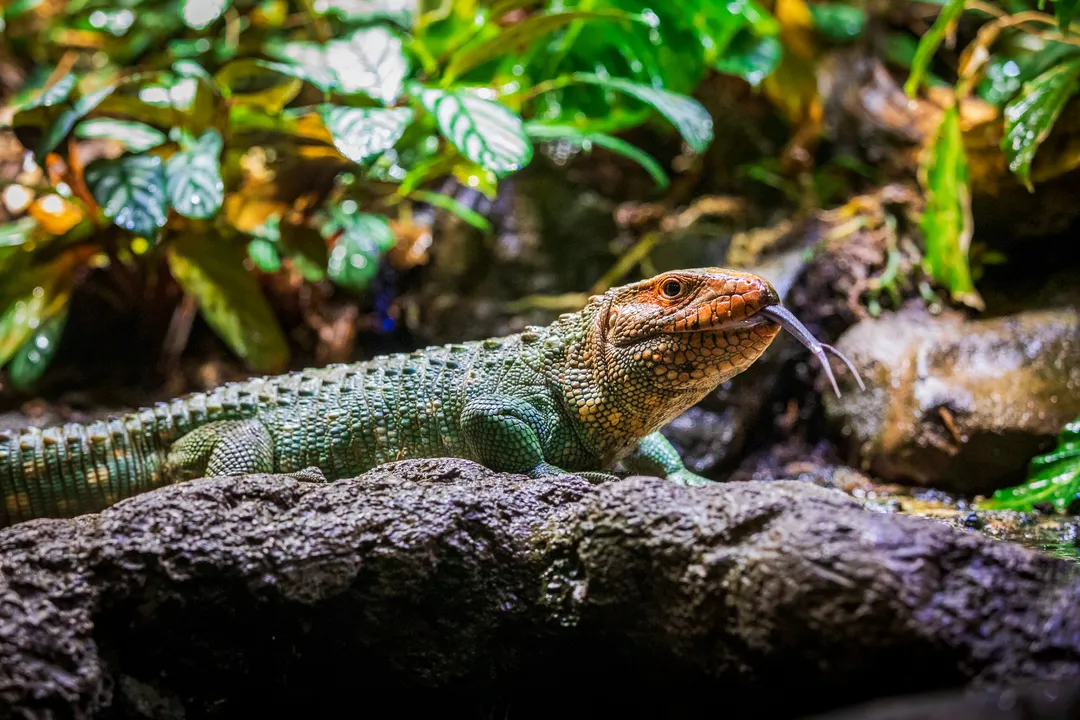
The creature often referred to as a "Kaiman" is more accurately known in zoological contexts as the Caiman Lizard, scientifically classified as Dracaena guianensis. This name frequently causes confusion because its appearance strongly suggests a relationship with the Caimans found in the family Alligatoridae, which includes true caimans and alligators. However, despite the shared name and a somewhat armored look, the Caiman Lizard is distinctly a species of lizard, not a crocodilian. It is a vibrant reptile native to the dense, wet forests of South America.
# Naming Confusion
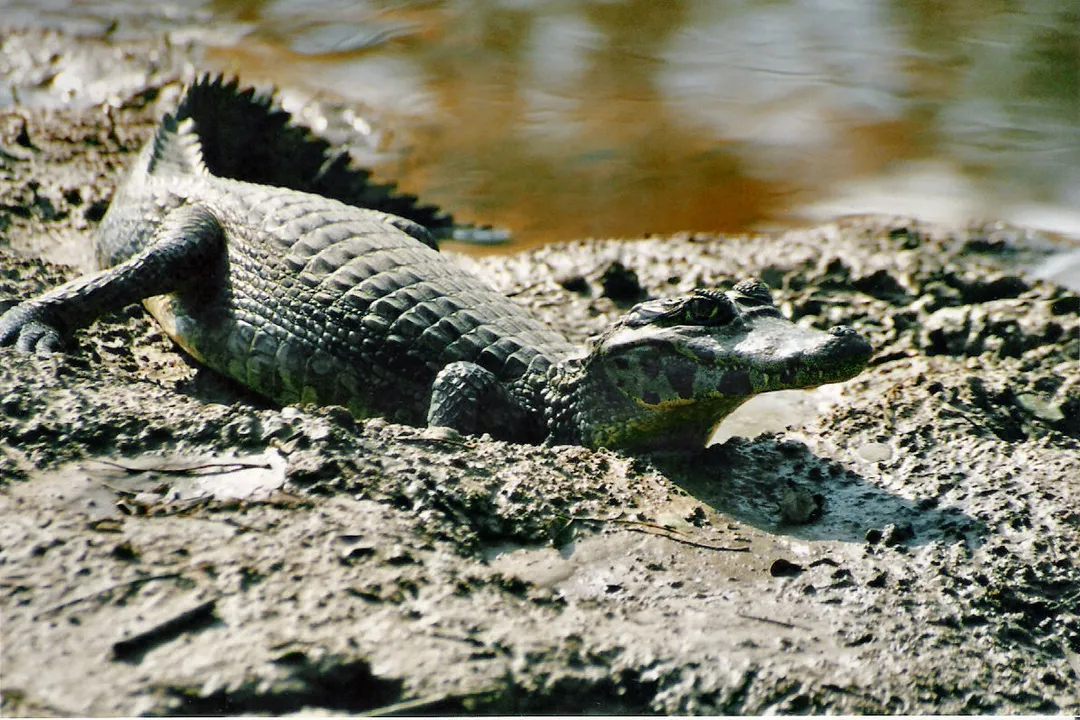
The resemblance that gives the Caiman Lizard its name is striking, particularly the prominent, dark scales along the back of its neck, which evoke the tough hide of a true caiman. This common nomenclature reflects a visual similarity rather than a close evolutionary relationship. To clarify this distinction for anyone keeping track of reptile families, a direct comparison is helpful.
| Feature | Caiman Lizard (Dracaena guianensis) | True Caiman (Genus Caiman) |
|---|---|---|
| Order/Suborder | Squamata (Lizards and Snakes) | Crocodilia (Crocodilians) |
| Family | Teiidae (or similar family depending on classification system) | Alligatoridae |
| General Type | Lizard | Reptile resembling an alligator |
| Primary Habitat | Arboreal and semi-aquatic (South America) | Aquatic (Central and South America) |
This fundamental difference in order—Squamata versus Crocodilia—shows that while they share common reptile ancestry, the Caiman Lizard diverged long ago from the lineage that produced the alligator family. The Dracaena genus itself is quite small, containing only two recognized species: D. guianensis and the Black Caiman Lizard, D. ater.
# Physical Traits
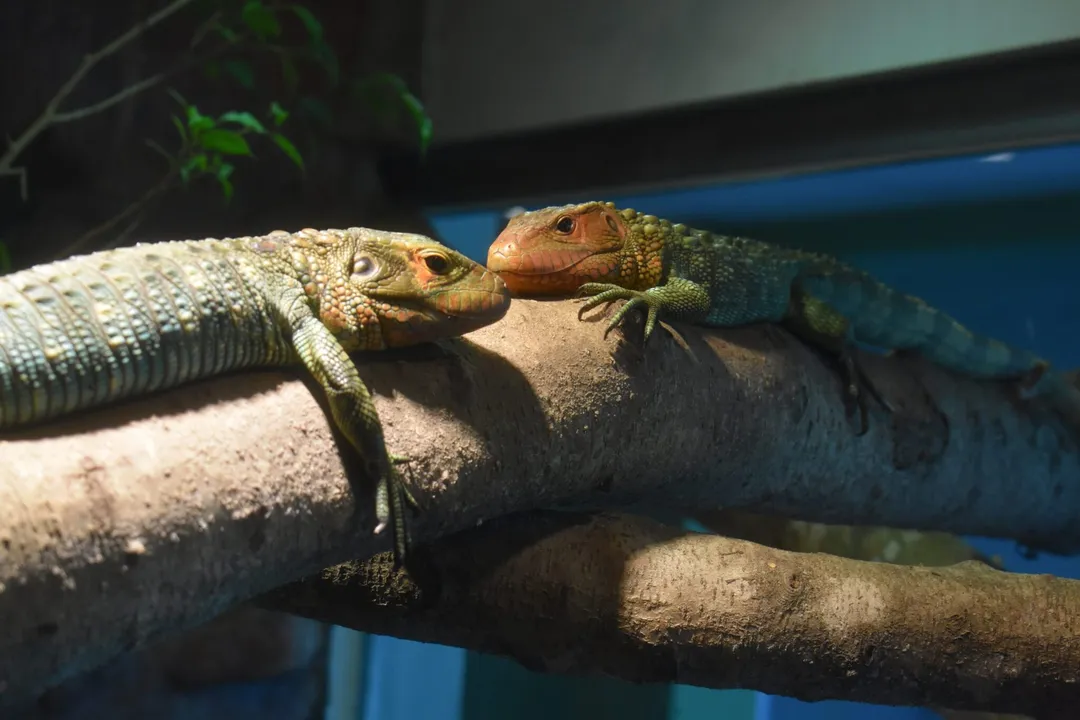
The Caiman Lizard is recognized as a beautiful reptile. Adults are sizable, capable of reaching lengths of approximately four feet. Their skin texture is noteworthy; they possess a distinctly bumpy and scaly exterior that can make them look somewhat like miniature, armored dinosaurs scurrying through the undergrowth. While the overall coloration can vary, the namesake feature is often the dark, rugged scaling, particularly around the neck area.
Their anatomy is clearly suited to a specialized lifestyle. The structure of their head and jaw is a testament to a very specific feeding habit. They have developed incredibly strong jaws, perfectly adapted for their diet. This muscular configuration is a key physical characteristic that sets them apart from many other semi-aquatic lizards.

# Habitat Niche
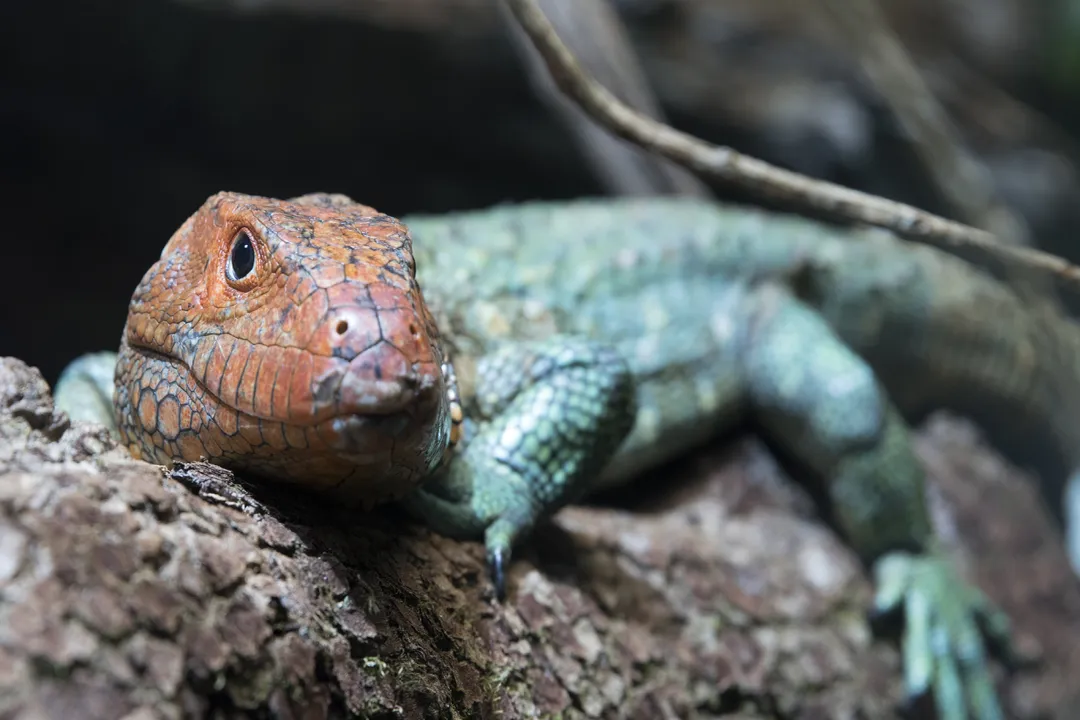
Geographically, the Caiman Lizard makes its home in South America, primarily within the vast expanse of the Amazon Basin. They are intrinsically linked to water, being described as semi-aquatic. This means that while they spend time on land, particularly climbing in trees, water is an essential component of their environment.
They favor areas near water sources within the forest environment. Their behavior balances two worlds: they are known to be excellent climbers and can navigate the branches, yet they are also strong swimmers, comfortable in the water where they spend a significant portion of their time. Thinking about the structure of an Amazonian riparian forest, this dual ability suggests they exploit resources both above and at the water line, perhaps avoiding terrestrial predators while accessing aquatic prey.
# Specialized Eating
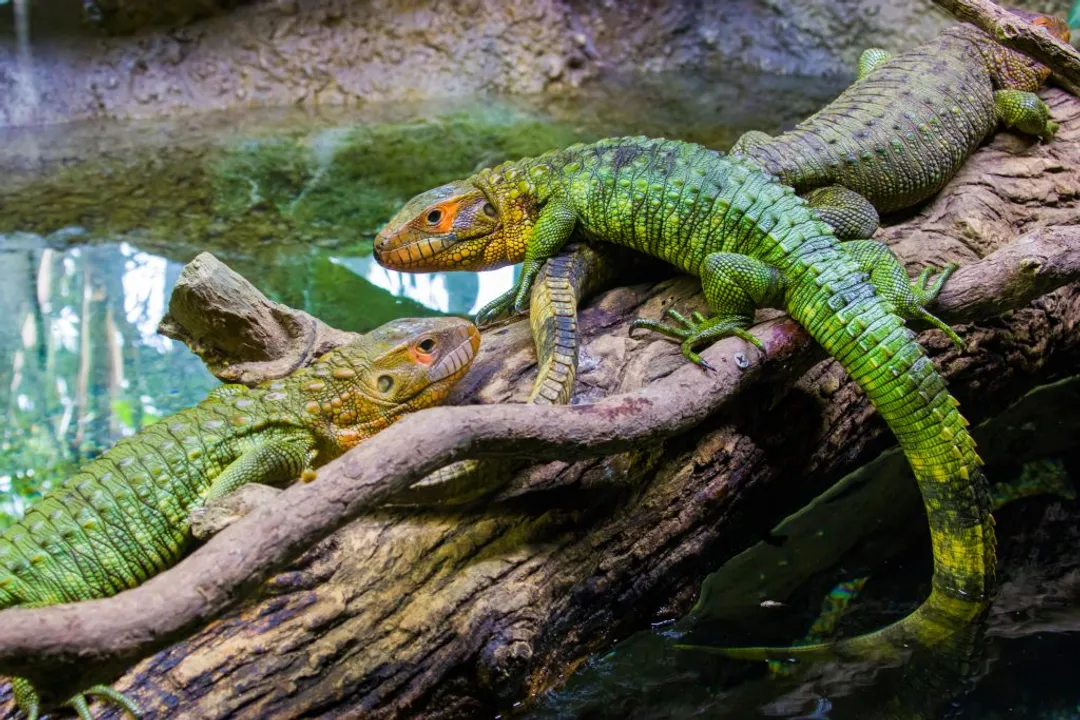
The most distinctive aspect of the Caiman Lizard's existence, aside from its confusing name, is its dietary specialization. These lizards are highly adapted predators whose menu relies almost entirely on one primary food source: apple snails.
This reliance means the Caiman Lizard's powerful jaw structure, mentioned earlier, is not for general aggression but is a tool for crushing shells. Imagine the hydrostatic pressure required to reliably crack the thick, calcareous shell of a large aquatic snail while the lizard is perhaps balancing precariously on a low-hanging branch or semi-submerged in the water. This focused evolutionary pressure likely drove the development of those immensely strong jaw muscles and robust dental structure. For keepers, understanding this singular dietary focus is paramount; success in captive care often hinges on providing an appropriate, consistent source of these hard-shelled mollusks.

# Lifestyle Habits
The combination of physical attributes and habitat dictates a unique routine for Dracaena guianensis. They are creatures of both the canopy and the creek. Their prowess as strong swimmers allows them to pursue prey in the water or make quick escapes, while their climbing ability provides vantage points for hunting or resting above the water's surface.
This arboreal and aquatic existence means their daily activities likely involve moving between the two mediums as needed. In the wild, this balance is critical for survival, allowing them to exploit food resources that might be unavailable to strictly terrestrial or strictly aquatic reptiles. The fact that they thrive in the Amazon Basin suggests an adaptation to high humidity and tropical temperatures, typical of areas rich in slow-moving water bodies favored by large snails.
# Conclusion
Ultimately, the creature known colloquially as "Kaiman" is the Caiman Lizard (Dracaena guianensis), a distinct species of lizard from South America, not a member of the alligator family. Its identity is defined by its powerful, shell-crushing jaws, its semi-aquatic and arboreal lifestyle within the Amazon Basin, and its striking, armored appearance. It stands as an excellent example of how convergent evolution—or perhaps just superficial similarity—can lead to common names that can temporarily mislead observers about true biological lineage.
Related Questions
#Citations
Caiman - Wikipedia
Tales of the Tails You're A Lizard, Caiman - Virginia Zoo
Meet the fascinating Caiman Lizard, a vibrant reptile native to South ...
All you need to know about Caiman Lizards - YouTube
Caiman Lizard - The Dallas World Aquarium
Creature Closeup: Caiman Lizard - California Academy of Sciences
Caiman Lizard (Dracaena guianensis) Care and Bioactive Terrarium ...
Caiman lizards: beautiful and highly adapted predators - Zoo Atlanta