What is unique about Ural owls?
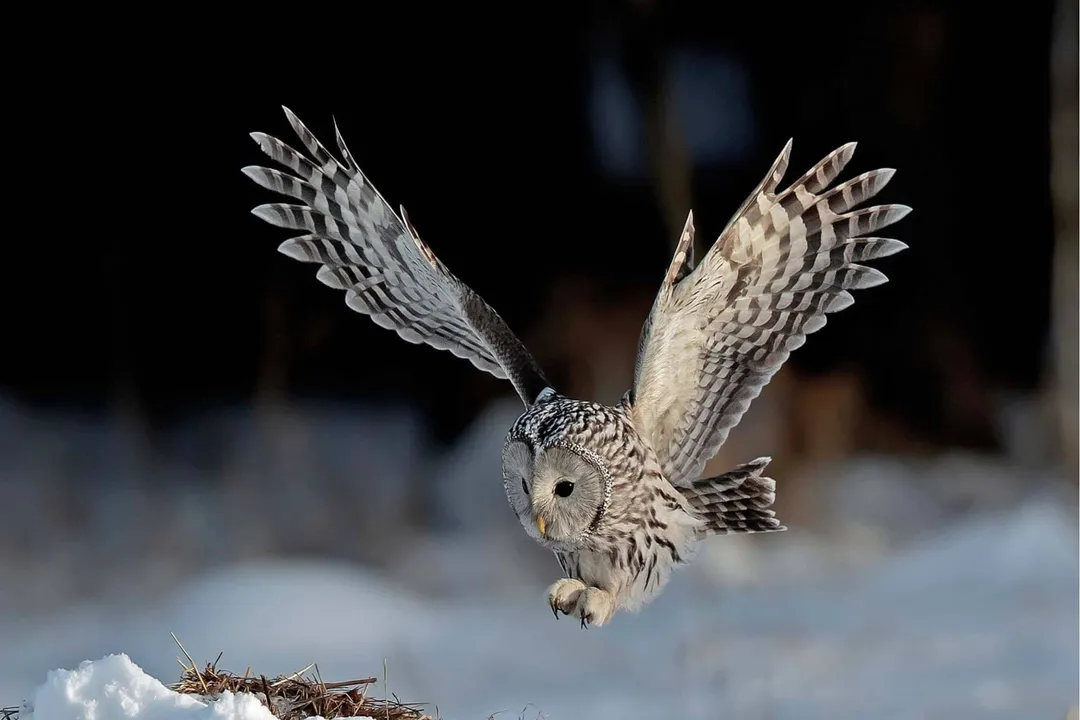
The Ural owl (Strix uralensis) is one of the true owls, belonging to the genus Strix, though its common name is somewhat geographically limiting, referencing only the Ural Mountains where the original specimen was collected. [4][5] This bird’s true distinction lies in its incredibly broad range, sweeping across the Palearctic from Scandinavia in the west, through Europe, across vast stretches of Russia, and as far east as Japan. [4][5][7]
# Distinctive Appearance
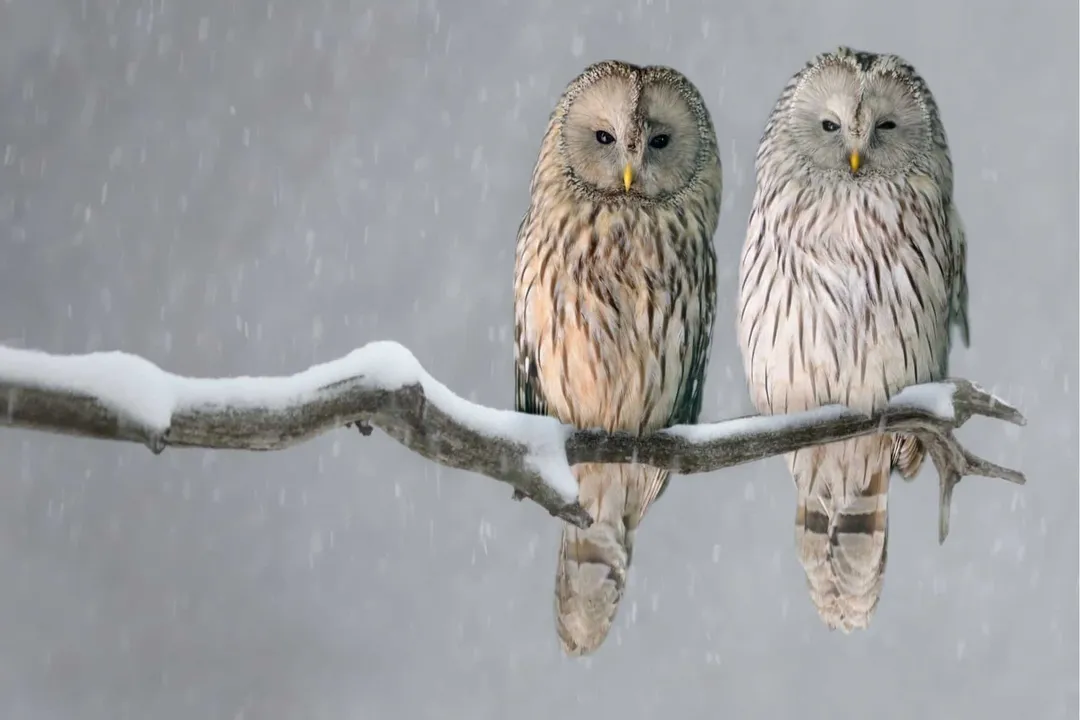
To spot a Ural Owl, birdwatchers often look for a large owl, characterized by a rounded head and a notably long, wedge-shaped tail—a feature that sets it apart from many relatives. [4][9] Its plumage is generally a plain, pale greyish-brown to whitish, featuring heavy dark streaking on the pale underparts, though it notably lacks the crossbars found on the underparts of the closely related Tawny Owl. [4][5]
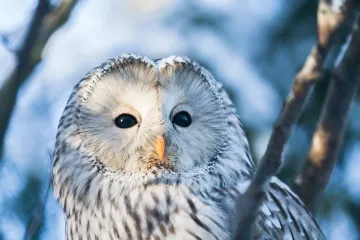
However, perhaps the most striking and unique feature, especially when comparing it to other large owls like the Great Grey Owl, is its eyes. Ural Owls possess relatively small, closely set dark brown or ebony eyes. [2][4] This feature often grants them a less overtly "fierce" countenance than some of their cousins. [4] The focus on dark pigmentation for the eyes, contrasting with the yellow eyes of many sympatric species, hints at an evolutionary path heavily favoring effective camouflage and specialized hunting within deeply shaded, low-light environments, rather than visual signaling that might be more prominent in other species. [4]
# Forest Dweller
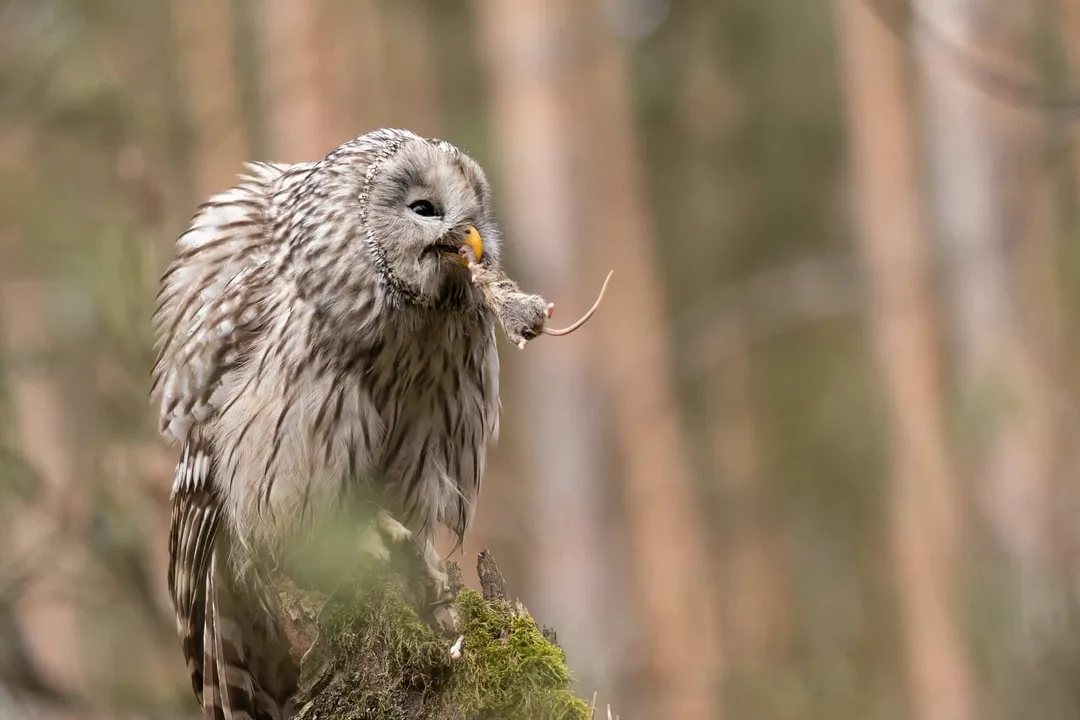
The preferred realm of the Ural Owl is the mature, dense forest, often referred to as taiga or "snow forest" in its northern reaches. [5][9] While they are associated with vast Eurosiberian taiga, they adapt to mixed or temperate deciduous forests as well, typically favoring areas close to some kind of opening, such as forest bogs or clearings. [4][5] They are exceptionally well-adapted to frigid northern conditions due to their thick feathering and are largely non-migratory, preferring to maintain a defined home range year-round, even when local prey numbers temporarily crash. [3][4][9] This resident nature is a behavioral contrast to many nomadic boreal owls that strictly follow prey cycles. [4]
# Sensory Focus

The Ural Owl’s survival in dense, often dark forest habitats relies heavily on superior non-visual senses. They possess remarkable binocular vision, but their physical structure compensates for the fixed nature of their eyes: the Ural Owl can rotate its head an astonishing 270 degrees. [3][7] This extreme mobility is facilitated by having 14 neck vertebrae, twice the number found in humans or giraffes. [7]
Furthermore, their auditory apparatus is significant. They have some of the largest ears, in proportion to body size, recorded among all owls. [4][5] These large ears work in concert with their well-developed, round facial discs, which act like specialized funnels to gather and direct sound waves toward the ears, underscoring the critical importance of hearing in their hunting strategy within the boreal zones. [3][5] This acuity is so profound that they are capable of hearing prey moving just centimeters beneath the snowpack. [7]
# Fierce Defense
Ural Owls are known for forming strong, often lifelong, monogamous pair bonds. [5][9] While they generally maintain their territories quietly, their behavior changes drastically when protecting their nests. The female, in particular, is reputed for her vigorous defense of the young. [4] This protective instinct is so pronounced that the Swedish name for the species is Slaguggla, meaning "attacking owl". [4][5][6] Reports indicate that these attacks can be severe enough to cause serious physical harm to intruders, including humans, with documented instances of eye damage or orbital fractures resulting from their powerful strikes. [4][6] This intense, localized defense likely contributes significantly to keeping nest predation rates quite low for the species. [4]

# Dietary Breadth
While they are classified as dietary generalists within the Strix genus, Ural Owls show a strong local reliance on small mammals, with voles often making up the bulk of their diet across much of their European range. [4][5][9] Prey studies reveal they are opportunistic, taking over 200 species in total, including insects, frogs, birds, and even mammals up to the size of a hare. [4][9]
It is fascinating to observe how their specialization shifts based on local availability. In areas where rodent cycles are dramatic, like parts of Finland, their diet fluctuates significantly. [4] Conversely, in some European locations, their diet has shown remarkable adaptability; for instance, urban-adapted populations in Slovakia have been recorded relying almost entirely on pigeons and doves during certain periods. [4] This ability to pivot—from relying heavily on voles in the taiga to capitalizing on local bird populations near human settlements—demonstrates a necessary flexibility that supports their year-round territorial habits, unlike the more specialized Great Grey Owl, which is far more restricted to vole dependency. [4] This tendency to hold territory despite fluctuations suggests that, on average, the Ural Owl's local environment provides just enough consistent, varied prey biomass to sustain them through lean times, allowing them to avoid the nomadic movements typical of true specialists. [4]
Despite their success, the primary threat to the Ural Owl’s long-term stability is the loss of the very specific habitat they require: old forests with ample natural tree cavities and stumps for nesting. [4][9] Conservation work, including providing artificial nest boxes, has been effective in bolstering local numbers in places like Finland and Central Europe, but securing their mature forest homes remains paramount for their continued presence. [4][9] The International Union for Conservation of Nature (IUCN) currently lists the species as Least Concern, estimating the global population to be between 396,000 and 1.2 million mature individuals. [5][4]
#Videos
Focus on the Ural owl (Strix Uralensis) An incredible predator with ...
Related Questions
#Citations
Ural owl - Wikipedia
Ural Owl - Facts, Diet, Habitat & Pictures on Animalia.bio
Ural owl Bird Facts - Strix uralensis - A-Z Animals
Ural Owls | National Geographic
Ural Owl Facts For Kids | AstroSafe Search - DIY.ORG
Ural Owl *CURRENTLY OFFSHOW* - New Forest Wildlife Park
Focus on the Ural owl (Strix Uralensis) An incredible predator with ...
Ural owl - the barking owl - Vildriket
Ural Owl - Noah's Ark Zoo Farm