What is the taxonomy of a Poodle?
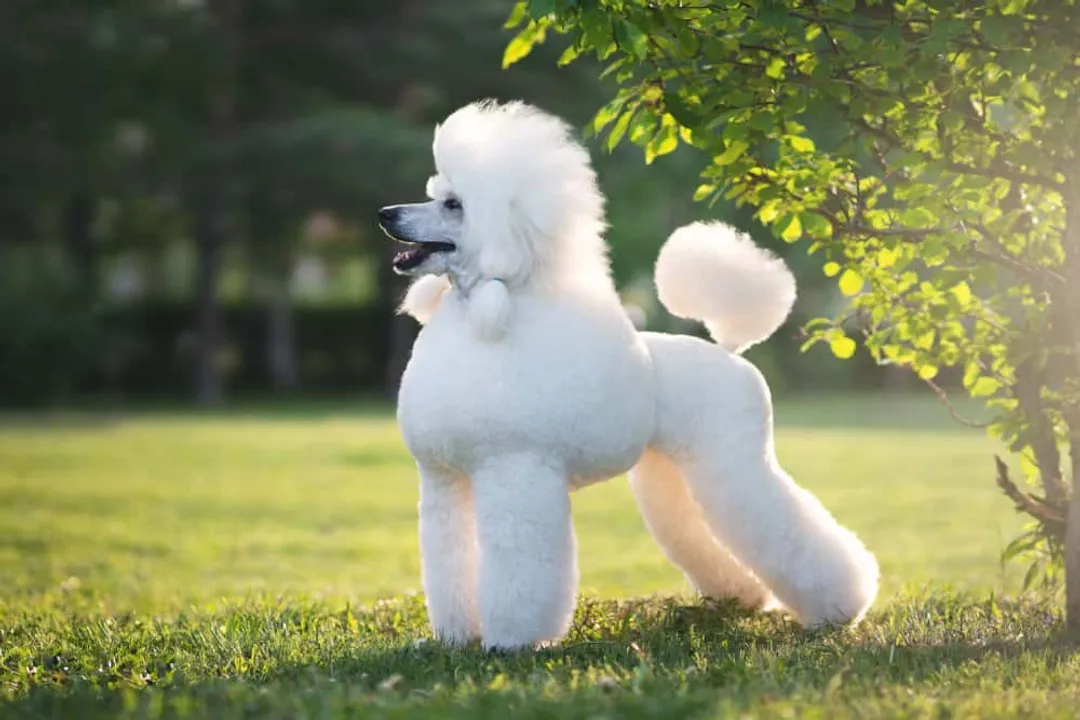
The journey to understand any living creature begins with its placement within the grand scheme of life, a system known as taxonomy. For the Poodle, a breed instantly recognizable by its elegant gait and distinctive coat, this scientific classification reveals a deep connection to the wild and a fascinating evolutionary path that separates it from the wolf, yet firmly plants it within the canine family. The Poodle is not just a collection of distinct sizes; it is a single breed (Canis lupus familiaris) categorized across several necessary levels of biological organization, from the broadest kingdom down to the specific breed standard recognized by kennel clubs. [2][5]
# Kingdom Placement
At the very top of the organizational chart, the Poodle is categorized within the Kingdom Animalia. [5] This initial classification is shared by every creature that moves, consumes other organisms for energy, and lacks rigid cell walls, setting the Poodle apart from plants, fungi, and bacteria. Within Animalia, the Poodle belongs to the Phylum Chordata, meaning it possesses a notochord or backbone at some stage of its development, placing it firmly in the group of vertebrates. [5] Following this is the Class Mammalia, a designation that speaks to its warm-blooded nature, the presence of fur or hair (even the highly specialized Poodle coat), and the ability to nurse its young with milk. [5] This broad agreement on classification is consistent across major biological databases and encyclopedic entries describing the species. [2][5][6]
# Canid Kinship

Moving deeper into the classification system, the Order Carnivora defines the Poodle’s dietary and physical structure, grouping it with bears, seals, and, most relevantly, cats. [5] The subsequent Family, Canidae, narrows this down considerably, placing the Poodle with foxes, jackals, and wolves. [5] This relationship highlights the Poodle’s inherent predatory ancestry, even though centuries of selective breeding have refined its temperament and physical utility away from pure survival hunting. The Genus is Canis, which typically encompasses the well-known dog-like canids. [5]
This shared ancestry with the wild wolf is scientifically formalized at the Species level. While some older or generalized genomic references might use Canis familiaris, the prevailing, modern scientific consensus, especially when considering genetic lineage, classifies the domestic dog as a subspecies of the gray wolf, Canis lupus. [5][6] Therefore, the full scientific binomial nomenclature often used for the domestic dog, including the Poodle, is Canis lupus familiaris. [5] This designation acknowledges the recent divergence and strong genetic ties between domestic dogs and their wild progenitors. [2]
# Species Naming Nuance
It is worth noting the slight divergence in how the domestic dog is formally named across different scientific databases. For instance, the NCBI Taxonomy browser lists the ID 9615 for Canis lupus familiaris, [5] affirming the subspecies status under Canis lupus. Conversely, some genomic references may default to Canis familiaris. [6] From a practical standpoint for a Poodle owner or enthusiast, this distinction is minor, as both names refer to the domesticated form of the canine. [2] The key takeaway is the species-level classification: the Poodle is Canis lupus domesticated, not a separate species entirely. This places it in the same biological category as a Chihuahua or a Great Dane. [2][8]

# Breed Layering
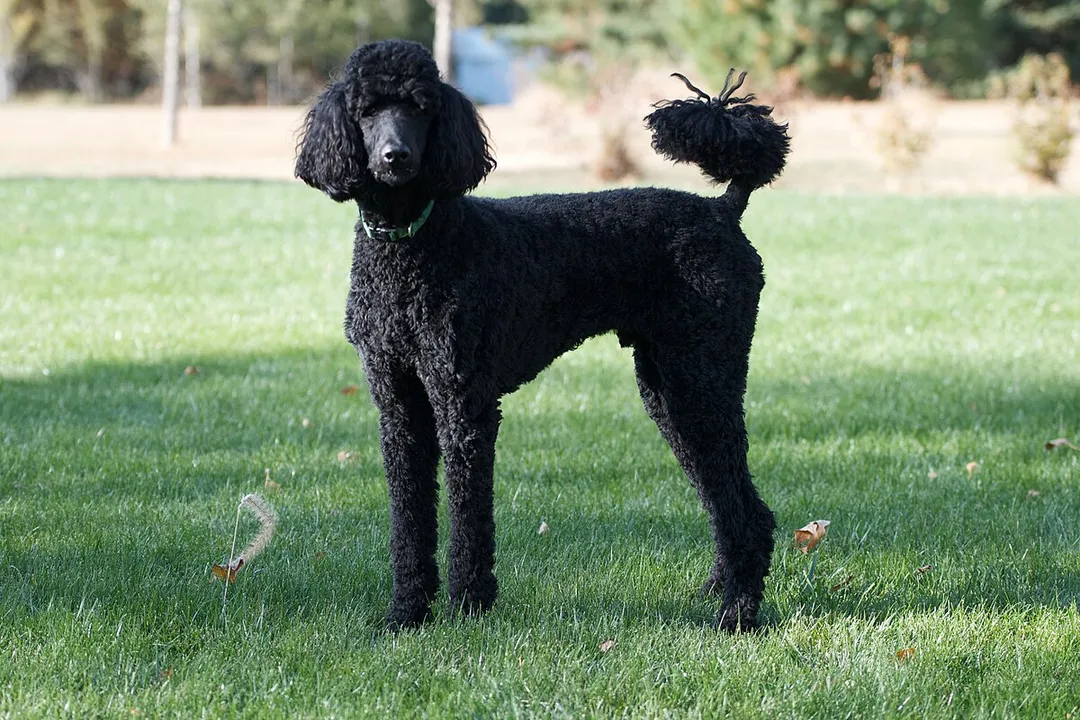
Once the Poodle is situated within the scientific hierarchy, the classification shifts from broad biological grouping to human-defined breed standards, which serve as a secondary, cultural taxonomy layer. [7] Kennel clubs around the world recognize the Poodle as a singular breed, despite its significant size variations. [2] This is where human selection pressure becomes evident in the formal registration structure. The American Kennel Club (AKC), for example, recognizes three distinct varieties of the Poodle: Standard, Miniature, and Toy. [7]
These varieties are not classified as separate breeds; rather, they are recognized as variations within the same breed, differentiated primarily by height and weight. [2][7] This structure contrasts somewhat with the strict Linnaean system, which generally defines species based on reproductive isolation. Here, the kennel club system recognizes that breeding between a Standard and a Toy Poodle can still produce viable offspring, confirming their status as a single breed, Canis lupus familiaris, albeit one with artificially maintained size classes. [7]
Consider the size differentiation:
| Variety | Approximate Height Range (Inches) | Primary Distinction |
|---|---|---|
| Standard | Over 15 at the shoulder | The original form; excellent athlete |
| Miniature | 10 to 15 at the shoulder | Reduced size for different utility |
| Toy | Under 10 at the shoulder | Smallest variation, primarily companion |
This managed classification system means that while a Toy Poodle is taxonomically Canis lupus familiaris, its practical classification within the dog world is distinct from a Standard Poodle for competition and breeding purposes. [7] This is a common feature in highly developed domestic animal populations where function or aesthetic preference drives selection faster than natural speciation. [1]
# Ancestral Context and Nomenclature
The Poodle’s historical classification as a water retriever provides insight into why its earliest development was so crucial to its modern look. Originating in Germany, the Poodle was developed for retrieving waterfowl. [2] The name itself is often traced back to the German word Pudel or Pudelin, meaning "to splash in the water". [2] This functional origin explains the breed’s characteristic dense, curly, non-shedding coat, which historically would have insulated the dog in cold water and offered protection. [2][8]
The evolution into the various sizes we see today occurred over time, with breeders developing the smaller Miniature and Toy versions likely for companionship or easier handling in different environments, though the Standard remains the true representation of the original working type. [2][7]
When we analyze the three recognized sizes—Standard, Miniature, and Toy—we observe a direct impact of human intervention on the genetic makeup of Canis lupus familiaris. Biologically, these are simply size polymorphisms within the same gene pool. However, kennel club rules mandate that breeding must generally occur within the size class to maintain eligibility for competition. [7] If we were to map this onto a strict biological model, we might imagine the Miniature and Toy varieties as distinct morphotypes that have been artificially stabilized within the single Poodle species. [1] This demonstrates how the Poodle’s classification involves navigating both the immutable facts of genetics (species level) and the mutable rules of organized human kennel management (variety level).
# Integrity of the Breed
The Poodle’s standing as a distinct breed is maintained through breed clubs and registries that focus on maintaining the type, often irrespective of the pure taxonomic rank. For example, records and established breed histories help solidify its place as a recognized entity within the companion animal sector. [1][4] Regardless of whether one views the Poodle through the lens of Canis lupus familiaris or simply as a highly refined breed of domestic dog, its identity is secure. [5][8] The consistent structure, temperament, and appearance (aside from size) across the varieties ensure that experts recognize them as belonging together. [7]
In summary, the taxonomy of the Poodle is a layered structure. It begins with its universal placement as an animal, a vertebrate mammal, and a member of the dog family, Canidae, under the species Canis lupus. [5] It then descends into the specific designation of the domestic dog, C. l. familiaris. [5] Finally, it enters the human-defined system of breed registration, where the Standard, Miniature, and Toy varieties are kept distinct for competitive purposes, even though they share the same fundamental biological classification. [7] This structure accurately reflects a creature that has evolved naturally from a wild ancestor and has been meticulously shaped by human hands for centuries.
Related Questions
#Citations
Poodle - Discover Animals
Poodle - Wikipedia
Poodle Dog Breed Complete Guide - A-Z Animals
species_list | Canis_lupus_familiaris_breed_poodle - diArk
Canis lupus familiaris - NCBI
Domestic dog (Canis familiaris) longevity, ageing, and life history
Poodle (Standard) - Dog Breeds - American Kennel Club
Poodle - Justapedia